

Avoid Customs Holds When Shipping Gifts Internationally from the U.S.
Yes, you can ship gifts overseas. The real decision is whether you need an international courier for speed and tracking or a locally fulfilled gift for simplicity, and whether you’ve written a customs description detailed enough to avoid a hold at the border. Get those two calls right before you tape a single box.
TL;DR:
- Using DDP service for customs duties significantly reduces the risk of a customs invoice arriving unexpectedly for the recipient.
- Vague descriptions on customs forms, such as “gifts” or “assorted items,” are the leading causes of shipment holds and delays at borders.
- For each item, providing a detailed description, including model, material, and quantity, is essential to avoid customs issues and ensure smooth transit.
- Shipping electronics with batteries requires declaring battery chemistry and following labeling rules; shipping batteries separately can be a safer alternative.
- Delivery times range from 1 to 3 days for express routes to well-connected countries, but international shipments to remote areas may take several weeks.
Table of Contents
- How Does International Gift Shipping Actually Work?
- What Shipping Service Level Should You Choose?
- What Customs Paperwork Do You Need?
- How Should You Pack a Gift Basket for International Travel?
- What Determines Delivery Time and Cost?
- How Do You Avoid the Most Common Shipping Problems?
- Where Can You Get Toy-Specific Shipping Help?
- A Practical Read on What Actually Matters Here
- Shop Giftable Toys Built for International Shipping
- Where to Check Before You Ship
- Sources
- FAQ
How Does International Gift Shipping Actually Work?
Two routes dominate international gift shipping: cross-border courier and local-fulfillment networks. A courier route means you pack the gift at home and hand it to a carrier like USPS, DHL, or FedEx, which carries it across borders through customs. Local fulfillment means a company with warehouses in the destination country assembles and ships the gift from inside that country, skipping international customs almost entirely.
Courier shipping fits best when the gift is something specific and personal. A grandmother’s handmade quilt or a particular toy a child has been asking for only exists in one place, and it has to travel from there. Local fulfillment fits better for perishables, bulk corporate gifting, or when you’re sending to several countries at once. Local fulfillment partners can consolidate multi-country sends and sidestep customs complexity almost entirely, which is a real advantage when you’re managing a dozen recipients across a dozen tax jurisdictions.
The trade-offs run in opposite directions; consulting a guide to luxury gift shopping helps you understand recipient-choice tools and sourcing local vendors, especially when explaining local fulfillment and recipient selection for corporate gifting.
- Courier shipping: full control over what’s inside the box, but you own the customs paperwork and any delays it causes.
- Local fulfillment: faster and simpler for the recipient, but you’re limited to whatever catalog the local partner offers.
- Cost: courier shipping on a single unique item is often cheaper than paying a fulfillment markup for one recipient.
What Shipping Service Level Should You Choose?
Express and economy service levels aren’t just a speed dial. They change how much customs friction the recipient feels on arrival. Express services from major international carriers often move through customs faster because they’re prioritized, and some networks reaching more than 200 countries can deliver in as little as 1 to 3 business days on certain corridors. Economy service can take two to four weeks depending on the destination, and it’s more likely to sit in a customs queue behind higher-priority freight.
The bigger decision is DDP versus DDU. DDP (Delivered Duty Paid) means you prepay duties and taxes at checkout, so your recipient opens the box with nothing owed. DDU (Delivered Duty Unpaid) leaves that bill for the recipient, and nothing ruins a gift faster than a customs invoice showing up at the door. For gifts, DDP is almost always the better choice. USPS and other carriers now let you prepay import duties for certain destinations directly through their online tools.
A few service add ons matter more for gifts than for regular parcels:
- Insurance on anything with real replacement value, especially electronics or collectibles
- Signature confirmation if the address is an apartment building or shared mailbox
- Fragile handling flags for anything glass, ceramic, or battery powered
Pro Tip: It is advisable to add signature confirmation on international gifts with significant declared value. Carriers won’t reroute a “left at door” package once it clears customs, and unsigned deliveries are a common reason a gift never reaches the person you meant it for.
What Customs Paperwork Do You Need?
Vague descriptions are the single biggest reason international gifts get held at the border. Writing “gifts” or “assorted items” on a customs form used to work. It doesn’t anymore. Detailed commodity descriptions are now enforced rather than treated as a formality, and entries that vague can trigger a return or an extended hold.
Here’s what a workable description actually looks like:
- Toys: “Plastic remote-control car, battery operated, 1 unit, new” instead of “toy”
- Clothing: “Cotton children’s sweater, size 6, 1 unit, new” instead of “clothing”
- Food items: “Sealed chocolate assortment, 500g, commercially packaged” instead of “food gift”
Documentation you’ll need on hand for most international gift shipments:
- A commercial invoice or customs declaration listing each item separately
- HS (Harmonized System) codes for higher-value or regulated items, when the carrier’s form requires them
- A CN22 or CN23 form for smaller parcels through postal networks, filled out with the same item-level detail
- An accurate declared value per item, not a lump sum for the whole box
Incomplete or vague documentation remains the leading cause of international shipping delays across the industry, ahead of weather, capacity, and customs backlogs combined. If your shipment’s total value crosses certain federal thresholds, an Electronic Export Information (EEI) filing may also apply. This mostly affects high-value or bulk shipments rather than a single wrapped gift, but it’s worth checking if you’re sending something expensive.
Shippers heading into or through the European Union face an extra layer now. The EU’s ICS2 security program requires more granular declarations for anything destined for or transiting EU member states, which means the days of a one-line customs description are effectively over for that region.
How Should You Pack a Gift Basket for International Travel?
A mixed gift basket is really several small shipping problems stacked in one box. Each component needs its own protection, and the box needs to survive handling that a domestic package never sees.

Start with inner boxing. Group similar items and box them separately inside the outer shipping carton rather than letting everything shift loose. Double-boxing fragile or perishable components and separating foodstuffs with moisture barriers meaningfully cuts down on spoilage and breakage over a long transit.
A few packing rules worth following every time:
- Wrap glass or ceramic items individually, then cushion them so they can’t touch each other or the box wall
- Use moisture barriers (resealable bags or wax paper) between food items and anything absorbent
- Seal the outer box with pressure-sensitive tape on every seam, not just the top
Certain items are restricted or flatly prohibited across many destinations: perishable foods, alcohol, seeds, some cosmetics, and lithium batteries. Battery-powered toys need particular care. Carriers require declared battery chemistry and specific labeling for anything with a built-in lithium battery, and when a destination’s rules are unclear, shipping the toy without its batteries (or sending batteries separately with the right paperwork) is the safer call.
Pro Tip: If you’re not sure whether a destination country allows a particular battery type, choose a non-electronic gift instead. It’s a smaller decision than untangling a customs seizure after the fact.
What Determines Delivery Time and Cost?
Delivery windows swing widely by corridor. Express service on a well-traveled route can land in 1 to 3 business days, while economy service to a less-connected country can take three to four weeks. Holiday seasons make everything slower, since carrier networks are running near capacity.
Cost comes down to a handful of variables working together:
- Dimensional weight: carriers charge by whichever is higher, actual weight or box volume, so an oversized box for a small gift costs more than you’d expect
- Declared value: higher-value items usually cost more to insure and may trigger duties
- Duties and taxes: destination-specific, and the reason DDP service exists
- Remote-area surcharges: rural or island addresses often carry an extra fee regardless of carrier
Once a package ships, tracking should update at every major handoff, especially the moment it transfers from the international carrier to a local postal service, which is often where visibility gets patchy for a day or two. If tracking stalls for more than 48 hours past an expected update, contact the carrier directly rather than waiting it out.
How Do You Avoid the Most Common Shipping Problems?
Most international gift shipping problems trace back to three causes: documentation errors, wrong or incomplete recipient contact details, and shipping to a restricted destination without checking first. Sanctions and embargo rules can restrict or block shipments to specific countries or individuals, so it’s worth a quick check before sending anything to an unfamiliar destination.
A short pre-shipment checklist catches most of this before it becomes a problem:
- Confirm the full address, including apartment or unit number, and a working phone number and email
- Write an itemized contents list with quantities and values, not a single lump description
- Choose DDP service so the recipient isn’t billed on arrival
- Check the destination against current sanctions guidance if it’s a country you haven’t shipped to before
For holiday sends, shipping earlier than you think you need to matters more than any other single decision, since peak volume creates processing bottlenecks that no service level fully escapes. If a shipment does get held, most carriers will notify you with a reason and a resolution path. Respond quickly. Held packages that go unanswered are often returned to sender.
Where Can You Get Toy-Specific Shipping Help?
Toys carry their own quirks: batteries, small parts warnings, and country-specific safety standards that vary more than most gift categories. Toylandeu™ publishes detailed guidance on exactly this, including a walkthrough on how to send toys overseas and a dedicated guide to shipping toys with lithium batteries legally.
Author Thane Holland draws on these Toylandeu™ resources throughout this piece, particularly for the battery-labeling and customs-description guidance above. For seasonal gift selection, the toy gifting guide breaks down what tends to travel and clear customs well. If your shipment involves batteries, high declared values, or a destination you’ve never shipped to, contact Toylandeu™ support before you box anything. Complex cases are cheaper to fix before shipping than after.
A Practical Read on What Actually Matters Here
Most individual senders overthink the carrier choice and underthink the customs description. Pick express courier for a single unique gift and local fulfillment for anything perishable or multi-country, then spend your real effort writing an itemized, specific customs form. Guidance from specialized resources covers the toy-specific details, like battery labeling, that trip up otherwise careful senders.
— Thane Holland
Shop Giftable Toys Built for International Shipping
The catalog provides a wide range of products where shipping rules are sorted out by category to help customers understand if an item can legally cross a border. Every product page lists its own shipping details, which matters far more for toys than for most gift categories given battery and small-parts rules.
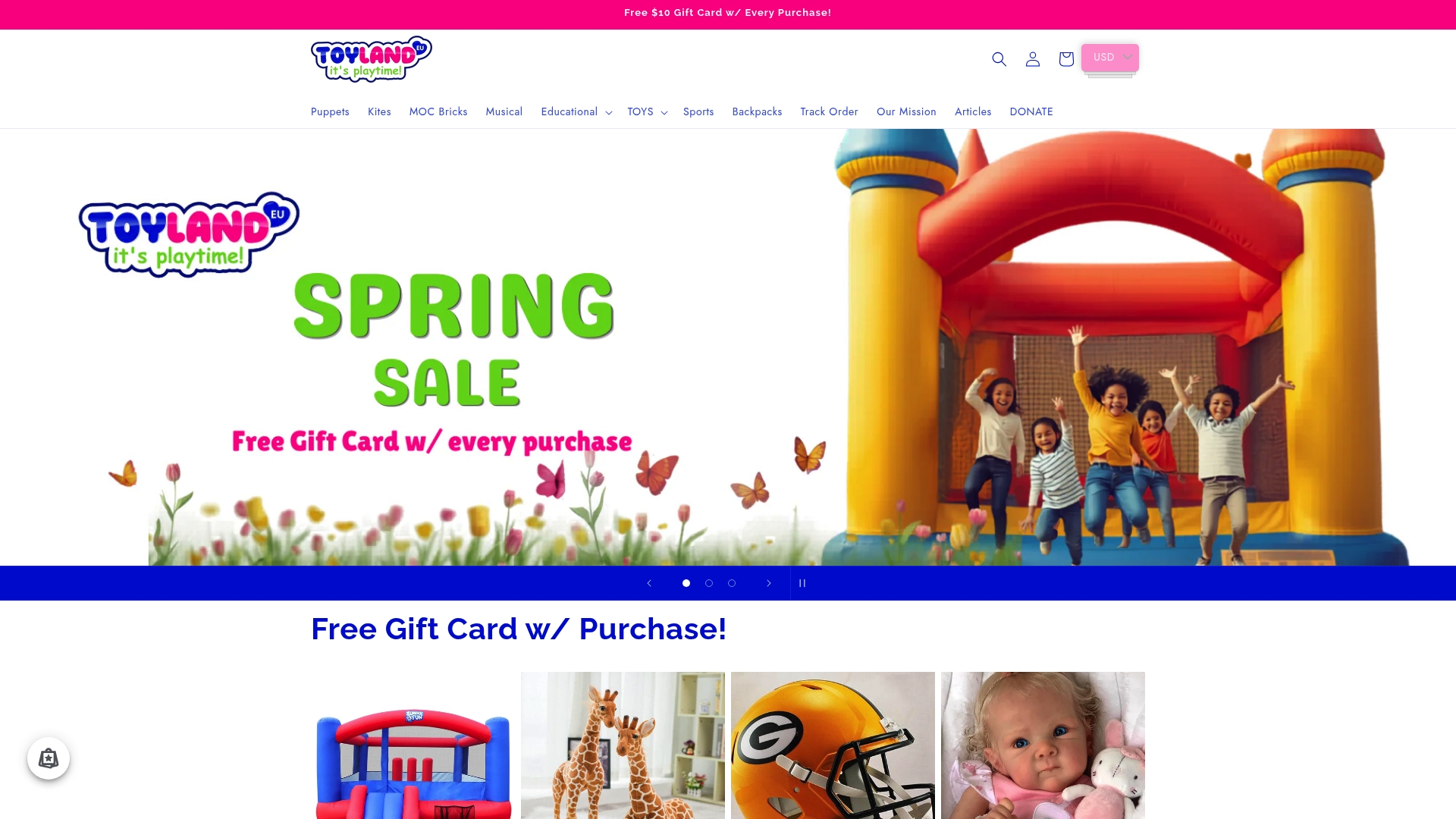
If you’re shopping for something that ships cleanly without battery paperwork, non-electronic picks like the Montessori drawing kit or the clay modeling kit travel with far less friction than anything battery powered. For families who want the remote-control experience anyway, the gesture-controlled stunt car is listed with its shipping specifics clearly noted on the product page. Check the shipping section on any product before you buy if the recipient lives outside the country where you’re placing the order, and reach out to Toylandeu™'s support team if you need clarity on a specific destination.
Where to Check Before You Ship
A few official pages are worth bookmarking before you send anything internationally. USPS International covers postage, customs forms, and duty prepayment for U.S. senders. Carrier sites like DHL publish current customs and documentation guidance for gift shipments specifically. And the OFAC sanctions list tells you upfront whether your destination country has restrictions you need to know about.
Sources
- The best international carriers for fast shipping | Easyship
- International gifting: your guide to shipping this holiday season | DHL Discover
- International — USPS
- Sanctions programs and country information | OFAC
FAQ
Do I have to pay duties on a gift I’m shipping overseas?
Often yes, depending on the destination and declared value. Choosing DDP service lets you prepay those duties so your recipient doesn’t get billed on delivery.
Can I ship food or perishable items internationally?
Some sealed, commercially packaged food items ship fine, but many countries restrict fresh, homemade, or perishable food. Check destination-specific rules before including food in a gift basket.
How do I ship a toy with batteries internationally?
Declare the battery chemistry and follow the carrier’s labeling rules, or ship the toy without batteries and send them separately. Toylandeu™'s lithium battery shipping guide walks through the specifics.
What’s the fastest way to avoid customs delays?
Write an itemized, specific description for every item in the box instead of a generic label like “gifts.” Vague descriptions are the leading cause of holds and returns.
How long does international gift shipping usually take?
Express service on well-connected corridors can arrive in 1 to 3 business days, while economy service to less-connected destinations can take several weeks, especially during holiday peaks.