

Toy gifting guide: delight and educate in 2026
- Choosing age-appropriate, interest-connected, and safe toys ensures lasting engagement.
- Open-ended toys support child development and grow with the child’s changing needs.
- Thoughtful presentation and personalization enhance the emotional impact of the gift.
Picking the right toy for a child sounds simple until you’re standing in a store aisle staring at hundreds of options, or scrolling endlessly online with no clear direction. Every gift buyer wants that moment when a child’s face lights up, but getting there requires more than grabbing whatever’s trending. The good news is that choosing a toy that’s both fun and meaningful doesn’t have to be guesswork. This guide walks you through every step, from understanding what makes a toy truly age-appropriate to presenting it in a way that makes the gift unforgettable.
Table of Contents
- What to consider before buying a toy gift
- Matching toys with age and developmental stage
- Smart shopping: checklists, tips, and common gifting mistakes
- Creating impact: presentation, personalization, and play beyond the gift
- Why intentional gifting beats flashy trends every time
- Find the perfect toy with ToylandEU
- Frequently asked questions
Key Takeaways
| Point | Details |
|---|---|
| Age matters most | Matching toys to developmental stage ensures both safety and joy. |
| Open-ended wins | Blocks, props, and art supplies support creativity and last for years. |
| Personal touch counts | Thoughtful presentation and customization make gifts more memorable. |
| Balance fun with learning | The best toys entertain while boosting lifelong skills like problem-solving and imagination. |
What to consider before buying a toy gift
Before you add anything to your cart, it helps to think through a few key factors. These aren’t just nice-to-haves. They’re the difference between a toy that gets played with for years and one that collects dust after the first week.
Age-appropriateness comes first. Toy packaging always lists a recommended age range, and that range exists for two reasons: safety and developmental fit. A toy that’s too advanced frustrates a child. One that’s too simple bores them fast. Neither outcome is what you’re going for.
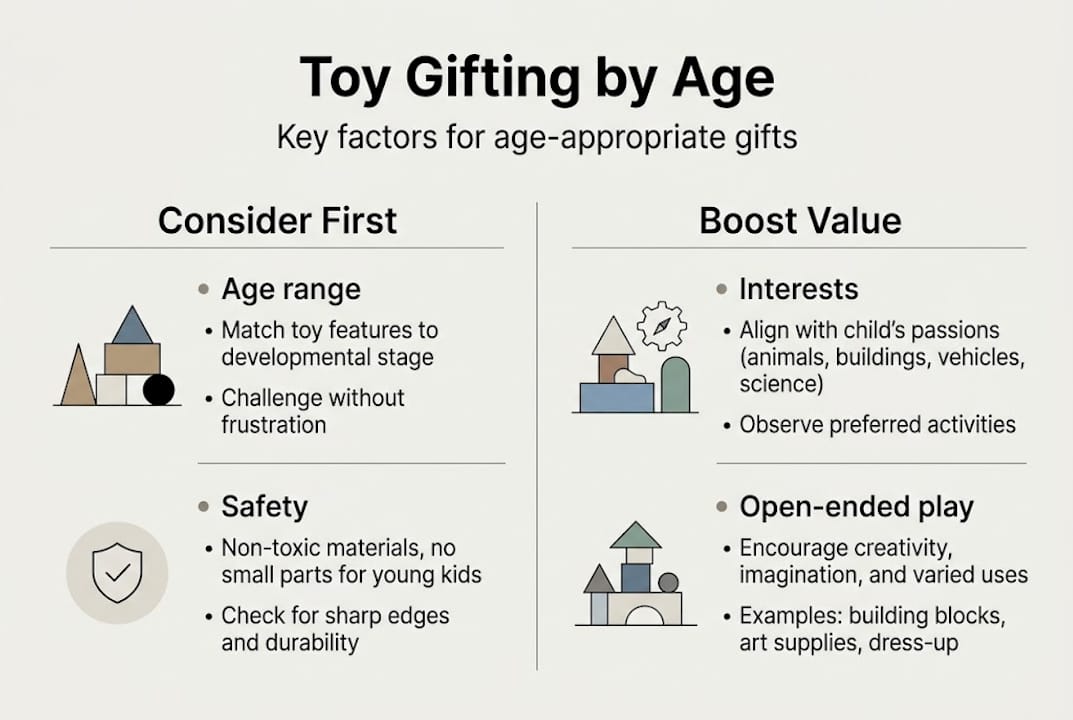
Think about the child’s specific interests. Does she love animals? Is he obsessed with building things? A toy that connects to what a child already cares about will always outperform a generic pick. Also consider the type of play the toy encourages. Active play, imaginative play, and educational play each serve different developmental needs, and the best gifts often blend more than one.
Safety and quality matter more than price. Check for certifications relevant to your region, and look up whether a product has been recalled. A cheap toy that breaks on day one isn’t a bargain. It’s a disappointment.
One of the most important insights from child development research is that open-ended toys support development across motor, cognitive, and social areas while growing with the child over time. Blocks, art supplies, and pretend play props fall into this category. They don’t have one “right” way to be used, which means kids stay engaged longer and at deeper levels.
There are also good reasons to consider why toys make great gifts beyond the immediate excitement. A well-chosen toy creates memories, builds skills, and becomes part of a child’s story.
“The best toy is one that a child can use in ten different ways on ten different days.”
Common mistakes to avoid:
- Choosing a toy because it’s trending, not because it fits the child
- Ignoring age recommendations to buy something that “looks cool”
- Prioritizing quantity over quality when budgets are tight
- Forgetting to check return policies, especially for online purchases
Pro Tip: If you’re unsure between two toys, pick the one with more open-ended play potential. A STEM toys by age guide can help you zero in on options that grow with the child.
Matching toys with age and developmental stage
Understanding what to prioritize is only half the battle. You also need to match your choice to the child’s current stage. Here’s a quick-reference table to make that easier.
| Age range | Recommended toy types | Why it works |
|---|---|---|
| 0 to 12 months | Soft rattles, sensory mats, high-contrast books | Stimulates senses and early motor skills |
| 1 to 3 years | Push/pull toys, stacking items, simple puzzles, pretend play | Builds motor skills, problem-solving, early imagination |
| 3 to 5 years | Role-play sets, building blocks, turn-taking games | Strengthens social skills, self-regulation, pre-academics |
| 5 to 8 years | Construction kits, logic puzzles, board games | Boosts problem-solving, patience, and strategic thinking |
| 8 and up | Science kits, complex building sets, strategy games | Supports abstract thinking and sustained focus |
Research backs these categories up. Toddler push and pull toys support motor development and early imagination in the 1 to 3 age window. For preschoolers, role-play and building toys actively strengthen social skills and early self-regulation, two abilities that pay dividends in school and beyond.
Here’s a numbered breakdown of how play needs shift as children grow:
- Infants and young toddlers need sensory input and physical exploration above all else.
- Older toddlers start using imagination and benefit from toys that mirror real life.
- Preschoolers thrive with cooperative play and early rule-based games.
- Early school-age kids are ready for more complex challenges and multi-step builds.
- Older children want autonomy and toys that respect their growing intelligence.
You can also explore open-ended toy benefits to understand why toys without a single “correct” outcome tend to hold a child’s interest longer at every stage. For younger kids especially, check out expert early learning toys that are backed by developmental research.
Pro Tip: Look for toys labeled for a range of ages rather than a single year. A toy that works for ages 3 to 7 gives you far more value and stays relevant as the child grows.
Smart shopping: checklists, tips, and common gifting mistakes
With age and stage in mind, let’s make sure your shopping approach is as effective as your gift choice. A solid checklist prevents last-minute regrets.
Before you buy, confirm these four things:
- Does the toy match the child’s age and current developmental stage?
- Does it connect to something the child is genuinely interested in?
- Is it made from safe, durable materials with no known safety issues?
- Does the seller offer a clear return or exchange policy?
Here’s a comparison of in-store versus online shopping to help you decide where to buy:
| Factor | In-store shopping | Online shopping |
|---|---|---|
| Ability to inspect quality | High | Low |
| Price comparison | Limited | Easy |
| Selection range | Moderate | Vast |
| Return process | Usually simple | Varies by retailer |
| Gift wrapping options | Often available | Sometimes available |
| Convenience | Requires travel | High |
One often-overlooked principle is that variety over quantity matters more than filling a basket. A mix of sensory, motor, cognitive, and imaginative toys serves a child better than a pile of similar items. Rotating toys every few weeks also keeps engagement high without requiring new purchases.
For buyers thinking about sustainability, eco-conscious toy gifting is a growing movement worth exploring. Choosing toys made from natural materials or brands with ethical sourcing practices adds meaning to the gift. You can also find sensory STEM toy ideas that combine environmental awareness with developmental value.
Pro Tip: Rotate a child’s toys every two to three weeks instead of leaving everything out at once. Familiar toys feel new again after a short break, and kids play more creatively with fewer options in front of them.
Creating impact: presentation, personalization, and play beyond the gift
Smart shopping doesn’t end with hitting “purchase.” Thoughtful presentation and ongoing engagement tie it all together.
The way a gift looks when it arrives matters more than most people realize. Creative presentation signals that someone put real thought into the moment, not just the item. Here are some ideas that go beyond standard wrapping:
- Use a reusable fabric bag or decorative basket that becomes part of the gift
- Include a handwritten note explaining why you chose this specific toy for this specific child
- Create a simple “treasure map” that leads the child to where the gift is hidden
- Add a small related item, like a set of colored pencils with an art kit, to expand the play possibilities
- For educational toys, include a card with one or two fun activity ideas to try first
Personalization adds emotional weight that no price tag can replicate. A note that says “I picked this because I know you love building things” tells a child they are seen and known. That’s a gift within the gift.
The developmental case for certain toys is stronger than many people expect. Block play boosts math skills, with research linking early construction play to algebra performance in middle school. Active motor play also improves attention and memory in meaningful ways. These aren’t small benefits.
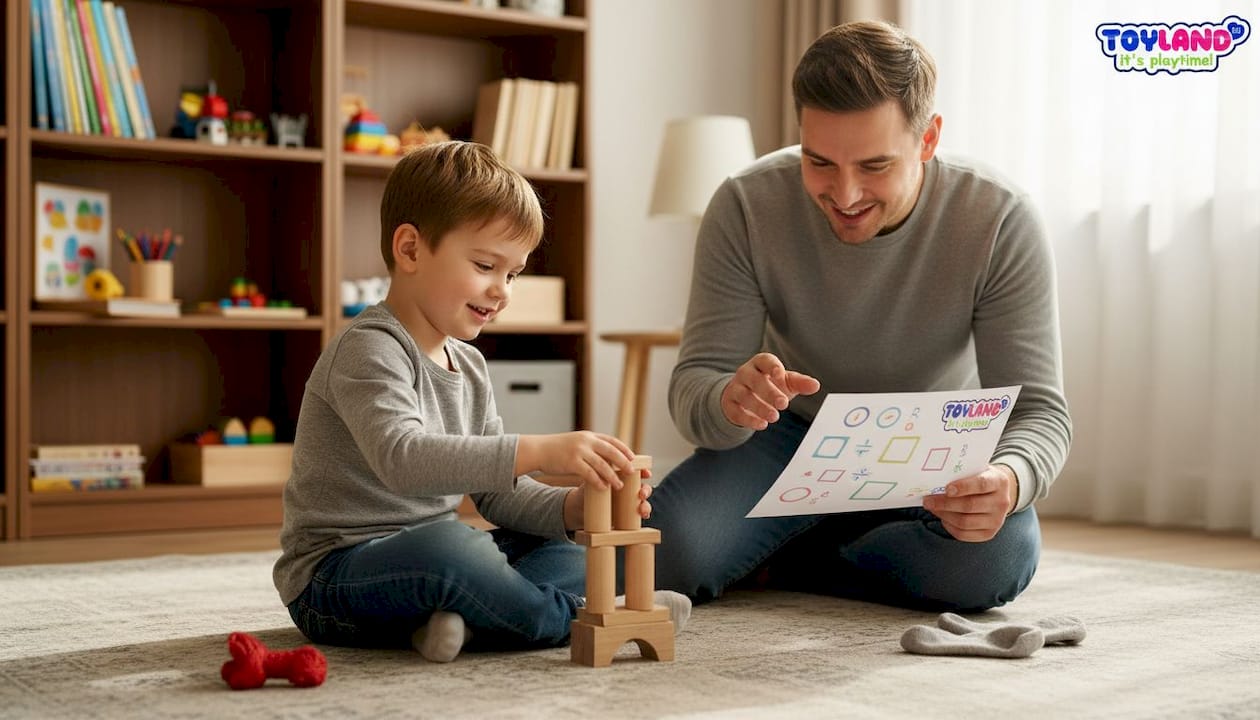
If you’re looking for a toy that delivers on both the fun and the learning side, Montessori stacking blocks are a strong example of a gift that works on multiple levels at once.
Pro Tip: After gifting, share a few play ideas with the child’s parents. Suggesting how to use the toy in different ways helps them get more out of it and shows that your gift was chosen with real care.
For more inspiration on making gifts feel personal and lasting, personalized gifting tips offer practical ideas that go beyond the toy itself.
Why intentional gifting beats flashy trends every time
Here’s something the toy industry doesn’t advertise: the hottest toy of the season is often forgotten by February. Kids are drawn to novelty, but novelty fades fast. What holds a child’s attention over months and years is a toy that meets them where they are and grows alongside them.
We see this pattern repeat constantly. A loud, light-up gadget gets played with intensely for three days, then sits on a shelf. Meanwhile, a simple set of open-ended toy guidance blocks or a quality art kit gets used in new ways every week because the child brings their own imagination to it.
Intentional gifting isn’t about spending more. It’s about choosing with purpose. When you pick a toy that aligns with a child’s current interests and developmental stage, you’re not just giving a present. You’re investing in a few hundred hours of engaged, creative play. That’s the kind of gift that parents remember and kids return to again and again.
Trends will always exist, and there’s nothing wrong with a fun, popular toy. But the gifts that create real impact are the ones chosen with thought, not hype.
Find the perfect toy with ToylandEU
Now that you know what makes a toy gift truly great, ToylandEU makes it easy to act on that knowledge. Every product in the catalog is selected with child development and creativity in mind, and all toys are quality-checked for safety and gift appeal.
Whether you’re shopping for a toddler or a school-age kid, you’ll find age-appropriate options that match the guidance in this article. The Montessori Drawing Kit and the Color Clay Modeling Kit are two standout picks for creative, open-ended play. With free worldwide shipping and over 30,000 items to choose from, browse all gift options and find the one that will make a child’s face light up.
Frequently asked questions
How do I pick a truly age-appropriate toy gift?
Check the manufacturer’s recommended age range on the packaging, and prioritize toys that match the child’s current developmental stage. Age-appropriate toys are critical for both safety and supporting key milestones.
What are examples of open-ended toys that grow with children?
Blocks, stacking items, pretend play props, and art supplies are excellent choices because they don’t have a single correct use. Open-ended toys like blocks support development across multiple areas for years as a child matures.
How can toys support learning while still being fun?
Look for toys that invite active or imaginative play, such as building sets and role-play games. Block play links to math achievement and active play improves focus, so the best toys do both at once.
What’s a common mistake to avoid when buying toys for gifts?
Choosing trendy or flashy toys over those that match the child’s real interests and abilities is the most frequent error. A toy that fits the child will always outlast one that just looks impressive on a shelf.
Recommended
- Why toys make great gifts: fun, learning, memories – ToylandEU
- Top Innovative Toys for Child Development in 2025 | Parent’s Guide – ToylandEU
- Plush toys explained: Safety, benefits, and collector appeal – ToylandEU
- How 2025 Toy Safety Tech Boosts Parental Confidence – ToylandEU
- Sustainable Christmas gift checklist for children 2026 – Nicholas & Rose Limited