

The smart parent's guide to buying toy gifts right
TL;DR:
- Parents often feel overwhelmed by choosing safe, suitable toys due to confusing labels and fleeting trends. Preparing by gathering child’s interests, age, safety resources, and budget helps focus shopping and reduces impulse buys. Following a consistent safety, hazard, and quality check workflow ensures confident, responsible toy gifting that children will genuinely enjoy.
Staring at thousands of toy options online while second-guessing whether that shiny robot kit is actually safe for a 4-year-old is a feeling most parents know well. The toy aisle, whether physical or digital, has grown into a genuinely overwhelming landscape filled with bold packaging claims, age labels that feel like guesses, and a rotating cast of trending products that may or may not last past a Tuesday afternoon. Here at ToylandEU, we’ve seen what separates a gift that delights from one that disappoints, and it almost always comes down to process, not price.
Table of Contents
- What you need before you start
- Step-by-step toy gift buying workflow
- Critical safety and recall checks before gifting
- Making the final cart decision: Value, durability, and returns
- What most parents miss about toy gift buying workflows
- Streamline your toy gifting with ToylandEU
- Frequently asked questions
Key Takeaways
| Point | Details |
|---|---|
| Gather key info first | Know the child’s age, interests, and any allergies before shopping for toys. |
| Follow a step-by-step workflow | Use a clear process for safety, recall, and suitability checks on every toy gift. |
| Don’t skip recall checks | Always verify toys are not recalled before gifting or buying, as recalls never expire. |
| Value matters at checkout | Consider durability, educational value, and return policies before your final purchase. |
| Routine prevents regret | Building these steps into every purchase protects your gifts from disappointment or risk. |
What you need before you start
With the need for a streamlined system in mind, let’s lay out what to gather before you even click on a single toy.
The single biggest time-waster in toy shopping is starting with no information and browsing until something looks right. It feels like progress, but it usually ends in impulse buying, size-wrong gifts, or safety issues discovered too late. Before you browse even one product page, pause and collect the basics.
Child profile essentials to gather:
- Age and developmental stage (not just birthday, but actual play ability)
- Known interests (dinosaurs, building, art, outdoor play, specific characters)
- Any allergies or sensitivities (latex, certain plastics, loud sounds for sensory-sensitive kids)
- Toys they already own to avoid duplicating
- Your firm budget ceiling
Once you have that list written down, your browsing becomes focused rather than aimless. You’re scanning for a match, not hunting for inspiration.
The next move is to keep official safety guidance within reach. Age labels and warnings are not just regulatory formalities. They reflect hazard assessments and developmental research. A toy rated for ages 8 and up may contain small magnetic pieces that are genuinely dangerous for a 3-year-old sibling who shares the same playroom. Treat those labels as hazard guidance, not marketing.
Bookmarking a few key safety and recall resources also pays off massively before you commit to a purchase. The Consumer Product Safety Commission (CPSC) and similar national agencies publish searchable recall databases. Having those tabs open during your session saves the separate research later.
Pro Tip: Start with general toy categories rather than specific products. Knowing you want “outdoor activity toys for a 6-year-old who loves animals” gives you a structured filter before you hit the search bar. Check out smart toy choosing tips for category guidance that works across age groups.
| Prep item | Why it matters |
|---|---|
| Child’s age and stage | Narrows options to developmentally safe and suitable toys |
| Current interests | Improves gift reception and play engagement |
| Budget ceiling | Prevents comparison creep and overspending |
| Allergy or sensitivity notes | Avoids returns and potential harm |
| Safety resource bookmarks | Speeds up recall and hazard verification |
These five minutes of prep work can cut your total shopping time in half, while dramatically improving the quality of the final choice. For more ideas that connect fun and learning, explore how you can delight and educate with toys through smarter selection from the start.
Step-by-step toy gift buying workflow
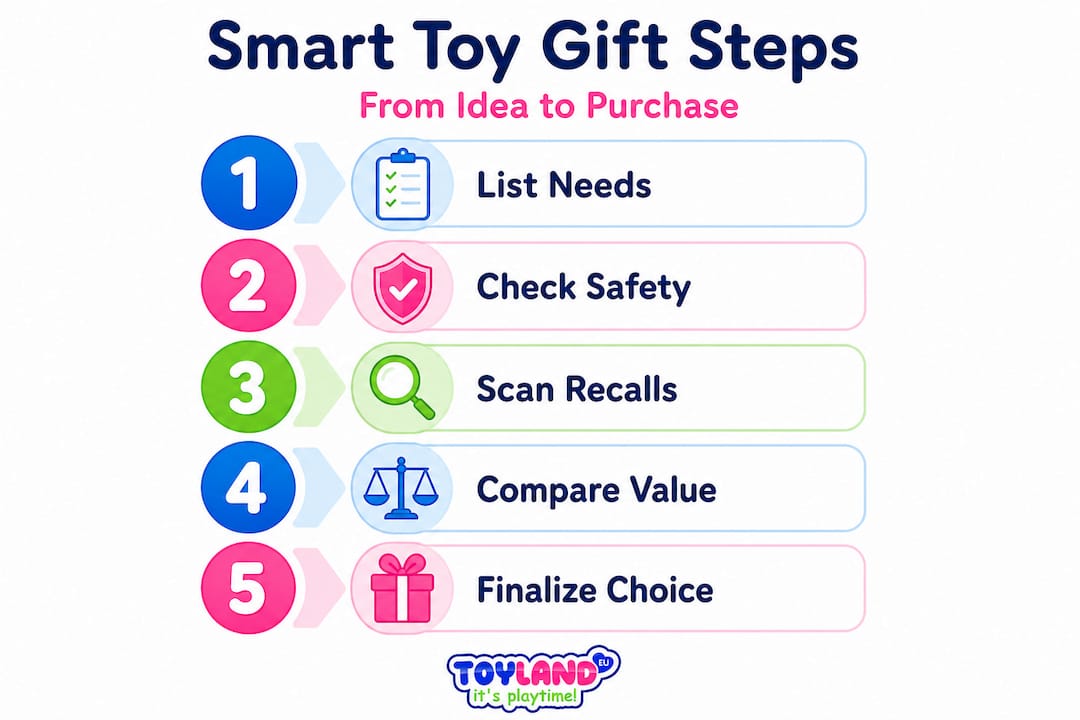
Now that you’re prepared, here’s the actionable workflow from first idea to final purchase.
Think of this as a checklist you run every single time, regardless of the child’s age or the toy category. Consistency is the whole point. You’ll get faster at it after the first two or three uses.
1. Define the child’s unique context Go beyond “she likes dolls.” Think about how she plays: independently or with others, indoors or outdoors, focused building projects or fast-moving imaginative play. That context shapes which dolls, which playsets, and which accessories are actually going to get used.
2. Filter by age-appropriateness first Before evaluating any toy, check its labeled age range against the child’s age and abilities. Age labels and safety warnings serve as developmental and hazard guidance. A toy designed for a 10-year-old may include sharp tools, complex mechanics, or small components that present real risks for younger kids. Never override the label based on assumptions about a child’s maturity.
3. Inspect for common hazards Even age-appropriate toys can carry specific risks depending on the child’s situation. Run through this quick hazard check:
- Small parts (choking risk for under-3s and curious toddlers in the home)
- Magnets (high-powered magnets in toys can be fatal if swallowed)
- Button batteries (require secure, screw-locked compartments)
- Sharp edges or points on painted or stamped metal
- Cord or string longer than 12 inches on toys for younger children
4. Verify the toy has not been recalled This step is non-negotiable. Search the exact product name and manufacturer on the CPSC database or your country’s equivalent. Recalls don’t expire, which means a toy that was recalled three years ago can still appear on store shelves or in online listings.
5. Evaluate educational value, interest match, and durability Once a toy passes the safety filter, assess its actual quality as a gift. Does it align with what the child genuinely enjoys? Will it hold up to repeated use? Does it offer open-ended play, which tends to sustain interest longer than single-function novelty items? These questions matter just as much as price. Understanding what makes a toy truly giftable can make this step much faster with practice.
6. Review return policies and gift-readiness features Before you finalize the cart, confirm the store’s return and exchange window. Check whether the toy is packaged in a way that suits gifting (or if gift wrapping is available). Confirm whether batteries are included or required.
Pro Tip: Never assume a brand-new toy is safe by default. Recalls happen on newly released products too. Always run the product name through a recall check, even on toys you just saw advertised this week.
Safety reminder: Hazard checks and recall verification should be a dedicated step in your workflow every time, not an optional add-on. The majority of toy-related injuries in children are preventable with a consistent pre-purchase review.
| Shopping approach | Typical outcome |
|---|---|
| Browsing without prep | Impulse buys, possible safety gaps, frequent returns |
| Workflow-driven buying | Targeted options, hazard-checked, higher gift satisfaction |
| Price-first shopping | May miss age fit, safety warnings, or recall status |
| Workflow with recall check | Confident purchase, minimized risk, better value |
Critical safety and recall checks before gifting
Among the steps listed above, the recall and safety inspection deserve extra detail for your peace of mind.
A toy recall happens when a product is found to pose an unreasonable risk of injury or death to children. Recalls are issued through agencies like the CPSC in the United States, and they cover everything from choking hazards and toxic coatings to dangerous magnetic components. The critical point that many parents miss: recall checks should happen before gifting, not as an afterthought. Returning a recalled gift after the fact is stressful for everyone, and in worst-case scenarios, it’s a safety failure.
How to run a thorough recall check:
- Visit the CPSC recall database at cpsc.gov and search by product name, brand, or toy category
- Subscribe to email or app-based recall alerts so you get notified automatically when new recalls are issued
- Check the toy’s packaging for current safety certification marks (such as ASTM F963 in the US or EN 71 in Europe)
- Review the product listing on the retailer’s website for any safety notices posted by the seller
- For second-hand or gifted toys, search with extra care since recalled products frequently recirculate through resale channels
Remember: Recalls don’t expire. A toy recalled in 2019 is just as unsafe today. If you’re buying from a resale market, thrift store, or accepting hand-me-downs, the same recall search applies without exception.
The impact of toy recalls on how parents shop is evolving rapidly. More parents in 2026 are using recall alert subscriptions as a routine part of toy buying. Understanding the toy safety recall impact on purchasing decisions can help you recognize what good practice looks like and adopt it quickly.
Safety technology in toys is also advancing. Features like secured battery compartments, non-toxic certified materials, and sensor-based automatic shutoffs are becoming more common. Staying informed about emerging toy safety innovations helps you identify higher-quality options during your workflow.
Pro Tip: Check both recent and older recalls. Toys can be re-boxed, relabeled, or resold years after a recall. A quick two-minute search before any gift purchase is one of the highest-value safety habits you can build.
Making the final cart decision: Value, durability, and returns
After passing all safety and suitability checks, a smart cart decision ensures satisfaction for both child and giver.
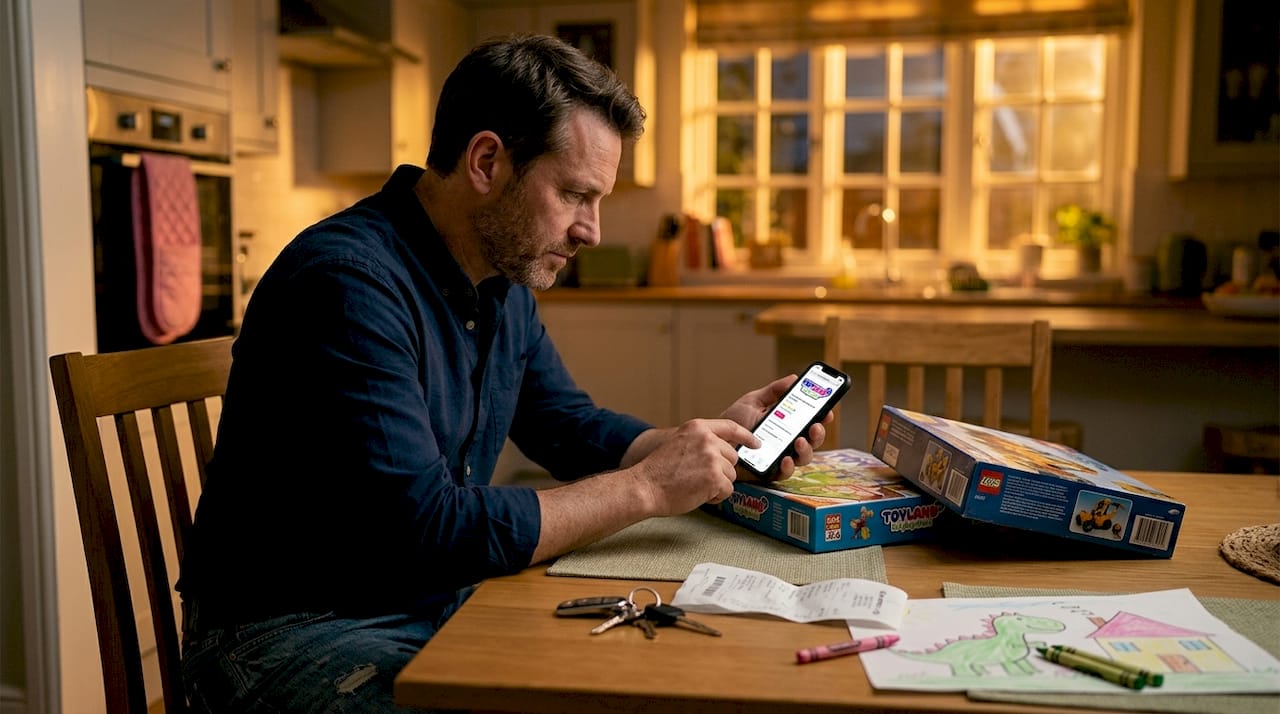
This is the stage where many parents rush because they feel like the hard work is done. But the final review before checkout is where you protect your investment and set up the best possible outcome for the child. A toy that breaks in week one, or that a child simply has no interest in, is a waste of money and a frustration for everyone involved.
Final cart checklist:
- Material quality: Does the toy feel solid? Read customer reviews specifically for durability comments, not just overall star ratings.
- Play lifespan: Single-function toys often lose their appeal quickly. Toys that grow with a child’s skills, like STEM kits, building sets, or creative playsets, tend to deliver more value over time.
- Customer reviews: Sort by most critical first. A pattern of “broke after a week” comments tells you something the overall rating hides.
- Warranty information: Does the manufacturer offer any warranty, even a limited one? This matters more for higher-priced items.
- Return window: Confirm the retailer’s return policy before checking out. Gift purchases often benefit from extended return windows, so check if that option exists.
- Gift receipt: Always include one. It removes the awkward conversation and gives the recipient options if the toy doesn’t fit.
The final cart step should include honest assessments of durability and play likelihood, not just whether it looked appealing in the product photo. Parents who skip this step report more returns, more disappointment, and more spend overall.
| Toy type | Typical durability | Play lifespan | Return friendliness |
|---|---|---|---|
| RC vehicles | Medium (depends on brand) | High with recharging | Varies by retailer |
| STEM / robotics kits | High | Very high (skill-building) | Usually good |
| Plush toys | High | Medium to high | Generally easy |
| Single-function gadget toys | Low to medium | Short | Check policy carefully |
| Building sets / blocks | Very high | Very high | Usually excellent |
One additional step worth taking: check whether the toy needs batteries, a charger, or assembly, and whether those things are included or clearly disclosed. Arriving at a gift-opening moment without the right batteries is a minor disaster that a 30-second product check could easily prevent.
Pro Tip: Prioritize toys with both strong play potential and at least a limited warranty. These two features together give you the best chance at a gift that lasts, and a fallback if something goes wrong. For more on balancing fun with learning value, revisit our guide on how to gift delight and educate through smarter toy choices.
What most parents miss about toy gift buying workflows
You now know the mechanics, but here’s what experience reveals about sticking with a thoughtful workflow.
Here’s a truth worth saying directly: most parents who feel burned by bad toy purchases didn’t buy carelessly. They just bought quickly. The instinct to save time by skipping steps is completely understandable. But in toy gifting, the shortcuts almost always create more work in the end: returns, disappointed kids, safety scares, and duplicate gifts.
What a consistent workflow actually does is compress future decision-making. The first time you run through it, it might take 20 minutes. By the fifth time, it takes five. The steps become automatic, and you start to recognize good toy choices faster because you’ve trained yourself on what the signals look like.
There’s also a mindset shift worth making. Many parents treat toy shopping as a task to complete rather than a decision to make well. The difference is significant. A completed task just means you bought something. A decision made well means you bought the right thing for this child, at this age, with this kind of play style, with verified safety and a solid return option.
The most memorable gifts are rarely the most expensive ones. They’re the ones that show you paid attention. A specific toy that matches a child’s exact current obsession, bought safely and thoughtfully, will be played with far longer than a flashy item that cost three times as much but had nothing to do with what the child actually loves. Checking the giftable toy criteria before you buy is one concrete way to make that connection between child and gift happen reliably.
Treat the workflow as a permanent part of how you shop for kids, not a one-time experiment. It will save you money, reduce stress, and make you the gift-giver that children and parents genuinely look forward to.
Streamline your toy gifting with ToylandEU
Ready to put the workflow into action? ToylandEU makes it easier to follow through on every step you’ve just learned.
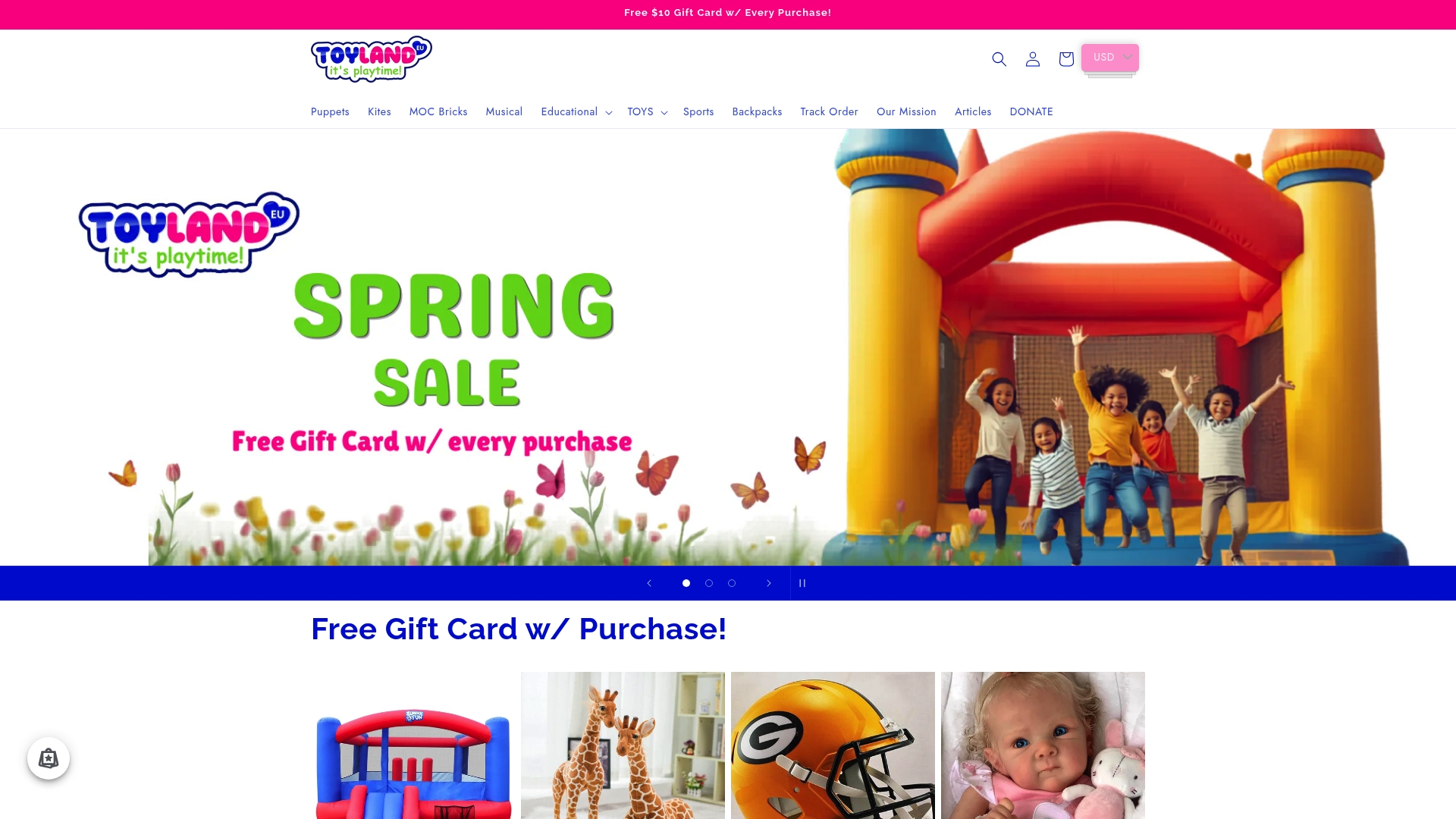
At ToylandEU, we’ve curated a catalog of over 30,000 toys organized by age group, interest category, and play type, so the filtering work you’d normally do manually is already done for you. Whether you’re shopping for a hands-on builder who would thrive with a STEM robotics car kit or looking for an active outdoor gift like a RC gesture-controlled stunt car, our product pages include age guidance, safety details, and return information upfront. Free worldwide shipping, competitive pricing, and a broad selection mean your workflow can go from checklist to checkout without the usual friction. Let ToylandEU be the practical partner behind every confident gift you give.
Frequently asked questions
How do I check if a toy has been recalled before gifting?
Search the toy on the Consumer Product Safety Commission website or subscribe to recall alerts from agencies in your country. As noted in the recall guidance from CHLA, recalls never expire, so always check regardless of when the toy was manufactured.
What is the most important safety check when buying toys for kids under 3?
Always avoid toys with small parts, magnets, or button batteries, since these are leading choking and ingestion hazards for children under 3. Age labels and hazard warnings exist precisely to flag these risks before purchase.
Why should I check return policies before buying a toy as a gift?
Return policies let you recover value if a toy turns out to be unsuitable, defective, or duplicated. The Mumsnet Toys and Play 2024 report confirms that return and warranty readiness is a critical final step in any confident purchase decision.
How can I find out if a toy’s age recommendation is right for my child?
Review the manufacturer’s age grading alongside your own knowledge of the child’s developmental abilities and play environment. Toy safety guidelines recommend treating age labels as both developmental and hazard guidance, not just a general suggestion.
What is the single best way to save time buying safe toy gifts?
Follow a repeatable gift-buying workflow every time you shop so that each step, from safety check to cart decision, becomes faster and more automatic. A consistent checklist eliminates hesitation and prevents the rushed decisions that lead to returns and disappointment.