

What Music Calms Children: A Parent's Practical Guide
TL;DR:
- Calming music for children features a slow tempo, soft instruments, and a predictable structure that promote relaxation. Consistent use of familiar music at the same time daily strengthens the calming response over time.
Calming music for children is defined as music with a slow tempo, simple melodic patterns, and minimal or no lyrics that actively reduce anxiety and promote physical relaxation. Knowing what music calms children gives you a real tool for bedtime struggles, meltdowns, and stressful transitions. The science is clear: slow, predictable rhythms lower cortisol and shift the nervous system from a stressed state to a calm one. This guide breaks down exactly which musical qualities work, how to match music to your child’s age, and how to build a routine that sticks.
Quick Summary
The most effective calming music for children features a tempo of 60–80 BPM, instrumental sounds like piano or cello, and predictable, repetitive structure. Familiarity matters as much as genre. Consistency in when and how you play the music builds the strongest calming response over time.
TL;DR
- Aim for 60–80 BPM, no heavy percussion, and soft instruments.
- Toddlers respond best to a parent’s live singing voice.
- School-age kids do well with instrumental or nature sound playlists.
- Teens and tweens prefer lo-fi or acoustic versions of familiar songs.
- Repeat the same playlist at the same time each day for the best results.
Table of Contents
- What musical characteristics make music calming for children?
- How to choose calming music by age group
- How to build a calming music routine
- Troubleshooting when music is not working
- Key Takeaways
- Perspective
- Where to find calming tools for kids
- FAQ
What musical characteristics make music calming for children?
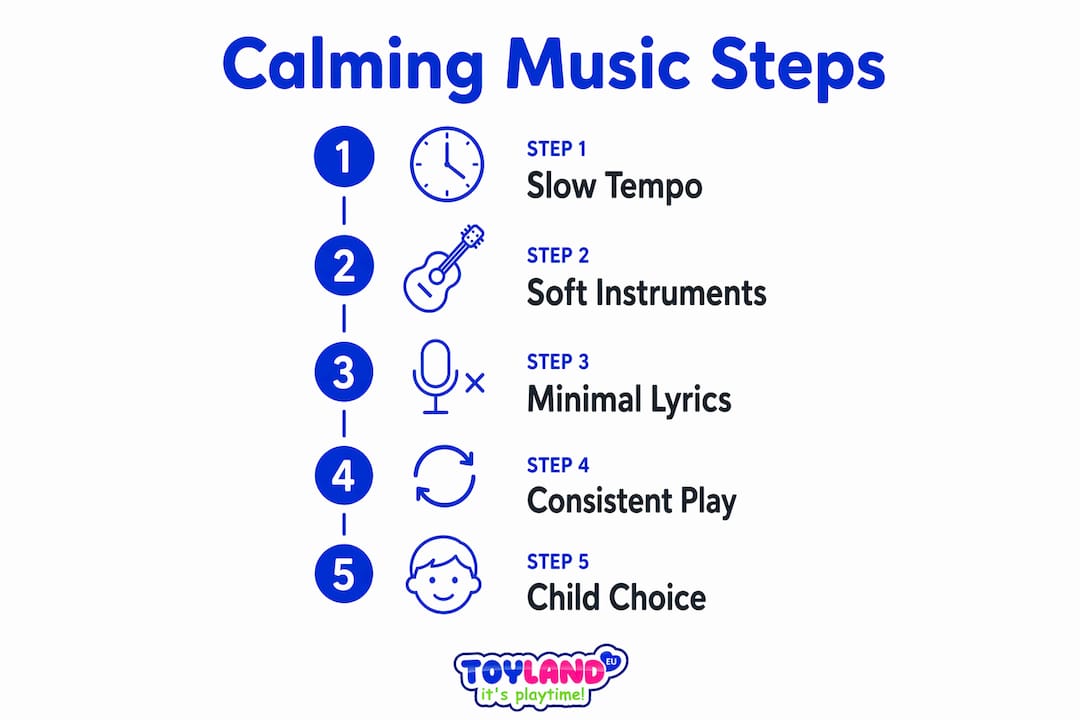
The single most important factor in soothing music for kids is tempo. 60–80 BPM mirrors a healthy resting heart rate, which signals the body to slow down. Music at this pace gently pulls a child’s physiology toward calm rather than excitement.
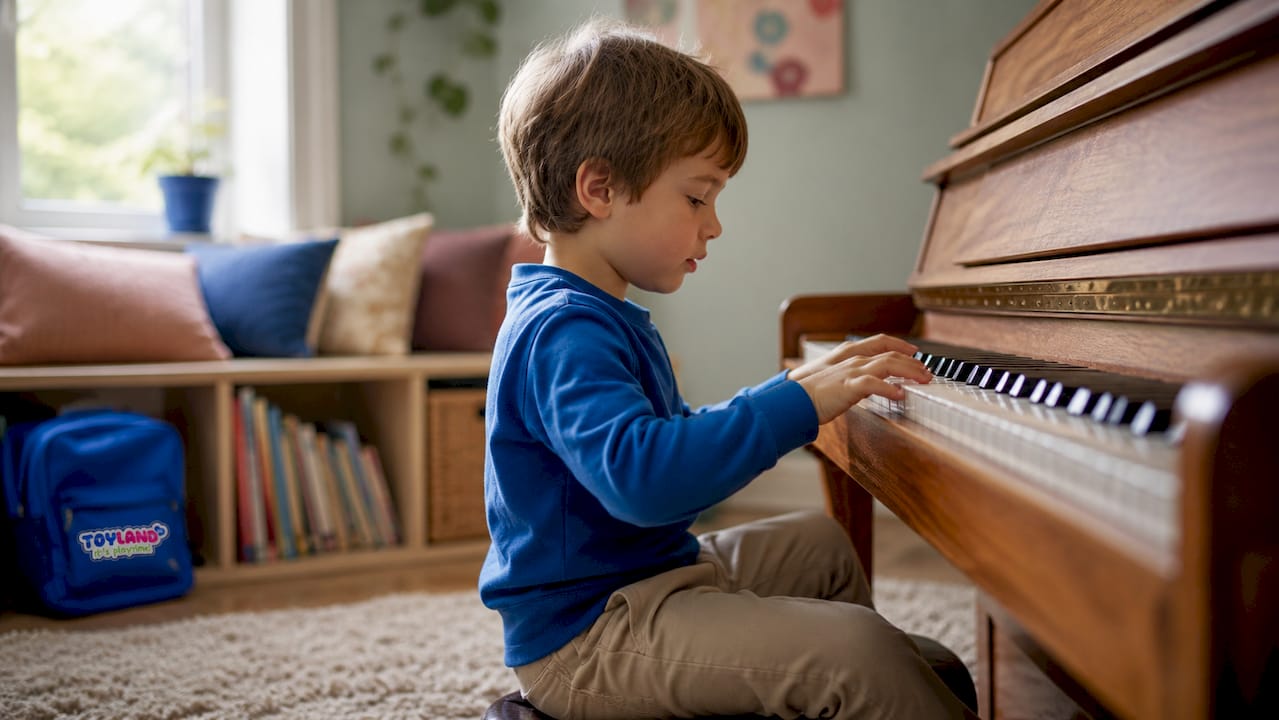
Instrumentation matters just as much. Soft piano, cello, violin, and ocean waves calm without overwhelming a child’s senses. Heavy percussion and distorted sounds do the opposite. They activate the nervous system rather than quiet it.
Lyrics are a hidden source of overstimulation. When a child hears words, the brain works to process language. That cognitive load competes with relaxation. Instrumental music sidesteps this entirely, letting the body respond to sound without the mind racing to keep up.
Predictability is the fourth pillar. Children feel safe when they know what comes next. A melody that repeats in a familiar pattern reassures the nervous system. Surprise and unpredictability in music can spike alertness, which is the opposite of what you want at bedtime or during a stressful moment.
Key qualities to look for in calming songs for children:
- Tempo: 60–80 BPM, steady and unhurried
- Instruments: Piano, cello, flute, acoustic guitar, or nature sounds
- Lyrics: None, or minimal and simple
- Structure: Repetitive, predictable phrases with no sudden shifts
- Volume: Soft and consistent, never jarring
Pro Tip: If you are unsure about a song’s tempo, tap your finger along to the beat for 15 seconds and multiply by four. That gives you the BPM.
How to choose calming music by age group
Age shapes how a child responds to sound. A playlist that works for a seven-year-old will frustrate a toddler, and vice versa. Matching music to your child’s developmental stage makes the calming effect much stronger.
-
Toddlers (ages 0–3). Live singing by a parent is more effective than any recording at this age. A caregiver’s voice acts as a safety cue. The child recognizes it as a signal that they are protected. Simple lullabies like “Twinkle Twinkle Little Star” or “Hush Little Baby” work because they are short, repetitive, and familiar. If you cannot be present, recording yourself singing a favorite lullaby and playing it back gives a similar effect.
-
Preschoolers (ages 3–5). Children at this stage still respond strongly to a parent’s voice but can also benefit from gentle instrumental tracks. Nature sounds like rain or a babbling brook work well. Keep the playlist short and consistent so the child learns to associate those specific sounds with rest.
-
School-age children (ages 6–12). Instrumental and neoclassical pieces support focus and relaxation better than lyrical music at this stage. Lo-fi instrumental tracks, soft classical piano, or nature sound playlists are strong choices. Involving your child in picking the playlist increases buy-in and makes the music feel personal rather than imposed.
-
Tweens and teens (ages 12+). Older kids often resist music that feels “babyish.” Acoustic versions of songs they already like, lo-fi hip-hop instrumentals, or ambient music tend to land well. The key is that the music stays below 80 BPM and avoids heavy bass or sudden volume spikes.
-
All ages. Consistency in song choice builds stronger calming associations over time. The same playlist used repeatedly becomes a reliable trigger for relaxation, regardless of age.
How to build a calming music routine
A music routine works because the brain learns to associate specific sounds with specific states. Consistent musical cues paired with predictable timing create a powerful signal for relaxation and sleep preparation. The music does not have to be perfect. The routine does.
Practical steps for building a routine that works:
- Pick two or three anchor moments. Bedtime, after school, and before homework are the most effective windows. These are natural transition points where anxiety often spikes.
- Keep volume low and steady. Soft background volume is more calming than music played at a conversational level. Sudden volume changes activate the startle response, which undoes the calming effect.
- Pair music with a physical cue. Rocking, slow breathing, or gentle stretching alongside the music reinforces the relaxation signal. The body and the sound work together.
- Use the same playlist every time. Familiarity is the mechanism. Rotating new songs constantly prevents the brain from building a strong association with rest.
- Start the music before the stressful moment. Play it five minutes before bedtime begins, not after the meltdown starts. Prevention is more effective than intervention.
Pro Tip: Record a short playlist of three to five songs and save it with a name your child picks. Letting them name it gives them ownership, which increases cooperation.
Troubleshooting when music is not working
Not every song works for every child. If the music seems to increase agitation rather than reduce it, the problem is usually one of three things: tempo, instrumentation, or volume.
Watch for these signs that the music is not calming your child:
- Increased fidgeting or restlessness after the music starts
- Covering ears or asking for the music to stop
- Louder or more frequent vocalizations
- Difficulty settling even after several minutes
Fast tempos, sudden volume changes, and heavy percussion activate the nervous system rather than quiet it. If your child is reacting this way, switch to a slower track with softer instruments immediately.
Minor key music is worth trying when a child is highly anxious. Minor keys can validate a child’s emotional state better than bright, cheerful major key music. A child who feels sad or scared may resist upbeat music because it does not match how they feel. A gentle minor key piece meets them where they are.
Patience is part of the process. Consistency builds effectiveness over days and weeks, not minutes. Give a new playlist at least five to seven sessions before deciding it does not work.
Key Takeaways
Calming music for children works best when it combines a slow tempo, soft instrumentation, and consistent repetition across a predictable daily routine.
| Point | Details |
|---|---|
| Target 60–80 BPM | This tempo mirrors a resting heart rate and signals the body to slow down. |
| Choose instrumental tracks | Lyrics create cognitive load; soft piano, cello, or nature sounds calm without distraction. |
| Match music to age | Toddlers need a parent’s live voice; older kids respond better to lo-fi or neoclassical playlists. |
| Build a consistent routine | Playing the same music at the same time each day trains the brain to associate it with rest. |
| Watch for negative signals | Fidgeting or agitation means the tempo or instrumentation needs adjustment. |
What I have learned from years of watching music work on kids
The conventional advice says to pick the “right genre.” I think that misses the point entirely. Genre is almost irrelevant. What matters is predictability and your presence.
I have watched a parent hum an off-key lullaby completely settle a toddler in under two minutes, while a perfectly curated playlist on a speaker did nothing. The child was not responding to the music. The child was responding to the parent. That distinction changes everything about how you approach this.
For school-age kids, the most underrated move is letting them build the playlist themselves. A ten-year-old who picks her own lo-fi tracks is far more likely to sit quietly with them than one who is handed a playlist by an adult. Ownership creates cooperation.
The other thing I have noticed is that parents give up too fast. They try a playlist twice, the child does not settle, and they conclude music does not work for their kid. The calming association builds over time. It needs repetition. Five sessions is the minimum before you draw any conclusions.
My honest recommendation: start with your own voice, keep the tempo slow, and play the same three songs every night for two weeks. You will be surprised how quickly the routine takes hold.
— Thane Holland
Calming tools for kids from Toylandeu™

Music works best when it is part of a broader calm-down environment. Toylandeu™ carries a range of products that pair naturally with a soothing music routine, from plush toys that play gentle melodies to creative kits that channel anxious energy into focused, quiet activity.
The Montessori Drawing Kit is a strong companion to any calming playlist. Art and music together engage the senses without overstimulating them. For younger children, the colorful drawing scroll kit gives hands and minds something gentle to focus on while the music plays. Toylandeu™ ships worldwide with free delivery, so finding the right calming tool for your child is straightforward wherever you are.
FAQ
What tempo is best for calming music for kids?
The ideal tempo is 60–80 BPM, which mirrors a healthy resting heart rate and helps reduce physical stress responses in children.
Is live singing better than recorded music for toddlers?
Yes. A parent’s live voice acts as a safety cue for children under five, producing a stronger calming response than any recorded track.
Should calming music have lyrics?
Instrumental music is generally better for relaxation. Lyrics require the brain to process language, which competes with the body’s ability to settle down.
How long does it take for a music routine to work?
Most children need five to seven consistent sessions before the calming association becomes reliable. Give any new playlist at least one to two weeks before adjusting.
What are signs that music is making my child more anxious?
Watch for increased fidgeting, ear covering, louder vocalizations, or difficulty settling. These signals mean the tempo is too fast or the instrumentation is too stimulating.
Recommended Reads
- How Music Calms Children: A Parent’s 2026 Guide
- Anxiety Toys That Actually Work: A Practical Guide
- Top 4 Best Calm Music Marketplaces for Kids 2026