

What Colors Calm Children: A Parent's 2026 Guide
TL;DR:
- Cool, soft hues like blue, green, and lavender naturally lower children’s heart rates and promote emotional relaxation. These colors directly influence the nervous system, especially during early childhood development, making environment choices crucial for calming effects. Warm and saturated colors tend to overstimulate and should be limited in rest and sleep spaces to support healthy emotional regulation.
Soft blues, muted greens, and gentle lavenders are the colors most proven to calm children, reducing physiological arousal and supporting emotional relaxation. Color psychology for children, a field grounded in developmental neuroscience, shows that cool-toned hues lower heart rate and neural activity in ways that warm, saturated colors simply cannot. Sources including Positive Kids, DosJunior, and PatPat’s child development guides all point to the same conclusion: the colors surrounding your child are not decoration. They are a direct input into your child’s nervous system.
Quick summary
The best colors for calming kids are soft blue, sage green, and muted lavender. These cool tones lower heart rate, support melatonin production, and reduce nervous system stimulation. Warm saturated colors like red and bright yellow do the opposite. Lighting, saturation level, and your child’s age all shape how strongly any color affects their mood.
Tl;dr
- Calming colors: soft blue, sage green, gentle lavender
- Stimulating colors to limit: red, bright orange, neon yellow
- Key rule: muted shades soothe; electric or neon versions overstimulate
- Beyond walls: pajamas, bedding, and toys all carry color signals
- Age matters: children under 6–7 show the strongest physiological responses to color
Table of contents
- Which Colors Are Scientifically Proven to Calm Children?
- How Age and Development Shape Color Reactions
- How to Apply Calming Colors Beyond Paint
- Calming vs. Stimulating Colors: How to Balance Both
- Key Takeaways
- Perspective
- Shop Calming Toys for Kids at Toylandeu™
- FAQ
Which colors are scientifically proven to calm children?
Soft blues, sage greens, and gentle lavenders are scientifically shown to lower physiological arousal, heart rate, and neural activity in children. These are not just aesthetic preferences. They are neurological events. Color reaches the limbic system, the brain’s emotional processing center, before rational thought even engages. For children whose language centers are still developing, color provides non-verbal psychological safety in a way words cannot.
Here is what the research shows about specific hues:
- Soft blue is the single most recommended bedroom color for children. Blue promotes melatonin production and lowers heart rate, making it the strongest sleep-supporting color available.
- Sage green mimics natural environments, which the nervous system reads as safe. Muted greens reduce tension without making a space feel cold or sterile.
- Gentle lavender sits at the intersection of blue and pink, carrying the calming properties of blue while feeling warmer and more inviting for younger children.
- Warm neutrals like soft beige and warm white do not actively calm, but they do not stimulate either. They work well as background tones that let accent colors do their job.
The saturation level of any color matters as much as the hue itself. Electric or neon versions of calming colors can overstimulate rather than soothe. A neon blue is not a calming blue. Muted, dusty shades are the ones that actually work.
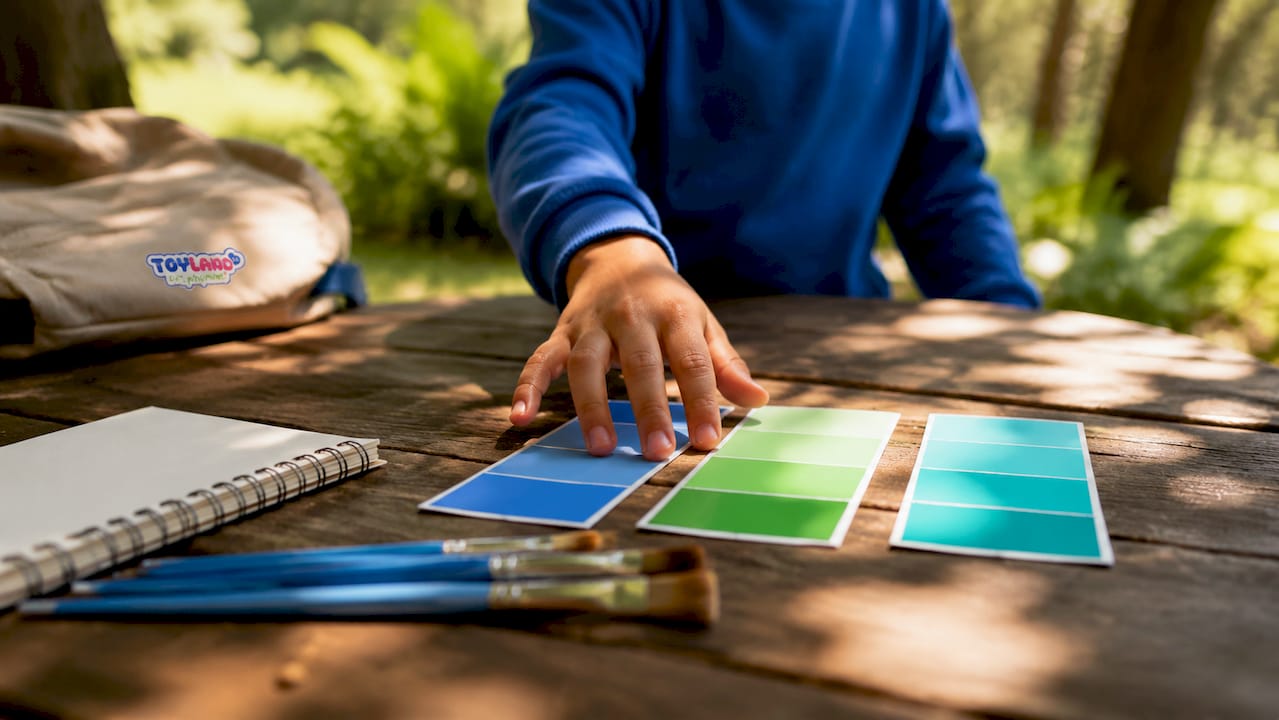
Pro Tip: When choosing paint, hold the swatch against a white wall in your child’s room at three different times of day. Morning light, afternoon sun, and evening lamp light can each shift a color’s perceived warmth dramatically.
How do age and development shape a child’s color reactions?
Color vision fully matures within the first 4–6 months of life, which means environmental color exposure begins shaping the nervous system far earlier than most parents realize. The younger the child, the more immediate and physical the color response tends to be.
Here is how color sensitivity shifts across developmental stages:
- Infants (0–18 months): High-contrast patterns matter more than hue at this stage. Soft blues and greens in the room environment still influence sleep quality, even if the infant cannot consciously perceive color nuance.
- Toddlers (18 months–3 years): Physiological responses to color are at their peak. Bright reds and oranges in a toddler’s bedroom are directly linked to difficulty settling and shorter sleep cycles.
- Preschool age (3–6 years): Children begin associating colors with emotions. Lavender and soft green in a calm-down corner can become a reliable emotional anchor during tantrums or overstimulation.
- Early school age (6–10 years): Color preferences shift around ages 6–7, with cultural and social influences starting to compete with physiological responses. A child who loved lavender at age 4 may resist it at age 8. Work with their preferences while keeping saturation levels muted.
- Tweens (10–12 years): Personal identity drives color choices more strongly. Introduce calming colors through accessories and bedding rather than wall paint, giving the child ownership of their space.
The practical takeaway is that calming color strategies work best when they are age-calibrated. A sage green nursery is a great start. A sage green accent wall in a 10-year-old’s room, paired with their chosen bedding, is a smarter long-term approach.
How can parents apply calming colors beyond paint?
Walls are just the beginning. A consistent calm color palette across a child’s environment, including their clothing, bedding, and toys, creates visual predictability that actively supports emotional regulation. Think of it as building a color language your child’s nervous system learns to trust.
Practical ways to extend calming colors beyond paint:
- Lighting: Natural light enhances the calming effect of blues and greens, while fluorescent or cool white artificial lighting can make those same colors feel clinical. Use warm-toned bulbs (2700K–3000K) in children’s bedrooms to keep the atmosphere soft.
- Pajamas and bedding: Calm-colored pajamas psychologically signal bedtime and support the transition from active to restful states. Soft blue or lavender pajamas worn consistently become part of the sleep ritual.
- Toys and play areas: The colors of toys matter more than most parents expect. Research on toy color choices and child development shows that play environments with muted, cool-toned toys reduce arousal compared to spaces dominated by bright primary colors.
- Avoid neon accents: Even one or two neon-colored items in a bedroom can undercut the calming effect of the entire room. Swap electric shades for dusty or muted versions of the same hue.
Pro Tip: Therapists use color mood journals with children to help them map emotions visually. You can adapt this at home by letting your child pick a “calm color” for their pillow or stuffed animal. It gives them agency and reinforces the color’s emotional meaning.
Calming vs. stimulating colors: how to balance both
Warm, saturated colors are not the enemy. Reds and bright oranges elevate heart rate and stimulate the nervous system, which is genuinely useful in a playroom or creative space. The problem arises when those colors dominate a bedroom or a space meant for winding down. Warm yellows inspire creativity and engagement but should be used in moderation to avoid overstimulation.
The goal is not an all-blue, all-green world. It is intentional placement.
| Color | Effect on Children | Best Used In |
|---|---|---|
| Soft blue | Lowers heart rate, supports melatonin | Bedrooms, reading nooks |
| Sage green | Reduces tension, mimics nature | Bedrooms, calm-down corners |
| Gentle lavender | Soothes, bridges calm and warmth | Nurseries, bedrooms |
| Warm yellow | Boosts energy and creativity | Playrooms, art spaces |
| Red / bright orange | Elevates heart rate, increases alertness | Active play areas only |
| Warm neutral (beige, cream) | Neutral baseline, no stimulation | Any room as a background tone |
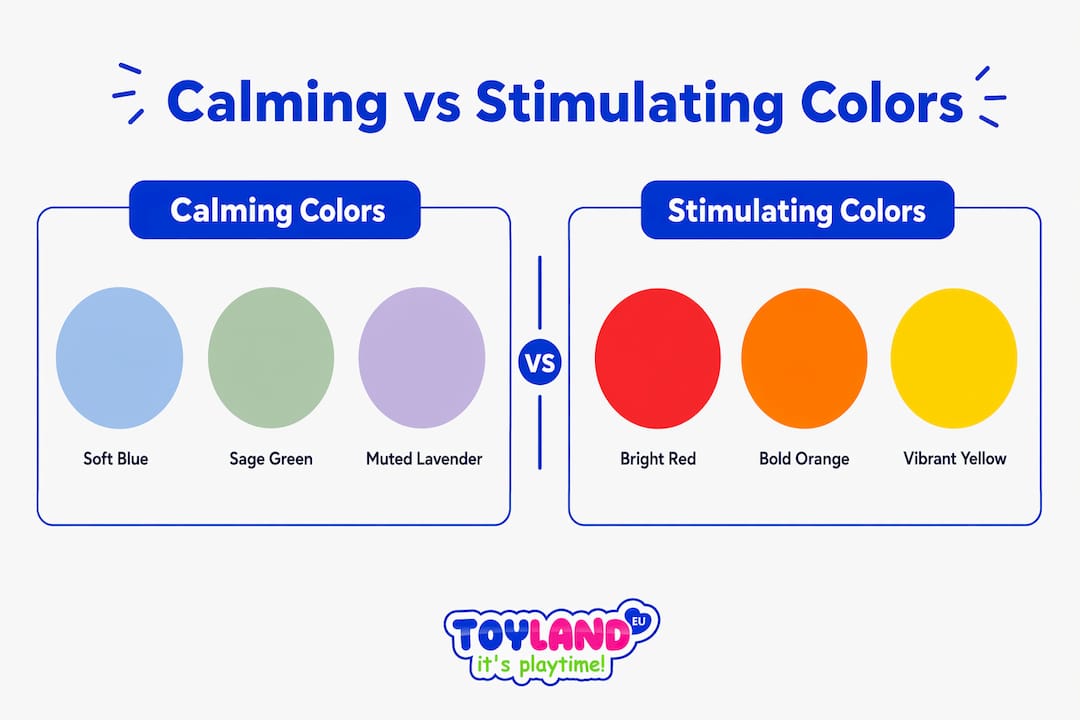
The most effective approach is to use calming hues as the dominant color in sleep and rest spaces, then allow warmer tones as accents in areas designed for activity. A playroom with yellow walls and a blue reading corner gives children both energy and a clear visual cue for when it is time to slow down. You can explore more on color psychology for children to build a room-by-room strategy.
Key takeaways
The most effective calming colors for children are soft blue, sage green, and gentle lavender because they directly lower physiological arousal, support melatonin production, and create visual predictability that helps emotional regulation.
| Point | Details |
|---|---|
| Blue is the top sleep color | Soft blue promotes melatonin and lowers heart rate, making it the strongest bedroom choice. |
| Saturation level is critical | Muted, dusty shades soothe; neon or electric versions of the same color overstimulate. |
| Age shapes color response | Children under 6–7 show the strongest physiological reactions; older kids need more input on choices. |
| Color extends beyond walls | Pajamas, bedding, and toys all carry color signals that reinforce or undercut the room environment. |
| Balance warm and cool tones | Reserve stimulating colors like red and bright yellow for active play spaces, not bedrooms. |
What i have learned after years of watching parents get this wrong
Most parents I talk to make the same mistake: they pick a color they love, not a color that works. A deep teal looks stunning on a Pinterest board. In a north-facing bedroom under a cool LED bulb, it reads as cold and slightly anxious. The child does not sleep well, and the parent blames the mattress.
The second mistake is treating calming colors as a one-time decision. Color is a system. A sage green wall paired with bright red toy bins and a neon orange lamp is not a calming room. It is a green wall in a stimulating room. The whole environment has to speak the same language.
What actually works, in my experience, is starting with the bedding and pajamas before touching the walls. Those are low-cost, reversible, and they teach you quickly how your specific child responds to color cues. If soft blue pajamas and a lavender pillow start making bedtime smoother within two weeks, you have your answer. Then you paint.
The research from Positive Kids and DosJunior confirms what observant parents already sense: color is not background noise. For a child who cannot yet say “I feel overwhelmed,” a muted green room is a sentence they can feel.
— Thane Holland
Shop calming toys for kids at toylandeu™
Color does not stop at the bedroom wall. The toys your child plays with every day carry their own color signals, and choosing toys in muted, developmentally appropriate palettes is one of the easiest ways to extend a calming environment into playtime.

Toylandeu™ carries over 30,000 toys across every category, from STEM kits to dolls to RC vehicles, with options that fit naturally into a calming color strategy for kids. If you are looking for a toy that engages without overstimulating, the Blue Eyes BJD Doll is a beautiful example of a toy built around soft, soothing tones that align with the color principles in this article. Toylandeu™ ships worldwide with free delivery, so building a calming play environment for your child is one order away.
FAQ
What colors calm children the most?
Soft blue, sage green, and gentle lavender are the most effective calming colors for children. These cool-toned hues lower heart rate and support melatonin production, making them ideal for bedrooms and rest spaces.
Which colors reduce anxiety in children at bedtime?
Blue is the single strongest color for reducing bedtime anxiety in children. It directly promotes melatonin production and lowers physiological arousal, supporting the transition to sleep.
Can the wrong color in a bedroom affect a child’s sleep?
Yes. Saturated warm colors like red and bright orange elevate heart rate and stimulate the nervous system, making it harder for children under age 10 to settle and sleep.
Does color saturation matter as much as the color itself?
Saturation matters enormously. A neon blue overstimulates the nervous system, while a muted, dusty blue soothes it. Always choose muted or pastel versions of calming hues for children’s rest spaces.
At what age do children start responding to calming colors?
Color vision matures within the first 4–6 months of life, so environmental color begins influencing a child’s nervous system in infancy. Physiological responses to calming colors are strongest before age 6–7.