

How Music Affects Kids: Development Guide for Parents
TL;DR:
- Music actively enhances children’s cognitive, emotional, and social skills through structured, group, and active participation. Rhythmic, beat-driven music and early engagement improve executive functions like self-control and working memory, supporting school readiness. Consistent, joyful musical activities at home and in groups foster self-regulation and social bonds without requiring formal lessons.
Music is one of the most powerful tools for child development, directly shaping cognitive skills, emotional regulation, and social behavior from infancy through early childhood. Research published in 2026 confirms that structured music activities improve executive functions including self-control, working memory, and inhibitory control in children as young as age 4. The impact of music on children goes far beyond entertainment. Active participation in singing, rhythm, and group music making builds the neural architecture children need for school readiness and lifelong learning. Understanding how music affects kids gives parents and educators a concrete, research-backed path to support growth through play.
How does music influence cognitive development in children?
Music engages multiple brain networks at the same time, making it uniquely effective for building cognitive skills. Active music engagement fires neural systems supporting attention, memory, and coordination simultaneously. That multisensory demand is what separates music from most other childhood activities.
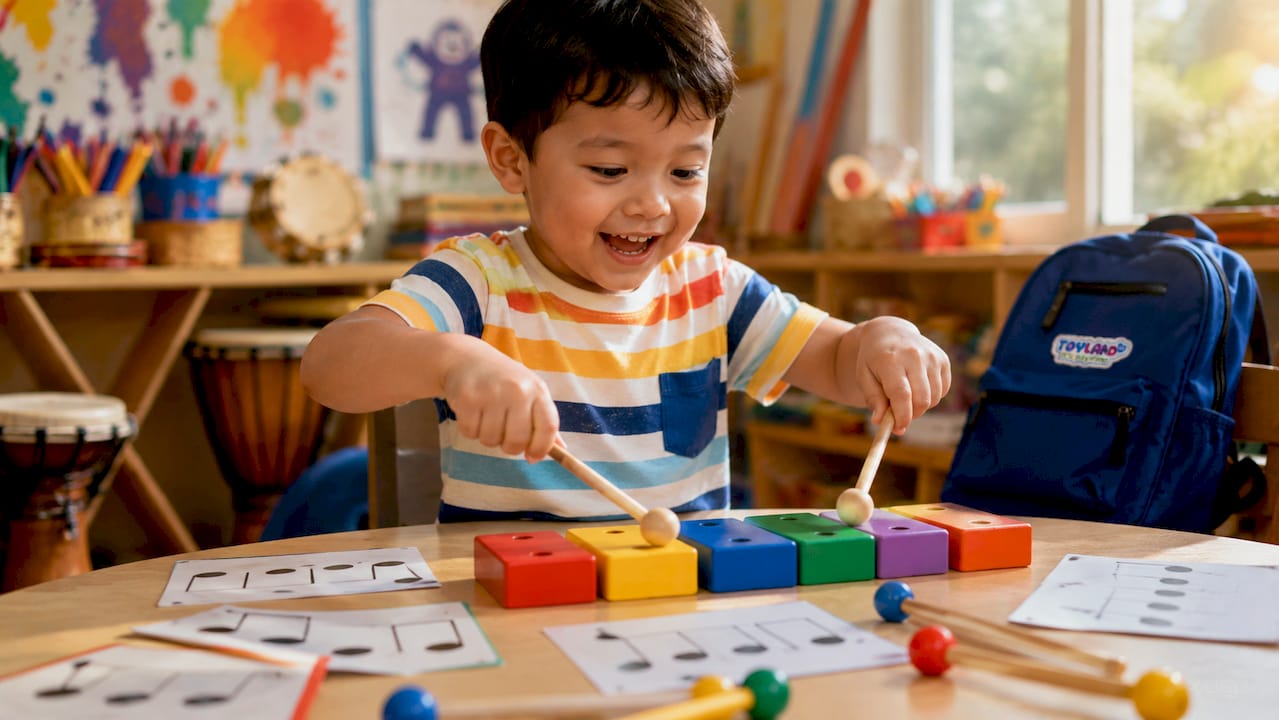
An 8-week percussion and rhythm-based program produced effect sizes from 0.62 to 1.12 for self-control in children aged 4–5, with percussion training exceeding 1.0 for specific self-control components. Effect sizes above 1.0 are considered large in developmental research, meaning the gains were substantial and measurable.
Early music training before age 7 also shapes academic outcomes. Musical training before age seven builds positive study attitudes that improve working memory, which then links directly to stronger math performance. The pathway runs from music to attitude to memory to math scores, not from raw talent alone.
Pro Tip: Start rhythm activities before formal schooling. Clapping games, simple drums, and call-and-response songs at ages 3–5 build the executive function foundation that predicts school readiness.
Cognitive benefits at a glance
| Skill | How music builds it |
|---|---|
| Self-control | Rhythm following requires impulse inhibition and sustained attention |
| Working memory | Tracking melody and beat trains short-term memory systems |
| Inhibitory control | Stopping and starting on cue in music games strengthens response control |
| Math readiness | Study attitudes formed through music training mediate math performance gains |
| Attention | Multisensory processing in music strengthens focus networks across tasks |
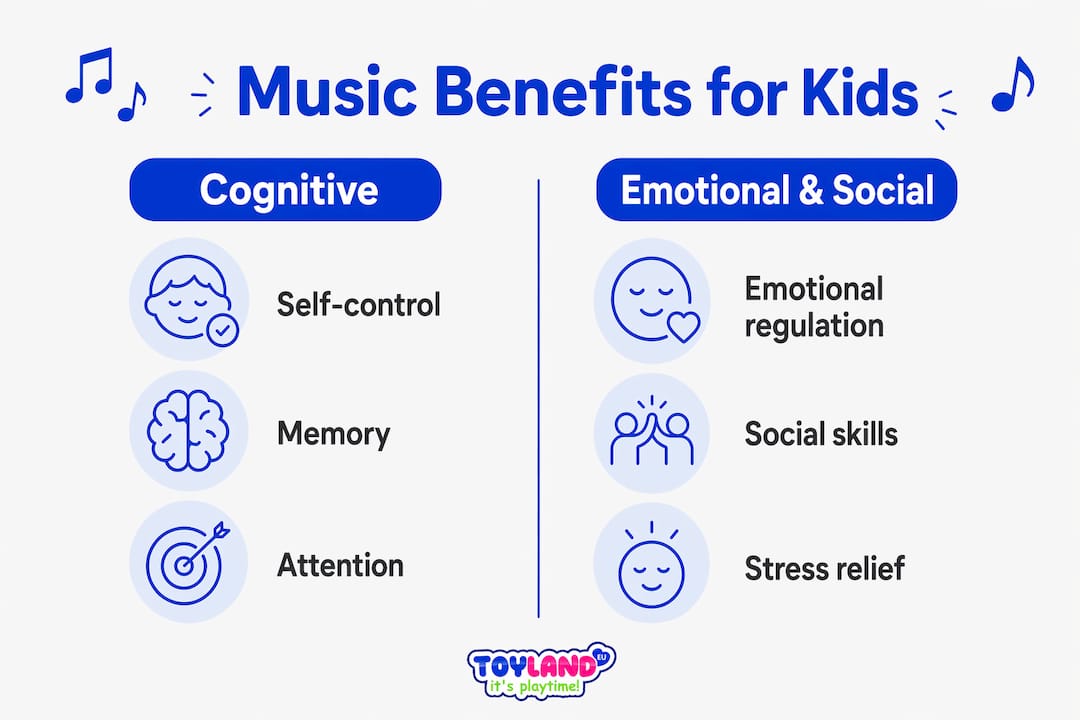
What emotional and social benefits does music provide for kids?
Music builds emotional regulation and social skills through shared experience and synchronized movement. A study of 1,582 parents found that a positive home musical environment correlates with stronger parent-child intimacy and measurably higher pro-social behaviors in children aged 3–6. The mechanism runs through emotional regulation: children who feel emotionally secure through music are more cooperative and less impulsive.
Musical synchrony during group activities is especially powerful. Group music making fosters a sense of community, reduces impulsive behavior, and strengthens social bonds between children. When kids clap, sing, or play instruments together, they practice reading social cues and matching their actions to others in real time.
Key emotional and social benefits of regular music engagement include:
- Emotional regulation: Children learn to manage frustration and excitement through the structured rise and fall of musical activities.
- Reduced anxiety: Familiar songs and rhythms create predictability, which lowers stress responses in young children.
- Cooperation: Group music requires turn-taking and listening, two skills that transfer directly to classroom and peer settings.
- Parent-child bonding: Singing and dancing together at home strengthens attachment and communication.
- Community feeling: Shared musical experiences build a sense of belonging that supports healthy identity development.
Pro Tip: Sing the same songs at consistent times, such as a morning wake-up song or a bedtime lullaby. Predictable musical routines reduce anxiety and signal transitions, which helps children self-regulate throughout the day.
Do different music styles affect children’s development differently?
Not all music produces equal developmental gains. Latin music styles showed the most consistent improvements in inhibitory control and working memory among preschoolers, with benefits that held at follow-up assessments. The rhythmic complexity and strong beat structure of Latin genres appear to engage executive function networks more intensely than other styles.
Active participation also matters more than passive listening. Structured interventions involving singing, dancing, or instrument playing yield stronger cognitive and social improvements than background music alone. Passive listening offers limited developmental impact. The child’s body and attention must be engaged for the brain to benefit.
Music style and engagement comparison
| Music type or activity | Primary developmental benefit | Engagement level required |
|---|---|---|
| Latin music (rhythmic, structured) | Inhibitory control, working memory | Active listening or movement |
| Percussion and rhythm games | Self-control, persistence | Active participation |
| Lullabies and maternal singing | Speech perception, linguistic readiness | Passive reception (infants) |
| Group singing or choral activities | Social bonding, cooperation | Active participation |
| Background music (unstructured) | Minimal cognitive impact | Passive |
Maternal singing deserves special mention for infants. Newborn brains show heightened activation in right hemisphere regions for speech perception in response to song compared to humming or speech alone. This means singing to a newborn is not just comforting. It is building the neural networks for language before the child can speak.
How can parents and educators incorporate music into kids’ daily routines?
Practical music integration does not require formal training or expensive instruments. The most effective approach is consistent, joyful, and active. Research confirms that fun is essential to motivating children’s natural exploration of complex cognitive tasks through music.
- Build daily musical moments. Sing during meals, car rides, and bedtime. Consistency matters more than duration. Even 10 minutes of active singing daily builds habit and neural reinforcement.
- Choose rhythmically strong music. Opt for music with a clear, steady beat for movement activities. Latin, African percussion, and children’s folk music all offer strong rhythmic structure that supports executive function gains.
- Use musical toys with sensory feedback. Instruments and toys that combine sound with touch and light, such as a Montessori sensory cube with musical lights, engage auditory and motor systems together, which deepens learning.
- Enroll in group music classes early. Group settings add the social synchrony component that solo listening cannot provide. Classes for children aged 2–5 are widely available and directly support cooperation and emotional regulation.
- Let the child lead. Allow children to choose songs, bang on pots, or make up lyrics. Child-directed musical play builds intrinsic motivation and sustains engagement longer than adult-directed sessions.
Parents can also explore early learning toy guides to find products that combine musical interaction with sensory and cognitive development goals.
Key Takeaways
Music actively builds children’s cognitive, emotional, and social skills through structured, active engagement with rhythm, melody, and group participation, making it one of the most effective developmental tools available to parents and educators.
| Point | Details |
|---|---|
| Active beats passive | Singing, dancing, and instrument play produce far stronger gains than background music. |
| Start before age 7 | Early music training builds study habits and working memory that improve math outcomes. |
| Rhythm style matters | Latin and percussion-based music produce the strongest executive function improvements. |
| Social gains are real | Group music making builds cooperation, reduces impulsivity, and strengthens peer bonds. |
| Home environment counts | A positive musical home correlates with pro-social behavior in children aged 3–6. |
Music and kids: what the research gets right (and what parents miss)
The research on music and child development is more specific than most parents realize. The gains are not from having music on in the background. They come from active, structured engagement where the child’s body, attention, and social awareness are all working at once.
What I find most overlooked is the role of rhythmic salience. Parents often default to whatever music they personally enjoy, but the evidence points clearly toward structured, beat-driven music for developmental work. A playlist of ambient or slow background tracks does almost nothing for executive function. A drum circle or a Latin dance song where a child is clapping and moving is a completely different neurological event.
The other misconception I see constantly is the idea that formal lessons are the only path. They are not. Consistent, joyful, active musical play at home, starting in infancy with maternal singing and progressing to percussion games and group singing, delivers real gains without a single lesson. The sensory and musical play connection is also underused. Combining tactile and auditory stimulation through musical toys gives young children two developmental inputs at once.
The future direction I am watching is music therapy for children with anxiety and attention challenges. The early evidence on music therapy for children is strong, and I expect it to become a standard recommendation in pediatric developmental care within the next decade.
— Thane Holland
Toys and kits that support music-inspired development
Children who benefit from music also thrive with creative, multisensory play that reinforces the same cognitive and motor skills. Toylandeu™ carries a range of developmental kits designed to extend the gains from musical engagement into hands-on creative work.

The Montessori Drawing Kit builds fine motor control and creative expression, skills that directly complement the coordination and focus developed through music. For parents looking to build a well-rounded developmental play environment, Toylandeu™ also offers brain development toys that pair well with musical routines at every age. Free worldwide shipping makes it easy to find the right fit for your child’s stage.
FAQ
How does music affect kids’ brain development?
Music simultaneously activates auditory, visual, and motor brain networks, strengthening the neural pathways that support attention, memory, and self-control. Active music engagement, not passive listening, produces the strongest developmental effects.
What age should children start music activities?
Music benefits begin at birth. Maternal singing engages newborn speech perception networks, and structured rhythm activities from ages 3–5 produce measurable gains in executive function and self-control.
Can music improve learning in kids academically?
Yes. Early musical training before age 7 builds study attitudes and working memory that directly improve math performance, according to 2026 research tracking children aged 8–12.
Is music therapy effective for children with anxiety?
Music therapy for children shows strong early evidence for reducing anxiety and improving emotional regulation, particularly through structured group activities that use musical synchrony to build calm and social connection.
Does the type of music matter for child development?
Yes. Rhythmically structured music, especially Latin genres, produces the strongest gains in inhibitory control and working memory. Background or ambient music offers minimal developmental benefit compared to active, beat-driven engagement.