

What Chores Should My 6 Year Old Do Daily?
TL;DR:
- Six-year-olds can handle three to five short daily chores that take up to five minutes each.
- Using visual charts and introducing one chore weekly helps children build responsibility and confidence.
Age-appropriate chores for 6-year-olds are defined as short, single-step tasks with clear, visible outcomes that match a child’s physical coordination and cognitive readiness. If you’re asking what chores should my 6 year old do, the answer is straightforward: 3–5 daily tasks lasting 2–5 minutes each, adding up to no more than 10–15 minutes of total chore time per day. These tasks build real skills, contribute to family life, and give children a genuine sense of competence. Toylandeu™ supports parents in finding tools and rewards that make this routine stick.
Quick Summary
Six-year-olds thrive with 3–5 short, concrete daily chores. Tasks like making their bed, setting the table, and feeding pets fit their attention span and physical ability. Visual chore charts and a slow rollout strategy reduce resistance. Avoid chores involving chemicals, sharp tools, or heavy equipment until age 8 or older.
TL;DR
- Assign 3–5 chores per day, each lasting 2–5 minutes.
- Use visual chore charts and single-step instructions.
- Introduce one new chore at a time.
- Skip vacuuming, chemical cleaners, and sharp tools until age 8+.
- Reward effort, not perfection.
Table of Contents
- What chores should my 6 year old do every day?
- How to assign chores effectively to a 6-year-old
- Common challenges and how to overcome them
- Chores to avoid at age 6
- Key Takeaways
- Perspective
- Toylandeu™ picks for after-chore play
- FAQ
What chores should my 6 year old do every day?
Six-year-olds can handle 3–5 daily chores that are physical, visible, and completable in under five minutes. The key is choosing tasks with a clear finish line. “Put your dirty clothes in the hamper” works because the child can see when it’s done. “Clean your room” fails because it’s too abstract.
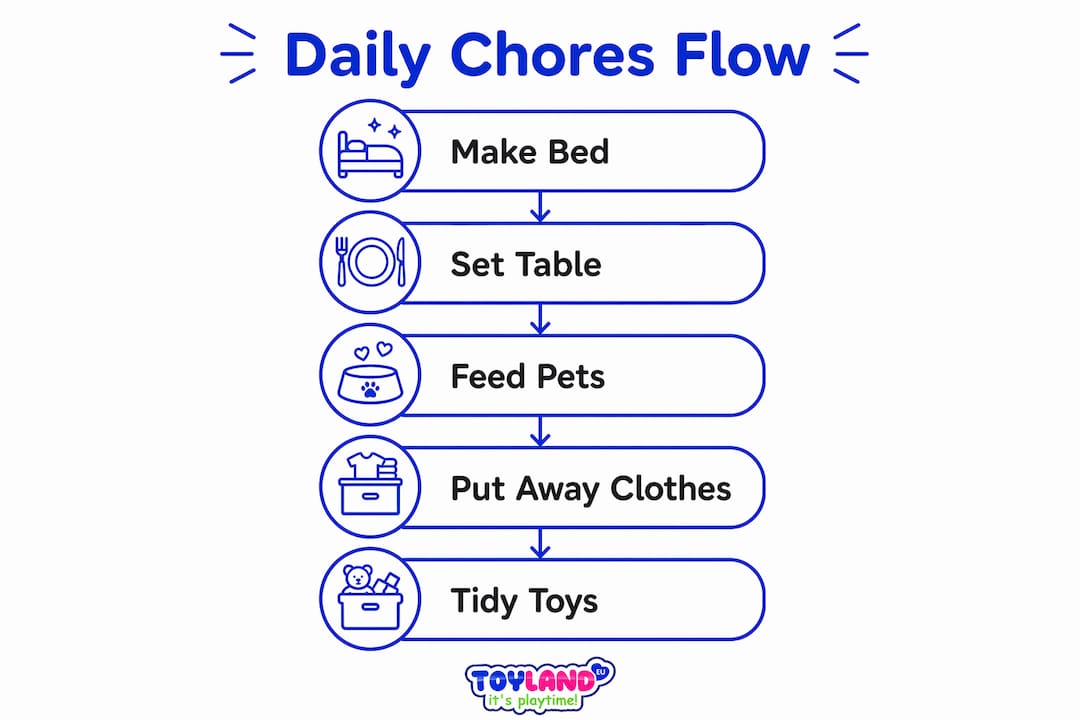
Here are the five best daily chores for a 6-year-old:
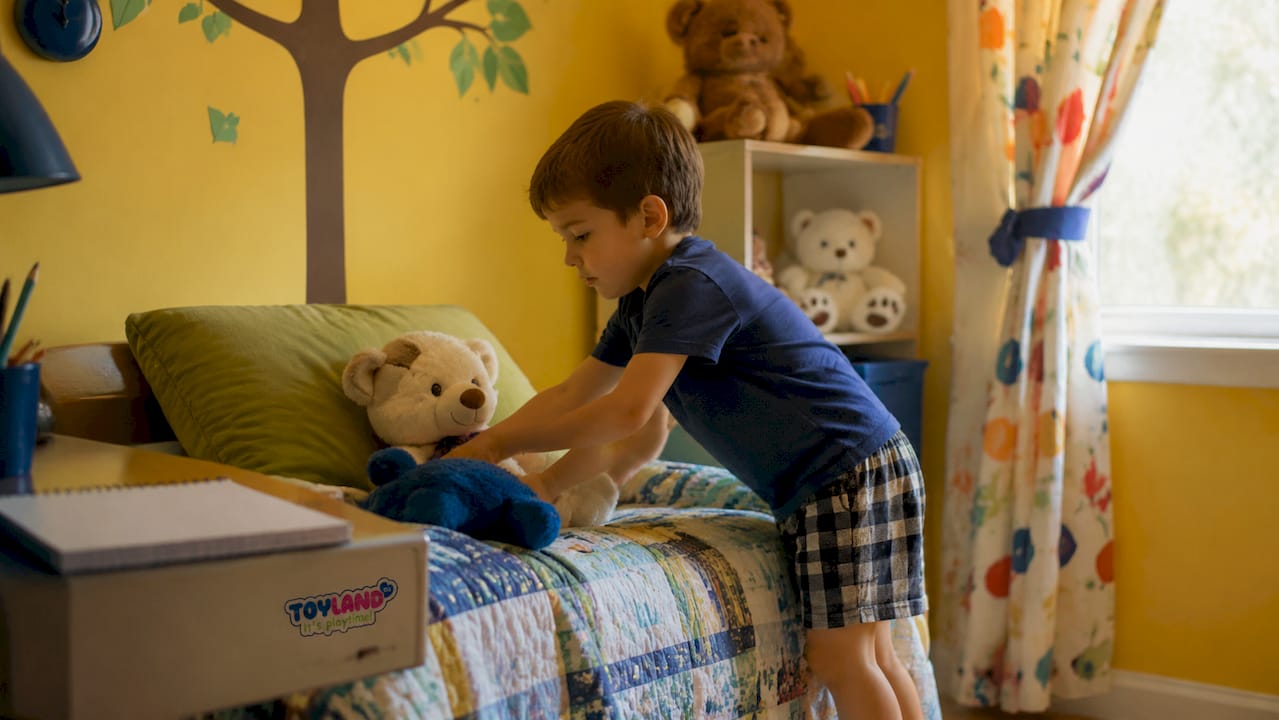
- Make their bed. It won’t look perfect, and that’s fine. The goal is the habit, not the result. A flat blanket and a pillow in place counts as done.
- Set the table. Placing plates, cups, and utensils is concrete, physical, and directly tied to family life. It takes two minutes and builds a sense of contribution.
- Put dirty clothes in the hamper. This is one of the easiest wins. The visible finish line, a full hamper, helps children understand task completion clearly.
- Feed a pet. Scooping food into a bowl is a single-step task with an obvious outcome. It also builds empathy and routine.
- Tidy one area of their bedroom. Keep it specific. “Put your books on the shelf” works. “Clean up” does not.
These tasks fit the cognitive and physical profile of a typical first-grader. At this age, children are moving out of the preschool “helper” role and into genuine six year old responsibilities. They want to feel capable, not just praised.
Pro Tip: Set a two-minute timer for each chore. Short, timed tasks feel like a game rather than a burden, and they match the natural attention span of most 6-year-olds.
How to assign chores effectively to a 6-year-old
Visual tools are the single most effective way to introduce chores at this age. Checklists and routine cards help 6-year-olds grasp cause-and-effect relationships and understand what “done” looks like. A simple chart with pictures of each task, posted at eye level, removes the need for repeated verbal reminders.
Follow this rollout sequence when introducing guided chores for young children:
- Start with one chore. Pick the easiest task first, such as putting shoes away. Let your child do it for a full week before adding anything new.
- Demonstrate the standard. Show exactly what “done” looks like. A made bed means the blanket covers the pillow. A set table means one plate, one cup, one fork per person.
- Assign ownership of a zone. Giving children a specific zone or task, rather than rotating chores weekly, builds competence and a sense of personal responsibility.
- Add one chore per week. Slow rollout prevents resistance. By week five, your child has five chores and feels proud of each one.
- Tie completion to privileges, not money. Screen time, a favorite game, or choosing dinner works better than cash at this age. Non-monetary rewards align with how 6-year-olds actually think.
Introducing chores one at a time reduces the mismatch between what parents expect and what children can deliver. That mismatch is the number-one cause of chore-related frustration in early elementary households.
Pro Tip: Use a simple sticker chart. One sticker per completed chore, five stickers earns a small privilege. The visual progress is motivating in a way that verbal praise alone is not.
Common challenges when assigning chores to 6-year-olds
The biggest mistake parents make is giving abstract instructions too early. Clear, visible goals align with a 6-year-old’s concrete operational thinking stage. “Put the blue toys in the bin” succeeds. “Tidy up” fails every time.
Here are the most common obstacles and how to handle them:
- Short attention spans. Keep each chore under five minutes. If a task takes longer, break it into two separate chores on different days.
- Resistance and refusal. This usually means the instruction was too vague or the task was introduced too quickly. Go back to one chore and rebuild from there.
- Perfectionism frustration. This one cuts both ways. Some children get upset when their bed doesn’t look right. Remind them, and yourself, that acceptable completion beats perfection every time.
- Forgetting mid-task. Six-year-olds have a working memory ceiling of 3–4 items. Multi-step instructions overload that ceiling fast. Stick to one instruction per chore.
“Chores build family identity and self-confidence when parents value effort and competence over perfection. Six-year-olds feel capable when they contribute. They feel judged when they’re corrected constantly.”
The transition from “helper” to “responsible family member” happens around age 6. Less praise and more genuine thanks, “I really appreciate that you fed the dog,” works better than “Great job!” It signals that the contribution actually mattered.
What chores should a 6-year-old avoid?
Some tasks are genuinely unsafe or developmentally mismatched for this age group. Vacuuming and bathroom cleaning typically suit children aged 8 or older, once physical coordination and safety awareness are more developed.
Skip these chores entirely at age 6:
| Chore | Why to skip | Better age to start |
|---|---|---|
| Vacuuming | Heavy equipment, poor coordination | Age 8+ |
| Chemical cleaners | Safety risk, toxic exposure | Age 10+ |
| Sharp kitchen tools | Fine motor skills not ready | Age 9–10 |
| Laundry (full cycle) | Multi-step, machine operation | Age 8–9 |
| Bathroom scrubbing | Chemical products, complex task | Age 8+ |
What chores should a 7 year old do that a 6-year-old cannot? By age 7, children can handle light sweeping, simple meal prep like washing vegetables, and sorting laundry by color. By age 8, vacuuming and wiping down surfaces with mild soap become realistic. The progression is gradual and tied to coordination, not just age.
For children closer to 5, what chores should a 5 year old do looks simpler still: picking up toys, putting books away, and carrying their plate to the sink. The gap between 5 and 6 is meaningful in terms of focus and follow-through.
Key Takeaways
Six-year-olds build lasting responsibility through 3–5 short, concrete daily chores with visible finish lines, introduced one at a time using visual tools and non-monetary rewards.
| Point | Details |
|---|---|
| Daily chore volume | Assign 3–5 tasks per day, each lasting 2–5 minutes, for a total of 10–15 minutes. |
| Instruction clarity | Use single-step, concrete directions like “put blue toys in the bin,” never vague commands. |
| Rollout strategy | Introduce one new chore per week to build habits without resistance or frustration. |
| Chores to avoid | Skip vacuuming, chemical cleaners, and sharp tools until age 8 or older. |
| Reward approach | Tie chore completion to privileges, not money, to match how 6-year-olds are motivated. |
Why chores matter more than most parents realize
By Thane Holland
Parents often underestimate what a 6-year-old can actually do, and then overestimate what a 6-year-old can actually understand. Those two errors pull in opposite directions and create most of the friction around chores.
The research on chore habits and family identity confirms what I’ve observed repeatedly: children this age don’t want to be babied, and they don’t want empty praise. They want to feel like they did something real. A 6-year-old who feeds the dog every morning knows that the dog depends on them. That’s not a small thing.
The conventional wisdom says to make chores fun. I’d push back on that slightly. Chores don’t need to be fun. They need to be clear, short, and genuinely useful. When a child sets the table and the family sits down to eat, the connection between effort and outcome is immediate. That’s more motivating than any sticker chart.
My honest advice: pick two chores this week, demonstrate each one once, and then step back. Resist the urge to redo the task after your child finishes. The educational toys for children that Toylandeu™ carries can reinforce this same ownership mindset through play, but the chore habit itself starts with you trusting your child to do the job imperfectly and completely.
— Thane Holland
Toylandeu™ picks for after-chore play
After a child completes their daily tasks, play is the natural reward. Toylandeu™ carries over 30,000 toys designed for children at every stage, including options that build the same motor skills and focus that good chore habits develop.

The gesture-controlled stunt car from Toylandeu™ is a strong pick for 6-year-olds finishing their chore routine. It responds to hand movements, which builds coordination and keeps attention engaged. For families who want to pair responsibility with a meaningful reward, Toylandeu™ offers free worldwide shipping and a catalog that covers RC cars, STEM kits, dolls, and games. Browse the full range at toylandeu.com and find the right after-chore reward for your child.
FAQ
What chores should my 6 year old do each day?
Six-year-olds handle 3–5 short daily chores best, such as making their bed, setting the table, putting dirty clothes in the hamper, feeding a pet, and tidying one specific area of their room.
How long should chores take for a 6-year-old?
Each chore should take 2–5 minutes. Total daily chore time should stay within 10–15 minutes to match a 6-year-old’s attention span and energy level.
Should I pay my 6-year-old for doing chores?
Non-monetary rewards like screen time or choosing a family activity work better than money at this age. Linking chores to privileges builds intrinsic motivation more effectively than cash.
What chores are too advanced for a 6-year-old?
Vacuuming, using chemical cleaners, operating kitchen appliances, and scrubbing bathrooms are all too advanced. These tasks suit children aged 8 and older, once coordination and safety awareness are stronger.
How do I get my 6-year-old to actually do their chores?
Use a visual chore chart with pictures, introduce one chore at a time, and demonstrate exactly what “done” looks like. Consistent routine and clear expectations reduce resistance far more than repeated reminders.
Recommended Reads:
- Chores for 6 year olds: what’s OK and what to skip
- How toys can supercharge learning: 10 evidence-based tips