

Chores for 8-Year-Olds: What's OK and What's Not
TL;DR:
- Eight-year-olds can handle personal care and household tasks that promote responsibility safely with supervision. Tasks like making their bed, packing their school bag, and supporting setting the table help build confidence and family contribution. Short daily routines of 15 to 30 minutes across 3 to 5 tasks foster independence and responsibility at this age.
Age-appropriate chores for 8-year-olds are defined as simple household and personal care tasks that a child can complete safely, with or without supervision, while building real responsibility. Knowing what chores are ok for a 8 year old matters because the right tasks build confidence, not frustration. At this age, children are ready for more than picking up toys. They can handle structured duties that contribute to the whole family. The key is matching the task to the child’s physical ability, attention span, and safety needs.
Quick Summary
Eight-year-olds can independently handle personal care tasks like making their bed, packing their school bag, and feeding pets. Family support tasks like setting the table, sorting laundry, and simple meal prep (with supervision) are also well within reach. Daily chore time should stay in the 15–30 minute range, spread across 3–5 tasks.
TL;DR
- Make bed, pack school bag, feed pets: fully independent
- Set and clear the table, sort laundry: independent with light guidance
- Simple meal prep near heat or sharp objects: adult supervision required
- Keep daily chore time to 15–30 minutes
- Focus on family contribution, not allowance
Table of Contents
- What chores are ok for a 8 year old?
- Why these chores benefit your child’s development
- How to set up a chore routine that actually works
- Practical examples for daily family life
- Key Takeaways
- Perspective
- Toylandeu™ picks for skill-building at home
- FAQ
What chores are ok for a 8 year old?
Eight-year-olds are ready for three categories of tasks: personal responsibility, family support, and supervised skill-building. Personal responsibility tasks are ones your child owns completely. Family support tasks connect them to the household. Supervised tasks introduce real-world skills under your watch.
Personal responsibility tasks
These tasks require no adult help and build daily habits fast:
- Making their bed each morning
- Packing and unpacking their school bag
- Personal hygiene: brushing teeth, washing hands before meals
- Tidying their bedroom at the end of the day
- Putting dirty clothes in the hamper
Family support tasks
These connect your child to the household routine:
- Setting and clearing the dinner table
- Feeding and watering pets
- Sorting laundry by color or owner
- Wiping down the bathroom sink
- Emptying small trash cans
Tasks that need supervision
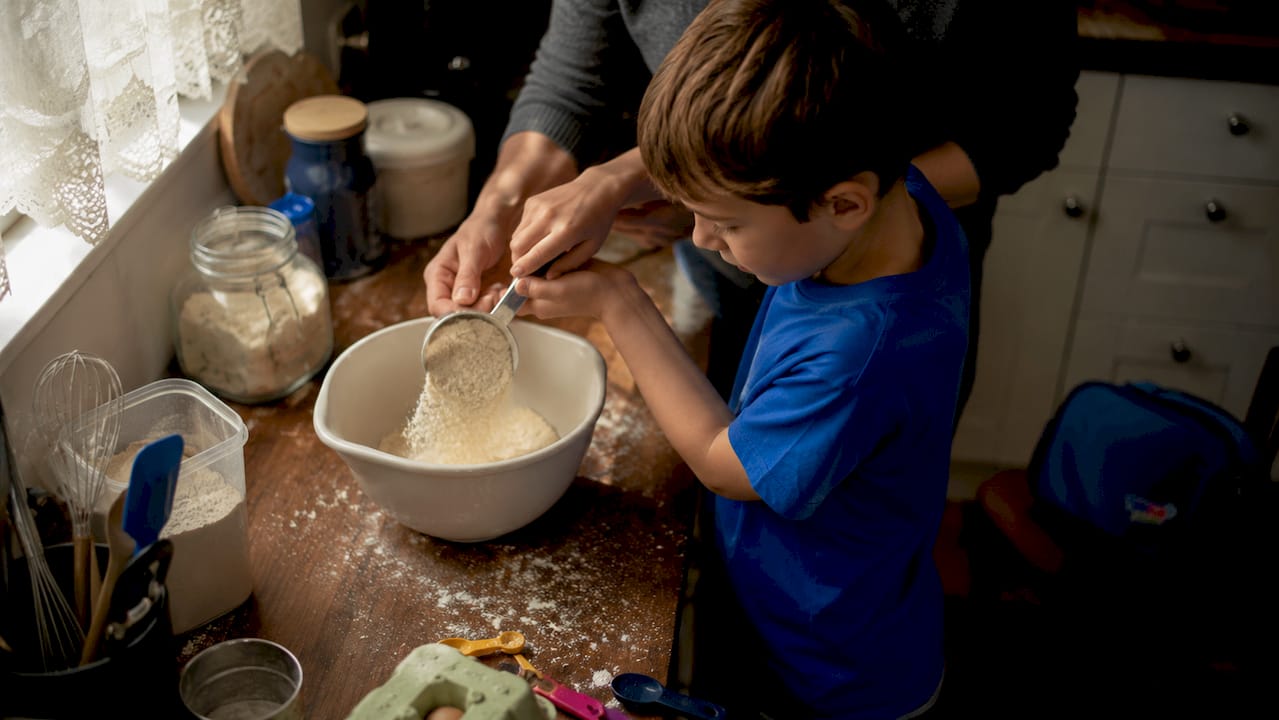
Chores involving sharp objects, high heat, or heavy lifting require an adult nearby. Simple meal prep, like measuring ingredients or rinsing vegetables, is great for 8-year-olds. Cutting, using the stove, or carrying heavy laundry baskets should always have a parent present.
| Chore | Independence level | Supervision needed? |
|---|---|---|
| Making bed | Fully independent | No |
| Packing school bag | Fully independent | No |
| Feeding pets | Fully independent | No |
| Setting the table | Independent | No |
| Sorting laundry | Independent | Light guidance |
| Measuring ingredients | Assisted | Yes |
| Rinsing vegetables | Assisted | Yes |
| Using stove or sharp knives | Not recommended | Always |
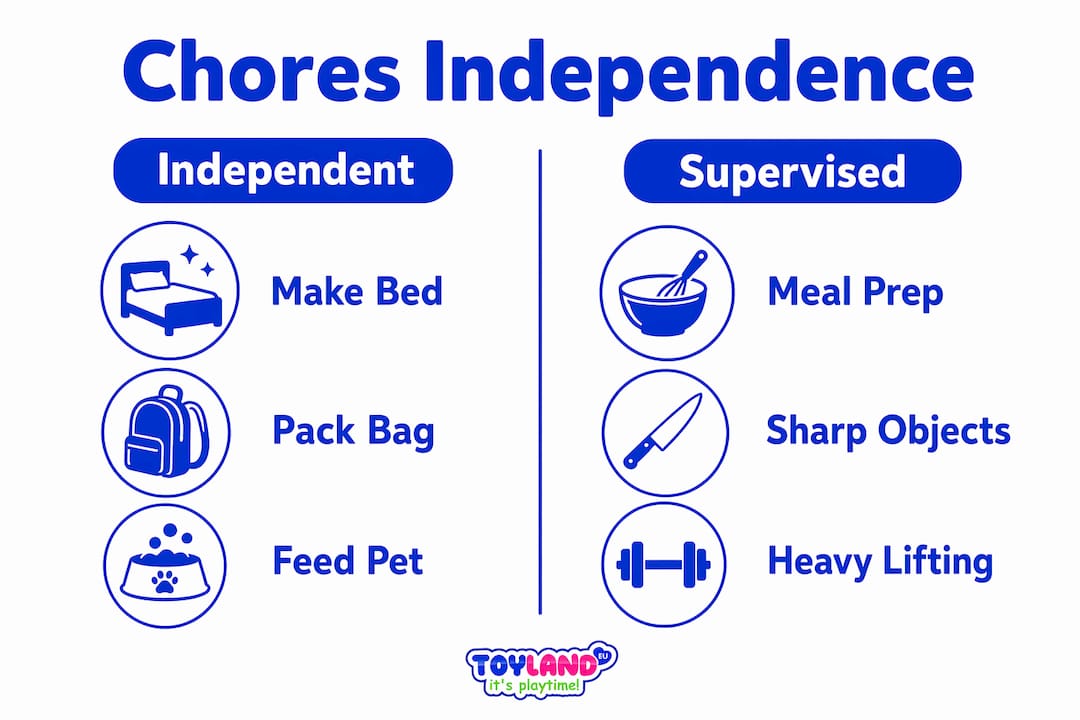
Pro Tip: Aim for 15–30 minutes of chore time per day, split across 3–5 tasks. That range keeps the workload manageable and the habit consistent without burning out your child.
Why do chores benefit an 8-year-old’s development?
Chores function as an apprenticeship for independence, giving children the exact skills they will need as teenagers and adults. Cooking, laundry, and cleaning are not adult surprises. They are skills built one small task at a time, starting now.
Research published in the Journal of Marriage and Family found that children who do chores regularly show higher self-reliance and empathy than peers who do not. Self-reliance grows because children learn they can handle real problems. Empathy grows because they see how their effort affects the whole family.
Motivation matters as much as the task itself. At age 8, family belonging drives motivation more effectively than tying chores to allowance. A child who feels like a valued team member works harder than one who is simply earning money. Frame chores as “this is how our family takes care of each other,” not “do this and get paid.”
“Children who regularly participate in household chores develop a stronger sense of competence and connection to their family. The habit of contributing builds the internal belief that their actions matter.”
Breaking tasks into specific steps also protects your child’s confidence. Vague commands like “clean your room” lead to paralysis and frustration. Specific steps like “put your books on the shelf, then put dirty clothes in the hamper, then make your bed” give a clear path to success. This approach works especially well for children with learning differences, but it helps every child.
How to set up a chore routine that actually works
A chore routine succeeds when your child knows exactly what to do, when to do it, and what “done” looks like. Chore charts and visual schedules remove daily negotiation by making expectations concrete. Post the chart somewhere visible, like the kitchen or your child’s bedroom door.
Follow these steps to build a routine that sticks:
- Pick 3–5 tasks that match your child’s current ability. Start small and add tasks as confidence grows.
- Assign specific times. Morning chores (making the bed, packing the bag) work best before school. Evening chores (setting the table, feeding pets) anchor the dinner routine.
- Give your child a choice. Letting them pick between two tasks increases buy-in. “Do you want to set the table or feed the dog tonight?” works better than a top-down assignment.
- Break complex chores into steps. Write out each step on the chart. “Clean your room” becomes four separate checkboxes.
- Resist the urge to correct immediately. Correcting children right away kills motivation. Wait until the task is done, then offer one specific, positive note. “You did a great job folding. Next time, try to match the socks before putting them away.”
Pro Tip: Let your child decorate their own chore chart. Ownership of the chart transfers to ownership of the tasks. You can find printable chart templates and cutting files at craft resources for kids to make it a fun project.
Practical examples for integrating chores into daily life
A sample daily schedule for an 8-year-old keeps chores predictable and short. Predictability removes resistance. Short sessions prevent burnout.
Morning (10 minutes):
- Make bed
- Pack school bag
- Put breakfast dishes in the sink
After school (5 minutes):
- Unpack school bag
- Put shoes and jacket away
Evening (10–15 minutes):
- Set the dinner table
- Feed and water the pet
- Sort laundry or wipe the bathroom sink
Meal prep is one of the best skill-building chores at this age. Your child can measure dry ingredients, rinse fruit, or tear lettuce for a salad. These tasks build math skills, fine motor control, and kitchen confidence. Always stay in the kitchen during prep involving water or food handling.
Pet care teaches daily accountability better than most other tasks. Feeding a pet at the same time each day creates a non-negotiable routine. The pet depends on your child. That dependency is a powerful motivator. For creative ways to build responsibility through play and hands-on learning, the age-appropriate STEM toy guide from Toylandeu™ offers useful ideas for pairing learning tools with daily routines.
Positive reinforcement works best when it is specific. “You remembered to feed Max before dinner three days in a row” lands harder than “good job.” Specific praise tells your child exactly what behavior to repeat.
Key Takeaways
Eight-year-olds thrive with 3–5 daily tasks totaling 15–30 minutes, focused on personal care and family support, with adult supervision reserved for tasks involving heat, sharp objects, or heavy lifting.
| Point | Details |
|---|---|
| Right task range | Personal care and family support tasks are safe and developmentally appropriate at age 8. |
| Daily time limit | Keep chore time to 15–30 minutes across 3–5 tasks to build habit without burnout. |
| Supervision rule | Tasks involving heat, sharp objects, or heavy loads always need an adult present. |
| Motivation strategy | Frame chores as family contribution, not payment, to build lasting intrinsic motivation. |
| Routine clarity | Break every chore into specific steps and use a visual chart to eliminate daily battles. |
Why I stopped worrying about perfection and started watching confidence grow
The biggest mistake I see parents make is treating chore time like an inspection. You assign the task, your child does it imperfectly, and you fix it right in front of them. The bed gets remade. The table gets reset. The message your child receives is: “You can’t do this right.” That message sticks.
What actually works is stepping back after the task is done and finding one real thing to praise before offering any correction. Eight-year-olds are at a developmental sweet spot. They want to contribute. They want to feel capable. Your job is to protect that instinct, not polish the outcome.
The other thing worth saying plainly: chores at this age are not about a clean house. They are about building a person. The laundry will get sorted better next year. The bed will look neater in six months. What you are really doing is teaching your child that they are a capable, contributing member of the family. That belief, built through small daily tasks, carries forward into every area of their life.
Patience and consistency matter more than any chart or system. Show up the same way every day, keep expectations clear, and let your child own the result.
— Thane Holland
Toylandeu™ picks for skill-building at home
Children who build responsibility through chores also thrive when their free time involves hands-on, creative tasks. Toylandeu™ carries a wide range of educational products that pair naturally with the independence your child is building through daily routines.

The Enchanting Kids Art Workbook Montessori Drawing Kit from Toylandeu™ gives 8-year-olds a structured, self-directed activity that reinforces the same focus and follow-through they practice during chores. For children who love making things, the colorful drawing scroll kit builds fine motor skills and independent task completion in a fun format. Toylandeu™ ships worldwide with free delivery, so finding the right tool for your child’s routine is straightforward.
FAQ
What chores can an 8-year-old do independently?
Eight-year-olds can independently make their bed, pack their school bag, feed pets, set the table, and sort laundry. These tasks require no adult supervision and build daily responsibility.
How long should an 8-year-old spend on chores each day?
The recommended daily chore time for an 8-year-old is 15–30 minutes, spread across 3–5 tasks. This keeps the habit consistent without overwhelming the child.
Should I pay my 8-year-old for doing chores?
Tying chores directly to allowance is less effective at this age than framing tasks as family contribution. Children motivated by belonging and family pride develop stronger long-term responsibility than those motivated by payment alone.
How do I get my 8-year-old to actually do their chores?
Use a visual chore chart, break each task into specific steps, and give your child a choice between tasks when possible. Avoid correcting their work immediately. Specific praise after completion builds the motivation to repeat the behavior.
What chores are not safe for an 8-year-old?
Tasks involving sharp knives, open flames, heavy lifting, or toxic cleaning products are not safe for 8-year-olds without direct adult supervision. Simple meal prep near heat is acceptable with a parent present, but independent use of the stove is not recommended at this age.