

Chores for 6 Year Olds: What's OK and What to Skip
TL;DR:
- Age-appropriate chores for 6-year-olds include simple tasks like making the bed, setting the table, and sorting laundry that build key life skills. These chores should be limited to five daily activities, each taking 15 to 20 minutes, and matched to the child’s motor skills and emotional readiness. Unsafe tasks involving sharp tools, heavy appliances, or chemicals should be avoided until age 8 or older to ensure safety and confidence.
Age-appropriate chores for 6-year-olds are short, safe tasks like making the bed, setting the table, and sorting laundry that build real life skills. Knowing what chores are ok for a 6 year old means matching the task to your child’s motor skills, attention span, and emotional readiness. At this age, kids can handle simple multi-step tasks with light supervision. Children who do regular chores score higher on self-reliance and empathy measures than those who don’t. That outcome is worth the extra patience it takes to get started.
What chores are ok for a 6 year old?
Six-year-olds are ready for tasks that involve short sequences, basic motor skills, and clear visual cues. Daily chore time at this age should run 15–20 minutes, with periodic check-ins rather than constant supervision. That window is enough to build habit without burning out your child.
The five core chores that work reliably at age 6 are:
- Making the bed. Pulling up a comforter and straightening a pillow builds fine motor control and gives your child a visible win first thing in the morning.
- Setting and clearing the table. Carrying plates, placing utensils, and folding napkins develops coordination and teaches sequencing. Keep breakable dishes out of the rotation until age 7 or 8.
- Sorting laundry. Matching socks and dropping clothes into the hamper is low-risk and surprisingly satisfying for kids. It also introduces the concept of categories.
- Refilling a pet’s water bowl. This chore builds empathy and a sense of care for another living thing. It works best when the child has a direct relationship with the pet.
- Emptying small trash cans. Carrying a lightweight bin to the main trash teaches responsibility for shared spaces without requiring strength or coordination beyond a 6-year-old’s ability.
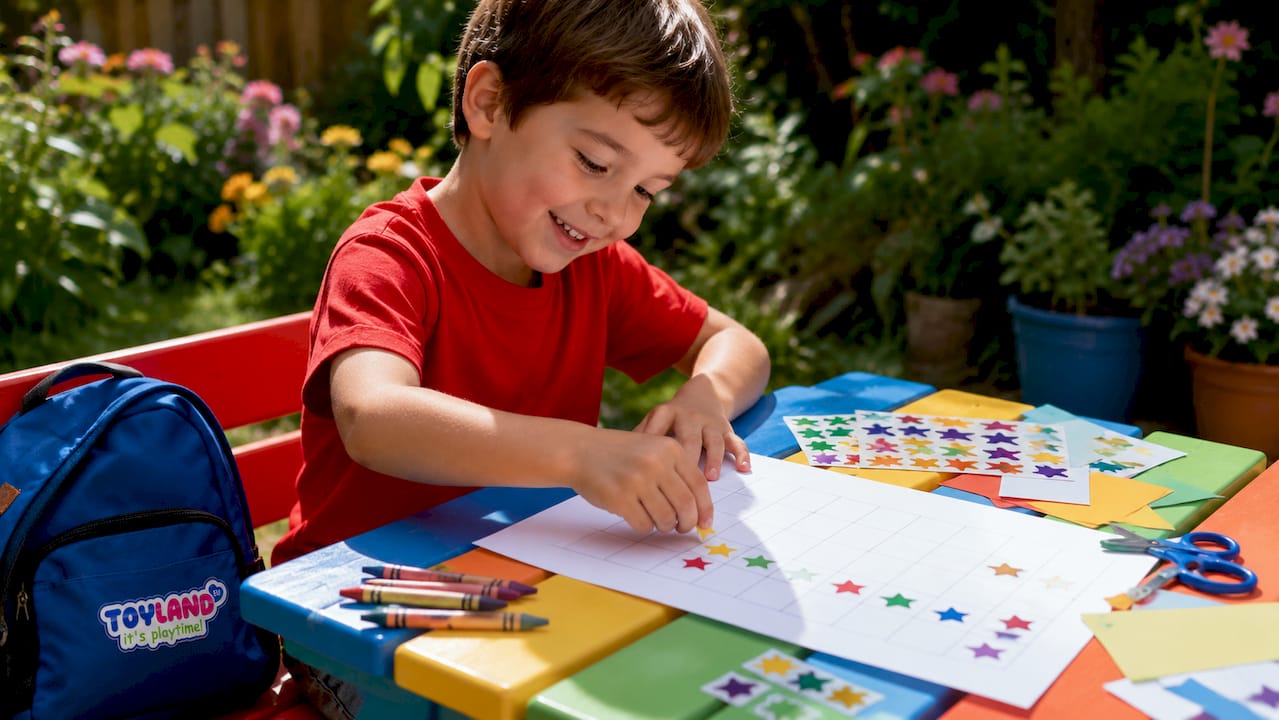
Pro Tip: Let your child decorate their own chore chart with stickers or drawings. Visual ownership of the chart increases follow-through more than any reward system.
Each of these tasks teaches something specific. Bed-making builds routine. Table setting builds sequencing. Pet care builds empathy. Together, they form a foundation for the self-sufficiency that clinical psychologist Stephanie Lee links directly to future life skills, even when early results look imperfect.
Which chores should 6-year-olds avoid?
Some tasks are genuinely unsafe or developmentally premature at age 6. Skipping them now protects your child’s confidence and physical safety.
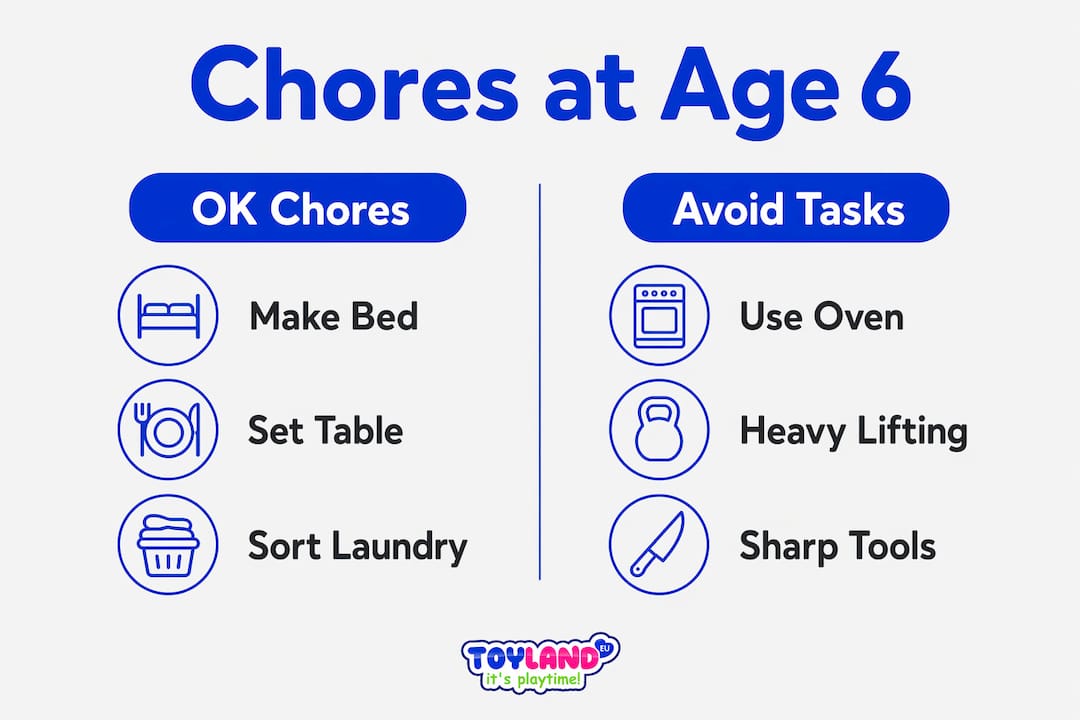
Tasks involving sharp tools, heavy appliances, or chemical cleaners are not recommended until age 8 or older. That includes:
- Loading the dishwasher. Sharp utensils and heavy racks create real injury risk.
- Vacuuming. The machine is heavy, loud, and requires sustained coordination most 6-year-olds haven’t developed yet.
- Cleaning the bathroom. Disinfectant sprays and toilet cleaning involve chemicals that are not safe for young children to handle unsupervised.
- Carrying laundry baskets. Full baskets are too heavy and can cause falls on stairs.
- Cooking on the stove. Heat and sharp edges make this a firm no until at least age 10 with direct supervision.
Waiting on these chores is not about low expectations. It’s about matching the task to the child’s actual capability. A 6-year-old who fails at vacuuming learns that chores are hard and frustrating. A 6-year-old who succeeds at sorting socks learns that contributing feels good. That second lesson is the one worth teaching right now.
How do you motivate a 6-year-old to do chores?
Motivation at this age comes from three things: choice, connection, and consistency. None of them require bribes or complicated reward charts.
- Give limited choices. Ask “Do you want to set the table or clear it tonight?” rather than “Please set the table.” Offering options like these helps children assert independence while still completing the task. The chore gets done either way.
- Frame chores as family contributions. Describing chores as acts of love and gratitude rather than obligations helps children see themselves as valued members of the household. “When you refill Biscuit’s water, you’re taking care of our family” lands differently than “Go do your chore.”
- Tie completion to natural privileges. Linking chores to natural privileges rather than money is more effective before age 8. Screen time after dinner, choosing the bedtime story, or picking Saturday’s breakfast all work well.
- Do chores together at first. Side-by-side participation teaches the task and builds connection at the same time. Fade your involvement gradually over two to three weeks.
- Keep the routine consistent. Same time, same sequence, every day. Predictability removes the negotiation entirely.
Pro Tip: Avoid asking “Did you do your chores?” at the end of the day. Instead, build the chore into a transition: “After you refill the water bowl, we’ll read together.” The chore becomes part of the routine, not a separate demand.
Understanding that chores prepare kids for self-sufficiency long before middle school changes how you approach the whole process. You’re not managing a task. You’re building a person.
Practical tips for building a chore routine that sticks
Starting with five daily tasks is the right scope. Overloading a child’s chore list leads to abandonment within weeks. Five manageable tasks done consistently beat ten tasks done sporadically.
Here’s a simple daily structure that works for most 6-year-olds:
| Time of day | Chore | Skill built |
|---|---|---|
| Morning | Make the bed | Routine, motor skills |
| Before school | Put dirty clothes in hamper | Organization |
| After school | Refill pet water bowl | Empathy, responsibility |
| Before dinner | Set the table | Sequencing, coordination |
| After dinner | Clear own plate | Self-care, tidiness |
A few principles make this structure work in real life:
- Accept “good enough.” Joint inspection builds self-assessment skills without public criticism. Walk through the task together and ask “What do you think?” before offering any feedback.
- Never redo the chore in front of your child. Straightening the bed after your child walks away teaches them their effort doesn’t count. If the result genuinely needs fixing, do it later and privately.
- Use educational toys alongside chores. Play-based organizing games and sorting toys reinforce the same skills your child uses when tidying their room.
- Expand the list slowly. Add one new task every four to six weeks once the core five are running smoothly.
The goal at age 6 is not a perfectly clean house. The goal is a child who understands that their actions matter to the people around them.
Key takeaways
Age-appropriate chores for 6-year-olds work best when limited to five daily tasks, matched to motor skills, and framed as family contributions rather than obligations.
| Point | Details |
|---|---|
| Start with five core chores | Bed-making, table setting, hamper use, pet care, and sock sorting are the right starting point. |
| Keep daily time to 15–20 minutes | Short sessions prevent burnout and build sustainable habit at this age. |
| Avoid unsafe tasks until age 8 | Dishwasher loading, vacuuming, and chemical cleaning are developmentally premature. |
| Frame chores as contributions | Children who see chores as acts of love show less resistance and stronger follow-through. |
| Accept good enough | Praising effort over perfection builds confidence and long-term ownership. |
Why I think parents underestimate the six-year-old window
Most parents I talk to either skip chores entirely at age 6 or wait until the child “seems ready.” Both approaches miss the point. Six is actually the ideal entry point, not because kids are capable of doing chores perfectly, but because they still want to help. That window closes faster than most parents expect.
I’ve seen what happens when chores start at age 9 or 10 instead. By then, the child has learned that household tasks belong to adults. Introducing responsibility at that stage feels like a punishment, and the resistance is real. Starting at 6, when kids still imitate adults and want to feel useful, makes the whole process easier for everyone.
The other thing I’d push back on is the perfectionism trap. Parents who redo their child’s work, even with good intentions, are teaching the wrong lesson. A lumpy bed made by a 6-year-old is worth more than a perfect bed made by a parent. Ownership and confidence come from completing the task, not from completing it flawlessly.
My honest advice: pick five tasks, hold the line on consistency, and resist the urge to fix everything. The payoff shows up years later, when your kid leaves for college already knowing how to take care of themselves.
— Thane Holland
Toylandeu™ toys that support the skills chores build
Building responsibility doesn’t stop when the chores are done. Play is where kids rehearse the same skills they use when tidying, organizing, and caring for shared spaces.

Toylandeu™ carries over 30,000 toys designed to develop the coordination, focus, and independence that make chores easier over time. The Montessori Drawing Kit builds fine motor skills your child uses when making the bed or setting the table. For kids who need to burn energy before settling into a routine, the gesture-controlled stunt car builds hand-eye coordination in a way that feels like pure fun. Toylandeu™ ships worldwide with free delivery, so the right toy is always within reach.
FAQ
What are the best simple chores for a 6-year-old?
The best chores for 6-year-olds are making the bed, setting the table, sorting laundry, refilling a pet’s water bowl, and emptying small trash cans. These tasks match the motor skills and attention span typical at this age.
How long should a 6-year-old spend on chores each day?
Daily chore time for 6-year-olds should be 15–20 minutes. Longer sessions increase resistance and reduce the chance of building a lasting habit.
Should I pay my 6-year-old for doing chores?
Monetary rewards are not recommended before age 8. Linking chores to natural privileges like screen time or choosing a bedtime story is more effective and age-appropriate.
What happens if my child refuses to do their chores?
Offer a limited choice between two tasks rather than a single demand. Giving children options increases cooperation without removing the expectation that the chore gets done.
When should kids start doing chores?
Most child development experts recommend introducing simple household tasks between ages 2 and 3, with more structured responsibilities beginning around age 6 when kids can follow short multi-step instructions.