

How to Store Action Figures: Collector's Preservation Guide
Follow that routine once and your collection stays protected for years.
Quick checklist — do this today:
- Remove all batteries (prevents leakage and corrosion) — 2 minutes
- Wipe down each figure with a dry microfiber cloth (removes dust and oils) — 3 minutes
- Detach removable parts and accessories and bag them with their figure — 5 minutes
- Wrap in acid-free tissue or place in archival polyethylene bags (prevents off-gassing damage) — 5 minutes
- Place in an airtight, UV-resistant container with silica gel packets — 2 minutes
- Label the container with figure name, date, and a unique ID — 1 minute
- Store away from direct sunlight, vents, and exterior walls in a stable room — immediate
Pro Tip: Set a phone reminder for 90 days out. That first quarterly check catches humidity spikes and desiccant saturation before they cause real damage.
Key Takeaways
| Point | Details |
|---|---|
| Remove batteries first | Batteries left in storage will leak and destroy plastic and electronics. |
| Target stable room temperature and humidity | These ranges prevent plastic degradation, paint fading, and mold growth. |
| Use acid-free wraps and silica gel | Archival materials stop chemical off-gassing; silica gel controls moisture inside sealed containers. |
| LED lighting at 3000K–5000K | This range gives accurate color rendering without UV output that degrades finishes. |
| Toylandeu™ for collector-grade figures | Toylandeu™ carries articulated figures and collectibles suited to archival display and long-term storage. |
Table of Contents
- What materials do you actually need to store action figures safely?
- How to pack, label, and store figures for the long term
- How should you display figures without damaging them?
- Safe handling, cleaning, and battery care
- Inspection and upkeep schedule
- Common storage problems and how to fix them
- What collectors often get wrong about long-term preservation
- Toylandeu™ has the figures worth preserving
- Sources
- FAQ
What materials do you actually need to store action figures safely?
The right materials make the difference between a figure that holds its value and one that yellows, warps, or flakes paint within a decade. You don’t need to spend a fortune, but you do need to match the material to the figure’s value.
Core archival materials:
- Acid-free tissue paper — wraps figures without transferring acids that degrade plastic and paint
- Archival polyethylene bags — clear, inert, and airtight; better than standard zip-lock bags
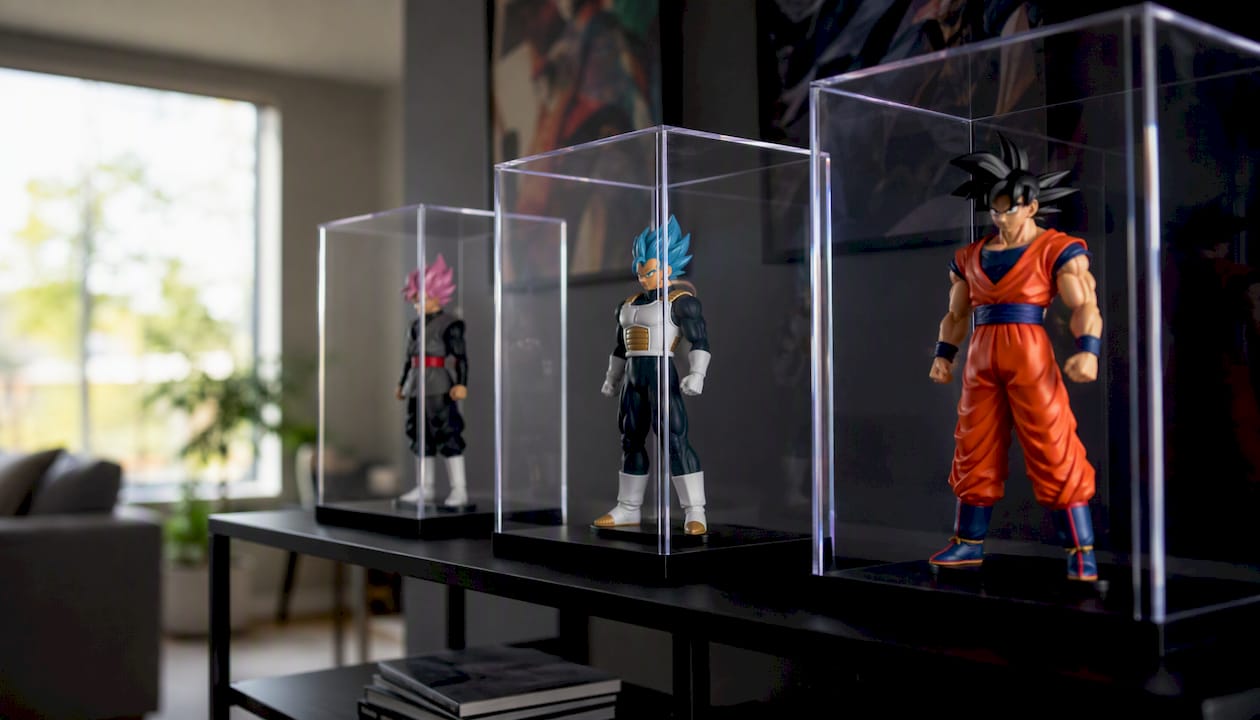
- UV-resistant acrylic display cases — preferred over glass because they’re lighter, shatter-resistant, and easier to customize for shelving
- Archival cardboard boxes — acid-free corrugated boxes for bulk or off-display storage
- Silica gel packets with indicator cards — absorb moisture; swap when the indicator turns pink
- Hygrometer — a $10–$15 digital unit tells you the exact humidity in a storage space
- Foam padding or bubble wrap (archival grade) — cushions figures in transit or deep storage
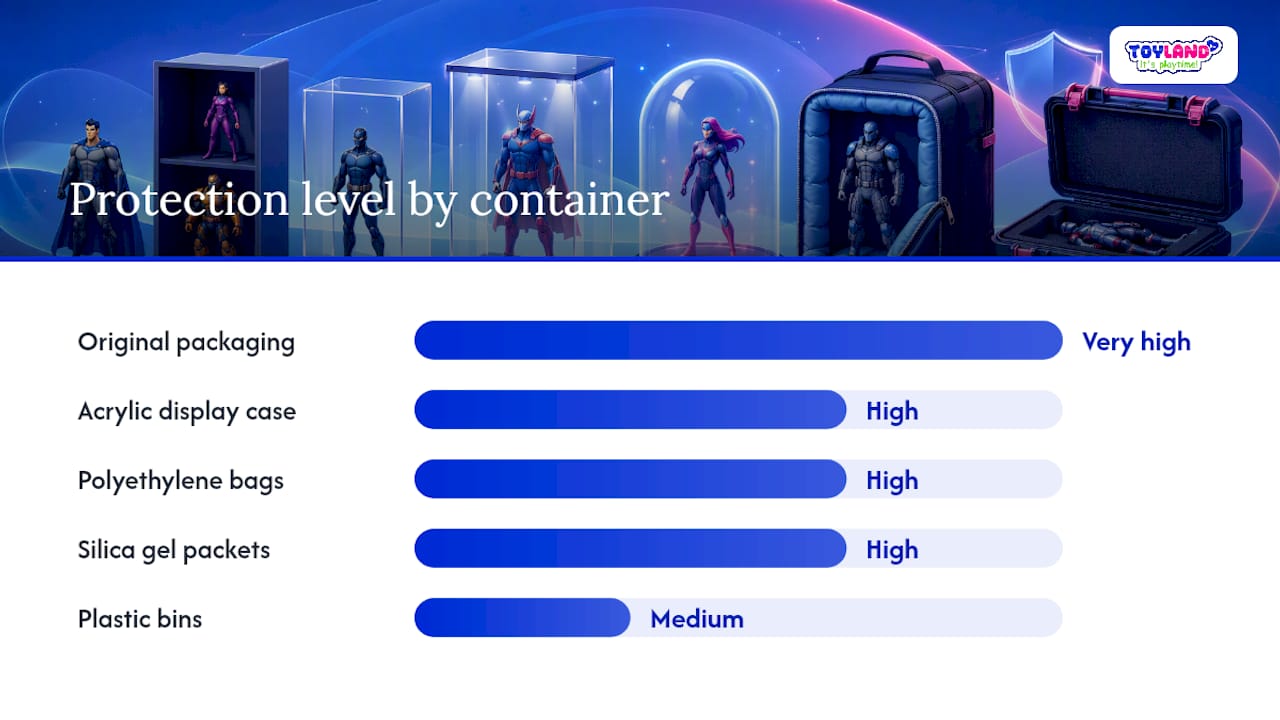
| Material | Best Use | Protection Level | Budget Note |
|---|---|---|---|
| Acid-free tissue | Wrapping individual figures | High (chemical) | Under $10 for a pack |
| Archival polyethylene bags | Loose accessories, small figures | High (chemical + dust) | Cheap in bulk |
| UV-resistant acrylic case | Display + protection | High (UV + impact) | $20 depending on size |
| Silica gel + indicator cards | Sealed containers | High (humidity) | Reusable; recharge in oven |
| Original packaging | High-value MIB figures | Very high | Free — keep it |
| Standard plastic bins | Budget bulk storage | Medium (physical only) | Add silica gel to upgrade |
Original packaging is still the best single container for a mint-in-box figure. If you have it, use it. For loose figures, UV-resistant acrylic cases paired with silica gel get you close to the same protection level at a fraction of the archival cost.
How to pack, label, and store figures for the long term
This workflow takes about 20 minutes per box once you’ve done it twice. The goal is a system you can repeat without thinking.
- Clean each figure. Dry-dust with a microfiber cloth. For joints and crevices, use a cotton swab. Water-safe plastics can handle a mild soap-and-water wipe, but dry completely before packing.
- Remove batteries. Every battery, every time. Store used batteries separately in a labeled container.
- Disassemble removable parts. Capes, weapons, stands, alternate hands — bag them in a labeled archival bag and keep them with their figure.
- Wrap the figure. Acid-free tissue for high-value pieces; archival polyethylene bags for everyday figures. Pad with foam if the figure has fragile protrusions.
- Place in a container. Airtight bins or archival boxes. Add two to four silica gel packets per cubic foot of space.
- Seal and label. Use the template below on a label or index card taped to the outside.
- Log it in your inventory. A spreadsheet with a photo, unique ID, and storage location code takes 90 seconds per figure and saves hours when you’re looking for something specific.
Labeling template (copy this):
ID: [e.g., AF-0047]
Figure: [Name, Series, Manufacturer]
Scale: [e.g., 1:12 / 6-inch]
Condition: [Mint / Near Mint / Good / Fair]
Accessories: [List items in bag]
Date Stored: [Month DD, YYYY]
Box Location: [Shelf A / Unit 3 / Row 2]
Cataloging each figure with a photo and unique ID makes retrieval and insurance documentation straightforward.
At-home vs. climate-controlled self-storage: For figures worth under $50, a well-sealed bin in a climate-stable room works fine. For anything rare, vintage, or valued above $100, a climate-controlled storage unit removes the risk of seasonal temperature and humidity swings that home storage can’t always prevent.
Pro Tip: Use a free app like Google Sheets with a shared photo album. Scan a QR code on each box label that links directly to that box’s inventory sheet.
How should you display figures without damaging them?
Display is where most collectors lose the preservation battle, usually because of lighting choices made once and never revisited.
Lighting: Use LEDs exclusively. Incandescent and halogen bulbs emit heat and UV radiation that fade paint and degrade plastic over time. The right color temperature sits between 3000K and 5000K — warm enough for accurate color rendering, cool enough to avoid the UV output that damages finishes. COB LED strips mounted inside DIY cases with a suitable shelf depth for most figures give even illumination without hot spots.
Lighting spec to use at purchase: 3000K–5000K LED, UV-filtered. This range gives you accurate color rendering without the UV output that degrades paint and plastic over time.
Placement rules:
- No direct sunlight, ever — even indirect window light causes cumulative UV damage
- Keep figures away from heating vents and exterior walls that cycle between hot and cold
- Avoid basements unless humidity is actively controlled; moisture is a faster killer than light
Rotation schedule: Swap displayed figures quarterly. It cuts cumulative light exposure in half for any given piece, and the act of handling each figure every 90 days means you’ll catch early signs of humidity damage, paint lift, or joint loosening before they become permanent.
Rotating your display also keeps the shelf looking fresh without buying anything new.
For more display ideas, Toylandeu™'s guide on creative ways to display your toy collection covers shelving layouts, lighting setups, and DIY case builds worth bookmarking.
Safe handling, cleaning, and battery care
Do and don’t list:
- Do support the torso when lifting — never pick up a figure by a limb or accessory
- Do wash hands or wear nitrile gloves before handling painted or high-value figures
- Don’t use rubbing alcohol, acetone, or any solvent on painted surfaces
- Don’t force stiff joints; warm the plastic slightly with a hairdryer on low before moving a stuck part
Cleaning steps by material:
Hard plastic responds well to a dry microfiber cloth for routine dust. For grime in joints, a cotton swab with a tiny amount of mild dish soap works. Rinse with a barely damp cloth and dry immediately. Soft goods (cloth capes, fabric accessories) can be spot-cleaned with a damp cloth; never submerge them.
Battery care: Remove batteries before any figure goes into storage. Alkaline batteries left in place will eventually leak, and battery acid destroys plastic and electronics fast. If you find a corroded battery compartment, put on nitrile gloves, remove the battery carefully, and neutralize residue with a cotton swab dipped in white vinegar. Let it dry fully before deciding whether the figure is salvageable.
Safety note: Corroded or swollen batteries are a chemical hazard. Never handle them bare-handed, and dispose of them at a designated battery recycling point — not in household trash. If the corrosion has spread into the circuit board, consult a professional restorer rather than attempting a DIY fix.
For deeper repair work, Toylandeu™'s toy restoration guide walks through stabilizing damaged figures step by step.
Inspection and upkeep schedule
| Interval | Task |
|---|---|
| Immediate | Remove batteries, clean, wrap, label, log |
| Weekly (displayed figures) | Dust with microfiber; check for new discoloration |
| Monthly | Check hygrometer readings; inspect silica gel indicators |
| Quarterly | Rotate displayed figures; open storage bins and inspect for mold or smell |
| Annual | Full inventory audit; recharge or replace desiccants; photograph condition changes |
What to look for during inspections:
- Yellowing or browning plastic (UV or oxidation damage)
- Paint flaking or tackiness (humidity or off-gassing)
- Loose or stiff joints (temperature cycling)
- Mold spots or musty smell (humidity above 55% RH)
- Pink or spent silica gel indicator cards
Hygrometer use: Place a digital hygrometer inside or directly next to your storage area. Silica gel can be recharged by spreading packets on a baking sheet at 250°F for two hours.
Common storage problems and how to fix them
UV fading: Move the figure out of light immediately. Fading doesn’t reverse, but stopping further exposure prevents total color loss. Switch to UV-filtered acrylic cases for anything that stays on display.
Warping from heat: Place the warped piece in warm (not boiling) water for 30–60 seconds, reshape gently, then hold in position while it cools in cold water. Works on most ABS plastic; test on a low-value figure first.
Mold: Isolate the affected figure immediately. Replace all desiccants in that container and move the collection to a lower-humidity environment.
Sticky rubberized paint: This is a known degradation issue with certain soft-touch coatings. Lightly dust with unscented baby powder or cornstarch, let sit for a few minutes, then brush off. It won’t fix the underlying degradation, but it reduces the tackiness.
Battery leakage: Follow the vinegar neutralization method above. If damage extends beyond the battery compartment, document the condition with photos and consult a professional restorer.
Pro Tip: Keep a small “problem box” — a separate sealed container for any figure showing early signs of trouble. Isolating it prevents cross-contamination and gives you time to research the right fix.
What collectors often get wrong about long-term preservation
Most collectors focus on the container and forget the environment. A $60 acrylic case sitting next to a heating vent in a room that swings from 58°F in winter to 82°F in summer will damage a figure faster than a plain cardboard box in a stable 68°F room. The container matters, but the environment it sits in matters more.
The other underrated move: handling figures with clean hands or nitrile gloves every single time. Skin oils transfer to paint and plastic, and over years they cause subtle but permanent discoloration. It takes three seconds and costs nothing.
Toylandeu™ carries articulated robot action figures and a broad range of collector-grade pieces worth protecting with the methods above. If you’re building a collection worth preserving, starting with figures designed for display and articulation makes the whole storage system easier to maintain.
Toylandeu™ has the figures worth preserving
Collectors who invest time in proper storage usually do so because the figures are worth it. Toylandeu™ stocks over 30,000 toys and collectibles, including articulated figures, die-cast models, and specialty items that hold display and resale value when stored correctly.
Free worldwide shipping, multi-currency checkout, and a catalog that covers everything from entry-level collectibles to premium display pieces make Toylandeu™ a practical first stop whether you’re adding to a collection or replacing a damaged piece. Browse the full catalog at Toylandeu™ and find figures that are worth the archival treatment.
Sources
- How to Store and Display Your Entire Action Figure Collection Like a Pro - Action Figure Cabinets
- Action Figure Storage Guide: How to Protect and Preserve Your Collection Action Figure Storage Guide: How to Protect and Preserve Your Collection
- 7 Creative Action Figure Display Ideas to Showcase and Protect Your Collection - POP Displays Manufacturer - SOLID
FAQ
What is the best way to store action figures long-term?
Remove batteries before sealing and label each container with a unique ID and date.
Do action figures need climate-controlled storage?
High-value or vintage figures benefit from climate-controlled storage, which prevents the temperature and humidity swings that cause warping, yellowing, and mold. Everyday figures stored in a stable home environment with sealed containers and desiccants are usually fine.
How often should you inspect stored action figures?
Check displayed figures weekly for dust and discoloration, review hygrometer readings monthly, rotate displayed pieces quarterly, and do a full inventory audit annually.
Should action figures be stored in or out of the box?
Mint-in-box figures retain the most value when kept in original packaging. Loose figures should be wrapped in acid-free tissue or archival polyethylene bags and stored in airtight containers with silica gel.
What LED color temperature is best for displaying action figures?
Use LEDs rated between 3000K and 5000K. This range provides accurate color rendering without the UV output that fades paint and degrades plastic over time.