

Action Figures and Role Playing: A Family Guide
TL;DR:
- Combining action figures with role-playing games enhances creativity, empathy, and engagement through tactile, visual storytelling. Different scales and customization options allow families to tailor immersive play that reflects character growth and shared narratives. Starting with simple rules and existing figures makes such family RPG adventures accessible, fun, and emotionally rewarding.
Action figures and role playing are a natural pair, yet most parents think of them as separate worlds. One sits on a shelf; the other happens at a table with dice and rulebooks. The truth is that combining the two creates something more powerful than either on its own. Physical figures give stories a visual anchor, a tactile presence that digital apps and paper tokens simply cannot replicate. Whether your family is brand new to tabletop games or your teenager already has a shelf of collectible action figures, there is a path here that makes play richer, deeper, and genuinely fun.
Table of Contents
- Key Takeaways
- The real benefits of action figures in role-playing games
- Types of action figures and miniature scales
- How to combine action figures with RPGs for family play
- Creative ways to customize your figures
- Choosing the right figures and RPG materials
- My take on figures and role-playing games
- Explore Toylandeu’s creative toy selection
- FAQ
Key Takeaways
| Point | Details |
|---|---|
| Action figures sharpen creativity | Role playing with physical figures builds imagination, empathy, and storytelling skills more effectively than screen-based play alone. |
| Scale matters for gameplay | A 4-inch grid system works best with 7-inch action figures, keeping combat tactical and spatially accurate. |
| Customization mirrors character growth | Swapping parts on modular figures physically represents a character’s progression, making RPG advancement feel real and exciting. |
| Entry cost is manageable | Beginner kits like the Mythic Legions RPG box start at $45, making the hobby accessible for most families. |
| Free rules lower the barrier | Many modern skirmish games offer free digital rulebooks, letting families use figures they already own. |
Table of Contents
- The benefits of action figures in role-playing games
- Types of action figures and miniature scales
- How to combine action figures with RPGs for family play
- Creative ways to customize your figures
- Choosing the right figures and RPG materials
- Expert perspective
- Explore Toylandeu’s creative toy selection
- FAQ
The real benefits of action figures in role-playing games
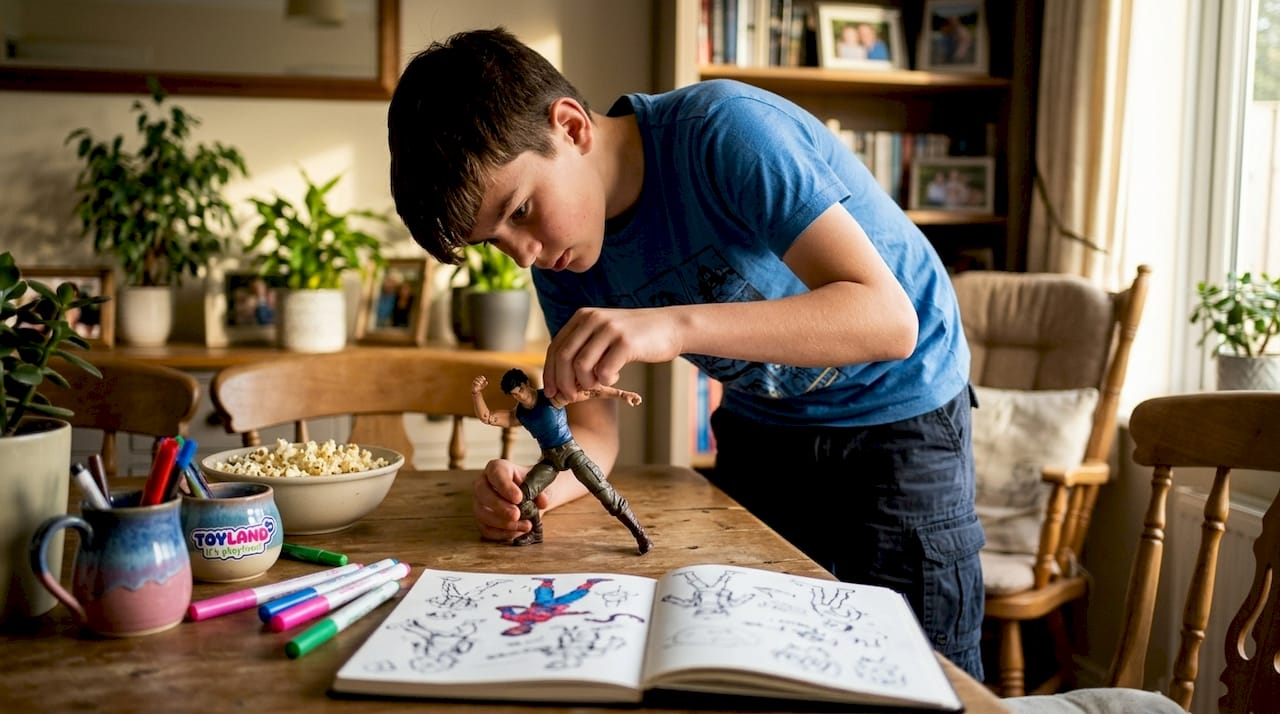
There is a reason child development researchers pay close attention to imaginative play. When kids physically pick up a figure and give it a voice, they are not just having fun. They are practicing identity, testing social roles, and building the mental flexibility that feeds confidence throughout life.
Role playing games amplify this further. A child who plays a heroic knight figure learns to make decisions under pressure. A teenager who voices a morally gray faction leader in a fantasy setting is quietly developing perspective-taking skills. These are not small gains.
“Action figure RPGs provide a cinematic, tactile experience not available with traditional tokens or miniatures, enhancing immersion and player engagement in ways flat components cannot match.”
The specific benefits worth knowing:
- Empathy and social skills. Taking on a character role forces players to consider how another person, even a fictional one, thinks and feels. Kids who role play regularly show stronger perspective-taking in everyday situations.
- Self-esteem through storytelling. When a child’s character succeeds in a scenario they designed themselves, that sense of authorship and ownership is real. It carries over.
- Visual comprehension. Seeing a story laid out on a table with physical pieces makes abstract narrative concepts click faster. Younger players especially benefit from having something to point to and move.
- Family connection. Sitting around a table building a shared story together creates a kind of focused attention that is harder to replicate on movie night.
Tactical skirmish games can even be completed in under 15 minutes with a full roster of figures, meaning this kind of play fits realistically into a family evening rather than requiring a dedicated gaming weekend.
Types of action figures and miniature scales
Not all figures work the same way in role-playing games, and the scale differences matter more than most beginners expect.
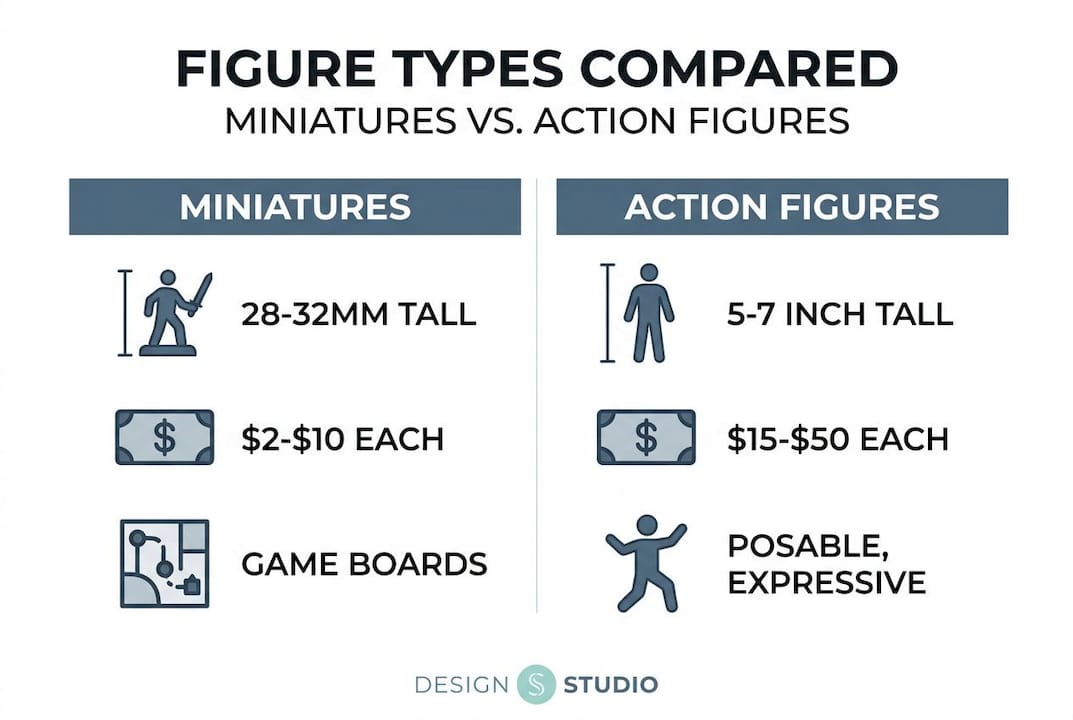
Traditional tabletop RPG miniatures sit at 28 to 32mm tall. They are detailed, affordable in bulk, and fit standard 1-inch grid maps perfectly. The downside is that they require painting to look their best, can be fragile, and do not offer the same physical presence as larger pieces.
Larger 7-inch action figures change the experience entirely. You can pose them. You can read their facial expressions from across the table. When a boss figure enters the scene, everyone feels it. The trade-off is scale: a standard 1-inch grid makes these figures look absurd, with characters barely fitting in single squares.
The Mythic Legions RPG solves this directly. The game uses a 4-inch grid rather than the standard 1-inch system, designed specifically around 7-inch figures. Boss encounters use an expanded grid that keeps movement and combat feel accurate without cramping the figures.
| Figure type | Scale | Cost range | Best for |
|---|---|---|---|
| Traditional miniatures | 28-32mm | $2 to $10 each | Large battles, detailed terrain |
| 7-inch action figures | ~180mm | $40 to $60 each | Boss fights, character showcases |
| 4-inch figures | ~100mm | $15 to $30 each | General play, family campaigns |
| Army Men style | ~54mm | $5 to $15 per set | Kids, casual play, quick games |
Pro Tip: If you already own collectible action figures from a favorite franchise, check whether free digital rules exist for that scale before buying anything new. Many modern skirmish games offer free rulebooks specifically so players can use the figures they already own.
How to combine action figures with RPGs for family play
Getting a family started does not require a shelf full of figures and a custom-built game table. The goal at the start is simple: make the story feel real using what you already have.
Here is a practical sequence that works for most families:
- Choose a starting scenario together. Let the kids pick the theme, whether that is fantasy, sci-fi, or superheroes. Their buy-in to the setting determines how engaged they stay.
- Assign figures to characters. Each player picks a figure from your existing collection to represent their character. The figure does not need to match perfectly. A space marine figure works fine as a warrior in a fantasy dungeon.
- Keep the rules light at first. The Mythic Legions RPG beginner box costs $45 and includes a rulebook, character materials, and standees. It is genuinely beginner-friendly and does not assume prior RPG experience.
- Use action figure accessories to set the scene. Weapons, shields, and environmental pieces give younger players physical cues about what is happening in the story. A figure holding a sword tells the story without anyone having to explain it.
- Let players pose their figures for key moments. This is what separates action figures from paper tokens. When a character defeats a villain, let the player pose the figure triumphantly. That physical moment sticks.
- Scale difficulty to the youngest player. Younger players can handle simpler encounters while teenagers handle more complex faction mechanics. The Mythic Legions faction system, for example, offers ten factions that affect abilities and story progression, giving older players depth without overwhelming beginners.
Some RPGs take a “toy-first” narrative approach, where the figures themselves are the protagonists in a flexible story world. This works beautifully for families because it removes the pressure of “playing correctly.” The figures lead the story. The rules support it.
Pro Tip: Keep a small box of mixed action figure accessories nearby during play. When a player wants their character to pick up a new weapon or wear different armor, physically swapping a piece onto the figure makes the moment feel earned.
Creative ways to customize your figures
This is where action figures pull ahead of traditional RPG miniatures in a way that is genuinely hard to overstate. Customization is not just cosmetic. It is narrative.
When a character earns a legendary sword in the story, you can actually put that sword in the figure’s hand. When they gain heavy armor, you swap the armor piece. The physical change mirrors in-game progression in a way that no character sheet ever can. For kids especially, this makes advancement feel tangible and exciting.
Modular figures with pop-and-swap construction, such as those in the Mythic Legions line, allow heads, limbs, torsos, and armor to be exchanged between figures. This means one figure purchase gives you the components to build several distinct characters. A barbarian body with a wizard’s head and a different color cloak becomes a whole new character in minutes.
Safe customization techniques to know:
- Warm water method. Soaking a figure’s joint in warm water for 30 to 60 seconds softens the plastic enough to separate pieces without snapping them.
- Hairdryer technique. A few seconds of gentle heat from a hairdryer achieves the same result and works better for shoulder or hip joints.
- Test before committing. Always test a new figure’s flexibility before attempting a full swap. Some manufacturers use harder plastics that need more heat.
- Use original parts for storage. Keep swapped-out parts in a small labeled bag so nothing gets lost between sessions.
Creating original characters through customization also lets players build figures that reflect their own personalities. An adaptable 3D printed robot figure takes this concept further, letting kids literally assemble their character piece by piece before the game even starts.
Choosing the right figures and RPG materials
Picking the right starting point matters more than buying the most figures. Here is what to think through before spending anything:
- Match the theme to existing interests. A kid obsessed with anime will engage more with anime-style figures than generic fantasy miniatures. Starting with what they already love removes friction immediately. A super anime action figure set can double as both a collectible display and an RPG roster.
- Start with a beginner kit. The Mythic Legions RPG beginner box at $45 includes everything needed to start playing: rulebook, character creation materials, and standees. Individual 7-inch figures run $40 to $60, so the kit is the most cost-effective first step.
- Check age appropriateness. Figures with small detachable weapons are not suitable for children under 3. For ages 5 to 8, look for figures with larger, sturdier parts and simpler rule systems.
- Consider a build-your-own kit. A shapeshifting robot build kit doubles as a STEM activity and produces a figure the child has genuine attachment to before the first game session begins.
- Balance collecting and playing. Collectible action figures are tempting to keep pristine on a shelf. Decide early whether your collection is for display or play, as this affects which figures you buy and how you handle them.
For role playing games specifically, look for lines that offer free or low-cost digital rules. This way you can test a ruleset with figures you already own before investing in a dedicated game system.
My take on figures and role-playing games
I have watched the tabletop hobby evolve for a long time, and the one thing I keep coming back to is this: traditional miniatures were designed for wargamers, not storytellers. They are small, they need paint, and moving them around a board does not create the same emotional response as picking up a fully realized 7-inch figure and physically placing it in front of your opponent.
What I have found is that the shift to action figures in role-playing is not a trend. It is a correction. The modular, customizable approach to figures finally closes the gap between what players imagine and what they can actually put on the table. When a player builds their character from swapped parts and then watches that same physical figure grow across a campaign, the investment is emotional in a way no digital character sheet can touch.
My strongest advice for parents is to play alongside your kids, not just facilitate. Take a character. Make decisions. Let your child’s character save yours sometimes. The dynamic that creates is worth more than any specific rulebook or figure line. The story you build together is the point.
— Thane Holland
Explore Toylandeu’s creative toy selection
If this article has you thinking about where to start building a collection for creative play, Toylandeu has a range of figures and kits that fit naturally alongside everything covered here.
The Adaptable XP Series metal mecha figure makes a striking centerpiece for any sci-fi campaign, and the interactive 3D robot playset gives younger players a buildable figure they will want to use in every session. Pair either with the Montessori drawing kit to let kids sketch their characters, maps, and story moments between sessions. Toylandeu ships worldwide with no minimum order, so building out your collection piece by piece is genuinely practical.
FAQ
What are the benefits of using action figures in role-playing games?
Action figures make RPG stories visual and tactile, helping players stay engaged and building imagination, empathy, and decision-making skills. Physical figures also make character progression feel real when players swap parts and accessories as their characters grow.
What scale works best for action figures in tabletop RPGs?
Standard 7-inch action figures work best on a 4-inch grid system rather than the traditional 1-inch grid used for 28mm miniatures. This keeps movement and combat spatially accurate without cramping larger figures on the board.
How do I customize action figures safely for role-playing?
Use warm water or a hairdryer to gently soften joints before swapping parts on modular figures. Always test a figure’s flexibility first, and store removed parts in a labeled bag to keep your customization options organized.
How much does it cost to start a figure-based RPG?
A beginner kit like the Mythic Legions RPG box costs around $45 and includes everything needed to start playing. Individual collectible action figures typically run $40 to $60 each, though many rulesets are free to download for families using existing figures.
Can young children play action figure RPGs?
Yes, with the right setup. Kids as young as 5 can participate using simplified rules and larger, sturdier figures without small detachable pieces. Letting children pose their figures and make story decisions, even without complex mechanics, gives them a genuine role-playing experience.