

Collectible Doll Types: The Ultimate Collector's Guide
- Collectible dolls vary greatly in value based on age, material, maker, and condition.
- Antique, vintage, fashion, character, and artist dolls serve different interests and investment goals.
- Building a collection rooted in passion ensures enjoyment beyond market trends and monetary value.
The collectible doll world can feel overwhelming the moment you step inside it. Thousands of dolls compete for shelf space, your budget, and your heart. Whether you stumbled onto a bisque head at an estate sale or spotted a rare Barbie at auction, the sheer variety of collectible doll types makes it easy to overpay, overlook a gem, or chase trends that don’t match what you actually love. This guide cuts through the noise. We’ll walk you through every major category, share the criteria that separate a $20 doll from a $20,000 one, and help you build a collection that’s genuinely yours.
Table of Contents
- How to evaluate collectible dolls: Key criteria explained
- Antique and vintage dolls: Timeless classics for collectors
- Fashion dolls: From Barbie to Blythe and beyond
- Character and art dolls: Pop culture gems, limited editions, and reborns
- Comparing popular collectible doll types: Which one fits your goals?
- What most guides miss: How to collect for joy, not just profit
- Find your next collectible doll or accessory
- Frequently asked questions
Key Takeaways
| Point | Details |
|---|---|
| Type distinctions matter | Knowing if your doll is antique, vintage, or modern drives both value and collecting strategy. |
| Fashion dolls top demand | Rare Barbies and other designer fashion dolls offer strong investment and nostalgia appeal. |
| Condition impacts value | A doll’s condition and packaging status (like MIB or NRFB) can make all the difference for collectors. |
| Pop culture drives collecting | Character and artist dolls let fans connect with their favorite stories and express creativity. |
| Collect for joy first | The most rewarding collections come from following your passion, not just chasing profits. |
How to evaluate collectible dolls: Key criteria explained
Before you can appreciate the categories, you need the vocabulary collectors use to assess any doll. Think of these criteria as your personal checklist. Once you internalize them, every doll you encounter tells you its own story.
Age is the first filter. The antique vs. vintage distinction is straightforward: over 100 years old means antique, 50 to 100 years old means vintage, and anything under 50 years falls into the modern category. Condition is critical for value at every age tier.
Material shapes both value and fragility. Here’s a quick breakdown:
- Bisque (unglazed porcelain): prized for its matte, lifelike skin tone
- China/glazed porcelain: shiny surface, common in 19th century dolls
- Wax: delicate, prone to melting, rare and highly collectible
- Vinyl: durable, dominant in post-1950s dolls
- Cloth and felt: used by makers like Steiff and Lenci
Brand, designer, and provenance matter enormously. A doll made by Jumeau or Kestner carries far more weight than an unmarked piece. Limited edition releases and documented ownership history (provenance) can double or triple a doll’s market value.
Condition grading uses industry shorthand you’ll see everywhere:
- MIB (Mint in Box): doll is in original box, unused
- NRFB (Never Removed From Box): sealed, untouched since purchase
- C8, C9, C10: grading scales from good to near-perfect
Pro Tip: Before buying any doll over $100, cross-reference its value in at least two price guides. The Blue Book Dolls & Values and The Official Price Guide to Dolls are the two most trusted references in the hobby.
“A doll in poor condition is rarely a bargain. Restoration costs often exceed the value gained, and purists will always prefer original, unrestored pieces.”
Finally, separate your goals early. Are you collecting for personal joy, display, or investment? Each goal changes which criteria matter most.
Antique and vintage dolls: Timeless classics for collectors
Now that the basics are set, let’s travel back in time to the oldest category: antique and vintage dolls. These are the pieces that launched the entire hobby, and they remain some of the most sought-after items at major auction houses worldwide.
Antique dolls over 100 years old include bisque, china/porcelain, wax, wooden, paper mache, and parian types. Each material reflects the manufacturing era and regional tradition of its maker.
| Type | Era | Key makers | Avg. auction range |
|---|---|---|---|
| Bisque head | 1860s to 1930s | Jumeau, Kestner, Simon & Halbig | $300 to $5,000+ |
| China/porcelain | 1840s to 1900s | German factories | $100 to $1,500 |
| Wax | 1850s to 1900s | Montanari, Pierotti | $500 to $3,000 |
| Parian | 1860s to 1880s | Various German | $200 to $1,200 |
| Paper mache | 1820s to 1860s | Greiner, German makers | $150 to $2,000 |
French bisque dolls from the Jumeau house are considered the gold standard. Their hand-painted faces, glass eyes, and elaborate costumes make them irresistible to serious collectors. German makers like Kestner and Simon & Halbig produced enormous quantities, which means more survive today, but rare molds still command impressive prices.
Vintage dolls from the 1930s through the 1970s overlap with early plastic and hard plastic eras. Composition dolls (made from sawdust and glue) bridge the antique and vintage worlds. Mid-century American makers like Madame Alexander and Effanbee built loyal followings that persist today.
Authentication is non-negotiable in this category. Look for maker’s marks on the back of the head or the body. Documentation like original purchase receipts or exhibition records adds significant value. When in doubt, hire a certified appraiser before spending serious money.
Fashion dolls: From Barbie to Blythe and beyond
Moving from history to iconic design, let’s explore the enduring world of fashion dolls. No other doll category has generated more cultural conversation, more collector obsession, or more investment potential than this one.
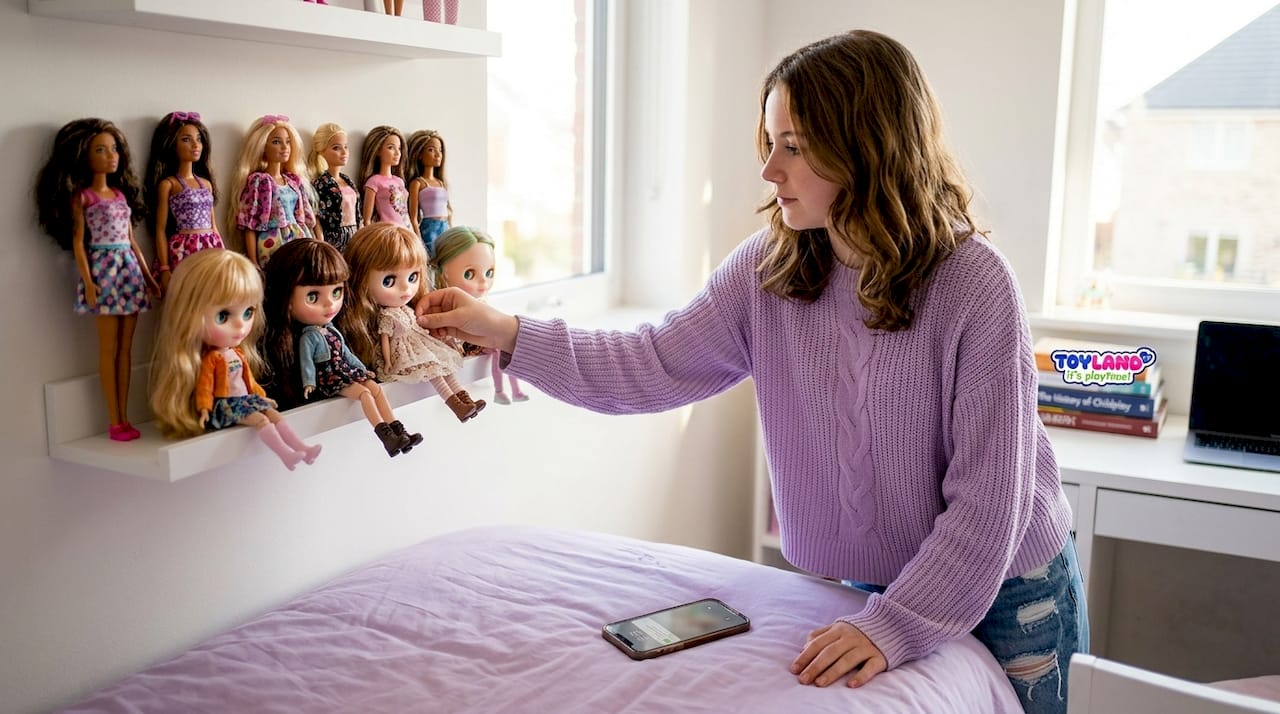
Fashion dolls are designed to showcase clothing, style, and lifestyle. They reflect the era they were made in, which is exactly what makes them fascinating time capsules. Fashion dolls include Barbie, Silkstone, Integrity Toys, Tonner, Blythe, and Momoko, each with its own devoted collector base.
Barbie is the undisputed queen of this category. Over 1 billion Barbies have been sold since 1959, and rare editions are worth $8,000 to $25,000 or more. The original 1959 Number 1 Barbie in MIB condition regularly fetches $8,000 to $12,000, with brunette versions being rarer and commanding even higher prices.
Key fashion doll lines worth knowing:
- Barbie Silkstone: adult collector line with a vintage aesthetic and higher-quality materials
- Blythe: oversized head, color-changing eyes, massive cult following in Japan and the US
- Integrity Toys: Fashion Royalty and Nu Face lines, known for couture-level detail
- Momoko: Japanese fashion doll with a minimalist, high-fashion look
- Tonner: Robert Tonner’s realistic proportions and elaborate costuming
Pro Tip: First editions, convention exclusives, and dolls with original certificates of authenticity consistently outperform standard releases at resale. Always keep the original packaging intact.
Market trends in fashion dolls shift quickly. Limited convention exclusives from Integrity Toys sell out within hours and often double in value within a year. Blythe customs by well-known artists can reach $1,000 to $3,000 for a single doll.
Character and art dolls: Pop culture gems, limited editions, and reborns
With style icons covered, our journey turns to beloved pop culture figures and striking artist-made dolls. This category is arguably the most diverse, and it’s growing faster than any other segment.
Character dolls depict film, TV, and literature figures like Harry Potter, Disney characters, and Steiff’s Snow White. The action figure market, which includes Marvel and Star Wars collectibles, reached $4 billion in 2022 alone. These are not toys in the traditional sense. Serious collectors treat them as cultural artifacts.
Here’s how to approach this category systematically:
- Identify the source material (film, book, game, TV show)
- Research the manufacturer and edition size
- Confirm whether the doll is a licensed product or an unlicensed reproduction
- Check for original tags, certificates, and packaging
- Compare recent sold listings on auction platforms before buying
Artist dolls occupy a different space entirely. These are one-of-a-kind or very limited pieces created by individual sculptors and doll makers. They’re judged on artistic merit, material quality, and the reputation of the maker. Prices range from $200 for emerging artists to tens of thousands for established names.
Reborn dolls are a subcategory that often surprises newcomers. These are hyper-realistic baby dolls, hand-painted and weighted to feel like actual infants. Reborns are used for therapeutic and comfort purposes, as well as art, not as toys. They’ve found audiences among grieving parents, collectors, and artists alike.
Pro Tip: If reborn dolls interest you, start with an established piece like the Bettie reborn doll or the Levi reborn art doll to understand the craftsmanship before investing in higher-end custom pieces.
Comparing popular collectible doll types: Which one fits your goals?
With each category covered, let’s put it all together with a practical comparison to guide your own collecting path.
The global doll market was valued at $7 billion in 2022, and it continues to grow. Every major category has a place in that market, but they serve very different collector profiles.
| Category | Best for | Investment potential | Entry cost | Display appeal |
|---|---|---|---|---|
| Antique/vintage | History lovers, investors | High (long term) | $100 to $5,000+ | Very high |
| Fashion dolls | Style enthusiasts, trend followers | High (select editions) | $20 to $500+ | High |
| Character/pop culture | Fans, nostalgia collectors | Moderate to high | $15 to $300+ | High |
| Artist/reborn | Art lovers, therapeutic users | Moderate | $100 to $3,000+ | Very high |
Before expanding your collection, ask yourself these questions:
- Do you collect for display, investment, or both?
- How much storage and display space do you have?
- Are you drawn to a specific era, material, or cultural moment?
- What’s your realistic budget per acquisition?
- Do you prefer rarity or variety in your collection?
There’s no wrong answer. A focused collection of 20 carefully chosen dolls will always outperform a scattered hoard of 200 random pieces, both in value and in personal satisfaction.
What most guides miss: How to collect for joy, not just profit
Here’s the perspective most collector guides skip entirely: the best collections are built on passion, not spreadsheets. We’ve seen collectors chase investment-grade Barbies and antique bisques because a price guide told them to, only to feel nothing when they look at their shelves.
The truth is that the thrill of the hunt, the story behind a specific doll, and the way a collection reflects your own taste are worth more than any resale margin. A $40 Blythe that reminds you of a childhood memory will bring you more daily joy than a $4,000 mint-condition piece you’re afraid to display.
That said, joy and smart collecting aren’t mutually exclusive. Define your own criteria first. Then let the market inform your decisions, not drive them. New collectors especially feel pressure to buy what’s trending. Resist it. Trends shift fast, but a collection built around genuine personal meaning stays satisfying for decades.
The most experienced collectors we’ve encountered share one trait: they know exactly why they own every piece on their shelf. That clarity is what separates a collection from an accumulation.
Find your next collectible doll or accessory
Ready to find a new treasure for your shelf or start a young collector on their journey? At ToylandEU, we carry a curated selection of collectible and art dolls that span the spectrum from lifelike reborns to creative play sets.
If reborn and artist dolls caught your eye in this guide, the Bettie reborn doll is a beautiful starting point, crafted from soft silicone vinyl with remarkable lifelike detail. For families introducing younger collectors to the hobby, our kids art workbook is a wonderful companion that nurtures creativity alongside collecting. We offer free worldwide shipping on our entire catalog, making it easy to find your next piece no matter where you are.
Frequently asked questions
What is the difference between antique, vintage, and modern dolls?
Antique dolls are over 100 years old, vintage dolls are 50 to 100 years old, and modern dolls are under 50 years old. Each category carries distinct market values and collector expectations.
How can I know if a doll is valuable?
Doll value depends on age, maker, material, condition, rarity, and original packaging. A 1959 Number 1 Barbie in MIB condition, for example, can reach $8,000 to $25,000 or more depending on hair color and completeness.
Are reborn dolls suitable for children?
Reborn dolls are intended as collectible art or therapeutic tools and are not designed as toys for young children. They require careful handling and are best suited for adult collectors or therapeutic settings.
What resources can help me authenticate collectible dolls?
Reference books like the Blue Book Dolls & Values and The Official Price Guide to Dolls are essential starting points, alongside expert appraisals from certified doll specialists.
Which doll type is best for investment?
Rare Barbie editions, antique bisque dolls, and limited artist pieces offer the highest investment potential when kept in excellent, original condition with all documentation intact.
Recommended
- Plush toys explained: Safety, benefits, and collector appeal – ToylandEU
- Playtime Perfection: Curating the Ultimate List of Toys for Girls – ToylandEU
- Ultimate Super Collectible Figurine Set for Fans and Collectors ToylandEU
- Ultra-Realistic Genesis Reborn Baby Boy Doll with Unique 3D Skin – Collector’s Choice ToylandEU
- 6 Curated Gothic Art Examples Every Collector Should Know – GothMarket