

Color Psychology for Kids: What Every Parent Should Know
TL;DR:
- Children’s brain responses to color develop early and influence their mood, attention, and behavior. Parents and educators can use deliberate color choices to support emotional regulation, focus, and sensory needs in children. Observing a child’s color preferences provides valuable insight into their temperament, helping tailor environments for better development and well-being.
Color psychology in children is the study of how specific hues directly shape a child’s mood, attention, and behavior at a neurological level. Before a child can name a feeling, their brain is already responding to the colors around them. Red raises energy and heart rate. Blue lowers it. Yellow sharpens focus. These are not decorative choices. They are developmental tools that parents and educators can use every single day.
Quick summary
- Children’s brains process color emotionally before language develops
- Color preferences emerge by ages 2–3 and reflect temperament
- Warm colors energize; cool colors calm and aid focus
- Saturation matters more than hue for young children’s reactions
- Practical applications include bedroom paint, clothing, and classroom design
Tl;dr
Color is a direct line to your child’s emotional brain. Use cool tones to calm, warm tones to energize, and always let kids lead their own color choices.
Table of contents
- What Do Color Preferences Reveal About a Child’s Personality?
- How Does Color Affect Children’s Mood, Learning, and Behavior?
- Color Considerations for Kids with ADHD, Autism, or Sensory Sensitivities
- How to Apply Color Psychology in Rooms, Wardrobes, and Classrooms
- Key Takeaways
- Perspective
- Explore Color-Smart Toys at Toylandeu™
- FAQ
What do color preferences reveal about a child’s personality?
Color preferences in children develop consistently between ages 2 and 3, and they reflect temperament, sensory style, and energy levels rather than random taste. This means a toddler who gravitates toward blue is likely showing you something real about how their nervous system is wired.
Here is what specific color preferences tend to signal:
- Blue: Calm, empathetic, and emotionally steady children often favor blue. These kids tend to be thoughtful and prefer structured, low-stimulation environments.
- Red: Bold, physically active, and high-energy children gravitate toward red. They thrive on movement and external stimulation.
- Yellow: Curious, social, and optimistic children often choose yellow. They tend to be communicative and enjoy group activities.
- Green: Children who prefer green are often balanced and nurturing. They adapt well to change and tend to be cooperative in group settings.
- Purple: Creative and emotionally sensitive children frequently choose purple. They often have rich inner lives and respond strongly to art and music.
Color preferences are personal, not gendered. Pushing a child toward “gender-appropriate” colors ignores what their preferences are actually communicating. Children on the autism spectrum often prefer muted or specific colors, and sensory-based color aversions reflect sensory integration differences rather than behavioral problems. Treating those preferences as data rather than defiance gives you far better insight into what a child needs.
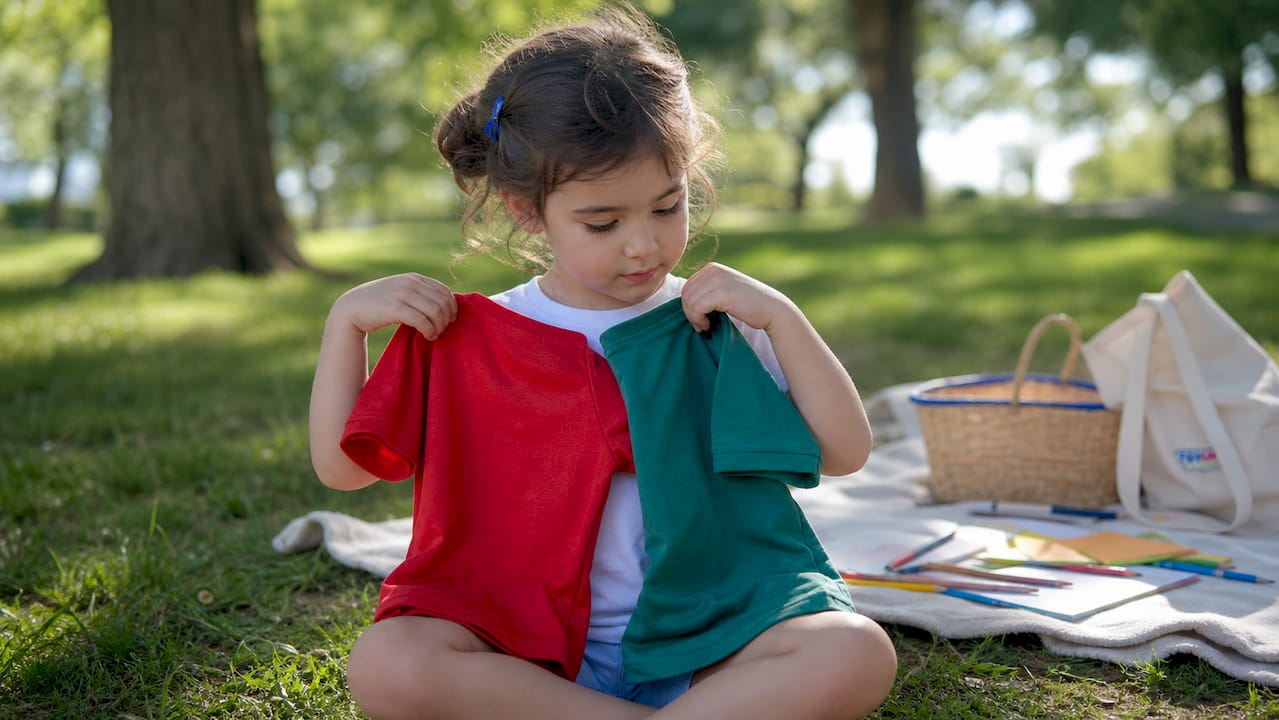
Pro Tip: Offer a child two outfit options in different colors and watch which they reach for without prompting. Their choice is often a reliable emotional cue for how they are feeling that day.
How does color affect children’s mood, learning, and behavior?
The limbic system processes color emotionally before language develops, making color a direct neurological event for children. Adults filter color through layers of cognitive interpretation. Children do not. The emotional response is faster and stronger.
The effects of color on kids follow a consistent pattern across research:
- Red raises heart rate, increases physical energy, and triggers a sense of urgency or excitement. Short bursts in clothing can boost confidence, but red walls in a bedroom cause chronic overstimulation and disrupt sleep.
- Orange shares red’s energizing quality at a lower intensity. It promotes enthusiasm and social interaction without the same risk of overstimulation.
- Yellow is the most attention-activating color. Research shows that yellow backgrounds improve focus on cognitive tasks more effectively than mood-based interventions like music. That finding matters for classroom design and homework spaces.
- Blue lowers heart rate and signals calm to the brain. It is the most consistently documented color for reducing anxiety and supporting sustained attention.
- Green mimics the calming effect of natural environments. It reduces eye strain and supports relaxed concentration over long periods.
- Lavender is the gentlest sedative in the color spectrum. It is particularly effective in sleep environments and transition spaces.
One finding that surprises most parents: color saturation influences young children’s reactions more than hue. A highly saturated green provokes a stronger physiological response than a muted red. This explains why a pastel nursery feels calming even when it uses warm tones.
The distinction between short-term and long-term exposure is also critical. Bright clothing colors can lift mood temporarily, but intense wall colors create a constant sensory load that compounds over time. A red accent pillow is very different from a red bedroom.
Pro Tip: For homework or reading time, try a yellow lamp or yellow desk accessories rather than repainting a wall. You get the attention benefit without the commitment.
How do neurodiverse kids respond differently to color?
Children with ADHD or autism often experience color at a higher sensory intensity than neurotypical peers. What reads as “cheerful” to one child can feel genuinely overwhelming to another. Understanding this difference is one of the most practical things a parent or educator can do.
Key considerations for neurodiverse children:
- Blue and green are the most reliably calming colors for children with ADHD. They reduce anxiety and support the kind of sustained focus that these children find hardest to maintain.
- Muted tones work better than saturated ones for children with sensory processing differences. A soft sage green is far less activating than a bright lime.
- Artificial dyes in food and environments can worsen symptoms. Pediatricians recommend eliminating artificial dyes for children with ADHD or anxiety because they are linked to increased irritability, restlessness, and disrupted sleep.
- Avoid high-contrast, multi-color environments in spaces meant for focus or rest. Classrooms and bedrooms for sensory-sensitive children benefit from a limited, cohesive color palette.
Observation is the most reliable tool here. Watch which colors a child avoids and which they seek out. Those patterns reveal how their sensory system is coping with the environment. Sensory toys designed with calming color palettes, like those explored in Toylandeu™'s guide to calming toys for autism, are built around exactly these principles.
Pro Tip: If a child with ADHD is struggling to settle at a desk, check the color intensity of the surrounding walls and materials first. A simple swap to cooler, less saturated tones can reduce sensory load before you try any behavioral strategy.
How can parents apply color psychology at home and school?
Practical color choices for child development do not require a full renovation. Small, deliberate changes in rooms, wardrobes, and learning spaces produce measurable results.
| Color | Primary Effect | Best Used In |
|---|---|---|
| Blue | Calms, lowers heart rate | Bedrooms, reading corners, homework areas |
| Green | Relaxes, reduces eye strain | Classrooms, play areas, study rooms |
| Yellow | Boosts attention and optimism | Homework desks, art spaces, morning routines |
| Red | Energizes, increases excitement | Short-term clothing, active play areas |
| Lavender | Promotes sleep and calm | Bedrooms, bedtime clothing, transition spaces |
| Orange | Encourages social interaction | Dining areas, group activity spaces |
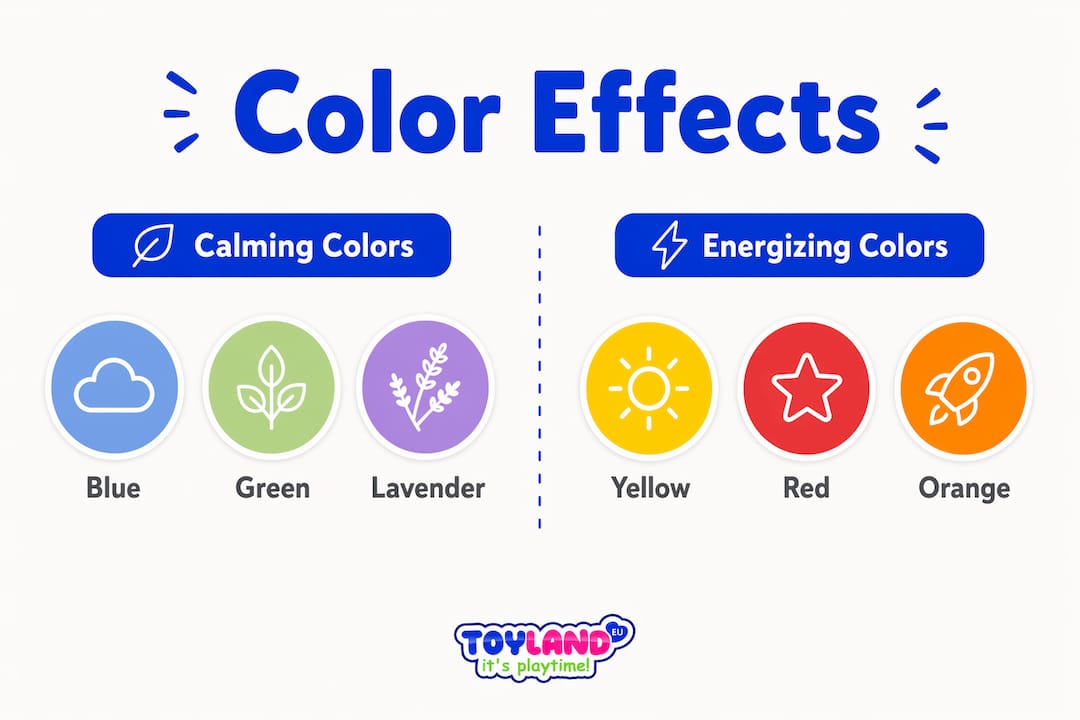
For bedrooms, blues, greens, and soft lavenders are the most effective colors for supporting rest and emotional regulation. Warm colors work best in small doses during active daytime hours. The “pyjama trick” is one of the most underused tools in parenting: cool-toned sleepwear and bedding in white, lavender, or soft blue signals the brain to produce melatonin and supports natural sleep onset. This biological cue is often more effective than a bedtime routine alone.
For classrooms, yellow accents in learning zones and blue or green walls in reading areas create an environment that matches the cognitive demand of each activity. Rotating color elements, like colored folders, desk mats, or storage bins, lets educators shift the sensory tone of a space without structural changes.
The most important rule across all settings: let children participate in color choices. Offering choice without steering allows genuine emotional expression and gives adults better insight into a child’s internal state. Color is a non-verbal language. When you listen to it, children tell you a great deal.
Key takeaways
Color psychology shapes children’s emotional and cognitive development through direct neurological responses, making deliberate color choices one of the most accessible tools available to parents and educators.
| Point | Details |
|---|---|
| Preferences start early | Children develop consistent color preferences by ages 2–3 that reflect temperament and sensory style. |
| Saturation beats hue | Highly saturated colors provoke stronger reactions in young children than the specific hue alone. |
| Short vs. long exposure | Bright clothing lifts mood temporarily; intense wall colors cause chronic overstimulation over time. |
| Neurodiverse needs differ | Children with ADHD or autism respond better to muted, cool tones and benefit from low-saturation environments. |
| Sleep and the pyjama trick | Cool-toned sleepwear and bedding in lavender, white, or soft blue supports melatonin production and better sleep. |
Color is a language. most adults forget to listen.
I have spent years watching parents redecorate children’s rooms based on trends and then wonder why their kids cannot sleep or settle. The research on color psychology in children is not complicated, but it does require you to stop thinking about color as decoration and start treating it as communication.
The most useful shift I have seen in parents and educators is learning to read color choices as emotional data. When a child reaches for the gray crayon every single day, that is worth noticing. When a child refuses to wear a red shirt and melts down at the door, the color might be the actual problem, not the child.
What I find most compelling about the toy color research is how it confirms what attentive caregivers already sense: children are not being difficult about color. They are being precise. Their nervous systems are giving accurate feedback about what they need.
The caution I would add is this: do not over-engineer it. You do not need to repaint every room or audit every outfit. Start by observing. Notice which colors your child seeks and which they avoid. Let them lead. Then make one or two deliberate changes and watch what happens. Color psychology works best as a listening tool, not a control mechanism.
— Thane
Explore color-smart toys at toylandeu™
Color psychology does not stop at the bedroom wall. The toys children play with carry the same emotional signals, and the best ones are designed with that in mind.
Toylandeu™ carries a wide range of toys built around deliberate color and sensory design, from the Montessori Pegboard Colorful Mushroom Toy that uses structured color sorting to build cognitive skills, to the 24-Color Clay Modeling Kit that gives children a hands-on medium for color-based emotional expression. For high-energy kids who need a physical outlet, the gesture-controlled stunt car delivers the kind of bold, stimulating play that matches their energy profile. Every toy in the catalog ships worldwide with free delivery.
FAQ
What colors are most calming for kids?
Blue, green, and soft lavender are the most calming colors for children. They lower heart rate and reduce anxiety, making them ideal for bedrooms and reading spaces.
When do children develop color preferences?
Children develop consistent color preferences between ages 2 and 3. These preferences reflect temperament and sensory processing style rather than random choice.
Does color affect how well kids focus in school?
Yellow significantly improves attentional performance in children. Research shows yellow backgrounds produce better focus on cognitive tasks than mood-based interventions like music.
Are color effects different for kids with ADHD or autism?
Children with ADHD or autism experience color at higher sensory intensity. Muted, cool tones like soft blue and sage green support focus and reduce anxiety, while highly saturated or warm colors can cause overstimulation.
Can clothing color affect a child’s behavior?
Short-term exposure to bright clothing colors can boost mood and energy. Cool-toned sleepwear in lavender, white, or soft blue supports melatonin production and improves sleep onset.