

How Much Is a Normal Allowance? 2026 Age Guide
TL;DR:
- Allowances typically range from $1 to $25 per week, depending on age and expenses. The national average is about $14.72, but the median is closer to $10, which better reflects common family practices. Adjust allowance amounts annually based on expenses, maturity, and family values to teach responsible money management.
A normal allowance is typically between $1 and $25 per week, depending on your child’s age and what expenses you expect them to cover. The U.S. national average sits at roughly $14.72 per week across all ages, while children aged 4–14 average closer to $8.74 weekly. Knowing how much is a normal allowance for your child’s specific age gives you a realistic starting point, and the right number also depends on your family’s values and your child’s readiness to manage money.
Quick Summary
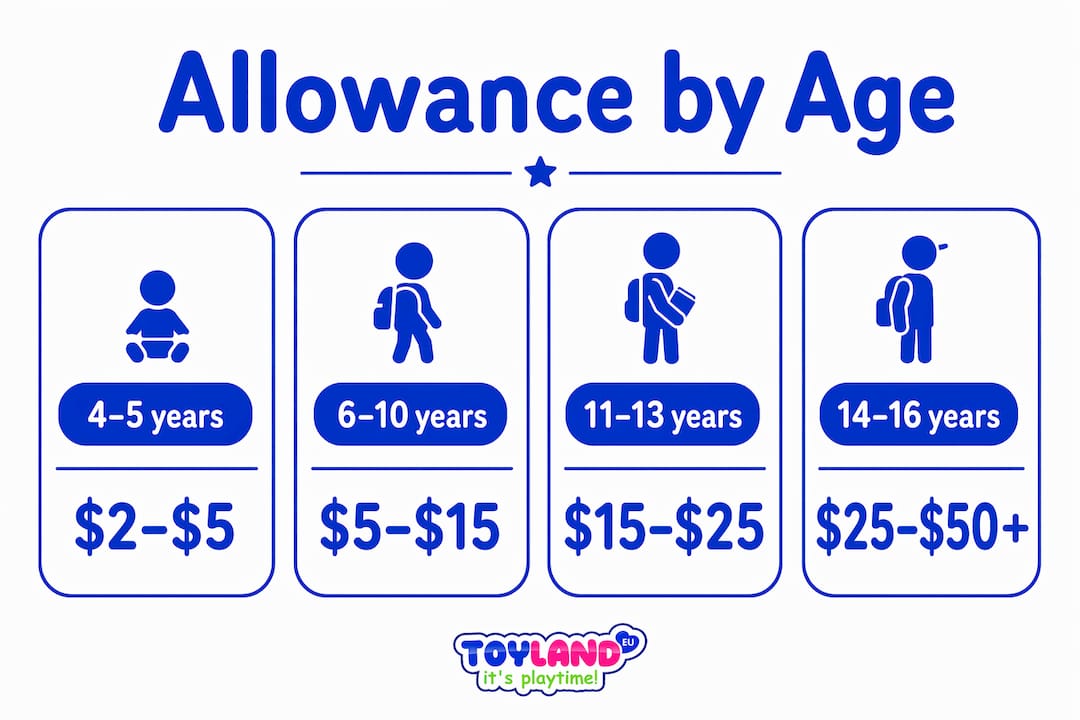
A fair allowance ranges from $2–$5 per week for young children to $25–$50+ per week for older teens. The national weekly average is $14.72, but the median is closer to $10, which better reflects what most families actually pay. Age, expenses, and financial maturity all shape the right number for your family.
TL;DR
- Ages 4–5: $2–$5/week
- Ages 6–8: $5–$10/week
- Ages 9–11: $10–$15/week
- Ages 12–14: $15–$25/week
- Ages 15–17: $25–$50+/week
- Review allowance annually and involve your child in the conversation.
Table of Contents
- What is the average allowance by age?
- How family values shape the right allowance amount
- Best practices for giving allowance
- When and how to adjust allowance over time
- Key Takeaways
- Perspective
- Toylandeu™ picks for allowance-worthy spending
- FAQ
What is the average allowance by age?
Allowance rates by age follow a clear pattern: the older the child, the higher the weekly amount. Children aged 4–5 typically receive $2–$5 per week, enough to buy a small treat or a sticker pack. By ages 6–7, the range climbs to $5–$7, covering small toys or snacks at school events.

| Age group | Typical weekly allowance | Common expenses covered |
|---|---|---|
| 4–5 years | $2–$5 | Candy, stickers, small toys |
| 6–8 years | $5–$10 | Books, craft supplies, small games |
| 9–11 years | $10–$15 | Toys, apps, hobby items |
| 12–14 years | $15–$25 | Clothing, outings, entertainment |
| 15–17 years | $25–$50+ | Social activities, personal care, savings |
Teens aged 14–16 commonly receive $25–$50 or more per week. That jump reflects real costs: movie tickets, fast food with friends, and personal care products add up fast. The monthly allowance for kids in this age group often exceeds $100, which is why some parents shift to monthly payments at this stage.
Pro Tip: Before setting an amount, list every expense you want your child to manage independently. Add those up weekly, then use that total as your floor, not a national average.
How do family values and financial maturity affect the right amount?
The average child allowance amount is a useful benchmark, but it is not a rule. Allowances work best when they match the child’s expected expenses and the family’s financial philosophy. A family that wants their child to save for a toy will set a different amount than one that expects the child to cover school lunches.
Financial maturity matters just as much as age. A 10-year-old who already tracks spending in a notebook is ready for more responsibility than one who loses money regularly. Consistent, frequent payouts in early childhood build money confidence by giving kids repeated practice with real decisions.
Here are the key factors families use to personalize allowance amounts:
- Child’s maturity level. Can your child explain where last week’s money went? If yes, a higher amount with more responsibility makes sense.
- Expenses covered. Decide upfront whether allowance covers only fun spending or also school supplies, clothing, and outings.
- Family budget. A fair allowance is one your family can sustain every week without strain.
- Chores or earned income. Some families tie allowance to completed chores, while others give it unconditionally to separate money lessons from household duties.
- Savings expectations. If you want your child to save 20% of every payment, factor that into the total so they still have spending money left.
Pro Tip: Try a “three-jar” system: one jar for spending, one for saving, and one for giving. It turns every allowance payment into a mini budgeting lesson without any extra effort.
Switching older teens to a monthly allowance schedule mirrors how adult paychecks work. That shift alone teaches teens to pace spending across four weeks instead of blowing everything by Wednesday. You can read more about the pros and cons of starting this practice in the parent’s guide to allowances from Toylandeu™.
What are the best practices for giving allowance?
A consistent payment schedule is the single most effective allowance habit. Children learn money management through repetition, not lectures. When payments arrive on the same day every week, kids begin to plan around them naturally.
- Set a fixed day. Pay allowance on the same day each week, such as every Saturday morning. Predictability builds the habit.
- Use physical cash for young children. Coins and bills make money tangible. A 6-year-old understands a quarter in a way they cannot yet understand a bank app balance.
- Transition teens to monthly payments. Monthly schedules develop budgeting skills that weekly payments do not. A teen who must make $80 last 30 days learns to prioritize.
- Avoid lending or advancing allowance. When you advance money, you remove the consequence of overspending. Let your child run out and wait for the next payment.
- Keep it separate from punishment. Withholding allowance as discipline confuses money lessons with behavior management. Address behavior separately.
- Talk about spending choices. Ask your child what they bought and whether they feel good about it. These conversations build judgment, not just habits.
The right allowance promotes routine money handling and prepares children for real financial decisions. That outcome depends less on the dollar amount and more on how consistently you follow through. For age-specific chore and responsibility ideas that pair well with allowance, Toylandeu™ has a practical guide on chores for 7-year-olds.
When should you adjust your child’s allowance?
The old “$1 per year of age” weekly rule is outdated. Experts now advise moving beyond that formula because inflation and modern teen expenses have outpaced it. A 12-year-old receiving $12 per week cannot cover a single movie ticket and a snack.
The table below shows how median and average figures differ, which matters when setting realistic expectations.
| Metric | Amount | What it means |
|---|---|---|
| National weekly average (all ages) | $14.72 | Skewed upward by high teen allowances |
| Average for ages 4–14 | $8.74 | More relevant for younger children |
| Median allowance | $10 | Better baseline for most families |
The median is the better number for most parents. Median allowance values exclude the effect of a small number of very high allowances that pull the average up. If you base your amount on the average, you may overpay relative to what most families actually give.
Increase allowance when your child takes on new expenses, shows consistent saving behavior, or enters a new life stage like middle school or high school. Households often adjust amounts based on their own budgeting philosophy rather than national data, and that flexibility is healthy. Review the amount once a year, ideally at the start of a new school year, and include your child in the conversation. When kids understand why an amount changes, they take the responsibility more seriously.
Key Takeaways
A fair allowance is defined by your child’s age, expected expenses, and financial maturity, not by a single national average.
| Point | Details |
|---|---|
| Age drives the baseline | Weekly amounts range from $2–$5 for young children to $25–$50+ for older teens. |
| Median beats average | The median allowance of $10 per week is a more realistic benchmark than the $14.72 average. |
| Consistency matters most | Paying on a fixed schedule teaches money habits more effectively than the dollar amount alone. |
| Monthly payments for teens | Switching to monthly allowances mirrors paychecks and builds long-term budgeting skills. |
| Review annually | Adjust amounts each school year and involve your child in the discussion to build ownership. |
Allowance as a money lesson, not just pocket money
By Thane Holland
Most parents treat allowance as a reward or a convenience. I think that framing misses the point entirely. The real value of a weekly or monthly payment is the repeated practice of making choices with limited money. That skill, built over years, is worth more than any single financial lesson you could teach.
The families I have seen struggle most with teen spending are often the ones who gave allowance inconsistently or always bailed their kids out when money ran out. The discomfort of running out of money at age 10 is a cheap lesson compared to the same experience at age 25.
One thing I would push back on: tying every dollar to a chore. When allowance becomes purely transactional, kids start negotiating over every task. Some chores should just be part of being in a family. Keep a small base allowance unconditional, then add earning opportunities on top for bigger jobs. That structure teaches both responsibility and the concept of extra effort earning extra reward.
The conversations around allowance matter as much as the money itself. Ask your child what they are saving for. Ask whether they regret a purchase. Those five-minute talks build financial judgment that no app or spreadsheet can replace.
— Thane Holland
Toylandeu™ picks for allowance-worthy spending
Allowance works best when kids have something worth saving for. Toylandeu™ carries over 30,000 toys and educational kits, including options that fit almost every budget and age group.

For younger children just learning to manage a few dollars, the Montessori Drawing Kit from Toylandeu™ is a great first purchase. It builds creativity and fine motor skills, and it sits comfortably within a young child’s weekly budget. Older kids saving up over several weeks might aim for the colorful drawing scroll kit, a fun DIY project that rewards patience and planning. Toylandeu™ ships worldwide with no shipping fees, so the price you see is the price your child saves toward.
FAQ
What is a normal weekly allowance for a 10-year-old?
A typical weekly allowance for a 10-year-old falls between $10 and $15. That range covers small hobby purchases and teaches basic budgeting without overwhelming a child with too much to manage.
How much allowance should a teenager get per month?
A standard monthly allowance for teens aged 15–17 ranges from $100 to $200 or more, depending on what expenses they are expected to cover. Monthly payments at this stage help teens practice budgeting across a longer time horizon.
Is the $1-per-year-of-age rule still a good guideline?
No. The $1-per-year-of-age rule is outdated and no longer reflects real costs. Experts advise adjusting allowance based on actual expenses and inflation rather than this fixed formula.
Should allowance be tied to chores?
Tying all allowance to chores is not recommended by most financial educators. A base unconditional allowance teaches money management, while separate earning opportunities for extra tasks teach the value of work.
How do I know when to increase my child’s allowance?
Increase allowance when your child takes on new expenses, consistently saves a portion of their payment, or moves into a new school stage. Reviewing the amount once a year at the start of the school year keeps it current without constant renegotiation.
Recommended reads
- Should I give my kid an allowance? A 2026 guide — Toylandeu™
- What’s a good allowance for a kid? — Toylandeu™
- The ultimate toy gift checklist: safe, fun, age-right picks — Toylandeu™