

Why Do Kids Cheat When Playing Games: A Parent's Guide
TL;DR:
- Children cheat mainly as an emotional coping mechanism to protect their self-worth from losing.
- Parents can help by fostering emotional resilience and creating supportive, low-pressure game environments.
Children cheat when playing games primarily as an emotional coping mechanism, not out of malice. When a child bends the rules during a board game or card match, they are almost always trying to protect themselves from the pain of losing. Research in developmental psychology confirms that young children tie their self-worth directly to winning, making a loss feel like a personal failure. Understanding why do kids cheat when playing games gives parents the tools to respond with empathy rather than frustration. This guide covers the emotional, cognitive, and parenting factors behind cheating behavior, along with practical strategies to encourage fair play.
What emotional and cognitive factors lead children to cheat during games?
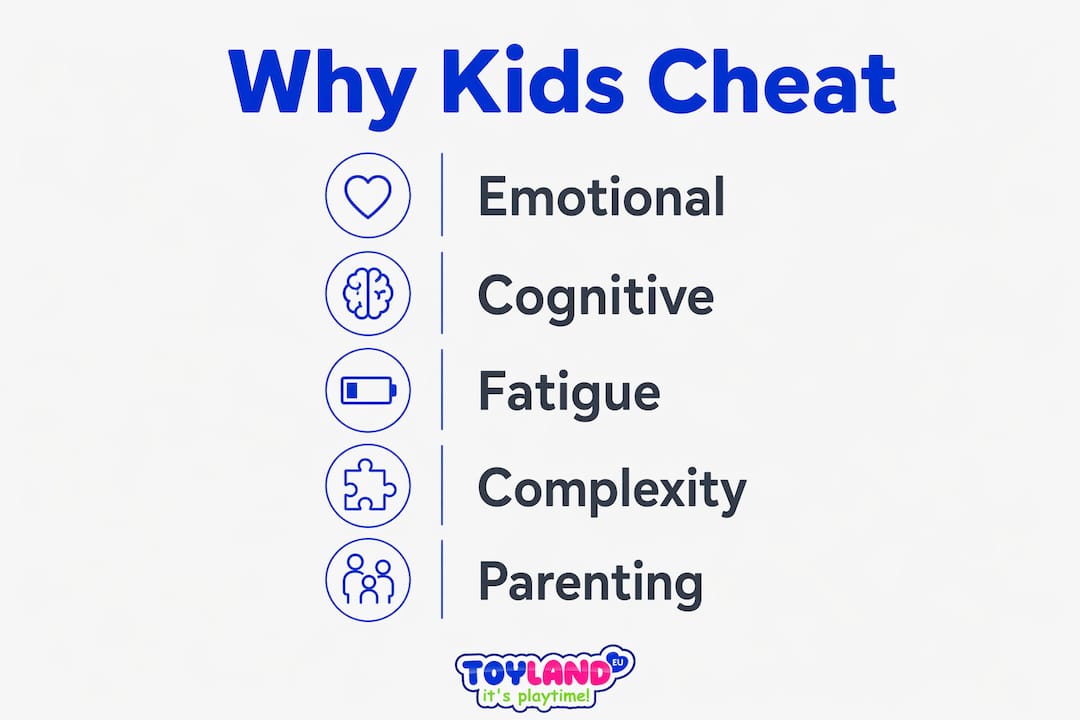
Children cheat during games because losing feels threatening to their sense of self. At early ages, kids equate success in a game with their personal value, so cheating becomes a defense against shame and failure. This is not a character flaw. It reflects the limits of their emotional development at that stage.
Emotional regulation, the ability to manage frustration and disappointment, is still forming in children under 10. When a child cannot handle the feeling of losing, cheating offers a quick exit from that discomfort. Developmental psychologists describe this as a coping strategy, not a moral choice. The behavior signals that a child needs support building emotional resilience, not punishment.
Cognitive overload is another major driver. Complex game rules place heavy demands on working memory. When a child forgets a rule or skips a step, it often happens subconsciously to reduce complexity, not to gain an unfair advantage. Parents who recognize accidental cheating versus intentional cheating respond far more effectively.
Key emotional and cognitive drivers of cheating include:
- Fear of failure. Children who equate losing with being “bad” at something will cheat to avoid that label.
- Underdeveloped frustration tolerance. Young children lack the brain maturity to sit with disappointment calmly.
- Rule confusion. Games with many steps overwhelm working memory, leading to honest mistakes that look like cheating.
- Desire for control. Cheating gives children a sense of agency when a game feels out of their hands.
Pro Tip: When you catch a child bending the rules, ask “Can you show me how that move works?” instead of accusing them. This opens a conversation without triggering shame.
Research from Developmental Science shows that training children in strategic deception during games actually promotes moral awareness, because cognitive and ethical learning develop together. Children who understand deception as a concept become more alert to fairness, not less.
How do game length and complexity influence cheating in children?
Long, complex games are a leading cause of rule-breaking in children. Fatigue and cognitive overload cause children to subconsciously skip rules to ease mental strain and shorten gameplay. This is not deliberate dishonesty. It is the brain taking shortcuts when it runs out of capacity.
Experts recommend limiting game sessions to 30–45 minutes for younger children. Shorter sessions preserve focus and reduce the frustration that builds into cheating. A child who is still engaged and energized is far more likely to play by the rules than one who has been sitting at the table for 90 minutes.
Here is how to adapt games for younger players:
- Break rules into stages. Introduce one or two rules per round until children are comfortable, then add more.
- Shorten the game. Play to a lower score target or use fewer game pieces to cut total playtime.
- Schedule breaks. A five-minute pause mid-game resets focus and reduces the cognitive fatigue that triggers cheating.
- Use practice rounds. No-stakes practice rounds lower performance pressure and help children internalize rules before competition begins.
- Choose age-appropriate games. A game rated for ages 8 and up will overwhelm a 5-year-old, making accidental cheating almost inevitable.
Pro Tip: Read the game’s age recommendation seriously. A game that is too advanced creates frustration before the first turn is even finished.
Shorter play sessions also improve focus and reduce both accidental and intentional cheating. When children feel competent and calm, they are more likely to enjoy the process rather than fixate on the outcome.
What is the impact of parenting styles and communication on cheating behavior?
Parenting style shapes how children respond to competition and losing. Authoritarian parenting at age 4.5 strongly predicts increased cheating by age 6, according to research published in Child Development in february 2026. Controlling environments create self-critical children who cheat to avoid the shame of falling short of high expectations.
Open, warm communication does the opposite. When parents discuss rules and consequences calmly before a game starts, children develop a clearer moral framework around fairness. They understand why rules exist, not just that breaking them is wrong.
Practical communication strategies that reduce cheating:
- Avoid the “cheater” label. Labeling a child a cheater damages their self-concept and makes the behavior more likely to repeat. Discuss the action, not the identity.
- Explain consequences logically. Tell children that cheating removes the fun for everyone, including themselves. Connecting cheating to a loss of enjoyment is more effective than punishment.
- Model grace in winning and losing. Children copy what they see. A parent who celebrates a child’s win generously and accepts their own loss calmly teaches sportsmanship better than any lecture.
- Praise the process, not the result. Excessive achievement praise drives children to cheat to meet high expectations. Praising patience, effort, and kindness during play shifts their focus away from winning at all costs.
Research from Developmental Science also found that giving children permission to deceive in strategic games paradoxically reduces actual cheating. When deception is acknowledged openly, children apply more moral reasoning to their choices, not less.
What strategies can parents use to reduce cheating and encourage fair play?
The most effective approach to reducing cheating combines emotional support, smart game choices, and consistent modeling of fair behavior. Parents who shift game focus from winning to enjoyment see faster improvement in children’s attitudes toward honest play. The goal is to make fairness feel rewarding, not just obligatory.
Strategies that work:
- Run no-stakes practice rounds. Practice rounds remove the pressure of winning and let children absorb rules without anxiety.
- Praise specific behaviors. Comment on patience, taking turns well, and handling a bad roll calmly. These behaviors build the emotional regulation skills that make losing bearable.
- Use cooperative games. Games where players work together rather than against each other eliminate the win-lose dynamic that triggers most cheating. They also build teamwork and communication.
- Stay calm during rule breaks. A quiet, matter-of-fact correction teaches more than a frustrated reaction. “Let’s check the rules together” works better than “You’re cheating again.”
- Introduce toys that build emotional control. Creative and interactive play outside of competitive games builds the confidence and patience children need to handle losing gracefully.
Pro Tip: After a game ends, ask your child what their favorite moment was, win or lose. This reframes the experience around enjoyment rather than outcome.
Children’s ability to accept loss gracefully improves as their general competence grows. Building confidence through art, building, and physical play carries over into how they handle competition at the game table. The skills are connected.
Key Takeaways
Children cheat when playing games because they lack the emotional regulation to handle losing, not because they are dishonest by nature.
| Point | Details |
|---|---|
| Cheating is emotional, not moral | Kids cheat to avoid shame and protect self-worth, not to deceive deliberately. |
| Game length matters | Limit sessions to 30–45 minutes for younger children to prevent fatigue-driven rule-breaking. |
| Parenting style has real impact | Authoritarian environments increase cheating; warm, open communication reduces it. |
| Labels make it worse | Calling a child a cheater damages self-concept and reinforces the behavior. |
| Praise behavior, not outcomes | Recognizing patience and sportsmanship separates a child’s identity from winning. |
Cheating is a signal, not a verdict
I have watched a lot of parents freeze the moment a child moves a game piece the wrong way. The instinct is to correct it hard, to make sure the lesson lands. But in my experience, that reaction almost always backfires. The child shuts down, the game ends badly, and nobody learned anything useful.
What I have found is that cheating during games is one of the clearest signals a child can send you. It says: “I care about this, and I don’t know how to handle losing yet.” That is not a character problem. That is a developmental stage. The children who cheat the most intensely are often the ones who care the most deeply, and that caring is something worth working with, not punishing away.
The parents I have seen handle this best are the ones who treat every game as a low-stakes rehearsal for real life. They let their kids feel the sting of losing in a safe environment. They model what it looks like to laugh off a bad roll. They make fairness feel like something worth choosing, not just something enforced. That shift, from policing to modeling, changes everything. Recognizing that cheating reflects emotional limits, not inherent dishonesty, is the foundation of every effective response.
— Thane Holland
Games and toys that build the skills behind fair play
Children who struggle with cheating often benefit from creative play that builds patience and confidence outside of competitive settings. When a child feels capable and calm in their everyday play, they carry that steadiness into game time.

Toylandeu™ carries a range of art and learning kits designed to develop exactly those skills. The Montessori Drawing Kit builds focus and patience through structured creative work, giving children a sense of accomplishment that does not depend on beating anyone. The Creative Learning Set for ages 3–12 combines drawing and math in a format that rewards effort over outcome. Both are available with free worldwide shipping through Toylandeu™, making them easy additions to any parent’s toolkit for raising confident, fair-minded kids.
FAQ
Why do kids cheat when playing games with family?
Children cheat during family games because losing feels personal and emotionally painful at young ages. They equate winning with self-worth, so cheating becomes a way to protect their feelings rather than a deliberate act of dishonesty.
At what age do children stop cheating at games?
Most children develop stronger emotional regulation and a clearer sense of fairness between ages 7 and 10. Building competence and confidence through varied play accelerates this development.
Is cheating at games a sign of a deeper problem?
Occasional cheating is a normal part of child development and reflects emotional immaturity, not a character flaw. Persistent cheating paired with other concerning behaviors may warrant a conversation with a pediatric counselor.
How should parents respond when they catch a child cheating?
Stay calm and address the action without labeling the child. Saying “let’s check the rules together” is more effective than accusation, and discussing how cheating affects everyone’s enjoyment builds moral understanding better than punishment.
Do cooperative games reduce cheating in children?
Cooperative games remove the win-lose dynamic that triggers most cheating. When children work toward a shared goal, the motivation to bend rules disappears, making these games a practical tool for parents managing cheating behavior.