

Smart Tips for Choosing the Best Toys: A Parent's Guide
- Select toys based on age, safety certifications, and developmental suitability to ensure engagement and safety.
- Balance educational, entertaining, and creative qualities to support holistic child development and sustained interest.
- Shop from reputable retailers, verify safety standards, and involve children in choosing to enhance satisfaction and safety.
Picking the right toy sounds simple until you’re standing in a store aisle or scrolling through thousands of options online, second-guessing every choice. Is it safe? Will they actually play with it? Does it match where they are developmentally? These questions trip up even the most prepared parents and gift buyers. The good news is that toy selection doesn’t have to feel like a guessing game. This guide walks you through the core criteria, the best toy categories, a side-by-side comparison of popular options, and smart buying habits so you can shop with real confidence every single time.
Table of Contents
- Choose toys based on age, safety, and development
- Find the right balance: educational, entertaining, and creative toys
- Compare top toy types for every age and interest
- Buying tips: choose reputable retailers and platforms
- A smarter approach to choosing toys: what most guides miss
- Ready to find the perfect toy? Explore top picks at ToylandEU
- Frequently asked questions
Key Takeaways
| Point | Details |
|---|---|
| Prioritize safety and age-fit | Check labeling and choose toys designed for your child’s developmental stage. |
| Balance learning and fun | Pick toys that spark creativity and enjoyment for solo and group play. |
| Use comparisons for smart choices | Assess toy types side by side to match children’s needs and interests. |
| Shop from trusted sources | Select retailers with safety records, clear return policies, and authentic products. |
Choose toys based on age, safety, and development
Every great toy purchase starts with three non-negotiables: age-appropriateness, safety, and developmental fit. Skip any one of these and you risk buying something that collects dust or, worse, poses a real hazard.
Age labels on toy packaging aren’t just suggestions. They reflect careful testing around cognitive ability, motor skills, and physical safety. Age labeling and safety standards protect children from unsuitable or dangerous toys, and ignoring them can lead to frustration for the child or genuine risk. A puzzle designed for a 6-year-old will bore a 10-year-old and overwhelm a 3-year-old.
Safety standards go beyond the age label. Look for certifications like CE (Europe), ASTM (United States), or EN71 markings. Pay attention to small parts warnings for children under 3, check for non-toxic toy safety materials especially in art and sensory toys, and be aware of newer smart toy safety tech considerations for connected or electronic products.
Developmental needs shift fast across age groups. Here’s a quick breakdown:
- Babies (0 to 12 months): Sensory toys, soft rattles, high-contrast visuals. Focus on stimulation and safe exploration.
- Toddlers (1 to 3 years): Stacking toys, shape sorters, push-and-pull toys. Build fine motor skills and cause-and-effect thinking.
- Preschoolers (3 to 5 years): Simple puzzles, art kits, pretend play sets. Encourage imagination and early problem-solving.
- School-age children (6 to 12 years): STEM kits, board games, building sets. Support logic, teamwork, and sustained focus.
- Teens (13 and up): Strategy games, advanced RC vehicles, creative technology kits. Challenge critical thinking and independence.
Looking at STEM toys by age is a great starting point for matching learning-focused toys to the right developmental window.
Pro Tip: Favor toys labeled for a range of ages rather than a single year. These “grow with the child” options deliver longer play value and better return on your investment.
Find the right balance: educational, entertaining, and creative toys
Once you’ve confirmed a toy is safe and age-appropriate, the next question is what kind of play it supports. The best toys don’t just occupy time. They build something.
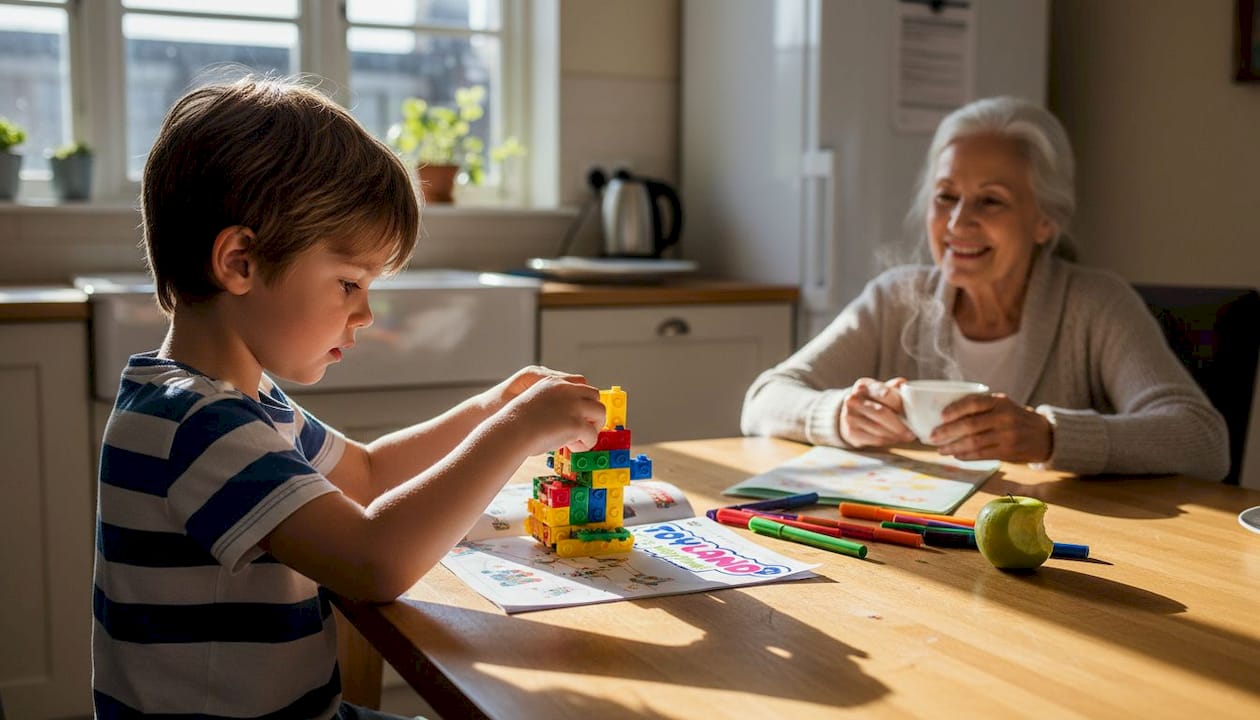
Toys that integrate educational content with enjoyable play help children gain cognitive and social skills, which is why the educational-entertainment balance matters so much when you’re choosing.
Here’s a breakdown of the main categories:
- Educational toys: STEM kits, coding games, literacy flashcards, math puzzles. These build specific knowledge and analytical thinking.
- Entertaining toys: RC cars, action figures, board games, outdoor kits. These prioritize fun and active engagement.
- Creative toys: Art sets, modeling clay, craft kits, building blocks. These support imagination, self-expression, and open-ended thinking.
The sweet spot is often a toy that touches two or three of these categories at once. A robotics kit, for example, is educational (coding and engineering), entertaining (it moves and responds), and creative (children design and customize their builds).
| Toy type | Primary benefit | Best age range | Solo or group |
|---|---|---|---|
| STEM kits | Critical thinking | 5 to 12 years | Both |
| Art and craft sets | Creativity | 3 and up | Solo |
| RC vehicles | Active fun | 6 and up | Solo or group |
| Board and card games | Social skills | 4 and up | Group |
| Building sets | Spatial reasoning | 3 and up | Both |
For toys that work well in classroom or family settings, group learning toys offer great options that build cooperation alongside skills. If sustainability matters to your family, eco-friendly toys made from natural or recycled materials are increasingly available across all these categories.
Pro Tip: Choose toys that work for both solo and group play. A child who can enjoy a toy alone and share it with friends gets far more value from a single purchase.
Compare top toy types for every age and interest
Not every child is wired the same way. Some kids want to build and tinker. Others want to move, compete, or create. Matching the toy type to the child’s personality is what separates a great gift from a forgotten one.
“The best toy is the one that fits the child, not the trend. When you match a toy to a child’s natural curiosity, play becomes self-directed and deeply satisfying.”
Matching toy types to a child’s interests boosts engagement and supports well-rounded development, which is why personality-based selection is more effective than simply buying what’s popular.
Here’s how the top toy types compare across key factors:
| Toy type | Best for | Age range | Strengths | Limitations |
|---|---|---|---|---|
| Art kits | Creative children | 3 and up | Self-expression, fine motor | Can be messy, supplies run out |
| RC vehicles | Active, tech-curious kids | 6 and up | Exciting, builds coordination | Batteries needed, outdoor space helps |
| Group board games | Social learners | 4 and up | Teamwork, strategy | Requires multiple players |
| STEM sets | Analytical thinkers | 5 to 14 years | Deep learning, replayable | May frustrate younger children |
For child-safe toys across all these categories, always verify that materials meet current safety standards before purchasing.
Here are standout picks by play style:
- Creative children: Art workbooks, clay sculpting kits, drawing sets with guided prompts.
- Active children: Gesture-controlled RC cars, outdoor kite sets, obstacle course kits.
- Analytical children: Robotics kits, logic puzzle sets, coding board games.
- Social children: Cooperative board games, trivia sets, group craft projects.
The key insight here is that no toy type is universally better. A STEM kit given to a child who loves art may sit untouched, while the same kit given to a curious builder becomes a weekly obsession. Ask the child, observe what they gravitate toward, and let that guide you.
Buying tips: choose reputable retailers and platforms
Knowing what to buy is only half the equation. Knowing where and how to buy protects you from counterfeit products, poor quality, and frustrating return experiences.
Trusted retailers provide better quality assurance, clear return policies, and verified safety compliance, which is why the platform you choose matters as much as the product itself.
Here’s a step-by-step approach to buying smart:
- Verify safety certifications. Look for CE, ASTM, or EN71 markings in the product description. If they’re missing, that’s a red flag.
- Read the full product description. Age range, materials, battery requirements, and assembly needs should all be clearly listed.
- Check customer reviews. Look for patterns, not just star ratings. Multiple mentions of broken parts or missing pieces are warning signs.
- Confirm the return policy. Especially for gifts, a flexible return or exchange window matters.
- Look for 2026 toy safety regulations compliance. Updated standards mean the product has been tested against current requirements.
When comparing online versus in-store shopping, here’s what to keep in mind:
- Online: Wider selection, easier price comparison, access to detailed specs and reviews. Watch for third-party sellers with unclear origins.
- In-store: You can inspect packaging and materials directly. Selection is more limited but quality is easier to assess on the spot.
A quick checklist before you buy:
- Age label matches the child’s current stage
- Safety certifications are clearly listed
- Materials are non-toxic (especially for children under 6)
- Reviews mention durability and play value
- Retailer has a clear return or exchange policy
Shopping from established platforms with a dedicated toy focus gives you an extra layer of confidence, since curated catalogs tend to filter out low-quality or non-compliant products before they reach you.
A smarter approach to choosing toys: what most guides miss
Most toy-buying guides hand you a checklist and call it done. But the parents who consistently find toys their kids actually love do something different. They stay curious and stay flexible.
Rigid perfectionism in toy selection often backfires. You spend hours researching the “optimal” STEM kit, only to discover your child is suddenly obsessed with puppetry. The best toy buyers we’ve seen treat selection as an ongoing conversation, not a one-time decision. They involve kids in the process, pay attention to what sparks genuine excitement, and aren’t afraid to pivot.
Some of the most memorable toys bridge multiple interests or even generations. A classic building set that a parent played with as a child can become a shared project that outlasts any single-use gadget. For families who want that kind of shared experience, toys for group learning offer a natural starting point.
The real goal isn’t to find the perfect toy. It’s to find a toy that opens a door. Educational intent matters, but so does the freedom to play without a script. Give children room to surprise you.
Ready to find the perfect toy? Explore top picks at ToylandEU
Now that you have a clear framework for choosing toys that are safe, engaging, and genuinely matched to your child’s needs, the next step is finding them in one place.
At ToylandEU, we carry over 30,000 safety-compliant toys for every age group, interest, and budget, with free worldwide shipping on every order. Whether you’re looking for something creative like the Montessori drawing kit or something thrilling like the stunt car adventure toy, our catalog is built to match the guidance in this article. Browse by age, category, or interest to find a gift or everyday toy that will actually get used and loved.
Frequently asked questions
How do I know if a toy is safe for my child’s age?
Check both the age label and safety certifications on the packaging, and reference recent safety regulation updates in your region. Certifications like CE or ASTM confirm the product has been tested against current standards.
What types of toys help with learning and development?
Toys that encourage creativity, critical thinking, or group collaboration support development at every stage. Educational and creative toys like STEM kits or art sets are especially effective for building both cognitive and social skills.
Should I buy toys online or in-store for better safety?
Both options can be safe when you choose reputable retailers and double-check product details for compliance and return policies. Online platforms often provide more detailed specs and reviews to help you verify quality.
How can I spot high-quality toys quickly?
Look for well-known brands, clear safety information, positive and detailed customer reviews, and products that encourage open-ended play. Toys that can be used in multiple ways tend to hold a child’s interest far longer than single-purpose items.