

What Is a Gift Set Toy? A Parent's Buying Guide
TL;DR:
- Gift set toys are curated bundles of themed components designed to provide a comprehensive and engaging play experience. They reduce gifting risk through variety and thematic depth, making them especially suitable when preferences are unknown. Choosing the right set involves assessing thematic cohesion, age appropriateness, and component quality to ensure lasting developmental and play value.
Walking into a toy store — or scrolling through thousands of options online — and trying to figure out what is a gift set toy versus a regular standalone toy is genuinely confusing. The packaging looks similar, the price points overlap, and the terminology shifts from brand to brand. Buy the wrong thing and you end up with a gift that misses the mark entirely. This guide breaks down exactly what gift set toys are, how they work, what makes them worth buying, and how to pick the right one without second-guessing yourself at checkout.
Table of Contents
- Key Takeaways
- What is a gift set toy, exactly?
- Why gift sets often work better than single toys
- Considerations before choosing a gift set
- How to choose the best gift set toys
- Popular types of gift sets and who they suit
- My honest take on gift set toys
- Discover gift sets your child will actually use
- FAQ
Key Takeaways
| Point | Details |
|---|---|
| Gift sets are bundled packages | They include multiple themed toy components sold together in one box. |
| Variety reduces gifting risk | Multiple items mean a child is more likely to enjoy at least part of the gift. |
| Quality matters more than quantity | Five mediocre items beat two great ones is false. Two great ones win. |
| Match sets to developmental stage | Age-appropriate components make gift sets genuinely useful, not just visually generous. |
| Single focused gifts can be better | When a child has clear preferences, one high-quality toy often outperforms a mixed set. |
What is a gift set toy, exactly?
A gift set toy is a pre-curated bundle of multiple toy components, themed and packaged together in a single box, designed to be given as one complete gift. It is not just a random collection of toys thrown together. The industry term most commonly used is playset, though “gift set” specifically signals that the package has been assembled and presented for gifting occasions.
Playsets are themed collections where every piece is designed to work together to enact a scene, action, or story. A classic example might be a character doll bundled with a buildable playset and a storybook. Another common format is a baby sensory bundle that pairs rattles, teething rings, and a soft play mat in one “Play Time Gift Set” box.
Here is what you typically find inside a toy gift set:
- A main toy or focal item (a doll, vehicle, or activity board)
- Themed accessories that extend or enrich play with the main item
- Supplementary items like books, stickers, or cards that reinforce the theme
- Occasionally, sensory or developmental tools aimed at specific age groups
“Gift sets are pre-packaged bundles where the components are designed to work together functionally, not just grouped for packaging appeal.” — Playset, Wikipedia
The concept has a longer history than most people realize. Playsets trace back to early 20th-century military toy figures and gained real momentum during the Baby Boomer era, when manufacturers advanced the idea of selling complete themed worlds in one purchase. Today, the format spans every category from STEM kits to soft toy collections.
Why gift sets often work better than single toys
The core advantage of toy gift sets for kids comes down to risk reduction. When you buy a single toy, you are making one bet. If the child already has it, doesn’t like it, or has aged past that type of play, you get a total miss. A gift set spreads that risk across multiple items, so even if one piece doesn’t land, something else in the bundle likely will.
There are four concrete reasons gift sets outperform single toys in most gifting scenarios:
- Perceived generosity. Multiple coordinated items in thoughtful packaging feel more substantial and considered than a single item, even at the same price point.
- Broader play value. A STEM kit with building blocks, an experiment guide, and a reference card covers more types of learning than one block set alone.
- Thematic depth. When pieces work together, children can build more complex play narratives, which extends how long they engage with the gift.
- Convenience for the buyer. Curated bundles remove the guesswork of pairing compatible toys from different stores or brands.
Pro Tip: If you are buying for a child you don’t know well, a gift set is almost always the safer choice. The variety acts as a buffer, and themed sets signal thought and care even when you aren’t sure of specific preferences.
Considerations before choosing a gift set
Not every gift set deserves your money. There are real pitfalls worth knowing before you commit.
The most common problem is filler. Some sets hit a price point by using cheaper versions of each item rather than delivering genuine quality across the board. Five mediocre pieces are not better than two excellent ones. If the individual components wouldn’t be worth buying separately, the set probably isn’t worth it either.
Here is what to watch for:
- Thematic mismatch. A bundle built around a character or theme your child doesn’t recognize won’t get much use, regardless of how well-made it is.
- Inappropriate age range. Many gift sets target a wide age bracket for marketing purposes. Check the specific developmental stage guidance, not just the general age range printed on the box.
- Quantity over quality. More pieces can look impressive on the shelf but deliver less actual play value than one well-designed focal toy.
| Scenario | Better choice |
|---|---|
| Child has specific, known interests | Single high-quality toy aligned to that interest |
| Recipient is unknown or preferences are unclear | Gift set with thematic variety |
| Milestone occasion (birthday, first steps) | Quality standalone toy with lasting value |
| Holiday gifting or stocking filler context | Gift set for visual impact and variety |
When a child has strong preferences or has hinted at specific items, a focused, high-quality single gift often lands better than any bundle. Minimalist kids and older children with developed tastes frequently prefer one excellent thing over a set of adequate things.
How to choose the best gift set toys
Knowing how to choose gift set toys comes down to evaluating a few specific factors, not just scanning the price tag and grabbing the most colorful box.
Start with thematic cohesion. Every component should make sense together and add something to the play experience. If you remove one piece and the rest still work fine without it, that piece is probably filler.
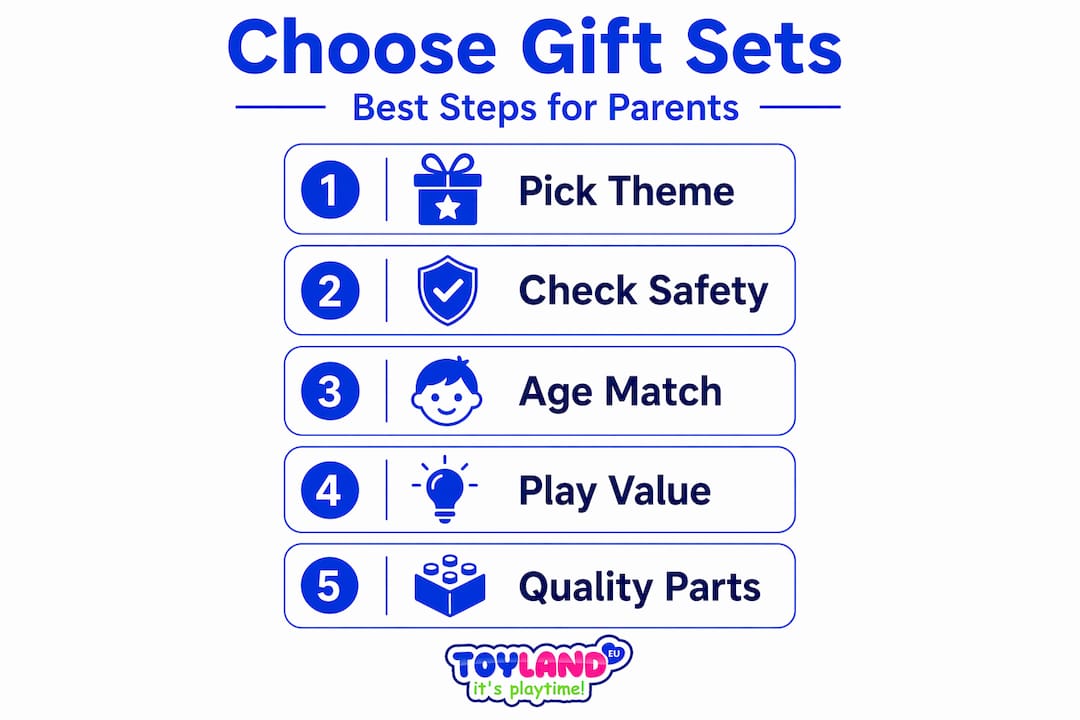
Pro Tip: Read the individual product descriptions for each component inside a set, not just the set’s overall description. This reveals whether the pieces genuinely complement each other or were bundled purely for packaging purposes.
Next, check these factors before buying:
- Age-appropriateness and safety. Look for sets that match your child’s current developmental stage, not just the minimum age listed. A set designed for ages 3 to 8 may have components suited to an 8-year-old that a 3-year-old can’t use yet.
- Educational or developmental value clues. Sets that mention specific skills, such as fine motor development, color recognition, or creative expression, signal intentional design.
- Review patterns. Look for reviews from parents of children the same age as your recipient. A set rated highly by parents of 5-year-olds tells you more than an aggregate star rating.
- Balance of staple and novelty. The best gift approach often pairs one standout item with one or two smaller complementary pieces, creating both focused impact and visual generosity.
For parents wanting a deeper framework, the toy gift checklist at Toylandeu covers age, safety, and play variety in practical detail.
Popular types of gift sets and who they suit
Gift sets work particularly well for children with exploratory play needs or parents who want to cover a range of developmental benefits in one purchase. Here is a quick reference for the most popular categories:
| Gift set type | Best suited for | Key benefit |
|---|---|---|
| Sensory and baby development kits | Infants and toddlers (0 to 2 years) | Stimulates early sensory and motor development |
| STEM and science kits | Ages 5 and up | Builds problem-solving and analytical thinking |
| Creative arts kits | Ages 3 and up | Develops fine motor skills and self-expression |
| Character and building playsets | Ages 4 to 10 | Encourages narrative play and spatial reasoning |
| Soft toy and interactive book combos | Toddlers (1 to 4 years) | Supports language and emotional development |
Gift sets for toddlers tend to perform best when they prioritize sensory input and simple cause-and-effect mechanics. Older children respond better to sets with a clear creative or problem-solving goal. You can find useful age-specific guidance on STEM toy selection to help match educational sets to the right developmental window.
My honest take on gift set toys
I’ve watched parents agonize over gift sets for years, and the mistake I see most often is treating “more” as automatically “better.” A beautifully packaged set with six pieces sounds impressive. But if four of those pieces are cheap accessories that end up under the couch by day two, the gift has already failed.
What I’ve found actually works is the hybrid approach: anchor the set around one genuinely strong focal toy, then choose one or two smaller items that genuinely extend what the main toy does. That structure delivers both the visual generosity of a set and the lasting play value of a quality individual toy.
I’ve also learned to pay close attention to the age guidance on individual components, not just the set as a whole. Brands routinely widen age ranges to broaden appeal. That catches a lot of buyers off guard when a toddler receives a set with pieces designed for a much older child.
The market for gift sets keeps growing, and the quality gap between good and mediocre sets is widening too. The best sets I’ve come across are the ones where you can tell a child development specialist had input on what went in the box, not just a packaging designer.
— Thane
Discover gift sets your child will actually use
Toylandeu has assembled a catalog of creative gift sets designed with genuine play value at their core, not just visual appeal.
If you are looking for unique gift toy ideas that combine education with hands-on creativity, the Montessori Drawing Kit is a standout option. It bundles structured art activities with open creative play in a format that holds a child’s attention well past the first afternoon. For something with more tactile variety, the clay modeling kit gives kids 24 colors to work with and supports both fine motor development and imaginative play. Every product ships worldwide with no minimum order, so finding the right gift set is one less thing to stress about.
FAQ
What makes a toy qualify as a gift set?
A gift set toy is a bundle of multiple themed toy components sold together in one package, where each piece is designed to complement the others functionally, not just visually. It differs from a single toy by offering variety and a complete play experience in one purchase.
Are gift sets worth buying for toddlers?
Yes. Gift sets for toddlers work well when the components target sensory development and simple motor skills. Look for sets where every piece suits the same developmental stage rather than sets that span a wide age range.
When is a single toy better than a gift set?
When the child has specific, known preferences or has hinted at a particular toy, a single high-quality item aligned to that interest will almost always be more appreciated than a varied set.
How do I spot low-quality filler in a gift set?
Check whether the individual components would hold value on their own. If several pieces seem like cheap add-ons that wouldn’t sell separately, the set is likely padding its item count to justify the price.
What types of gift sets offer the most developmental value?
STEM kits, sensory playsets, and creative arts bundles consistently rank among the best gift set toys for developmental value. They cover problem-solving, sensory processing, and fine motor skills in formats children engage with repeatedly.