

The Best Toy Animals for Kids: A Buyer's Guide for 2026
If you want realistic toy animals that hold up to play and actually teach something, start with a curated figurine set grouped by habitat rather than a random single figure. A jungle, farm, or ocean collection from Toylandeu™ gives kids a story to build around, and that narrative structure is what turns a toy into a learning tool.
Here’s the short version before you dive in:
- Realism and habitat grouping matter more than sheer piece count for imaginative and educational play.
- Match material and scale to the child’s age first, then worry about which animals look coolest on the shelf.
- Bundles that pair a figurine set with a simple playset base deliver more long-term play value than one-off purchases.
Toylandeu™ ships internationally, lists dimensions and materials on every product page, and backs purchases with a standard returns window, so you can check the specs before committing.
Key Takeaways
Realistic, habitat-grouped toy animals combined with age-appropriate material and scale choices deliver the strongest educational and play value for the money.
| Point | Details |
|---|---|
| Habitat grouping wins | Figures organized by jungle, farm, or marine theme drive more imaginative and educational play than random single pieces. |
| Age and material first | Match plastic durability or plush comfort to the child’s age before worrying about which species look best. |
| Scale consistency matters | Keep figures in a single size range when building dioramas so spatial reasoning lessons actually land. |
| Bundles beat one-offs | Pairing a small figure set with a simple playset base extends play value more than a single large purchase. |
| Toylandeu™ covers the range | Toylandeu™'s figurine, plush, and collector sets each list dimensions, materials, and age guidance to shop with confidence. |
Table of Contents
- What “Toy Animals” Actually Covers
- How to Choose the Right Toy Animal Every Time
- Curated Toylandeu™ Collections Worth Buying
- Cleaning, Safety, and Durability Checks
- How to Build a Habitat Playset That Actually Teaches Something
- Price Ranges and Gift Picks by Budget
- Why Habitat Play Beats the Checklist Mentality
- Shop Realistic Toy Animals at Toylandeu™
- FAQ
What “Toy Animals” Actually Covers
“Toy animals” is a catch-all term, and it covers more ground than most shoppers expect. Understanding the categories helps you match a listing to what your child (or the collector on your gift list) actually wants.
Realistic plastic figurines are the backbone of the category. These range from single detailed figures to multi-packs, often called TOOB-style sets, that bundle 8 to 12 smaller animals around one theme. Amazon’s best-seller data for kids’ animal figures shows pack sizes running from single pieces up to 60-piece assortments, which tells you how wide the price and complexity spread really is. Safari Ltd, one of the category’s best-known figurine makers, organizes its entire catalog by habitat rather than species, reinforcing the idea that grouping animals by where they live drives more engaged play than scattering random species together.
Plush animals serve a different job. They’re built for comfort, bedtime, and younger hands that aren’t ready for small, detailed parts. A plush lion or elephant becomes a bedroom fixture in a way a plastic figure rarely does.
Miniatures and diorama figures skew smaller and more numerous, aimed at kids and adults who want to build a scene rather than play one animal at a time. Think ant-sized farm animals scattered across a shoebox barn.
Themed playsets bundle figures with terrain pieces, fencing, trees, or water features. Farm, jungle, and marine are the three dominant themes on major retail platforms, and Target’s animal figures category alone returns over 1,200 results spanning these formats.
Educational animal kits pair figures with activity cards, anatomy cutaways, or matching games. These lean hardest into the classroom and homeschool market.
When you’re browsing listings, look for:
- Scale or size measurements (in inches or centimeters), not just “realistic size.”
- Material callouts: PVC, TPE, ABS plastic, or polyester plush fill.
- An age rating, even a general one like “3+” or “8+.”
- Multiple product photos showing the figure from different angles, not just a hero shot.
How to Choose the Right Toy Animal Every Time
Buying toy animals looks simple until you’re staring at ten nearly identical lion figures with wildly different prices. Here’s the process that actually works.
1. Start with age and safety, not looks
The cutest figure in the world is the wrong purchase if it’s a choking hazard for a toddler. Check the listing for a stated age range, and treat “3+” labels seriously. If a product page doesn’t mention small parts warnings at all, that’s a gap, not a good sign. Ask yourself three quick questions before adding anything to your cart:
- Does the listing state a specific age range, or just “for kids”?
- Are there small detachable parts (horns, tails, accessories) that could separate?
- Does the description reference any safety standard, even briefly?
2. Match material to durability needs
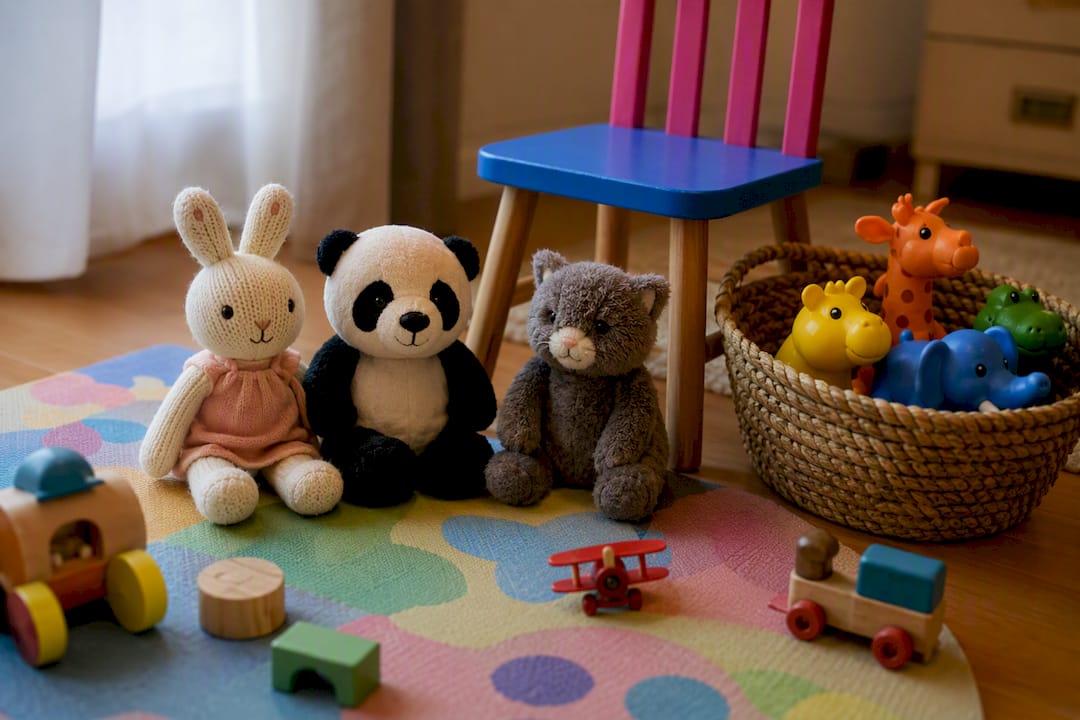
Hard plastic figurines, typically PVC or ABS, survive drops, outdoor sandbox sessions, and a fair amount of chewing from younger siblings. They’re the better pick for toddlers who put everything in their mouths, provided the piece size is large enough to avoid choking risk. Plush animals feel better for cuddling and quiet play but wear down faster with rough handling and need occasional spot cleaning or machine washing depending on the fill. For a preschooler who treats every toy like a hammer, go plastic. For a child who wants a bedtime companion, go plush.
3. Get the scale right before you buy
Scale consistency is the detail most buyers skip and most regret skipping. If you’re building any kind of habitat scene, mixing a 6 inch lion with a 2 inch giraffe wrecks the visual logic of the display and makes it harder for kids to reason about relative size, which is part of the point of habitat play in the first place. Toylandeu™'s guidance on plastic animal figures recommends checking stated dimensions against other pieces you already own, especially when adding to an existing collection or building a themed set over time.
Here’s a quick shopping checklist to run through before you click “add to cart”:
- Dimensions listed in inches or centimeters, not just “medium” or “large.”
- Material clearly named (not just “durable plastic”).
- Age rating stated on the page.
- Return policy and shipping window visible.
- At least two to three customer photos or a written review mentioning size accuracy.
Watch for these red flags, because they tend to predict a disappointing unboxing:
- No dimensions listed anywhere on the page.
- A single stock photo with no scale reference (coin, hand, ruler).
- Vague “non-toxic” claims with no standard referenced.
- No stated age guidance at all.
- Reviews mentioning the item arrived “much smaller than expected.”
Curated Toylandeu™ Collections Worth Buying
Once you know what to look for, the fastest path is a curated bundle instead of assembling one figure at a time. Toylandeu™ organizes its animal toy catalog around the buying patterns that actually show up in shopping carts: starter sets for the youngest kids, detailed collector figures for older enthusiasts, and plush lines for gifting.
Starter bundles for preschoolers typically combine four to eight larger, simplified figures in a farm or jungle theme, sized for small hands and priced to survive a first “I dropped it in the yard” incident without heartbreak. These work well as a first exposure to habitat play, since the animal count is low enough that a 3 year old can actually learn each one by name.
Realistic figurine sets for school-age kids step up in detail. Toylandeu™'s ocean creatures action figure set, featuring a turtle, octopus, and crocodile, is a solid example of this tier. The listing includes sizing and material details and calls out classroom-friendly uses like sensory bins, which is exactly the kind of trust signal a parent buying sight unseen wants to see before checkout.
Plush collections for comfort and gifting fill the softer end of the catalog. The Wild Safari Plush Animal Dolls Set lists a 25 centimeter size across its forest-themed lineup, making it easy to judge fit for a toddler’s arms versus a display shelf. Sets like this double as both a bedtime companion and a low-effort gift when you need something that reads as thoughtful without requiring research.
Collector-grade figures sit at the top of the range. The Majestic Lion Family Action Figures set shows the kind of sculpted detail and scale accuracy that appeals to older kids, hobbyists, and adult collectors who want display pieces rather than play pieces. That distinction matters when you’re shopping for a teenager or an adult on your list instead of a toddler.
Trust signals worth confirming before you buy any of these: stated dimensions, named materials, an age rating, at least a few angles of product photography, and visible shipping and return terms. Toylandeu™ lists all five on its animal toy product pages, which removes most of the guesswork that makes buying toys online frustrating.
Pro Tip: Pair a small figurine set with a basic playset base (a tray, some fake turf, and a few props) rather than buying a large single playset up front. You get more educational mileage from a flexible, reconfigurable setup than from one fixed diorama, and it costs less to start.
Cleaning, Safety, and Durability Checks
A little maintenance keeps toy animals looking good and, more importantly, keeps them safe over months of play. Plastic figures generally just need a wipe with a damp cloth and mild soap. Avoid soaking painted pieces for long periods, since prolonged water exposure can lift paint on lower-quality figures over time. Plush animals vary more: check the tag for machine-wash instructions, and when in doubt, hand wash and air dry rather than risk the dryer warping stuffing or seams.
Before handing any new figure to a young child, run a quick safety pass:
- Check for small, detachable parts like horns, tusks, or tails that could pop off.
- Look for chipped paint or rough mold seams that weren’t visible in photos.
- Confirm the age rating on the packaging or listing matches your child’s age.
- Look for a reference to a recognized safety standard on the product page, since manufacturers meeting ASTM F963 or CPSC requirements for U.S. toy safety will typically say so.
Durability tells you a lot about long-term value. Cheaper PVC figures can turn brittle after extended sun exposure, so an outdoor sandbox toy left on a windowsill for a summer may crack sooner than one stored indoors. Articulated figures, the ones with moving joints, need occasional inspection since joints are the first point of failure. For storage, a bin with some separation between pieces protects paint finishes better than a jumbled toy chest where figures rub against each other.
How to Build a Habitat Playset That Actually Teaches Something
Habitat play beats scattered, random play because it gives kids a framework: this animal lives here, eats this, and interacts with these other creatures. Schleich, another major figurine brand, structures its entire product line around this idea, clustering figures into habitat collections and starter sets rather than selling by species alone. Building your own version at home is cheaper than it sounds.
Here’s a simple process for a first habitat build:
- Pick one habitat to start: jungle, farm, or marine work best for beginners since they have clear, recognizable props (trees, fencing, water).
- Gather a base tray or shallow box as your foundation, plus a cheap substrate like sand, green felt, or blue paper for water.
- Choose 5 to 8 figures in a consistent scale so size relationships make sense to a young child comparing animals.
- Add two or three simple props (a small plastic fence, a few sticks for trees, a mirror shard for a pond) rather than buying an expensive prebuilt set right away.
- Introduce learning prompts as you set up: ask what each animal eats, where it sleeps, or how it stays safe from predators.
For a marine build, pairing Toylandeu™'s ocean creatures set with a blue fabric backdrop and a few rocks makes a classroom-ready sensory bin in under ten minutes. For a jungle theme, a starter figure pack combined with green craft paper and a couple of sticks does the job just as well. Toylandeu™'s educational toys overview points to combining physical toys with simple prompts as one of the more effective low-tech ways to extend play into real learning, and a clay modeling kit is an easy add if you want kids to sculpt their own habitat props instead of buying every piece.
Materials for a basic build run cheap: a shoebox lid, a bag of play sand, some green tissue paper, and figures you likely already own. This scales down fine for small apartments or up for a classroom table shared by six kids.
Learning prompts worth keeping in your back pocket: “What would happen if this animal lost its habitat?” “Which of these animals hunts at night?” “How does this animal protect its babies?” These questions turn ten minutes of figure-arranging into a real conversation about geography, biology, and even empathy.
Price Ranges and Gift Picks by Budget
Toy animal prices span a wide range, and knowing the bands helps you shop with intention instead of guessing. Single detailed figures sit at the entry price point, useful as small add-ons or party favors. Multi-packs and TOOB-style sets cost more per box but less per animal, which is where most parents find their best value. Plush sets price similarly to multi-packs but skew based on size and brand detailing. Collector-grade figures, like the Majestic Lion Family set, command a premium for sculpt accuracy and finish quality. Full playsets with terrain and accessories sit at the top of the range since you’re paying for both figures and infrastructure.
Gift matching by occasion:
- Party favors or small gifts: a single figure or a mini multi-pack.
- Birthday centerpiece: a themed playset or a mid-size figurine collection.
- Holiday splurge: a collector-grade set or a full habitat playset with accessories.
- Collector gift: a detailed, single-species figure with visible sculpt work, like the lion family set.
A single high-detail figure often beats a large generic set when the recipient already owns a broad collection and wants something specific to add. On the other hand, add-on accessories like fencing, extra terrain, or a second habitat theme extend the play value of a set someone already owns better than a near-duplicate figure would.
One more thing worth planning around: shipping timelines. If you’re buying for a birthday or holiday, order with a buffer of at least a week or two beyond the stated delivery window, and check whether your order clears any free-shipping threshold before checkout.
Why Habitat Play Beats the Checklist Mentality
Most buying guides treat toy animals as interchangeable inventory: bigger sets, more pieces, lower price per unit. That framing misses what actually makes these toys work. A 40-piece bargain bin assortment with no habitat logic teaches a child less than an 8-piece set organized around one ecosystem, because the smaller set gives them a story to hold onto.
The conventional advice to “buy the biggest set for the money” also undersells scale consistency, which is the detail that determines whether a diorama actually functions as a learning tool or just becomes clutter. A shelf of mismatched sizes looks like a toy box. A scaled, habitat-grouped set looks like a scene a kid can explain to you.
If you take one thing from this guide, prioritize matching material and age fit first, then build outward with habitat-consistent additions. Skip the urge to buy the flashiest single figure before you’ve settled the basics of size, safety, and scale.
Shop Realistic Toy Animals at Toylandeu™
Toylandeu™ built its animal toy catalog around the exact checklist this guide just walked through: stated dimensions, named materials, clear age ratings, and multiple product photos on every listing, so you’re not gambling on a surprise unboxing. Whether you need a preschooler’s first farm set, a detailed collector lion family, or a plush gift for a toddler’s bedroom, the catalog spans starter bundles through display-grade figures without forcing you to hunt across five different retailers to compare specs.
If you’re building a habitat scene as part of the setup, pair a figure set with an easy craft add like the Montessori drawing kit so kids can sketch or label the scene they’ve built. Browse the current wildlife figurine and playset collection now, check the size and material details on the listing that fits your child’s age, and add it to your cart with shipping and return terms visible before you check out.
FAQ
What are some of the best toy animals to buy right now?
Realistic figurine sets grouped by habitat, like jungle or ocean themes, tend to offer the best combination of play value and educational use, especially when paired with a simple playset base.
What are the most popular types of toy animals?
Plastic figurines, plush animals, and themed multi-packs (often called TOOB-style sets) are the most consistently popular formats across major retailers, with farm, jungle, and marine themes leading sales.
What are the different categories of toy animals available?
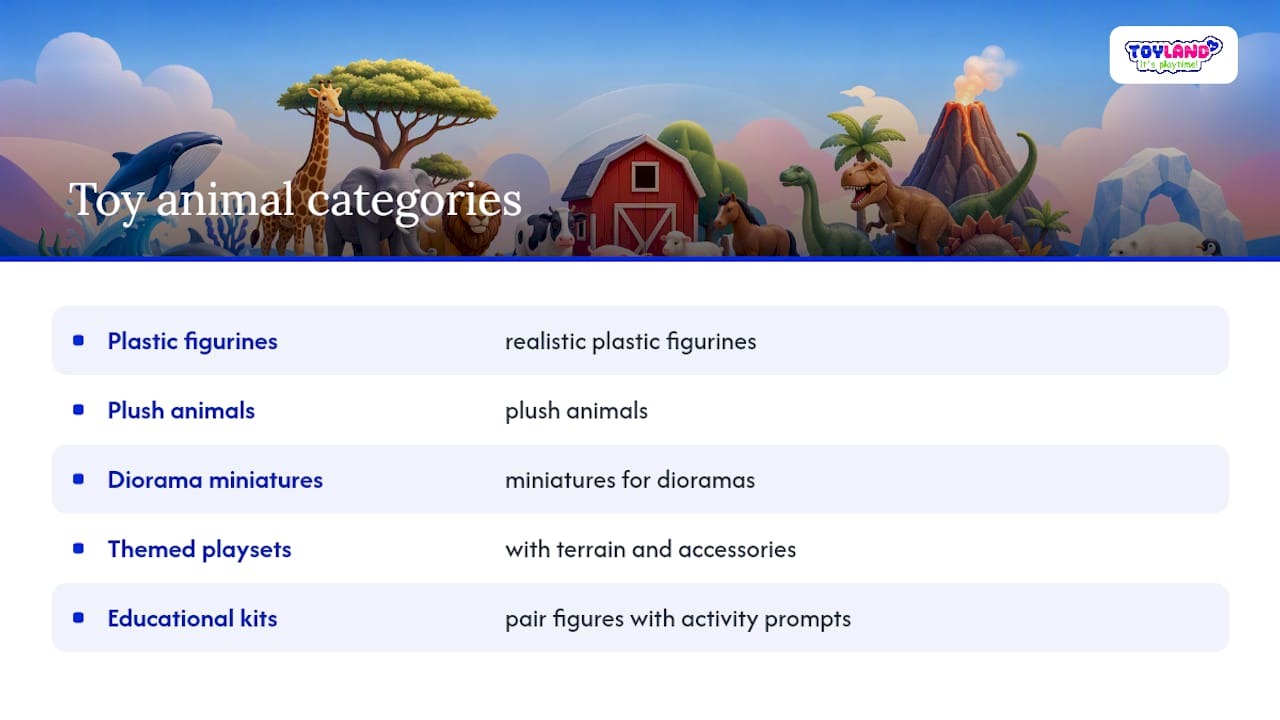
The main categories are realistic plastic figurines, plush animals, miniatures for dioramas, themed playsets with terrain and accessories, and educational kits that pair figures with activity prompts.
What animals are most commonly featured in toy animal sets?
Lions, elephants, giraffes, and other safari species dominate jungle sets, while turtles, octopuses, and sharks are the most common picks in ocean-themed collections like Toylandeu™'s ocean creatures set.
How do I know if a toy animal is safe for my child’s age?
Check the listing for a stated age range and any reference to recognized safety standards like ASTM F963 or CPSC compliance, and inspect the description for small, detachable parts before buying.