

Plastic Animals: Best Picks for Education and Gifts
TL;DR:
- Plastic animals are durable, realistic toys that enhance educational play, storytelling, and collection practices. Choosing sets labeled for children three and older, made from non-toxic, realistic materials, and containing 12 to 48 pieces maximizes learning and engagement. Combining these figures with activity books or habitat guides further enriches the educational experience across various play and teaching contexts.
Plastic animals are durable, realistically detailed toy figurines used for educational play, imaginative storytelling, and collecting. Brands like Schleich and Safari Ltd have defined the category by producing figures accurate enough to teach children species identification, habitat awareness, and wildlife conservation. Whether you are a parent choosing a first nature set, an educator building a Montessori classroom, or a collector hunting for the most detailed miniature plastic animals on the market, the criteria for a great purchase are the same: safety, realism, and variety.
1. What to look for when choosing plastic animal toys
Age labeling is the first filter. Toy animal figures must be labeled for ages 3+ to comply with small part safety regulations and material durability standards in 2026. This threshold exists because figures under 2.5 inches present a choking hazard for toddlers under three. Any set you consider should display this rating clearly on the packaging.
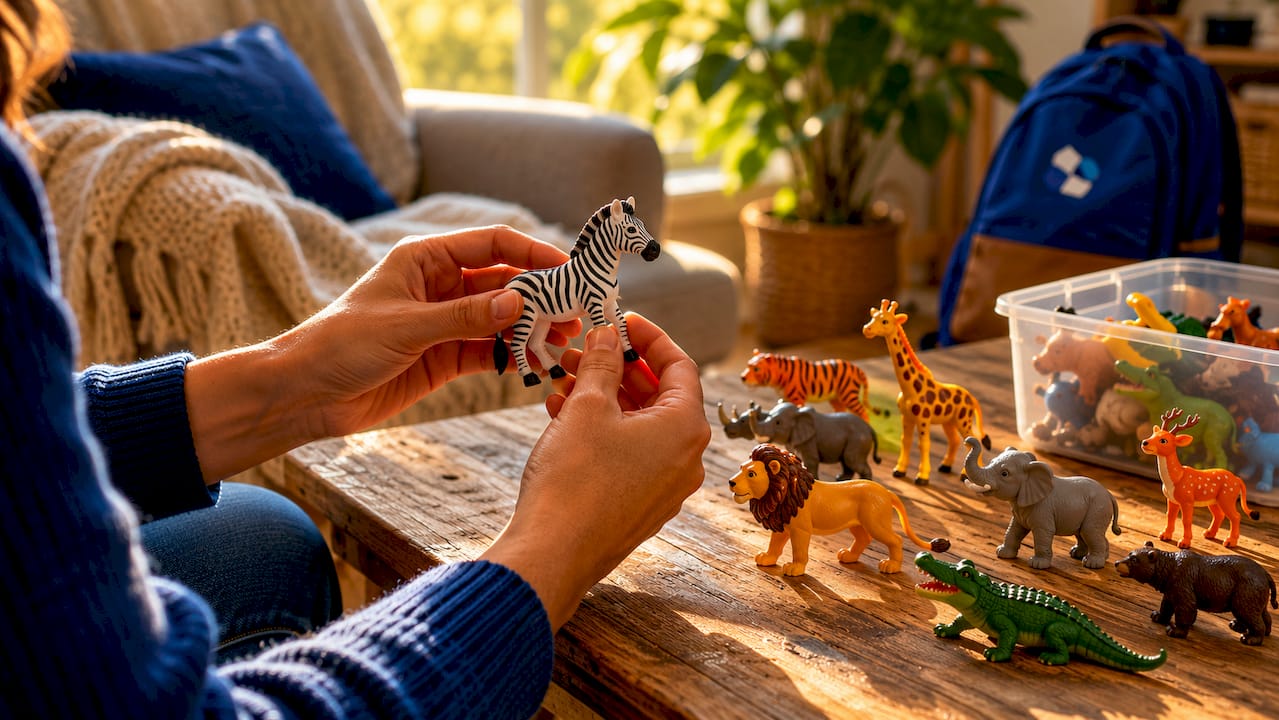
Material quality separates a toy that lasts one season from one that survives years of play. Non-toxic, durable materials that meet 2026 toy safety standards are the baseline expectation, not a premium feature. Look for PVC-free or BPA-free labeling, especially for sets intended for younger children who still mouth objects.
Realism drives educational value. The more accurately a figure represents an animal’s proportions, coloring, and texture, the more useful it becomes as a teaching tool. A child who can hold a correctly scaled elephant figurine while reading about African savanna ecosystems retains that information differently than one looking at a cartoon image.
Set size and variety matter for both play and learning. Standard mini sets contain 12 to 48 pieces with figures approximately 2.5 inches tall, giving children enough variety to sort, categorize, and build stories around. A set of 12 ocean animals teaches less than a set of 36 that spans multiple ocean zones.
- Age rating: 3+ minimum for safety compliance
- Material: Non-toxic, BPA-free or PVC-free plastics
- Realism: Accurate proportions, textures, and coloring
- Set size: 12 to 48 pieces for meaningful variety
- Extras: Activity books, habitat cards, or identification guides
Pro Tip: Buy sets that include an activity booklet identifying animal tracks, wingspans, or habitats. Experts confirm that activity books paired with figurines turn a toy into an interactive education tool, significantly increasing learning retention.
2. Top types of plastic animal toys and popular brands
The plastic animal toy category breaks into four distinct types, each with different strengths for play and education.
1. Farm animal sets. Schleich Farm World is the benchmark here. These figures feature hand-painted, realistic details that support Montessori-style learning and screen-free imaginative play. A child playing with a Schleich Holstein cow learns what the animal actually looks like, not a stylized version of it. Farm sets work especially well for children aged 3 to 8.
2. Wildlife and safari figures. Safari Ltd produces some of the most anatomically accurate plastic wildlife toys available at consumer prices. Their TOOB tubes pack 10 to 12 species-specific figures into a single cylinder, making them ideal for classroom use. Schleich’s Wild Life series competes directly, offering larger individual figures with more surface detail.
3. Ocean and marine sets. Miniature ocean animal sets, including 3D-printed articulated figures ranging from 2.1 to 4 inches, bring flexibility and tactile interest to marine biology lessons. Q.G.S produces a 12-piece ocean set where each figure folds and bends, doubling as a fidget toy. These work well as desk accessories and party favors in addition to classroom tools.
4. Soft versus hard plastic options. Hard plastic figures like those from Schleich hold fine painted detail better and last longer under rough handling. Soft or flexible plastic figures, including the Q.G.S articulated sets, offer sensory variety and are less likely to cause injury during active play. Educators often combine both types to serve different learning activities.
| Type | Best For | Price Range | Realism Level |
|---|---|---|---|
| Schleich Farm World | Ages 3 to 8, Montessori play | $$ | Very High |
| Safari Ltd TOOB | Classroom variety, ages 4+ | $ | High |
| Q.G.S Ocean Set | Sensory play, gifts, ages 3+ | $ | Moderate |
| Schleich Wild Life | Collectors, ages 6+ | $$$ | Very High |
3. How to use plastic animal toys effectively in education and play
Animal figure play gives urban children a safe, tangible connection to wildlife they may never encounter in person. Child psychologist Barbie Clarke notes that this type of play nurtures natural curiosity and supports early science learning. For parents and educators, the figures are only as powerful as the play structure around them.
Montessori-style open-ended play is the most effective framework. Place a collection of plastic animals on a nature tray alongside rocks, leaves, and soil samples. Let children sort them by habitat, diet, or size without a script. This approach builds classification skills, which are foundational to both biology and logical thinking.
Storytelling and role-play extend the learning further. Ask a child to create a story where a lion, a zebra, and a flamingo all live near the same watering hole. The child must recall facts about each animal to make the story work, reinforcing memory through narrative. This is why sets with 12 to 48 figures give educators more to work with than single-figure purchases.
- Sort figures by continent, habitat, or diet for geography and science lessons
- Use figures alongside picture books or nature documentaries for cross-media learning
- Introduce conservation topics by discussing endangered species in the set
- Build fine motor skills by having children arrange, stack, or categorize figures
Pro Tip: Pair your wildlife figure set with a nature-themed sensory book to create a multi-texture learning station that engages both visual and tactile learners simultaneously.
4. Budget and gift considerations for plastic animal toys
Choosing the right set for a gift comes down to three variables: age, interest, and how much play variety you want to deliver per dollar spent.
-
Under $15 (multipacks for young children). Safari Ltd TOOB sets and Q.G.S ocean packs deliver 10 to 12 figures at this price point. These are ideal for birthday party favors, classroom rewards, or stocking stuffers. The trade-off is smaller figure size and less surface detail.
-
$15 to $35 (mid-range sets). This range covers most Schleich Farm World starter sets and mid-size wildlife collections. You get hand-painted detail, durable hard plastic, and figures large enough for preschool hands to grip confidently. This is the sweet spot for most parents buying a first animal collection.
-
$35 and above (premium collectibles). Schleich’s larger individual figures and specialty sets fall here. These are appropriate for children aged 6 and up who already show a specific interest in a species or habitat. They also appeal to adult collectors who value display quality over play durability.
-
Multipacks versus singles. Multipacks win on variety and value for educational use. Singles win on detail and display quality for collectors. If the recipient is under 8, choose a multipack. If they are a focused collector or enthusiast, a single premium figure often means more.
-
Where to buy. Specialty toy retailers, museum gift shops, and international platforms like Toylandeu™ carry the widest selection of realistic plastic animals with verified safety certifications. Avoid unbranded bulk sets from unknown suppliers, as these frequently skip age-labeling and material safety testing.
Key takeaways
The most educational plastic animal toys combine non-toxic materials, realistic detail, and set variety of 12 to 48 pieces, paired with activity books or structured play frameworks.
| Point | Details |
|---|---|
| Safety first | Choose sets labeled age 3+ with non-toxic, BPA-free materials. |
| Realism drives learning | Accurate figures from Schleich or Safari Ltd teach species recognition better than stylized toys. |
| Set size matters | Packs of 12 to 48 figures give children and educators enough variety for sorting, storytelling, and classification. |
| Pair with materials | Activity books and habitat guides significantly increase the educational value of any figure set. |
| Budget by use | Multipacks suit education and young children; premium singles suit collectors aged 6 and up. |
Why I keep coming back to realistic animal figures
I have spent years watching children interact with toys across every category, and nothing consistently outperforms a well-made animal figurine for open-ended, screen-free learning. The moment a five-year-old picks up a Schleich giraffe and asks why its neck is so long, you have a science conversation that no app triggers as naturally.
What most buying guides miss is the combination factor. A single Safari Ltd TOOB paired with a library book about African wildlife creates a learning experience worth ten times the cost of either item alone. The toy becomes an anchor for curiosity rather than a passive object.
My honest recommendation for educators: buy one multipack per habitat zone, not one giant mixed set. Children learn more when they can connect figures to a specific ecosystem. A dedicated ocean set, a savanna set, and a rainforest set teach geography and ecology simultaneously. That structure also makes it easier to introduce conservation topics, which is where the real long-term value of these toys lives.
For gift buyers, do not overlook the Q.G.S articulated ocean sets. They are affordable, tactilely interesting, and genuinely different from the standard hard plastic figure. A child who has never seen a flexible, foldable octopus figurine will remember it.
— Thane
Explore educational animal toys at Toylandeu™
Toylandeu™ carries a curated selection of educational toys that pair perfectly with plastic animal collections. Whether you are building a Montessori nature tray or looking for a creative gift, combining animal figures with hands-on art and learning kits multiplies the play value immediately.
The Montessori Drawing Kit from Toylandeu™ pairs directly with animal figure sets, letting children sketch the animals they are studying and build observation skills alongside species knowledge. The colorful drawing scroll kit works the same way for younger children who are just beginning to connect what they see with what they can create. Toylandeu™ ships worldwide with free delivery, so the right educational set reaches you wherever you are.
FAQ
What age are plastic animal toys safe for?
Plastic animal toys are safe for children aged 3 and older. Sets labeled 36+ months meet small part safety regulations and use materials that comply with 2026 durability standards.
Which brands make the most realistic plastic animal figures?
Schleich and Safari Ltd produce the most anatomically accurate plastic animal toys at consumer prices. Schleich figures are hand-painted with fine surface detail; Safari Ltd TOOB sets prioritize species variety.
How many figures should a good plastic animal set include?
Quality sets range from 12 to 48 figures, with approximately 2.5-inch figures being standard. More pieces give children and educators greater variety for sorting and storytelling activities.
Are plastic animal toys good for Montessori learning?
Yes. Schleich farm and wildlife figures are specifically recognized for supporting Montessori-style play, encouraging nature identification and open-ended exploration without screens or scripted play.
What is the best way to increase the educational value of animal figure sets?
Pair figures with activity books that identify animal tracks, wingspans, or habitats. Experts confirm this combination turns a standard toy into an interactive learning tool that meaningfully increases retention.