

Top toys for toddlers: Boost learning and fun with expert picks
- Choose toys that match developmental milestones, promote open-ended play, and ensure safety.
- Classic toys like Duplo blocks and wooden sets support multiple skills and long-term engagement.
- Prioritize eco-friendly, durable, and non-toxic toys to support safety and sustainability.
Every parent has stood in a toy aisle or scrolled through endless product pages, wondering which toy will actually matter. Not just entertain for five minutes, but genuinely support how their toddler thinks, moves, and grows. The challenge is real: the market is flooded with flashy options that promise everything and deliver little. This article cuts through the noise. You’ll find a clear framework for evaluating toddler toys, a curated list of expert-approved picks, a side-by-side comparison, and guidance on safety and sustainability, so your next toy purchase feels confident rather than guesswork.
Table of Contents
- How to choose the best toys for toddlers: Key criteria
- Expert-approved favorites: Classic and creative toddler toys
- Head-to-head: Comparing top toddler toys by skill focus
- Special considerations: Safety, inclusion, and sustainability
- Our perspective: The value of classic play in a high-tech world
- Discover creative, child-approved toys at ToylandEU
- Frequently asked questions
Key Takeaways
| Point | Details |
|---|---|
| Choose toys by milestone | Match toy selection to your toddler’s current skills and growth stage for the best results. |
| Favor open-ended play | Blocks, stacking sets, and non-electronic toys build creativity and flexible thinking. |
| Safety and sustainability matter | Pick toys made from safe materials, size-appropriate, and built for durability and eco-friendliness. |
| Classic options last | Timeless picks like Duplo and wooden sets outlast trends and adapt to your child’s growth. |
How to choose the best toys for toddlers: Key criteria
Before you add anything to your cart, it helps to know what you’re actually looking for. Toddler development moves fast, and the right toy at the right stage can make a real difference in how your child builds skills.
Here are the core criteria to keep in mind:
- Developmental match: Prioritize toys matching milestones, such as push toys for gross motor skills in 1 to 2 year olds, and puzzles for fine motor development in 2 to 3 year olds. Balance sensory, motor, and cognitive play across your selections.
- Open-ended design: Toys that can be used in multiple ways grow with your child. Open-ended wooden blocks and Duplo are preferred over electronic toys for complex play, longevity, and motor planning, according to child development experts.
- Safety first: Look for non-toxic materials, no small parts for children under 3, and compliance with CPSC (Consumer Product Safety Commission) standards. When in doubt, check the label.
- Longevity and value: A toy that stays interesting for two or three years is a smarter investment than one that loses appeal in a week.
- Skill balance: The best toy collections cover a mix of sensory exploration, physical coordination, and cognitive challenge. No single toy does everything, so variety matters.
When you shop for educational toys for children, keep these five pillars in mind. They apply whether you’re choosing a birthday gift or stocking up a playroom.
Pro Tip: Rotate toys every few weeks instead of keeping everything out at once. This keeps play fresh and helps toddlers engage more deeply with each toy rather than bouncing between options without focus.
Expert-approved favorites: Classic and creative toddler toys
With a framework in mind, let’s look at the standout toys that meet these standards and why experts love them.
The best toddler toys share a common thread: they invite the child to do the work. Here are the top picks backed by pediatric and child development experts:
- LEGO Duplo sets: Top recommended for toddlers, Duplo supports fine motor skills, visual-spatial development, and open-ended creative play. Kids as young as 18 months can start snapping pieces together.
- Wooden unit blocks: Timeless and endlessly versatile. Children use them to build, sort, knock down, and rebuild, practicing spatial reasoning and bilateral coordination every time.
- Balance beams: Low-to-the-ground balance beams support gross motor development and body awareness. Physical therapists frequently recommend them for toddlers learning to control their movements.
- PlanToys Wooden Gardening Set: This set promotes sensory exploration, gross motor skills, and imaginative role-play. Toddlers love mimicking adult tasks, and gardening play taps directly into that instinct.
- Fine motor skill toys: Products like Spike the Hedgehog from Learning Resources build hand strength and coordination while introducing early math concepts like color matching and sequencing.
- Stacking cups and shape sorters: Deceptively simple, these classics teach cause and effect, problem-solving, and hand-eye coordination.
“The best toys for toddlers are the ones that make the child the star. Open-ended, hands-on toys invite children to lead the play, which is where the real learning happens.” — Child development experts consistently echo this across research and clinical practice.
For hands-on pretend play, a wooden toddler tool set gives toddlers a safe way to imitate real-world tasks while building grip strength and imagination. If your child has sensory preferences or you want to support sensory integration, exploring sensory toys for toddlers is a great next step.
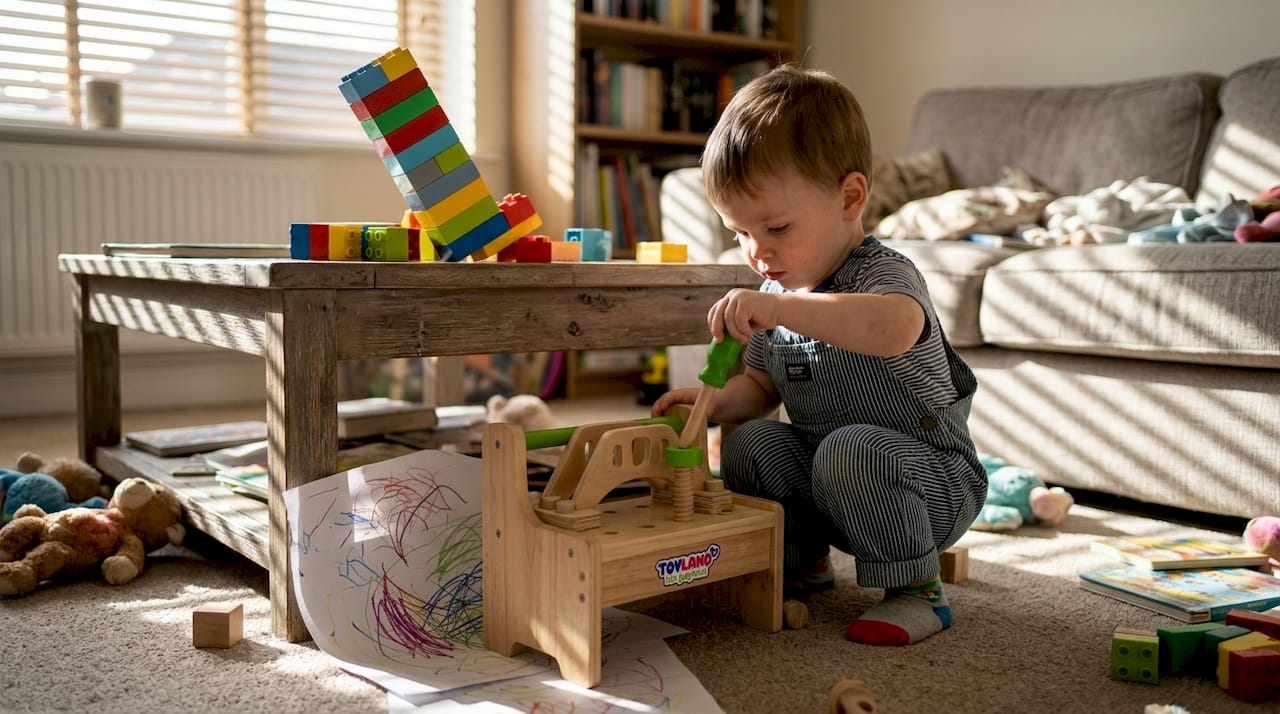
Pro Tip: Introduce role-play toys like gardening or tool sets alongside a simple story. Say “Let’s fix the bridge!” and watch your toddler’s focus and language skills light up together.
Head-to-head: Comparing top toddler toys by skill focus
Understanding why these toys stand out, here’s how they compare head-to-head across key criteria.
For 1 to 3 year olds, stacking cups, shape sorters, push toys, Duplo blocks, and pretend sets support problem-solving, imitation, and manipulation. Experts advise avoiding over-reliance on electronic toys during these years.
| Toy type | Age range | Skills developed | Open-ended | Longevity |
|---|---|---|---|---|
| LEGO Duplo | 18 months to 5 years | Fine motor, spatial, creative | Yes | High |
| Wooden unit blocks | 12 months to 6 years | Gross/fine motor, spatial reasoning | Yes | Very high |
| Balance beam | 18 months to 4 years | Gross motor, balance, coordination | Moderate | High |
| Shape sorter | 12 to 24 months | Cognitive, fine motor, problem-solving | Moderate | Medium |
| Stacking cups | 6 months to 3 years | Sensory, fine motor, cause and effect | Yes | Medium |
| Gardening set | 2 to 5 years | Gross motor, imaginative, sensory | Yes | High |
| Fine motor skill toys | 18 months to 4 years | Hand strength, coordination, early math | Moderate | Medium |
Open-ended toys like blocks encourage trial-and-error learning, bilateral coordination, and spatial reasoning. Electronic toys, by contrast, often reduce active child involvement because the toy does the work for the child.
Key takeaways from this comparison:
- Duplo and wooden blocks offer the best combination of longevity and skill range.
- Balance beams are underrated and rarely discussed but are a physical therapist favorite.
- Shape sorters and stacking cups are perfect starter toys for younger toddlers.
- Gardening and tool sets shine for imaginative play and language development.
Learning more about block play benefits can help you understand why blocks consistently top expert lists. And if you’re thinking ahead, exploring STEM toys that grow with kids shows how early play habits connect to later learning.
Special considerations: Safety, inclusion, and sustainability
After comparing features and benefits, consider these crucial safety and inclusivity factors for confident toy choices.
Safety is non-negotiable. Here’s a quick checklist for what to look for and what to avoid:
Look for:
- Non-toxic, BPA-free materials
- CPSC-compliant labeling
- Age-appropriate size (no small parts for under 3)
- Smooth edges and sturdy construction
- Washable surfaces for hygiene
Avoid:
- Toys with detachable small parts
- Strong chemical smells (may indicate unsafe coatings)
- Flimsy construction that breaks into sharp pieces
- Batteries that are easily accessible to small fingers
For children with sensory needs, textured balls and sensory beads are strong options. Intergenerational play designs, like those from Green Toys, also support parent-child bonding during play sessions.
| Consideration | What to prioritize | Brands to consider |
|---|---|---|
| Material safety | Non-toxic, BPA-free, CPSC-compliant | Green Toys, PlanToys |
| Sensory inclusion | Varied textures, adjustable stimulation | Fat Brain Toys, Learning Resources |
| Eco-friendliness | Recycled or sustainably sourced materials | Green Toys, PlanToys, Hape |
| Durability | Solid construction, washable | LEGO Duplo, wooden brands |
Sales data favors magnetic blocks and green toys for durability and sustainability, while child development experts continue to favor non-screen classics like Duplo and wooden sets over novelty electronics. Both camps agree: quality and longevity matter more than novelty.
If you want to go deeper on this topic, browsing eco-friendly toy choices and sustainable toy innovations will give you a solid picture of what’s available in 2026. For outdoor play, resources like bouncy houses for toddlers round out your options for active, physical play beyond the playroom.
Our perspective: The value of classic play in a high-tech world
Here’s something worth saying plainly: the toy industry is very good at making parents feel like they need the newest, most advanced option. A tablet app dressed up as a toy. A robot that teaches coding to a two-year-old. The marketing is convincing, but the research keeps pointing in the same direction.
Classic, open-ended toys do more. Not because they’re old-fashioned, but because they require the child to bring something to the play. A block doesn’t do anything until your toddler picks it up and decides what it becomes. That decision, that moment of imagination, is where development actually happens.
We’ve also seen how generational toys, the ones parents played with themselves, create a different kind of connection. When a parent sits down with a set of wooden blocks or a puzzle, they’re not just supervising. They’re playing. That shared experience builds bonds that a screen simply can’t replicate.
The eco-friendly toys impact extends beyond the environment too. Durable, well-made toys stay interesting longer, get passed down, and teach children that things have lasting value. That’s a lesson worth starting early.
Discover creative, child-approved toys at ToylandEU
Ready to put these ideas into action? At ToylandEU, you’ll find a wide selection of toys that check every box covered in this article, from open-ended creative play to sensory exploration and fine motor development.
For a creative starting point, the Montessori drawing kit is a wonderful way to build focus and self-expression in toddlers. If your child loves hands-on making, the modeling clay kit supports fine motor skills and sensory play in one colorful package. Browse the full ToylandEU shop to explore thousands of developmentally focused toys with free worldwide shipping.
Frequently asked questions
What are the safest toys for toddlers under 3 years old?
The safest toys are large, non-toxic, CPSC-compliant items without small parts, choking hazards, or sharp edges. Always check age labels before purchasing.
How do I pick toys that help my toddler’s development?
Choose toys that match your child’s current stage, such as push toys for gross motor skills at age 1 to 2, and puzzles for fine motor skills at age 2 to 3. Open-ended options that support multiple types of play are almost always the best bet.
Are electronic toys bad for toddlers?
Not all electronic toys are harmful, but open-ended wooden blocks and Duplo consistently outperform electronic alternatives for active engagement and developmental benefit. Use electronic toys sparingly and always alongside hands-on options.
Which toy brands are best for sustainability?
Brands using wood, recycled materials, and responsible manufacturing are the top picks. Sales data favors green toys and magnetic blocks for durability, while PlanToys and Green Toys lead on eco-friendly credentials.
Recommended
- Top early learning toys: expert-backed examples for smarter play – ToylandEU
- Top Picks for the Best Toys for Preschoolers – ToylandEU
- Best toys for group learning: a practical guide – ToylandEU
- Top Innovative Toys for Child Development in 2025 | Parent’s Guide – ToylandEU
- How to Keep Kids Entertained: A Guide to Planning a Memorable Party