

Why Outdoor Toys Matter for Students: Health, Learning, and Play
TL;DR:
- Outdoor toys promote physical health, emotional well-being, and social skills that indoor play cannot replicate.
- Choosing open-ended, versatile toys and creating dynamic environments enhances sustained engagement and development.
Screen time is up, backyards are emptier, and many parents assume a quality indoor toy or a well-chosen app covers all the developmental bases their child needs. The reality is more nuanced. Outdoor toys unlock a specific combination of physical challenge, spontaneous social interaction, and sensory-rich experience that no living room setup can fully replicate. This guide breaks down exactly what outdoor toys do for school-aged children, why researchers keep finding results that surprise even pediatricians, and how you can make smarter choices that support your child’s health, friendships, and learning all at once.
Table of Contents
- The unique benefits of outdoor toys for students
- Social development: How outdoor toys help children connect
- Supporting learning and attention through outdoor toys
- Choosing the right outdoor toys: More than just exercise
- Safety first: Balancing adventure and protection outdoors
- What most advice misses about outdoor toys: It’s not just the toy, but the setup
- Discover outdoor toys that spark real growth and play
- Frequently asked questions
Key Takeaways
| Point | Details |
|---|---|
| Whole-child benefits | Outdoor toys support students’ physical, emotional, and cognitive health in ways indoor play cannot. |
| Fosters social growth | Outdoor play with the right toys boosts cooperation, empathy, and friendships. |
| Active learning boost | Active outdoor toys improve focus, executive function, and school readiness. |
| Diverse play matters | Choose toys that encourage multiple types of play for richer development. |
| Safety is essential | Prioritize age-appropriate equipment and simple safeguards to maximize benefits safely. |
The unique benefits of outdoor toys for students
After understanding the shortcomings of indoor-only play, let’s explore the unique benefits outdoor toys bring for students. The difference between indoor and outdoor play isn’t just about fresh air. It’s about the quality and intensity of movement, the unpredictability of natural environments, and the freedom children experience when space opens up around them.
When kids take their play outside, they naturally move more. Running, jumping, climbing, and throwing happen almost automatically when engaging outdoor toys are part of the picture. That increased activity reduces obesity risk, supports healthy bone density, and builds coordination and balance that indoor play rarely challenges in the same way. Research also shows a strong connection between outdoor time and lower rates of myopia (nearsightedness) in school-aged children, a growing concern for parents worldwide.
The emotional and mental health benefits are just as compelling. Outdoor play is linked to measurable reductions in anger and aggression, lower stress and depression symptoms, and improved attention and focus after outdoor sessions. Children who spend consistent time playing outdoors tend to handle frustration better and return to focused tasks more easily.
“Playing outside gives children the chance to explore their world, test their limits, and build confidence in ways that structured indoor activities simply cannot match.” — HealthyChildren.org
Here’s a quick summary of the top benefits outdoor toys unlock for students:
- Increased physical activity compared to indoor equivalents
- Lower obesity risk and improved cardiovascular fitness
- Reduced myopia progression through natural light exposure
- Better motor skill development, including balance and coordination
- Lower stress, aggression, and anxiety in children who play outdoors regularly
- Improved focus and attention span following outdoor play sessions
- Greater sense of independence and self-confidence
These aren’t minor bonuses. They’re foundational outcomes that directly shape how children experience school, friendships, and everyday life.
Social development: How outdoor toys help children connect
Now that we’ve seen the whole-child benefits, let’s take a closer look at the critical role outdoor toys play in social development. The playground isn’t just where children burn calories. It’s where some of the most important interpersonal learning of childhood happens.
When kids share a jump rope, compete in a team relay, or build an outdoor fort together, they practice cooperation, negotiation, and conflict resolution in real time. No teacher is scripting the outcome. Children figure out rules, handle disagreements, and learn to read each other’s body language naturally. Outdoor play increases opportunities to socialize, cooperate, take turns, and build genuine friendships in ways that structured classroom settings often don’t allow.
Group games like capture the flag or relay races require children to assign roles, strategize, and root for teammates. Shared building projects using outdoor construction toys ask kids to communicate plans and compromise on design. Role-play scenarios in backyard settings, where one child is the “explorer” and another charts the map, build empathy and perspective-taking. Versatile playsets that support multiple play modes are particularly effective here because they adapt to what children imagine, rather than dictating a fixed activity.
“Children who regularly engage in outdoor group play develop stronger social skills and show better emotional regulation in school settings.” — Children’s Hospital of Philadelphia
Pro Tip: When choosing outdoor toys for social play, prioritize items that require more than one player to operate or enjoy fully. A solo swing is great for physical benefits, but a cooperative game, shared water table, or group sports set will deliver far richer social skill development. Look for toys labeled as designed for two or more players, or think about outdoor toys for social play that naturally invite a crowd.
The social skills children build outdoors include:
- Negotiating rules and handling disagreements constructively
- Taking turns and showing patience with peers
- Reading social cues and body language in real time
- Building and maintaining friendships through shared experiences
- Developing empathy by navigating different roles in group play
- Communicating clearly to coordinate group goals
These skills don’t just make children nicer to be around. They predict success in school group projects, long-term friendship quality, and even workplace collaboration decades later.
Supporting learning and attention through outdoor toys
With social skills covered, it’s important to recognize that learning doesn’t just happen indoors. Here’s how outdoor toys support cognitive development in ways that directly translate to classroom performance.
One of the most persistent myths parents encounter is the idea that time spent playing outdoors is time taken away from learning. Studies consistently challenge this. Outdoor play benefits concentration and school readiness and can improve self-regulation, collaboration, and motivation in ways that extra seat-time rarely achieves. Children who spend more time in active outdoor play don’t fall behind academically. Some cognitive measures actually improve.
Here’s a summary of what the research shows about key outcomes:
| Cognitive area | Effect of outdoor play | Example activity |
|---|---|---|
| Attention and focus | Significant improvement after outdoor sessions | Free exploration with nature kits |
| Self-regulation | Stronger impulse control and patience | Cooperative outdoor games |
| Motivation to learn | Higher engagement and curiosity | STEM outdoor science toys |
| Number and algebra skills | Measurable gains with active play | Counting games, obstacle courses |
| Collaboration | Better group problem-solving | Team building challenges |
Executive functions, the mental skills behind planning, flexible thinking, and self-control, develop faster when children regularly engage in unstructured outdoor play. These functions are the building blocks of school readiness and long-term academic performance.
Pro Tip: For the biggest cognitive boost, choose toys that require decision-making and problem-solving rather than just physical action. Outdoor science kits, nature exploration tools, and strategy-based sports sets all hit the sweet spot between movement and mental engagement. Check out smart toy selection tips for a practical framework on matching toys to developmental goals.
Choosing the right outdoor toys: More than just exercise
We know variety matters for development, so let’s break down how to choose outdoor toys that do more than just get kids moving. The most effective outdoor play environments offer children multiple ways to engage: exploratory, constructive, social, and dramatic play all deliver different and complementary developmental benefits.
Outdoor play environments work best when they provide affordances (built-in invitations to interact) for multiple play modes. A single-function toy like a standard trampoline offers excellent physical benefits but limited cognitive or social variety. A set of outdoor building blocks, on the other hand, can become a castle one afternoon and a racetrack the next, supporting physical, imaginative, and social play all in one.
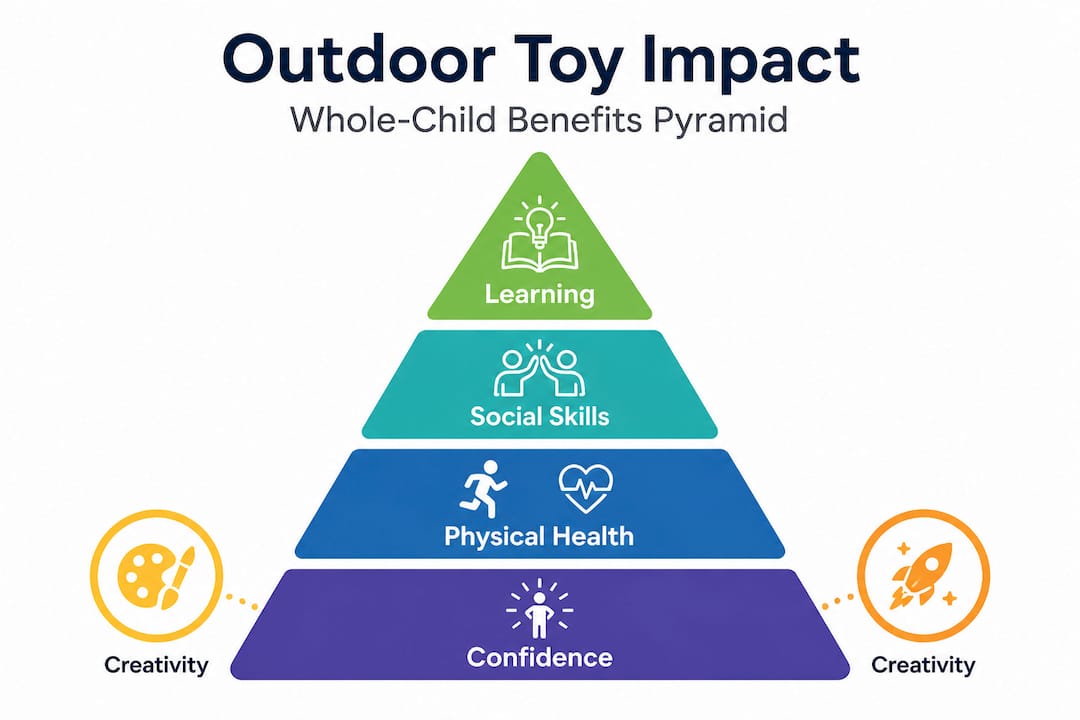
Here’s how common outdoor toy types stack up across play modes:
| Toy type | Physical benefit | Cognitive benefit | Social benefit |
|---|---|---|---|
| Climbing structures | High | Medium | Medium |
| Sandboxes and water tables | Low to medium | High (sensory, creative) | High |
| Sports sets (balls, nets) | High | Medium | Very high |
| Gardening tools and kits | Low to medium | High (science, patience) | Medium |
| Nature exploration kits | Low | Very high | Medium to high |
| Open-ended building toys | Medium | Very high | High |
Don’t overlook the role of outdoor footwear and protective accessories. Resources like choosing safe sandals can help you think through comfort and safety for active play sessions, especially when children spend extended time outdoors on varied surfaces.
Follow these three steps to balance physical and imaginative play in your outdoor toy selection:
- Start with a physical anchor. Pick one high-activity toy such as a scooter, rope ladder, or sports set that gets your child’s heart rate up.
- Add an open-ended creative tool. Include something like a sandbox kit, outdoor art set, or building kit that invites imagination without fixed rules.
- Layer in a social element. Choose at least one toy or game that works best with two or more children, reinforcing the teamwork and communication skills children need.
For warmer months, the outdoor water toys guide offers a detailed look at water-based options that hit multiple play modes in one setup.
Safety first: Balancing adventure and protection outdoors
With diverse and engaging outdoor toys in mind, let’s ensure safety isn’t left as an afterthought. One of the most important things to understand as a parent is that outdoor safety doesn’t mean eliminating all risk. It means managing it thoughtfully.
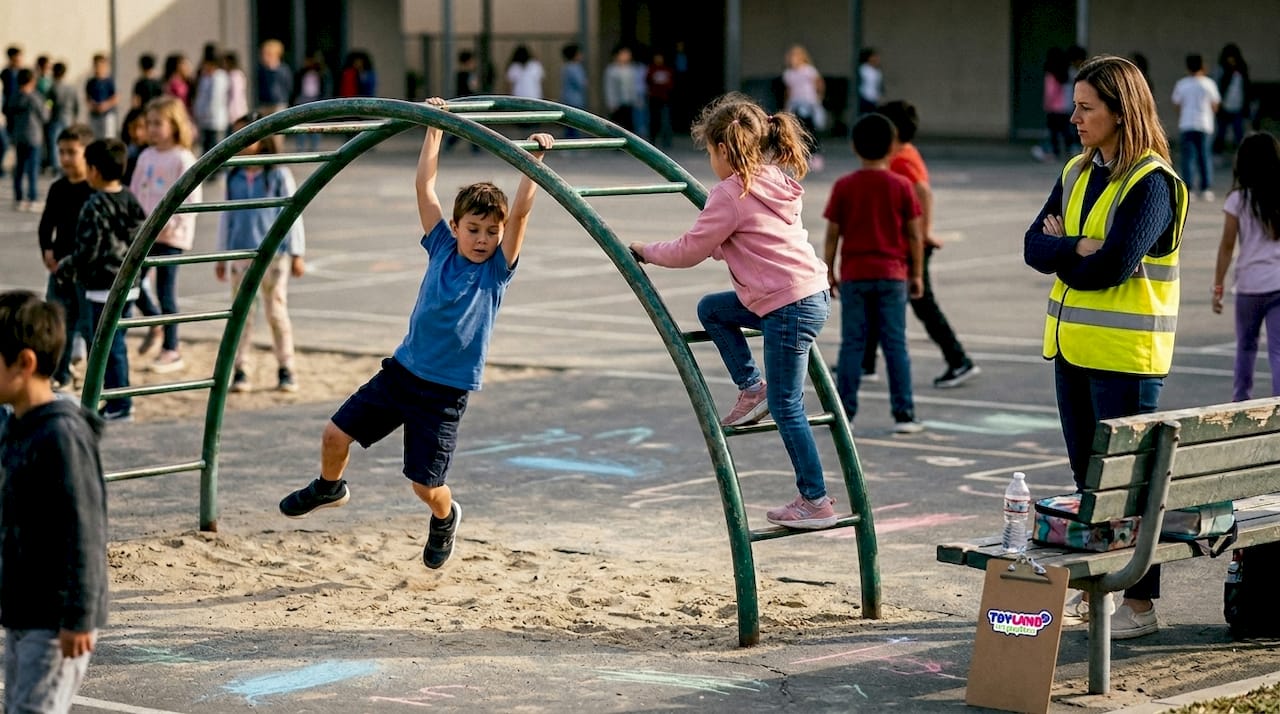
Research consistently shows that children who experience some level of manageable risk during outdoor play develop better judgment, more accurate self-assessment of their abilities, and greater resilience. Wrapping children in bubble wrap (physically or metaphorically) produces more timid children, not safer ones. The goal is structured freedom, not a sterile environment.
Age-appropriate equipment is the first line of defense. The CDC recommends checking that outdoor toys match your child’s developmental stage, that surfaces beneath climbing equipment are impact-absorbing, and that protective gear is used consistently for wheeled activities.
Here’s a practical safety checklist for outdoor play:
- Match toys to age and skill level. A toy designed for older children can overwhelm or injure a younger one.
- Use helmets for all wheeled activities, including bikes, scooters, and skateboards.
- Check surfaces regularly. Install rubber mulch, sand, or foam tiles under climbing equipment.
- Apply sunscreen and plan for heat. Outdoor play during peak sun hours (10am to 4pm) requires UV protection.
- Hydrate frequently. Children often don’t recognize thirst during active play.
- Inspect toys before each session for broken parts, sharp edges, or wear.
- Supervise based on age and environment, not fear.
Pro Tip: Think of outdoor play safety as managing risk, not removing it. Let children test their limits at the monkey bars. Let them figure out how to navigate a bumpy obstacle course. Your job is to make sure the environment is as safe as the activity allows, not to prevent every stumble. For more guidance, explore toy safety innovations and bouncy house safety rules for specific high-energy toy scenarios. Thinking ahead about protective footwear for outdoor play is also a simple but effective safety step many parents overlook.
What most advice misses about outdoor toys: It’s not just the toy, but the setup
Most articles on outdoor toys end with a product list. Buy this climbing frame, grab that sports set, and your child is set. That framing puts all the emphasis on the object, when the real magic happens in how the environment around that toy is structured and how involved caregivers are in creating space for play to evolve.
We’ve seen parents invest in premium outdoor equipment only to watch it sit unused after the first week. The toy wasn’t the problem. The setup was. Children thrive when their outdoor play space evolves and surprises them. When the same swing is in the same corner with the same options every day, novelty disappears and so does intrinsic motivation.
The most enduring outdoor play comes from simple, open-ended tools plus genuine trust in children’s imagination. A few lengths of rope, a pile of loose parts, a sandbox, and clear but generous boundaries can outlast any single-function toy in terms of play hours generated. That’s not an argument against buying quality toys. It’s an argument for pairing them with space, variety, and freedom.
Caregiver involvement matters too, but it doesn’t mean hovering. It means occasionally introducing a new challenge, rotating which toys are available, or gently suggesting a collaborative twist on a solo activity. Choosing the best toys becomes far easier when you approach it as building a play ecosystem rather than buying individual items.
Pro Tip: Rotate your outdoor toy selection every two to three weeks. Store some items temporarily and reintroduce them later. Children experience returning toys as new again, which resets their curiosity and extends the developmental value of what you already own.
Discover outdoor toys that spark real growth and play
Choosing outdoor toys that genuinely support your child’s health, friendships, and learning doesn’t have to feel overwhelming. The research points in a clear direction: prioritize variety, open-ended play potential, and options that naturally bring children together.

At ToylandEU.com, you’ll find a wide selection of outdoor toys spanning active play, creative exploration, and social connection, all available with free worldwide shipping. Whether you’re looking for sports sets that build teamwork, nature kits that spark curiosity, or water toys that turn summer afternoons into genuine sensory adventures, the catalog covers every developmental priority this guide has outlined. With over 30,000 toys across every age group and play style, finding the right match for your child is straightforward and affordable. Browse the full outdoor collection at ToylandEU.com and start building a play environment your child will actually want to be in.
Frequently asked questions
How much outdoor play is recommended for students?
Experts suggest about three hours of outdoor play daily for school-aged children to maximize health and social benefits. This can be split across morning, afternoon, and after-school sessions to fit busy family schedules.
Are outdoor toys safe for younger students?
Outdoor toys are safe when matched to the child’s age and skills and used with proper safety measures, like helmets for wheeled toys and consistent adult supervision for climbing equipment.
Do outdoor toys help with academic learning?
Yes, evidence shows outdoor toys and play support attention, self-regulation, and can boost academic skills like number and algebra development without sacrificing classroom readiness.
What types of outdoor toys are best for social development?
Toys that encourage group play, cooperation, and imaginative roles are ideal, because outdoor play increases opportunities to socialize, cooperate, and take turns in ways that solo indoor play rarely matches.
Recommended
- Engaging outdoor toys for kids: fun ideas and examples – ToylandEU
- Why toys make great gifts: fun, learning, memories – ToylandEU
- Why Interactive Toys Matter for Child Development – ToylandEU
- The Ultimate Guide to Outdoor Water Toys for Kids: Benefits, Safety Ti – ToylandEU
- Why Outdoor Safety Matters for Families