

My Kid Wants Fish: Best Pet Fish for Children 2026
TL;DR:
- Fish are engaging pets that teach children responsibility but require proper care and supervision. Choosing hardy species and setting up the tank correctly ensure a successful and educational experience. Parental involvement remains essential until kids can manage fish care independently.
Your kid wants fish, and honestly, it’s one of the better pet requests you’ll get. Fish are visually engaging, require no handling, and genuinely teach children about routine and responsibility. The catch: they’re not as low-maintenance as most parents assume, and the wrong species in the wrong tank can turn a fun experience into a frustrating one fast.
Quick Summary
Fish make excellent first pets for children when parents choose hardy species, set up an appropriate tank, and stay actively involved in daily care. Neon tetras and goldfish are among the commonly recommended species, but each comes with specific care requirements that determine long-term success.
TL;DR
- Best beginner fish: neon tetras, guppies, platies, betta fish (one per tank)
- Goldfish need at least 20 gallons per fish and can live 20+ years
- Cycle the tank before adding any fish
- Parents must supervise care until kids can manage independently
- Budget $50–$150 for a solid starter setup
Table of Contents
- Is a fish a good pet for your child?
- Best fish types for kids and their care needs
- Setting up a child-friendly aquarium
- The parental role in fish care
- Why fish make a great gift with the right support
- What does a fish setup actually cost?
- Ethical sourcing and environmental responsibility
- FAQ
Is a Fish a Good Pet for Your Child?
Fish are genuinely great first pets for kids, with a few honest caveats. They don’t need walks, they don’t scratch furniture, and watching a school of neon tetras dart around a tank holds a child’s attention in a way that’s hard to replicate with a toy. Active involvement in fish care builds empathy, science curiosity, and daily routine.
That said, fish are not “set it and forget it” pets. PetMD puts it plainly: fish require just as much care and time as a cat or dog. Before your kid wants fish to become a tank full of sick or dying ones, here’s what to know upfront:
- Fish need daily feeding and weekly water changes
- Tank size, water temperature, and filtration must match the species
- Parental supervision is non-negotiable for younger children
- Lifespans vary widely, from 2 years for guppies to 20+ years for goldfish
- Educational payoff is real: kids learn biology, empathy, and consistency
Best fish types for kids and their care needs
Choosing the right species is where most families go wrong. Hardy, peaceful fish that tolerate beginner mistakes are the only sensible starting point. A child’s first aquarium should use species forgiving of small errors, with a weekly maintenance routine that kids can grow into.
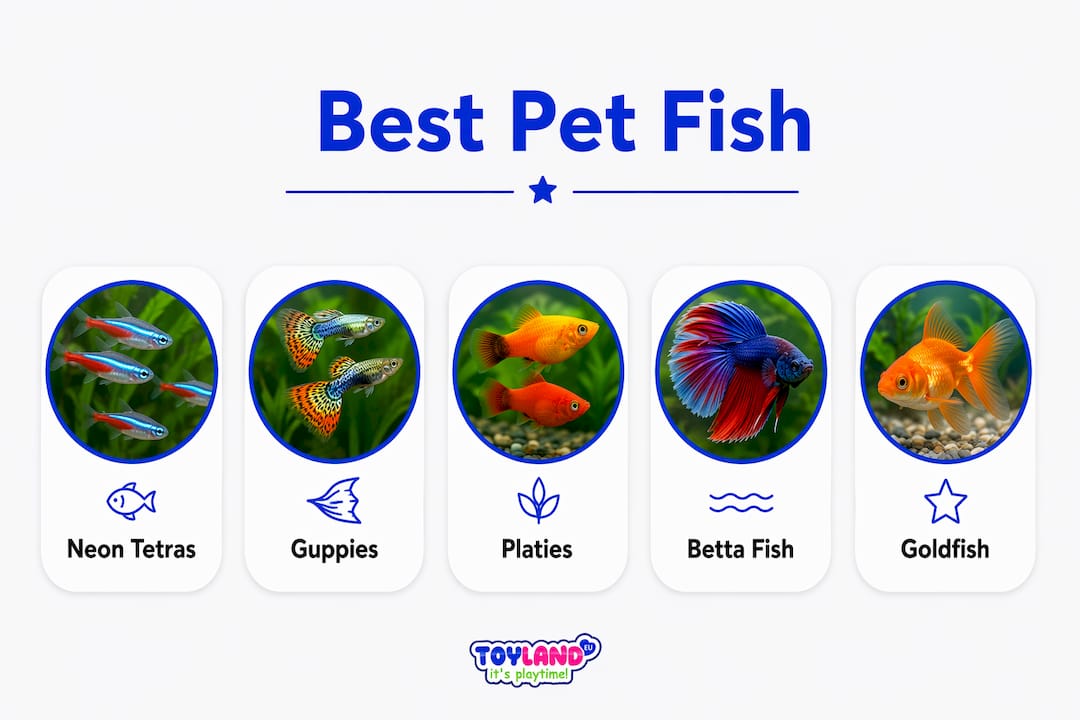
Neon Tetras The top pick for beginners. Bright red and blue, fast-moving, and endlessly watchable. You need at least five to form a school, and a 5-gallon tank can comfortably hold five to eight. Expect them to live 5–8 years.
Goldfish The classic choice, but widely misunderstood. Goldfish need a minimum of 20 gallons per fish and can live over 20 years. That’s a longer commitment than most parents anticipate. Long-bodied varieties handle water quality fluctuations better than fancy types like oranda.
Guppies Colorful, hardy, and available in dozens of varieties. They live roughly two years, making them a lower-commitment option. Keep only one sex unless you want dozens of fry appearing within weeks.
Betta Fish Visually stunning and interactive, but bettas require a minimum 5-gallon heated tank with low-flow filtration. Never keep two males together. Females can sometimes coexist with peaceful community fish.
Platies Peaceful, colorful livebearers that adapt well to a range of water conditions. Great for community tanks and easy to feed with standard flakes.
Zebra Danios Fast, tough, and social. They tolerate a wide temperature range and work well in groups of six or more. One caveat: they may nip long-finned fish, so don’t mix them with bettas.
Common health signs to watch: clamped fins, white spots, gasping at the surface, or hiding all day. Catching problems early is the most valuable skill a young fish keeper can develop.
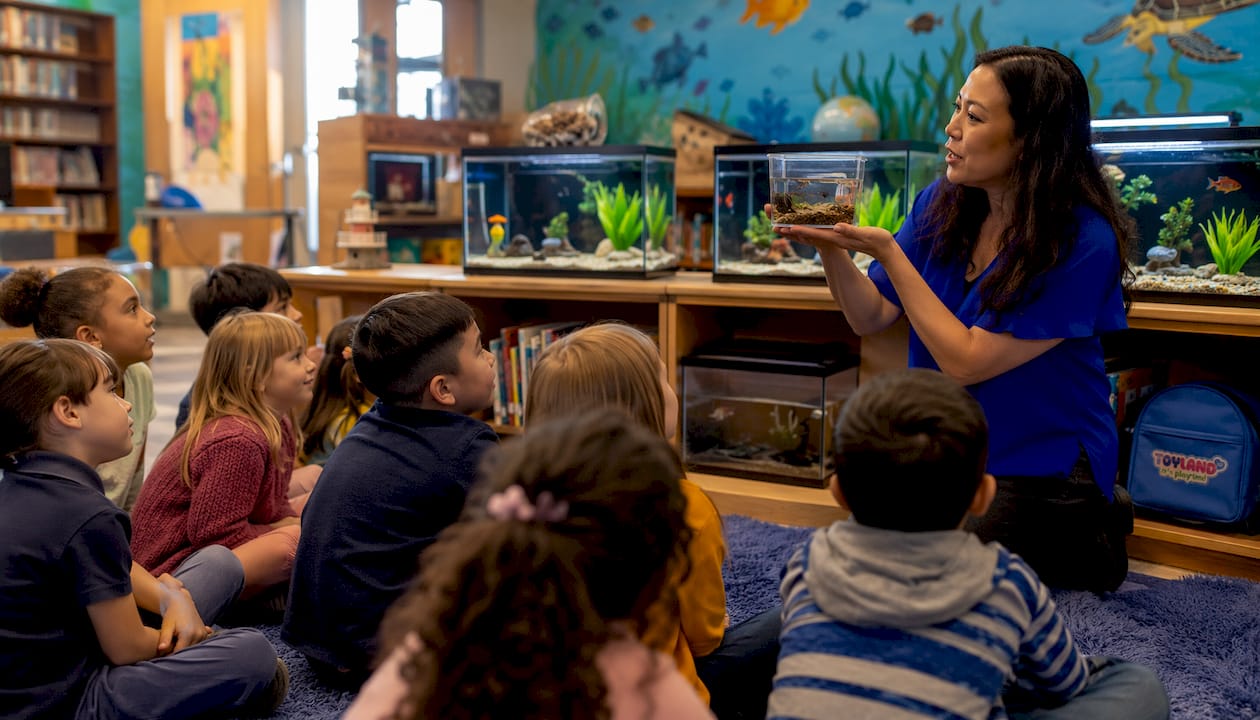
Setting up a child-friendly aquarium
Tank setup done right means fewer problems and a more engaged kid. Start with at least a 10-gallon tank. Water parameters stay more stable in larger volumes, and fish have room to behave naturally.
Cycling the tank before adding fish is the step most beginners skip and later regret. Cycling establishes beneficial bacteria that break down fish waste, creating a safe environment. Run the filter for one to two weeks before any fish go in.
- Filter: non-negotiable for every setup
- Heater: required for tropical species like tetras, bettas, and guppies
- Lighting: standard LED works; avoid intense reef-style lights for freshwater tanks
- Décor: soft silk plants and smooth rocks only; sharp plastic edges can tear fins
- Water conditioner: removes chlorine from tap water before every water change
Weekly water changes of 25–40% keep nitrate levels in check. A gravel vacuum pulls debris from the substrate at the same time.
Pro Tip: Let your child help set up the tank from day one. Picking the decorations, adding the water conditioner, and watching the cycle progress gives them ownership before a single fish arrives.
Storing aquarium supplies neatly matters more than most parents expect. Organized fish care storage keeps maintenance tools accessible and reduces the chance that a weekly water change gets skipped because the gravel vacuum is buried somewhere.
The parental role in fish care
Parents are the real caretakers until kids prove otherwise. Adult supervision is critical: feeding, water quality checks, and tank cleaning all require a steady hand and consistent schedule that most children under ten can’t maintain alone.
- Guide daily feeding: a pinch of food once or twice a day, no more
- Supervise weekly water changes and teach the steps one at a time
- Correct the “set it and forget it” mindset early and often
- Teach proper handwashing after any tank contact; betta fish can carry Mycobacterium, which in rare cases transfers to humans during maintenance
- Visiting the pet store multiple times before buying helps confirm genuine interest
If care becomes unmanageable, rehoming fish responsibly through rescue groups or donating to a classroom is a legitimate and caring choice, not a failure.
Why fish make a great gift with the right support
When a child wants pet fish and gets the right setup, the results go well beyond a pretty tank. Fish ownership builds daily routine, sharpens observation skills, and introduces basic biology in a hands-on way. The commitment varies by species, which is exactly why the choice matters so much upfront.
- Fish provide daily visual engagement that holds children’s attention long-term
- Proper species selection and tank setup are what determine whether the experience succeeds
- Parental guidance turns fish care into a genuine science and empathy lesson
- A well-chosen fish can be a gift that teaches more than most toys
What does a fish setup actually cost?
A solid beginner setup runs $50–$150 for the tank, filter, heater, water conditioner, and basic décor. Starter kit aquariums often bundle these together and simplify the process. Ongoing costs include fish food (a small container lasts months), water conditioner, and occasional filter media replacements.
Goldfish cost more to house properly given the 20-gallon minimum per fish requirement. Neon tetras and guppies are among the most affordable options, both to purchase and to maintain. Freshwater setups cost significantly less than saltwater tanks, which require specialized equipment and are not appropriate for beginners.
Ethical sourcing and environmental responsibility
Where you buy fish matters. Wild-caught fish from unsustainable sources put pressure on natural ecosystems, particularly for species like neon tetras, which historically came from the Amazon basin. Look for captive-bred fish whenever possible. Most reputable pet stores stock captive-bred tetras, guppies, and bettas.
Ask your local fish store directly whether their stock is captive-bred or wild-caught. Avoid purchasing fish that appear sick or are kept in overcrowded store tanks. Never release pet fish into local waterways; invasive species cause lasting ecological damage. Responsible sourcing is part of what fish care teaches children about the natural world.
Explore more at Toylandeu™
Fish care sparks curiosity about science and nature, and that curiosity deserves more outlets. Toylandeu™ carries educational kits that keep kids engaged between water changes, including the Montessori Drawing Kit and the Creative Learning Drawing Scroll, both designed to build focus and creativity in children. Browse the full catalog at Toylandeu™ for age-right picks that complement a child’s growing sense of responsibility.
Key Takeaways
Fish make excellent first pets for children when parents choose hardy species, set up the tank correctly, and stay actively involved in daily care.
| Point | Details |
|---|---|
| Best starter species | Neon tetras, guppies, and platies are hardy and forgiving of beginner mistakes. |
| Goldfish tank size | Goldfish need at least 20 gallons per fish and can live over 20 years. |
| Cycle before fish | Run the filter for 1–2 weeks before adding fish to establish beneficial bacteria. |
| Parental supervision | Adults must guide feeding, water changes, and health checks until kids manage independently. |
| Ethical sourcing | Choose captive-bred fish and never release pet fish into local waterways. |
FAQ
What is the best fish for a child’s first tank?
Neon tetras and guppies are the top choices: both are hardy, colorful, and forgiving of the small mistakes that come with learning. Keep neon tetras in a school of at least five.
How much space does a goldfish actually need?
Goldfish need a minimum of 20 gallons per fish and can live over 20 years, making them a much larger commitment than most families expect.
Can a young child care for fish independently?
Not at first. Parents should supervise all feeding, water changes, and health monitoring until a child demonstrates consistent, reliable care on their own.
Do fish tanks need to be cycled before adding fish?
Yes. Cycling establishes beneficial bacteria that break down fish waste and make the water safe. Running the filter for one to two weeks before adding fish prevents the most common beginner problems.
What should I do if my family can no longer care for the fish?
Rehoming through a rescue group, donating to a classroom, or consulting the American Association of Fish Veterinarians are all responsible options that model good pet ownership for children.
Recommended Reads
- The ultimate toy gift checklist for kids
- STEM toy setup guide for parents
- No-Mess Magic Water Art Book for Kids