

Is It Normal for My Kids to Cheat at Cards?
TL;DR:
- Children often cheat at cards due to immature impulse control and emotional regulation, not bad character. Parents should respond with gentle correction and emotional validation while choosing age-appropriate games and limiting session length to reduce cheating.
Children cheating at cards is a normal developmental behavior, not a sign of bad character. Research confirms that rule-bending starts as early as 24 months, as children develop theory of mind and executive function. When your child peeks at another player’s hand or quietly moves a card, they are testing boundaries, managing big emotions, and learning how the world works. Understanding this is the first step toward doing something constructive about it.
Quick Summary
Kids cheat at cards because their brains are still developing impulse control and emotional regulation. Harsh punishment makes it worse. Shorter game sessions, practice rounds, and gentle correction make it better.
TL;DR
- Cheating in card games is developmentally normal from toddlerhood onward.
- Cognitive immaturity, not moral failure, drives most childhood cheating.
- Harsh parenting predicts more deception, not less.
- Sessions of 30–45 minutes and no-stakes practice rounds reduce cheating.
- Gentle correction focused on actions, not character, builds lasting honesty.
Table of Contents
- Why do children cheat at cards?
- How parenting styles shape cheating behavior
- How game choice and session length affect cheating
- Practical strategies to teach kids fair play
- Key Takeaways
- Perspective
- Toylandeu™ toys that support honest play
- FAQ
Is it normal for my kids to cheat at cards?
Yes. Children cheating in games is one of the most common behaviors parents report, and developmental psychology backs that up. Lying and rule-breaking emerge as children develop theory of mind, the ability to understand that other people have different knowledge and beliefs. A child who hides a bad card is not a budding con artist. They are a child whose brain is doing exactly what it should at that stage.

The clinical term for this behavior is deceptive rule violation, and it peaks between ages 4 and 8. That window aligns with rapid growth in prefrontal cortex function, the brain region responsible for impulse control and planning. The behavior is not random. It is a predictable signal of cognitive development.
Why do children cheat at cards?
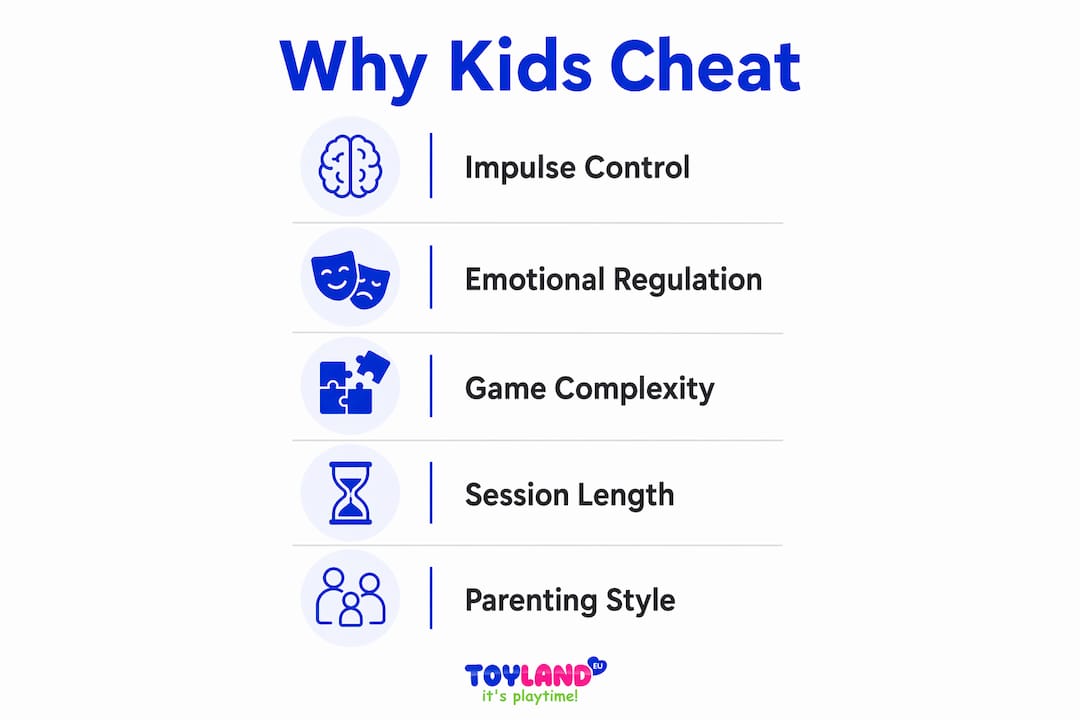
Cheating reflects executive function struggles, not intentional malice. Executive function covers impulse control, working memory, and emotional regulation. These skills are still forming throughout childhood and well into adolescence. When a child cannot tolerate losing, their underdeveloped prefrontal cortex simply overrides the rule they just learned.
Several specific drivers push kids toward cheating at the card table:
- Fear of failure. Losing feels catastrophic to young children. Cheating is a fast fix for an emotion they cannot yet manage.
- Boundary testing. Children use rule-bending to learn what happens when rules break. It is experimentation, not defiance.
- Desire for control. Card games involve luck, which children find deeply frustrating. Cheating restores a sense of control.
- Impulsivity. Children with attention challenges may cheat impulsively, without any plan. Giving them a moment to pause before their turn reduces this significantly.
Pro Tip: Before the game starts, name the feeling out loud: “Losing can feel really bad. That’s okay. Let’s see how we handle it together.” Naming the emotion in advance lowers the stakes and reduces the urge to cheat.
How parenting styles shape cheating behavior
The way you respond to cheating matters more than the cheating itself. Harsh punishment at age 7 predicts increased deception by ages 8 and 9. Children who fear punishment do not stop cheating. They get better at hiding it.
Authoritarian responses create a cycle: the child cheats, faces harsh correction, feels shame, and cheats more carefully next time. Shame is not a learning tool. It is a barrier to honest behavior.
“Labeling a child as a ‘cheater’ or ‘liar’ increases shame and worsens dishonest behavior over time. Correcting the action while keeping the child’s self-image intact is what actually builds honesty.” — Child Mind Institute
Gentle correction works differently. When you focus on the action, not the character, the child can hear you. “That move wasn’t fair” lands better than “You always cheat.” The first statement is fixable. The second feels permanent.
Modeling matters too. When children watch you play honestly, even when you lose, they absorb that behavior. Parents who narrate their own disappointment out loud (“I really wanted that card, but it’s your turn”) give children a script for managing loss without cheating.
How game choice and session length affect cheating
Game design directly influences how often children cheat. Rule-breaking spikes when attention fades or game mechanics become too complex. A child who cannot track the rules cannot follow them.
The following factors reduce cheating at the card table:
- Keep sessions short. Limit play to 30–45 minutes for younger children. Fatigue is a direct trigger for rule-breaking.
- Choose age-appropriate games. Games with fewer rules and visible mechanics give children less opportunity and less motivation to cheat.
- Run practice rounds. No-stakes practice rounds separate learning from competition. Children who understand the rules are less frustrated and less likely to bend them.
- Use transparent mechanics. Games where all cards or pieces are visible reduce the temptation to hide information.
Pro Tip: Try age-appropriate game rules designed for younger players. Matching the game to the child’s cognitive level is the single fastest way to cut cheating in half.
The table below shows how game features map to cheating risk:
| Game feature | Cheating risk level |
|---|---|
| Long sessions (60+ minutes) | High |
| Complex multi-step rules | High |
| Short sessions (30–45 minutes) | Low |
| Simple, visible mechanics | Low |
| Practice rounds before competition | Low |
Practical strategies to teach kids fair play
Teaching honesty during card games is a long game, not a single conversation. The goal is to build the emotional and cognitive skills that make cheating unnecessary. These strategies work across age groups:
- Correct the action, not the child. Say “That card needs to go back” instead of “You cheated.” The first invites repair. The second invites shame.
- Validate the feeling behind the cheat. “I can see you really wanted to win. Losing is hard.” Validating disappointment builds resilience far better than letting children win repeatedly.
- Assign the “Rule Keeper” role. Give your child the job of explaining the rules to others. Children who teach rules internalize them more deeply.
- Praise strategy, not outcome. “That was a smart move, holding that card” shifts the reward from winning to thinking well.
- Build self-worth outside the game. Performance pressure creates cycles where children cheat to avoid shame. Praising effort and creativity in non-competitive settings reduces that pressure at the card table.
- Use educational toys to build executive function. Toys that require planning, patience, and turn-taking train the same brain circuits that prevent cheating. Resources like toys that supercharge learning offer evidence-based options for parents.
Children do not develop integrity in a single game session. They develop it across hundreds of small moments where a trusted adult responds with patience instead of punishment.
Key Takeaways
Children cheating at cards is a normal developmental behavior driven by immature executive function, and the most effective parental response is gentle correction paired with emotional validation.
| Point | Details |
|---|---|
| Cheating is developmentally normal | Rule-bending begins as early as 24 months and peaks between ages 4 and 8. |
| Harsh punishment backfires | Research shows punitive responses predict more deception, not less, by ages 8 and 9. |
| Session length matters | Limiting play to 30–45 minutes reduces fatigue-driven cheating in younger children. |
| Correct actions, not character | Labeling a child a “cheater” increases shame and worsens long-term honesty. |
| Validation builds resilience | Acknowledging the pain of losing teaches children to cope without cheating. |
What I’ve learned from watching kids cheat at cards
I used to think a child who cheated at Go Fish was showing you something about their values. After years of observing how children actually develop, I think the opposite is true. Cheating shows you exactly where their brain is right now. It is a developmental readout, not a character verdict.
The parents I’ve seen handle this best share one trait: they stay curious instead of reactive. They ask “What was hard about that moment?” instead of “Why did you cheat?” That single shift in framing changes everything. The child stops defending themselves and starts thinking.
The uncomfortable truth is that children who cheat most often are frequently the ones under the most performance pressure. They cheat because winning feels like the only safe outcome. The fix is not stricter rules. It is a wider definition of success at the table.
Patience is not passive. Responding calmly to cheating, every single time, is one of the most active things a parent can do for a child’s long-term integrity.
— Thane Holland
Toylandeu™ toys that support honest play
Toylandeu™ carries a broad range of educational toys designed to build the exact skills that reduce cheating: patience, focus, impulse control, and creative problem-solving. These are not just fun. They train the prefrontal cortex in the same way that card games do, but with lower stakes and higher engagement.

The Montessori Drawing Kit and the Creative Learning Drawing Set both develop focus and sequential thinking in children ages 3–12. The 24-Color Clay Modeling Kit builds patience and fine motor control, two traits directly linked to better emotional regulation during competitive play. Toylandeu™ ships worldwide with free delivery, so the right developmental tool is always within reach.
FAQ
Is cheating at cards a sign of a deeper problem?
Occasional cheating is a normal part of childhood development, not a red flag. It becomes a concern only when it is persistent, escalating, or paired with other deceptive behaviors across multiple settings.
At what age do kids understand that cheating is wrong?
Most children develop a clear understanding of fairness and rule-following between ages 6 and 8, as their theory of mind and executive function mature. Before that age, rule-bending is largely impulsive rather than calculated.
Should I let my child win to stop them from cheating?
No. Letting children win repeatedly prevents them from learning to lose gracefully. Validating their disappointment while playing honestly is more effective for building resilience.
How do I correct cheating without shaming my child?
Address the action, not the person. Say “That card needs to go back” rather than “You cheated.” Keeping the child’s self-image intact makes them more likely to correct the behavior.
Do practice rounds actually help reduce cheating?
Yes. No-stakes practice rounds separate learning from competition, so children understand the rules before pressure enters the game. Lower confusion means lower frustration and fewer rule violations.