

Is Action Figure Grading Worth It for Your Collection?
Grading makes sense if you own a rare, popular figure in near-mint condition. It rarely pays off for common figures or anything with visible wear. Before you spend a dime, estimate the figure’s current market value, photograph it from every angle, confirm the grading company accepts it, and pick a service tier that matches how badly you need it back. The declared value you list on the submission form drives both your insurance cost and your grading fee, so guess conservatively and check recent sold listings first.
- Estimate market value using recent sold comps, not asking prices
- Photograph the figure, card, blister, and accessories before packing anything
- Confirm eligibility with the grading company before you ship
- Choose a service tier based on how urgently you need the item returned
Key Takeaways
Grading pays off when a figure’s expected score sits around 85 or higher or when genuine rarity backs it up; below that, fees and shipping usually outweigh the resale gain.
| Point | Details |
|---|---|
| Grade selectively | Reserve grading for figures likely to score 85+ or ones that are demonstrably scarce. |
| Budget for hidden costs | Factor in insured shipping and optional upgrades like UV cases on top of the base fee. |
| Check completeness first | A missing small accessory can cut a loose figure’s value by half or more. |
| Verify before shipping | Confirm eligibility, photograph everything, and never cut factory tape without asking the grader. |
| Preserve what you keep | Toylandeu™ offers display cases and replacement accessories for collectors preserving figures outside the grading process. |
Table of Contents
- How Does Action Figure Grading Actually Work?
- What Do Grading Scales and Tiers Actually Mean?
- How Much Does Grading Cost and Is It Worth It?
- How Do You Submit an Action Figure for Grading?
- How Do You Choose a Reputable Grading Company?
- How Should You Store a Graded Action Figure?
- When Is Grading Actually Worth the Wait?
- Protect What You’re Not Sending Off for Grading
- Sources
- FAQ
How Does Action Figure Grading Actually Work?
Professional grading is a third-party inspection where a trained grader examines a figure and its packaging, then assigns a standardized numeric score so buyers and sellers can agree on condition without handling the piece themselves. That score is the entire point. It turns a subjective “looks pretty good” into a number a stranger on eBay will trust.
The process runs in three stages:
- Authentication. The grader checks for factory tape versus resealed tape, reproduction parts, and any restoration work that would disqualify the item or lower its score.
- Grading. Inspectors examine the figure, card, blister, and any accessories separately, often assigning subgrades to each component so a crushed corner doesn’t tank the score for an otherwise pristine figure.
- Encapsulation. The item goes into a sealed case with a label showing the grade, subgrades, and a serial number for verification.
Presentation options, like label color or case style, don’t change the underlying grade itself. Turnaround typically scales with service tier, and most companies offer a standard queue alongside a faster, pricier option.
Pro Tip: If your figure has visible factory double taping on the blister, don’t cut or peel anything before contacting the grader. Some vintage pieces were sealed twice at the factory, and disturbing that seal can hurt your authentication result.
What Do Grading Scales and Tiers Actually Mean?
Most grading companies use a 100-point scale that maps to a simplified 10-point or “unified” label system, and AFA documents both approaches alongside separate categories for sealed, qualified, and loose items. A 95 on the 100-point scale typically lands in the same tier as a 9.5 on the unified scale. The number matters less than which tier it falls into.
- Gold tier (roughly 90 and up): near-perfect, factory-fresh appearance with no visible handling wear
- Silver tier (roughly 80 to 89): case-fresh looking, but a trained eye can spot minor flaws
- Bronze tier (below 80): noticeable wear, creasing, or packaging damage that a casual buyer would catch
A single dented corner or a faded color spot can drop a figure from Gold to Silver even when everything else looks flawless. That’s why subgrades matter: they show a buyer exactly where the weakness sits, whether it’s the card, the blister, or the figure itself, instead of burying it inside one flat number.
How Much Does Grading Cost and Is It Worth It?
Base fees run from roughly $10 to over $100 depending on figure size and the service tier and add-ons a company offers, including cleaning, UV-resistant case upgrades, and a printed grading summary. That range sounds vague because it is. A pocket-sized carded figure costs far less to grade than an oversized boxed vehicle playset.
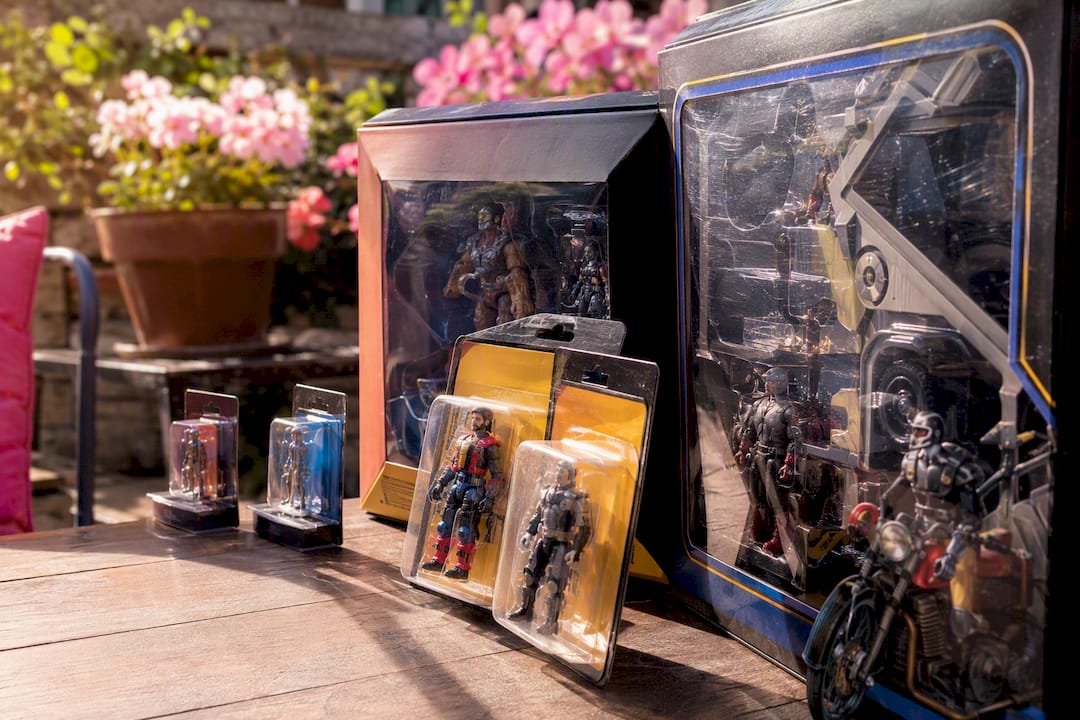
Shipping and insurance are the costs people underestimate. You’ll want to insure the shipment to its full declared value, which can add anywhere from a few dollars to several hundred, depending on how much the figure is actually worth and which carrier you use. Priority turnaround tiers cost more too, and most collectors bump high-value items into that faster queue simply because very expensive items sitting in a warehouse for months isn’t worth the stress.
Grading tends to pay for itself when the expected grade lands around 85 or higher, or when the figure is demonstrably scarce. Mint-in-package figures already carry a 3x to 20x premium over loose examples, and grading tends to widen that gap further for top-condition pieces. Missing a small original accessory can cut a loose figure’s value by half or more, so completeness matters as much as condition.
- Base grading fee varies widely based on size and tier
- UV case upgrades and cleaning: add-ons, not included in base fee
- Insured shipping: a few dollars for common items, much more for high-value pieces
- Rule of thumb: grade if you expect 85+ or the figure is genuinely scarce
How Do You Submit an Action Figure for Grading?
Getting a figure into a grader’s hands without damaging it takes more care than most first-timers expect. Follow this order:
- Confirm eligibility with the grading company’s website or customer service before you do anything else.
- Fill out the submission form honestly, listing a declared value based on realistic recent sales, not wishful thinking.
- Photograph the item from multiple angles, including any suspected factory tape or seal, before it leaves your hands.
- Pack it properly: use a backing board behind carded figures, wrap loose or boxed items in bubble wrap, and leave clearance inside the outer shipping box so nothing shifts.
- Insure the shipment to its declared value and require a signature on delivery, following the packing and insurance guidance most collector communities recommend.
Some graders will specifically ask for close-up photos of tape seams they suspect might be factory-original versus resealed. Answer those requests directly and don’t guess. Consulting the grader before cutting or altering any seal can prevent an automatic disqualification.
Pro Tip: Ship your figure in the same packaging you’d want it returned in. A box that survives the trip there usually survives the trip back, and reusing sturdy packaging saves you money on the return leg.
How Do You Choose a Reputable Grading Company?
Not every grading company carries the same weight with buyers. Look at market recognition first: does the grade actually move resale prices for figures like yours, or is it a newer company nobody trusts yet?
Population reports and serial verification tools are a strong signal. Companies that publish searchable population data and let buyers verify a serial number are investing in the kind of transparency that builds long-term trust. Before submitting, ask a few direct questions: What’s your guaranteed turnaround for each tier? What’s the insurance limit if my item is lost or damaged in transit? What’s your policy if I need a recase later?
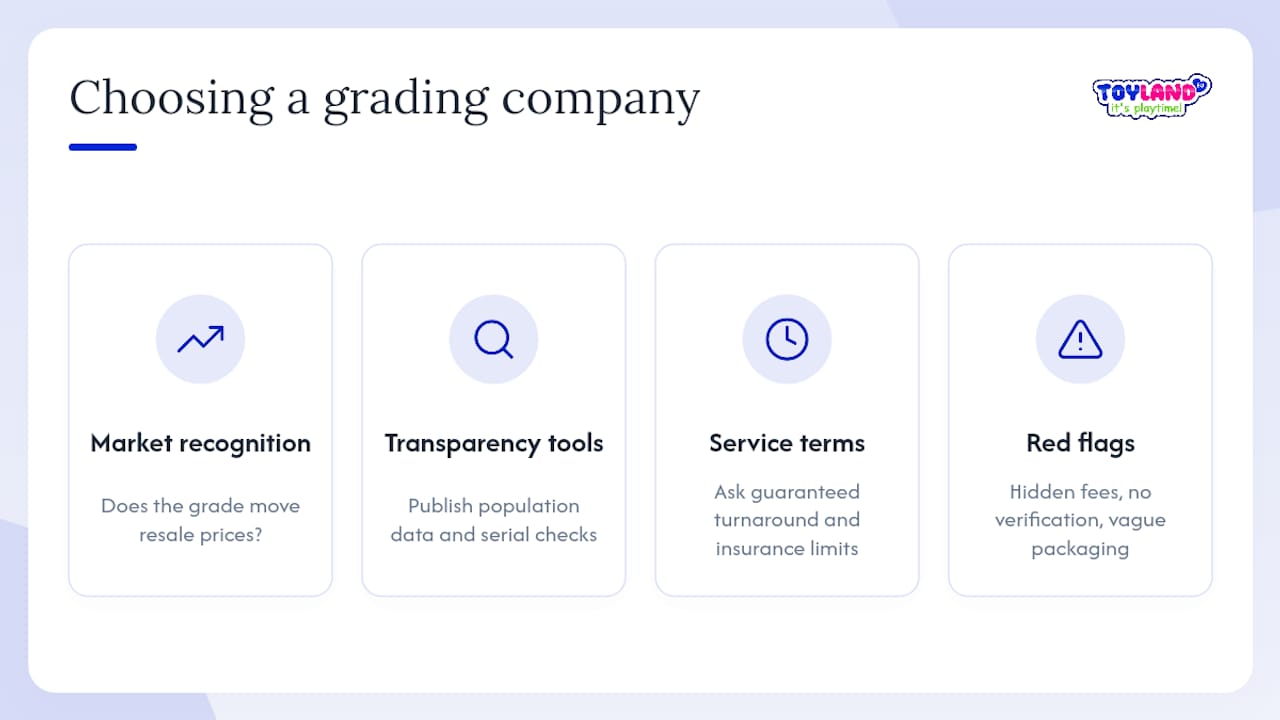
Watch for red flags: fee structures that aren’t published anywhere, no way to verify a past grade online, and packaging instructions so vague you’re guessing how to ship. Companies worth your money for action figure grading, including AFA, CGA, CAS, and UKG, each publish their own scales and eligibility rules, so read them before you submit rather than after something goes wrong.
How Should You Store a Graded Action Figure?
A grade only protects value if the case protecting it does its job too. Museum-quality, UV-resistant encapsulation blocks more of the light spectrum that causes yellowing and color fade over time, and most grading companies offer it as an upgrade rather than a standard inclusion.
- Keep graded cases out of direct sunlight, even indirect window light adds up over years
- Avoid rooms with fluctuating temperature or high humidity, both accelerate plastic degradation
- Store cases upright or flat rather than stacked under weight
- Handle by the case edges, not the encapsulated figure itself, even though it’s sealed
Beyond the numeric grade, the physical case itself signals serious collector treatment, tamper-evident and visibly protected. For collectors who’d rather skip grading and just preserve what they have, proper long-term storage techniques cover the same environmental risks in more depth.
Pro Tip: Rotate your display pieces out of direct light every few months if you keep them on an open shelf rather than in a case. Even LED shelf lighting contributes to fading over years of constant exposure.
When Is Grading Actually Worth the Wait?
I prioritize grading for three situations: an upcoming sale where the number will move the price, an insurance claim where I need documented condition, or a piece going into permanent display where the case itself matters as much as the grade.
For everything else, common figures worth $30 loose, or anything I bought purely for nostalgia, I skip it. The fees and wait time rarely make sense unless demand and rarity are both genuinely present, and overproduction can flatten resale potential no matter how sharp the corners look. Balance cost against what you actually want from the piece: cash, protection, or just something nice to look at.
— Thane Holland
Protect What You’re Not Sending Off for Grading
Not every figure in your collection is headed to a grading company, and that’s fine. Toylandeu™ carries display cases, storage solutions, and collectible pieces that help you protect a figure’s condition without the wait or the fee. If a figure loses a small accessory, and that alone can cut its value by half or more, a replacement or a curated collectible from our catalog keeps the set complete instead of leaving it half finished.
Rarity and demand drive value more than anything else, a point collectible investing guides make just as often about trading cards as they do about action figures. Browse our educational and collectible-adjacent product lineup to see what fits your shelf, or head to our full storefront to check current stock before your next purchase.
Sources
FAQ
Can You Get Action Figures Graded?
Yes, companies including AFA, CGA, CAS, and UKG all grade action figures, evaluating the figure, card, blister, and accessories separately before assigning a final score.
How Much Does It Cost to Grade an Action Figure?
Base fees typically run from roughly $10 to over $100 depending on figure size and service tier, with optional add-ons like UV cases and cleaning priced separately.
Does PSA Grade Action Figures?
PSA is primarily known for trading cards; dedicated action figure grading is handled by companies specializing in toys, such as AFA, CGA, CAS, and UKG.
How Do I Know If My Action Figure Is Worth Money?
Check recent sold listings for the same figure in similar condition. Value depends on popularity, rarity, condition, and current demand, and mint-in-package examples often sell for several times more than loose ones.