

Collectors: Acrylic vs Glass Display Case, 6 Question Museum Checklist
For most hobbyists and collectors moving items often, acrylic is the smarter buy. For long-term, high-value, or museum-grade displays that stay put for decades, laminated or low-iron glass wins. Case size, light exposure, and how long you plan to keep the display matter more than brand loyalty to either material.
TL;DR:
- Acrylic is ideal for portable or frequently moved displays due to its impact resistance and lower shipping costs, but it typically needs replacement after about two years for long-term preservation.
- Low-iron glass is better suited for permanent, high-value displays because it resists yellowing and damage for up to three decades, especially when laminated or with anti-reflective coating.
- Always specify cast acrylic with UV protection and provide detailed datasheets or Oddy-test documentation before ordering for accurate quality and conservation compliance.
- Glass customization options like low-iron, laminated safety, and anti-reflective coatings increase costs and lead times but enhance durability and color fidelity.
- Proper cleaning and avoiding direct sunlight extend the lifespan of acrylic cases, yet acrylic generally discolors faster than glass when exposed to UV light over time.
Table of Contents
- Acrylic vs Glass Display Case: The Core Trade-Offs
- Acrylic: When It’s the Better Choice and What to Specify
- Glass: When It’s Worth the Extra Cost and How to Specify It
- How to Choose: A Decision Checklist for Your Display Case
- Care and Maintenance: Keeping Your Case Clear Longer
- What Museum Conservation Standards Mean for Your Collection
- Real-World Advice for Typical Collector Setups
- Fill Your New Display Case With Something Worth Protecting
- Sources
- FAQ
Acrylic vs Glass Display Case: The Core Trade-Offs
The two materials trade the same handful of properties back and forth, and once you see them side by side, the decision usually makes itself.
Acrylic is up to 17 times more impact-resistant than glass at the same thickness, and it typically runs 40 to 60% cheaper once you add up material, shipping, and fabrication. Glass counters with scratch resistance and stability that acrylic simply cannot match over years of handling.
Here’s how the two stack up on the properties that actually affect your purchase:
- Impact resistance: Acrylic resists cracking and shattering far better than glass at the same thickness.
- Weight: Acrylic’s density sits around 1.2 g/cm³ versus roughly 2.5 g/cm³ for soda-lime glass, cutting shipping costs on bigger cases.
- Clarity: Standard glass carries a faint green tint from iron content; acrylic and low-iron glass both avoid it.
- UV protection: Many acrylic formulas block 98 to 99% of UV rays as a built-in property, not a coating.
- Scratch resistance: Glass holds a polished surface for decades; acrylic scuffs and hazes with repeated cleaning.
- Cost: Acrylic wins on sticker price and freight; glass wins on total cost of ownership for permanent installations.
If you’re shipping a case cross-country every convention season, weight and impact resistance decide the winner. If the case sits in your living room for the next 20 years, scratch resistance and stability matter more than either.
Acrylic: When It’s the Better Choice and What to Specify
Acrylic earns its reputation for a reason. It’s lighter, cheaper to ship, and dramatically harder to break by accident, which makes it the default for anyone who moves displays, travels to conventions, or just doesn’t want to worry about a knocked-over shelf turning into a trip to the emergency room.
The UV protection is the part people underrate. Because it’s built into the material itself rather than sprayed on, it won’t wear off or scratch away the way a surface coating eventually does.
When you’re ordering, ask for these specifics:
- Cast acrylic, not extruded. Cast sheets are optically clearer and more durable; extruded is cheaper but more prone to stress cracking.
- Named UV grades such as Plexiglas UF3 or Acrylite OP2, with a manufacturer datasheet to back the claim.
- Minimum thickness of 3/16 inch for small cases, thicker for anything over 24 inches wide, with edge supports specified.
- Cleaning guidance: a microfiber cloth and acrylic-safe cleaner only. Skip ammonia-based glass cleaners entirely.
Pro Tip: Ask the supplier for the acrylic’s brand name and grade in writing before you order. “UV-protected acrylic” with no brand behind it is a marketing line, not a spec.
Glass: When It’s Worth the Extra Cost and How to Specify It
Glass justifies its price tag when the display isn’t going anywhere for a long time. A well-specified glass case can last 25 to 30 years without the surface degradation or yellowing that eventually catches up with acrylic.
For anything large, frameless, or holding genuinely valuable pieces, glass also handles structural loads that acrylic can’t manage without visible sagging or flexing over time.
Specify these options when you’re pricing glass:
- Laminated safety glass for large panels or frameless doors, engineer-approved for the thickness you need.
- Low-iron (“water white”) glass removes the green tint for under 5% extra cost, worth it for anything color-sensitive like painted figures or fabric.
- Anti-reflective coatings cut glare by roughly 98%, but add 20 to 50% to the price and can complicate fabrication.
- Avoid tempered glass if UV protection matters. Tempering changes strength, not light transmission, so it does nothing for fading.
The catch with glass is lead time. Specialty grades like laminated or low-iron often take weeks longer to fabricate than off-the-shelf acrylic, and the finished weight means higher freight bills, especially for anything shipped across state lines.
How to Choose: A Decision Checklist for Your Display Case
Before you request a single quote, answer these questions honestly about your own situation.
Start with lifespan. A case you’ll rotate stock in and out of every few months has completely different needs than one meant to hold a signed jersey for the next 15 years. Then weigh how sensitive the object itself is. Vintage paper, fabric, or anything with adhesive residue reacts differently to trapped off-gassing than a solid vinyl figure does.
Once you know your priorities, run this checklist with any fabricator you’re considering:
- Cast or extruded acrylic? Get a straight answer; extruded is a downgrade for anything beyond casual use.
- Can you provide a UV datasheet? No datasheet, no verified UV protection. Move on if they can’t produce one.
- Has this material passed an Oddy test? This matters if you’re storing metal, paper, or textiles long-term. A vague answer is a red flag.
- What’s the lamination spec on glass panels? Get the thickness and interlayer type in writing.
- What thickness and support structure do you recommend for my case dimensions? A fabricator who quotes without asking your size and use case is guessing.
- Are quotes comparing equal specs? Finished assembly weight, glazing grade, and access method all need to match across quotes, or you’re comparing apples to oranges.
Walk away from any supplier who dodges the datasheet question or can’t tell you whether their acrylic is cast or extruded. That’s the fastest way to spot someone selling on price alone.
Care and Maintenance: Keeping Your Case Clear Longer
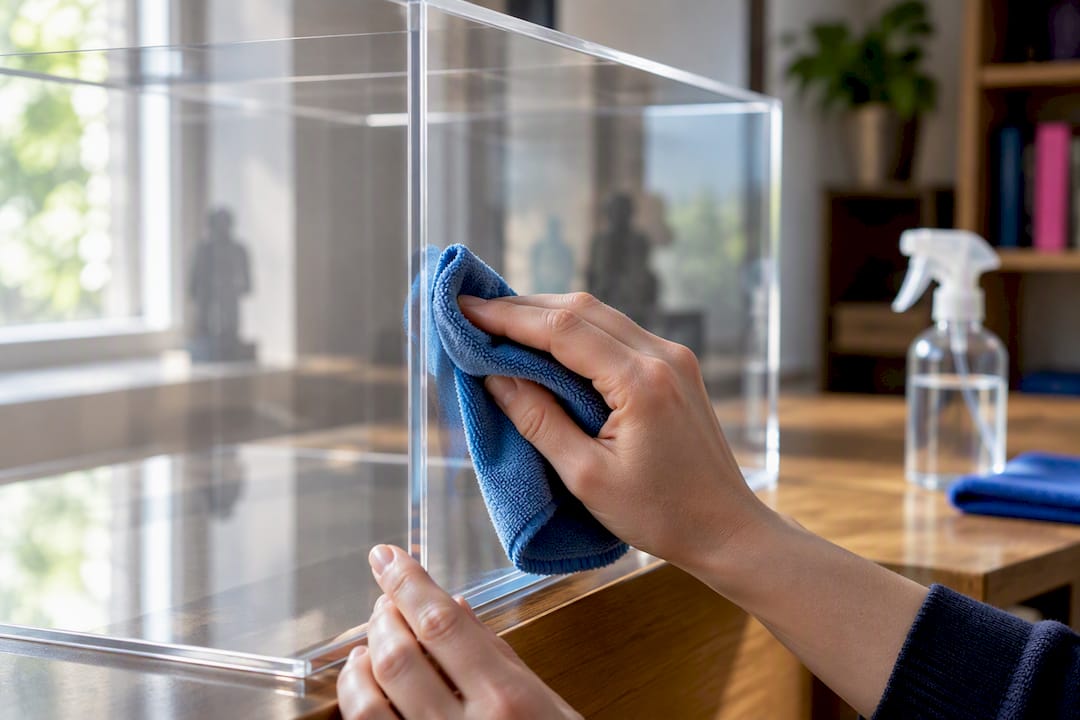
Cleaning habits determine how long either material actually looks good.
For acrylic, stick to a microfiber cloth and a cleaner made specifically for plastics. Ammonia-based glass cleaners will cloud and craze the surface over time. Minor scratches respond well to plastic polish kits you can buy for under $15, buffed in small circular motions. Glass takes the opposite approach: standard glass cleaner and a lint-free cloth work fine, but scratches on glass are permanent. There’s no polishing your way out of it, and a damaged panel means full replacement.
- Keep both materials out of direct sunlight when possible, since heat buildup accelerates yellowing in acrylic and can stress laminated glass seams over time.
- Control humidity around anything fabric, paper, or metal based, regardless of which glazing you chose.
- Check for a faint chemical smell right after unboxing a new acrylic case. That can signal off-gassing, worth noting if you’re storing sensitive materials inside.
Pro Tip: Wipe down display cases monthly rather than waiting until dust is visible. Acrylic scratches accumulate fastest during aggressive cleaning of heavily soiled surfaces, not gentle regular ones.
What Museum Conservation Standards Mean for Your Collection
Conservation professionals don’t treat this as a simple either/or choice, and their reasoning is worth borrowing even if you’re not running a museum.
Museum guidance generally limits acrylic to short-term exhibits, often citing a rough two-year window before off-gassing and UV-layer degradation become a real concern for sensitive artifacts. Extruded acrylic frequently fails the Oddy test outright, while even cast acrylic carries some risk for permanent installations.
That standard exists because acrylic’s UV-blocking properties can start degrading within about a decade, and repeated cleaning hazes the surface faster than most owners expect. If you’re displaying anything with real material sensitivity, paper, dyed fabric, aging plastic, ask suppliers for both a UV datasheet and Oddy-test documentation before you commit. No paperwork means no verification, and that’s the same standard institutions hold their own vendors to.
Real-World Advice for Typical Collector Setups
If you’re hauling display cases to conventions or rotating stock seasonally, acrylic’s weight and shatter resistance save you real money and stress over a few years of travel. For a permanent shelf holding your most valuable figures, laminated low-iron glass is worth the wait and the higher bill. Plenty of collectors split the difference: glass front for clarity and durability, acrylic sides and back to cut weight and cost.
— Thane Holland
Fill Your New Display Case With Something Worth Protecting
Once you’ve settled on a case, the fun part is deciding what goes inside it. Toylandeu™ isn’t a display case supplier, but it stocks the kind of collectibles hobbyists actually build cases around: Funko Pop figures, LEGO® official collectibles, and detailed articulated action figures that hold their value and their detail under good glazing.
With a large selection of toys and free worldwide shipping, Toylandeu™ offers a catalog built for collectors and gift buyers alike, making it easy to source the pieces from Wholesale Toys | Fun & Educational Toys for All Ages before you finalize your case dimensions. Sizing your acrylic or glass display around a specific figure line ahead of time saves you from ordering a case that’s an inch too short. Browse the Funko Pop collection now and measure twice before your case order goes out.
Sources
Before you sign off on any quote, pull the actual technical documentation instead of trusting a sales pitch. The definitive guide to museum display case glazing breaks down conservation-grade specs including Oddy testing and lamination standards in detail. For a practical rundown of acrylic’s strength and cost advantages, TT Plasticland’s comparison covers impact ratings and shipping math side by side. Wetop Acrylic’s collector buyer’s guide is useful for comparing finished-assembly weight across quotes from different fabricators. For UV protection specifically, Piedmont Plastics explains how the protection gets built into acrylic sheet during manufacturing rather than applied afterward.
Always ask any supplier for a manufacturer datasheet and Oddy-test status in writing. If they can’t produce either, treat that as your answer.
- Acrylic versus glass
- Acrylic vs. Glass: Which Is Better for Your Project?
- Acrylic vs Glass: The definitive guide to museum display case glazing
- Glass vs Acrylic Display Case for Collectibles | Wetop Acrylic
FAQ
Which Is Better, Glass or Acrylic?
Neither wins outright. Acrylic is lighter, cheaper, and far more impact-resistant, making it better for cases you move or ship often. Glass holds a scratch-free surface far longer and suits permanent, high-value, or large-format displays where stability matters more than portability.
Are Acrylic Display Cases Good for Long-Term Storage?
Acrylic works well for a few years, but conservation guidance generally treats it as a short-term solution, often citing a roughly two-year window before UV protection and clarity start to decline. For anything you plan to display for decades, laminated or low-iron glass holds up better.
What Is the Best Material for Display Boxes?
It depends on how the box gets used. For portable or frequently handled boxes, cast acrylic with verified UV protection is the practical choice. For a fixed, permanent display, laminated or low-iron glass is the stronger long-term investment.
Which Is Better for a Display Case, Tempered Glass or Acrylic?
Tempered glass is stronger against breakage than standard glass, but tempering doesn’t improve UV protection at all, so it still lets colors fade over time. Acrylic with built-in UV blocking generally protects displayed items better, even though tempered glass resists scratching more effectively.
Does Acrylic Yellow or Discolor Over Time?
Yes, especially with sun exposure and frequent cleaning with the wrong products. Keeping acrylic out of direct sunlight and using plastic-safe cleaners slows the process, but glass simply doesn’t have this issue at all over a comparable timeframe.