

Why boys playing with dolls builds empathy and skills
TL;DR:
- Doll play activates empathy-related brain regions in boys, fostering social and emotional development.
- Gender stereotypes hinder boys’ access to nurturing play, impacting their emotional skills.
- Parents influence play choices; promoting diverse toys supports healthier emotional growth.
When researchers at Cardiff University put brain scanners on children at play, they found something that should change how every parent thinks about the toy aisle. Doll play activates the same empathy-related brain regions in boys as it does in girls, specifically the posterior superior temporal sulcus, a region tied to understanding other people’s minds. Yet millions of boys are steered away from dolls every single day, missing out on real developmental benefits. This guide breaks down what the science actually says, why stereotypes persist, and what you can do right now to support your child’s emotional growth.
Table of Contents
- What does the research say about boys and doll play?
- How gender stereotypes affect boys’ toy choices
- What are the real benefits—emotionally and socially—of doll play for boys?
- How parents can encourage healthy, stereotype-free play
- Why it’s time to rethink boys, dolls, and play
- Explore more toys that inspire every child
- Frequently asked questions
Key Takeaways
| Point | Details |
|---|---|
| Doll play builds empathy | Brain studies confirm that dolls help boys and girls develop empathy and social understanding. |
| Stereotypes limit choices | Gendered attitudes and marketing keep boys from toys that boost emotional growth. |
| Parents can make a difference | Modeling acceptance and offering diverse toys helps break down harmful norms. |
| Benefits reach every child | Boys especially gain empathy, communication, and relationship skills from inclusive play. |
What does the research say about boys and doll play?
The scientific case for boys playing with dolls is far stronger than most parents realize. Researchers have moved well beyond surveys and questionnaires, using brain imaging and randomized controlled trials to pin down exactly what happens when a child picks up a doll and starts talking to it, feeding it, or putting it to bed.
A landmark study found that doll play improves theory of mind and false belief understanding in children aged 4 to 8, regardless of gender. Theory of mind is the ability to understand that other people have thoughts, feelings, and perspectives that differ from your own. It is the foundation of empathy, healthy friendships, and even academic collaboration. Crucially, the study was a randomized controlled trial published in PLOS One, which is a much higher standard of evidence than an observational study. Boys in the doll play group showed measurable gains in social cognition, and the effects were especially strong for children who already had peer relationship challenges.
“Children who played with dolls showed significantly greater activation in brain regions linked to social information processing, and this was true for both boys and girls.” — Cardiff University, 2024
The American Academy of Pediatrics and the American Psychological Association have both weighed in on the broader topic of gendered play. Both organizations recognize that rigid gender norms in toys limit children’s developmental potential. When boys are funneled exclusively toward construction sets and vehicles, and girls are pointed only toward nurturing and domestic play, neither group gets the full range of cognitive and emotional exercise that healthy development requires.
Here is a snapshot of what recent research shows across key skill areas:
| Skill area | Effect of doll play on boys | Notes |
|---|---|---|
| Empathy | Strong positive effect | Brain imaging confirms pSTS activation |
| Theory of mind | Significant improvement | Especially in children with peer problems |
| Emotional vocabulary | Increased | Children narrate emotions during doll play |
| Perspective-taking | Improved | Linked to better social outcomes later |
| Peer relationships | Better quality friendships | Effects seen in follow-up assessments |
Learning more about how interactive dolls benefits extend across different play contexts can help you choose the right toys with confidence.
Pro Tip: If your son is new to doll play, start with a character doll from a show or movie he already loves. Familiar characters lower the social awkwardness and get him talking, imagining, and problem-solving right away.
The evidence is not ambiguous. Doll play is a developmentally rich activity, and boys are not getting a lesser version of those benefits. They are getting the same ones.
How gender stereotypes affect boys’ toy choices
With benefits so clear, why is there still resistance to boys playing with dolls? The answer lies in social expectations that are deeply embedded and often invisible, even to well-meaning parents.
Research published in Frontiers in Psychology confirms that parents avoid counter-stereotypical toys for boys far more than for girls, and that fathers tend to be more gender-typed in their toy choices than mothers. This is not about bad parenting. It reflects cultural scripts that most adults absorbed in their own childhoods and are now, often unconsciously, passing on.
The timing of this influence matters enormously. Preschoolers aged 48 to 72 months already associate dolls and dollhouses firmly with girls, and cars and army toys firmly with boys. Both boys and girls use gendered language when explaining why they would or would not play with a particular toy. The stereotyping is already well established before a child even starts kindergarten.
Here is how the social pressure typically works at different ages:
| Age range | Common stereotype behavior | Impact on boys |
|---|---|---|
| 2 to 3 years | Begins noticing gender labels on toys | Mild; easily reversed with modeling |
| 4 to 5 years | Starts internalizing peer and parent cues | Moderate; peer play influences choices |
| 5 to 7 years | Stereotypes peak in rigidity | High; boys may reject dolls even if they enjoy them |
| 8 to 10 years | Social identity becomes more complex | Boys often privately enjoy diverse play but hide it |
Why do these pressures fall harder on boys than on girls? The cultural cost of a boy acting “too feminine” is treated as higher than a girl acting “too masculine.” Society rewards girls for being tomboys far more readily than it rewards boys for nurturing play. That asymmetry is not neutral. It actively shapes which developmental skills boys get to practice.
Key ways stereotypes show up in everyday family life:
- Grandparents commenting that a doll is “for girls” during gift giving
- Marketing that puts dolls in pink sections of toy stores, physically separated from boys’ toys
- Older siblings teasing younger brothers for wanting to play “baby games”
- Well-meaning adults redirecting boys toward trucks or action figures without thinking
Being thoughtful about choosing toys for boys means recognizing these patterns and making active, informed decisions rather than defaulting to the toy aisle’s color coding.
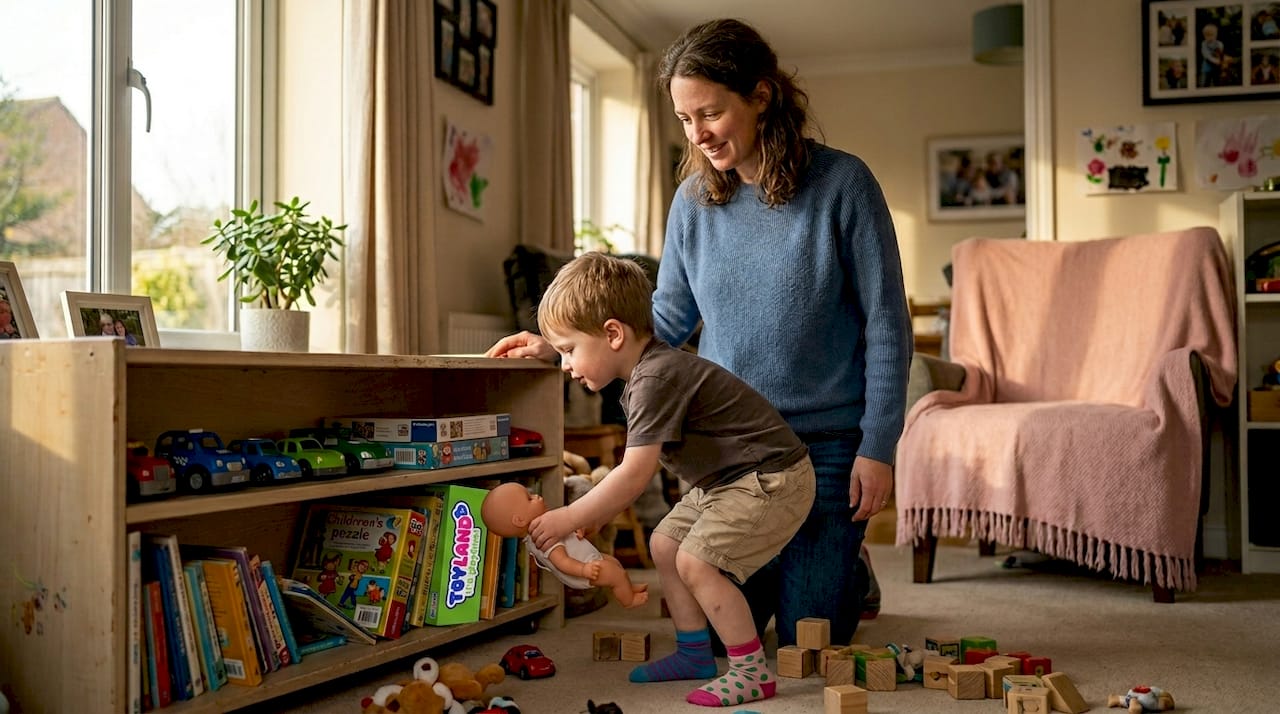
The critical window is ages 5 to 7. This is when stereotypes are most rigid and most susceptible to challenge. Early, intentional exposure to diverse play options during this window pays dividends for years.
What are the real benefits—emotionally and socially—of doll play for boys?
Understanding the roots of stereotypes, let’s focus on what boys actually gain from playing with dolls. The benefits are specific, measurable, and directly relevant to raising children who are emotionally resilient and socially capable.
The core gains include:
- Empathy development. Doll play requires a child to imagine what the doll is feeling or needing. Over time, this imaginative exercise translates into greater real-world empathy toward peers, siblings, and adults.
- Emotional vocabulary. When children narrate doll scenarios, they practice naming emotions: “She’s sad because nobody came to her party.” Research consistently shows this verbal practice expands emotional literacy.
- Perspective-taking. Acting out scenarios from another character’s point of view is a direct workout for the brain regions responsible for understanding other minds, and the Cardiff University study showed this effect is measurable in children as young as four.
- Conflict resolution. When a child plays out disagreements between dolls and then resolves them, they are rehearsing the scripts and skills they will use in real-life peer conflicts.
- Caregiving skills. Nurturing play teaches children to be attentive to others’ needs, a skill that matters whether your son grows up to be a parent, a doctor, a coach, or a colleague.
“Restricting boys to stereotypically masculine toys limits their emotional range and contributes to suppression patterns that harm mental health in adolescence and adulthood.” — American Academy of Pediatrics
The AAP and APA are explicit on this point. Gendered marketing limits development, and traditional masculinity norms that push boys to suppress emotions are linked to poorer mental health outcomes later in life. When boys are taught that crying is weak and nurturing is “girly,” they learn to disconnect from their emotional experience. Doll play is one of the simplest, most research-backed tools for countering that pattern early.
Pro Tip: Play alongside your son occasionally. Pick up a doll, give it a voice, and ask your son what his character thinks about the situation. This models that nurturing play is for everyone and signals your acceptance without any lecture needed.
Supporting emotional development in kids does not require expensive interventions or specialized programs. It often starts with something as simple as a doll on a shelf and a parent who does not redirect the child away from it.
Understanding how interactive toys and development connect more broadly can also help you build a well-rounded toy collection that covers emotional, cognitive, and physical growth.
How parents can encourage healthy, stereotype-free play
Benefits are clear and real, so how can parents put this knowledge into practice? This is where most parenting articles stop at “just let them play with whatever they want.” That advice is fine as far as it goes, but it ignores the reality that children are swimming in stereotype-reinforcing messages from every direction. Passive permission is not enough. Active, thoughtful support makes the real difference.
Here is what works:
- Stock a diverse toy shelf. Keep dolls, vehicles, building sets, art supplies, and science kits all in the same accessible space. When no category is labeled off-limits, children explore more freely and make choices based on genuine interest rather than social policing.
- Watch your language. Avoid phrases like “that’s for girls” or “big boys don’t play with that,” even casually. Children absorb these cues more deeply than we expect, especially between ages 5 and 7 when stereotypes are at peak rigidity.
- Use books and stories as tools. Research shows that counter-stereotypical narratives reduce stereotyping in children’s toy choices and even their ideas about professional roles, with effects lasting at least two weeks after a single reading session. Studies involving between 101 and 232 children confirmed these results. A picture book featuring a boy who loves to care for his baby sibling can shift a child’s thinking meaningfully and quickly.
- Intervene at the source, not just at home. If a relative makes a dismissive comment about your son’s toy preference, address it calmly in the moment. Children notice when adults defend their choices, and that validation matters.
- Avoid gendered gift-giving requests. When relatives ask what your child wants for birthdays or holidays, feel free to include dolls on the list. Normalizing the request normalizes the toy.
Pro Tip: Visit a toy library or toy store together and let your son pick freely without steering him. Observe what draws his attention without commenting. This gives you valuable insight into his current interests and signals that all toys are genuinely available to him.
Exploring options like inclusive baby dolls can give you a starting point for expanding what is on your child’s shelf. The key is variety, visibility, and a home environment where curiosity is more powerful than categories.
Why it’s time to rethink boys, dolls, and play
Here is the thing that rarely gets said directly: the resistance to boys and dolls is not really about child development. It is about adult anxiety. The science settled this question. Doll play benefits boys. The only remaining debate is whether the adults around them will let them have that benefit or withhold it to protect a social norm that harms children.
We often frame inclusive play as a progressive value, as if it is a lifestyle choice some families make and others do not. But that framing obscures what the research actually shows. Blocking boys from nurturing play is a documented developmental disadvantage. It is not neutral.
Families who encourage diverse play are not making a political statement. They are giving their sons access to the full range of human emotional experience, the same experience that girls have historically been allowed to practice through play. When boys can freely choose dolls for all kids, they grow up with stronger empathy, better friendships, and healthier emotional habits. That is not a side effect. That is the point.
Parents are the most powerful counter-force to cultural stereotyping. Not schools, not media, not toy companies. You. The choices you make about what sits on the shelf, how you respond when your son picks up a doll, and whether you validate or redirect that curiosity shape who he becomes. The barrier is learned. That means it can be unlearned, starting at home.
Explore more toys that inspire every child
At ToylandEU, we believe every child deserves a toy shelf as big and open as their imagination.

Whether your child loves nurturing play, creative adventures, or high-speed thrills, our catalog has something designed to spark curiosity and build real skills. Let your child explore an enchanting art workbook that supports creativity and fine motor development, or get the whole family laughing with a gesture-controlled stunt car that turns movement into play. No toy aisle color coding here. Browse our full toy collection and find the gifts that let every child, regardless of gender, grow, laugh, and thrive.
Frequently asked questions
Is it normal for boys to want to play with dolls?
Yes, it is completely normal and developmentally healthy. Cardiff University research confirms that doll play activates the same empathy-related brain regions in boys as in girls, supporting social and emotional growth across genders.
Will playing with dolls affect my son’s gender identity?
No, it will not. Major psychological associations including the APA have found no evidence that diverse toy choices influence gender identity, and they actively support inclusive, open-ended play for all children.
How can parents help boys feel comfortable playing with dolls?
Stock a diverse toy shelf, use inclusive language, and read picture books with non-stereotypical characters. Research confirms that counter-stereotypical stories meaningfully reduce toy stereotyping in children aged 5 to 7, with effects lasting two weeks or more after a single reading.
Are there certain types of dolls best for boys?
There is no single best type. Offering a variety, from baby dolls and figures to character dolls and puppets, lets your son discover what kind of imaginative play resonates most with him right now.