

Color Psychology for Children: What Parents Must Know
TL;DR:
- Color psychology influences children’s emotions, attention, and behavior through hue and exposure, with artificial dyes affecting behavior most strongly. Bright hues generally promote positive moods, while saturated colors can cause overstimulation, especially in sensitive children. Applying consistent, moderate color choices in environments supports healthy development without relying on color as a simple solution.
Color psychology for children is the study of how specific hues, saturations, and intensities shape kids’ emotions, attention, and behavior across everyday environments like bedrooms, classrooms, and play areas. Researchers including Boyatzis and Varghese established as early as 1994 that children associate bright colors with positive emotions and dark colors with negative feelings, a pattern that holds across cultures and age groups. What makes this field practically useful for parents and educators is that color choices for children are not just aesthetic decisions. They are environmental inputs that directly influence mood, focus, and even sleep quality.
What color psychology in children actually means
Color psychology, formally called chromopsychology, examines how color perception triggers psychological and physiological responses. In children, these responses are more pronounced than in adults because the developing brain processes sensory input with greater intensity and less cognitive filtering. The effects of color on children span three domains: emotional (how a child feels), behavioral (how a child acts), and cognitive (how well a child focuses and retains information).
The practical reach of this field is wide. It applies to the paint on a classroom wall, the color of a worksheet background, the hues in a child’s wardrobe, and the pigments in their food. Understanding color meanings for kids gives parents and educators a concrete, low-cost lever for supporting child development.
How do different colors affect children’s emotions and behavior?
Bright colors consistently evoke positive moods in children, while dark colors like brown, black, and gray are linked to negative emotional states. This is not simply a matter of preference. The association appears to be developmental and cross-cultural, suggesting a biological basis rather than a learned one.
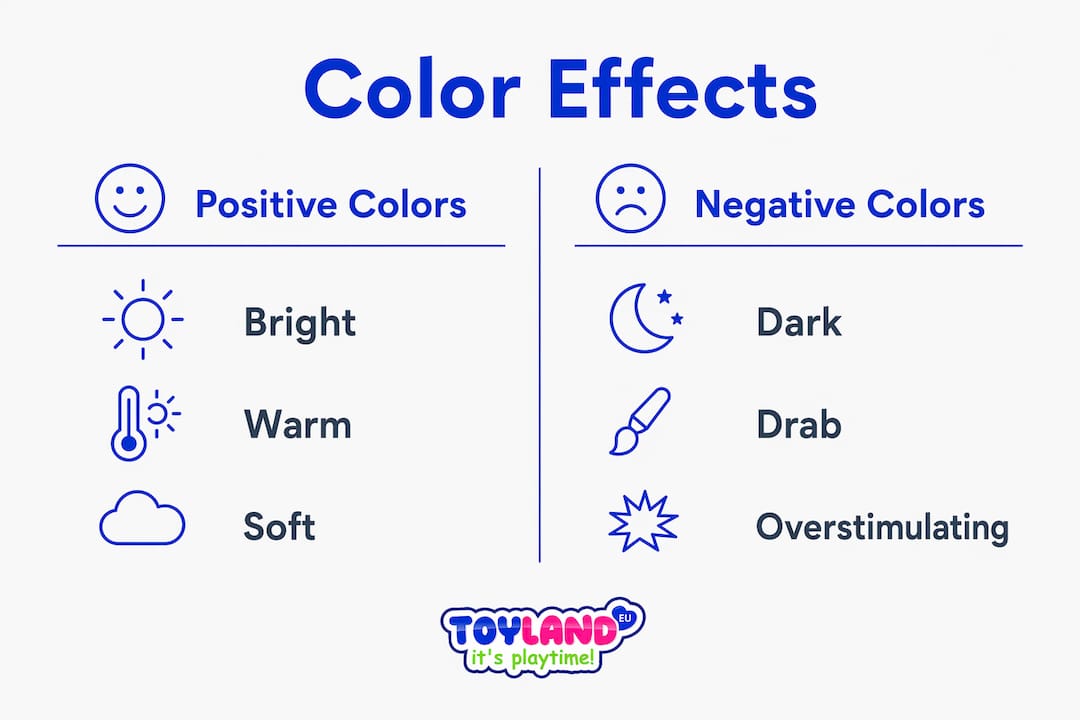
Color intensity matters as much as hue. Saturation and brightness drive emotional arousal more strongly than the specific color family. A muted navy blue and a vivid cobalt blue produce different physiological responses even though they share the same hue. This distinction matters enormously when you are choosing paint for a child’s room or selecting toys.
Here is how the major color families tend to function for most children:
- Red and orange: Warm, energizing colors that increase heart rate and stimulate activity. Useful in small doses for play areas but overstimulating in bedrooms or study spaces.
- Yellow: Associated with optimism and alertness. Research from a 2026 MDPI study shows yellow backgrounds specifically improve attentional performance in children.
- Blue and green: Cool tones that lower physiological arousal and support calm focus. Strong candidates for reading corners and sleep environments.
- Pink: Linked to comfort and reduced aggression in short-term exposure, though the effect diminishes with prolonged exposure.
- Brown, black, and gray: Consistently associated with negative emotional states in children’s self-reports and drawing studies.
Pro Tip: Avoid the oversimplification that “red makes kids hyper.” The effect depends on saturation, duration of exposure, and the individual child’s sensory profile. A child with sensory processing differences may react far more strongly to the same color than a neurotypical peer.
Does color actually improve children’s attention and learning?
The short answer is yes, but the mechanism matters. A 2026 MDPI study on color and cognitive processing found that children performed best on attention tasks when the background was yellow, regardless of whether they had been primed with a congruent emotional state through music. This finding is significant because it separates color’s effect on attention from its effect on mood.
The color impact on learning is strongest when color functions as a stable environmental cue rather than a transient mood trigger. Color cues in task environments produce more durable effects on selective attention than short-term emotional inductions like music or storytelling. In practical terms, a consistently color-coded classroom or homework station works better than occasionally using colored paper.
| Color application | Effect on children’s attention |
|---|---|
| Yellow worksheet backgrounds | Highest attentional performance in 2026 MDPI study |
| Cool blue or green walls in classrooms | Supports sustained focus and reduces restlessness |
| High-contrast color coding in learning materials | Aids visual discrimination and memory encoding |
| Overly bright, high-saturation room colors | Can cause overstimulation and reduce concentration |
Pro Tip: Use a single consistent accent color for a child’s homework station rather than rotating colors. Consistency trains the brain to associate that color context with focused work, which is exactly how color cues build attention over time.
What do artificial food colors do to children’s behavior?
This is where the evidence becomes clinically significant. Artificial food dyes are linked to irritability, restlessness, and sleep disturbances in children, according to research cited by the American Academy of Pediatrics (AAP) and HealthyChildren.org. Children with ADHD or autism spectrum disorder show stronger and more consistent behavioral responses to artificial dyes than neurotypical children.
The distinction between environmental color exposure and food color exposure is critical. Painting a wall red does not deliver a chemical compound into a child’s bloodstream. Consuming Red 40 or Yellow 5 does. The behavioral effects of artificial dyes are pharmacological, not perceptual, which is why the evidence for food colors is considerably stronger than for room or clothing colors.
If you suspect artificial dyes are affecting your child’s behavior, the AAP recommends a structured approach:
- Remove all artificial food colors from the child’s diet for a minimum of two weeks.
- Keep a daily behavioral log tracking mood, sleep quality, activity level, and irritability.
- Reintroduce artificial dyes one at a time and observe for changes within 24 to 72 hours.
- Share your observations with a pediatrician before drawing conclusions or making permanent dietary changes.
This elimination trial approach, recommended by HealthyChildren.org, gives parents observable data rather than guesswork. It is especially worth trying for children who show unexplained behavioral fluctuations tied to specific meals or snack patterns.
How to apply color psychology in children’s rooms, classrooms, and toys
Applying color psychology does not require a full renovation. Small, deliberate choices produce measurable results over time. Moderate use of cool tones like blue, green, and lavender supports calmness and better sleep, while warm tones like yellow and orange in small doses boost energy and confidence.
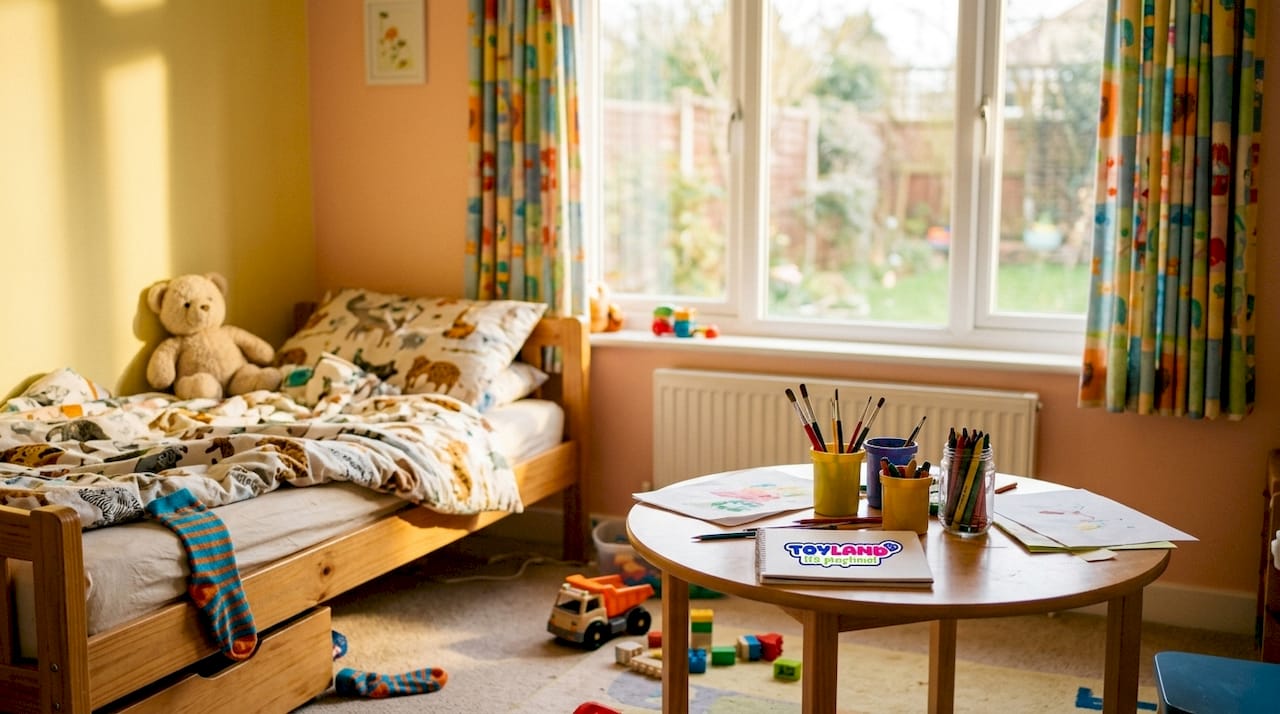
| Space | Recommended colors | Colors to limit |
|---|---|---|
| Bedroom | Soft blue, sage green, lavender | Bright red, vivid orange |
| Classroom reading area | Muted green, pale blue | High-saturation yellow, red |
| Play area | Yellow, orange, warm red accents | No strong restrictions |
| Homework station | Soft yellow background, neutral walls | Overly busy multicolor patterns |
Short-term bright color exposure in clothing can lift a child’s mood without the overstimulation risk of chronic exposure in a room. A bright yellow jacket or a vivid orange backpack gives the mood benefit without surrounding the child in high-stimulation color all day.
For neurodiverse children, color preferences signal sensory needs and temperament. A child who consistently avoids bright colors may be signaling sensory sensitivity, not just personal taste. Respecting those preferences while gently expanding color exposure through toys and art materials is a more effective strategy than imposing a color scheme based on general guidelines.
Pro Tip: When choosing toys, look for products that use a range of saturations rather than exclusively neon or exclusively muted palettes. Variety in color intensity gives children the sensory range they need for healthy emotional and cognitive development. The impact of toy color choices on development is more significant than most parents realize.
Key takeaways
Color psychology shapes children’s emotions, attention, and behavior through hue, saturation, and exposure duration, with artificial food dyes producing the strongest and most clinically documented behavioral effects.
| Point | Details |
|---|---|
| Bright colors lift mood | Children consistently link bright hues to positive emotions and dark hues to negative ones. |
| Yellow boosts attention | A 2026 MDPI study found yellow backgrounds improve task focus regardless of emotional state. |
| Food dyes carry the strongest evidence | Artificial dyes like Red 40 cause irritability and sleep issues, especially in children with ADHD. |
| Saturation matters more than hue | High-intensity colors overstimulate; moderate saturation supports emotional regulation. |
| Individual differences are real | Neurodiverse children and those with sensory sensitivities respond more strongly to color inputs. |
Color psychology is a tool, not a formula
I have spent years reading the research on how color affects children, and the single biggest mistake I see parents and educators make is treating color psychology like a recipe. Paint the bedroom blue, get a calm child. Put yellow on the worksheet, get a focused student. Reality is messier and more interesting than that.
What the evidence actually shows is that color creates conditions. It does not determine outcomes. A child who is anxious, hungry, or overstimulated from other sources will not be rescued by a sage green wall. But that same wall, as part of a thoughtfully designed environment, can reduce one layer of sensory noise and make it easier for the child to settle.
The most useful thing you can do is observe your own child. Watch which colors they gravitate toward and which ones seem to wind them up. Experiment with small changes, like swapping a bright red bedside lamp for a soft amber one, and give it two weeks before judging the result. Color psychology for children works best as a quiet background support, not a dramatic intervention. Small, consistent changes in color environment accumulate into real differences in mood and attention over months.
— Thane
Put color psychology into practice with the right creative tools
The research is clear: children who engage with a broad range of colors through hands-on creative play develop stronger emotional vocabulary and better sensory regulation. Toylandeu™ carries products built specifically for this kind of color-rich exploration. The Enchanting Kids Art Workbook Montessori Drawing Kit gives children a structured but open-ended way to work with color and express emotion through drawing. For tactile learners, the Vibrant 24-Color Clay Modeling Kit puts a full spectrum of saturations directly in a child’s hands, supporting the kind of color exploration that builds both creativity and emotional awareness. Both ship worldwide with free delivery through Toylandeu™.
FAQ
What is color psychology for children?
Color psychology for children, formally called chromopsychology, studies how colors affect kids’ emotions, behavior, and cognitive performance. Children respond more intensely to color than adults because their developing brains process sensory input with less filtering.
Do bright colors make children hyperactive?
Not directly. Saturation and prolonged exposure drive overstimulation more than hue alone. A vivid red room over weeks can increase restlessness, but a red shirt worn for a few hours typically does not produce the same effect.
Which color is best for a child’s study area?
Yellow backgrounds improve attentional performance in children, according to a 2026 MDPI study. Pairing a yellow desk surface or worksheet background with neutral or cool-toned walls gives the attention benefit without overstimulating the full environment.
Can artificial food colors affect my child’s behavior?
Yes. The AAP and HealthyChildren.org link artificial dyes like Red 40 and Yellow 5 to irritability, restlessness, and sleep disturbances, particularly in children with ADHD or autism. A two-week elimination trial is the recommended first step for parents who suspect a connection.
How do I choose toy colors that support my child’s development?
Look for toys that offer a range of color saturations rather than exclusively neon or exclusively muted palettes. Variety in color intensity supports healthy sensory development and gives children the emotional range they need for creative play.