

Protect Mint on Card Value: Five Photo First Checks for Collectors
Mint on Card (MOC) means a toy or action figure is still factory-sealed to its original retail backing card, with the plastic blister bubble unbroken. That single fact tells you the piece was never opened. It does not tell you whether the cardboard is bent, the bubble has yellowed, or the corners are soft, which is a separate condition check every buyer needs to run before paying a premium.
TL;DR:
- MOC confirms the toy is factory-sealed to its card but does not guarantee the card’s physical condition, so inspecting photos is essential.
- An unpunched tab on a card significantly increases value by indicating the figure was never displayed on a retail peg.
- Faded card artwork and yellowed bubbles can diminish value, even if the item remains unopened.
- Proper storage in UV-filtering, rigid display cases kept upright minimizes aging from light, humidity, and micro-movement.
- Seller grading on a C-scale is subjective; always verify condition through detailed close-up photos or consider third-party grading for high-value items.
Table of Contents
- What Does MOC Mean, and How Does It Differ From MISB, MIB, and NRFB?
- Why Do Collectors Pay So Much for Sealed Carded Figures?
- How Do You Inspect an MOC Toy Before Buying?
- How Do You Store and Display MOC Toys Without Damaging Them?
- What Do Grading Terms Like C-Scale Actually Mean?
- A Collector’s Five-Point Checklist Before Buying Sealed
- Where to Find Collector-Friendly Supplies and Sealed Items
- Sources
- FAQ
What Does MOC Mean, and How Does It Differ From MISB, MIB, and NRFB?
Collectors throw around a handful of abbreviations, and mixing them up is an easy way to overpay or undersell. Here’s what each one actually signals about a package’s state:
- MOC (Mint on Card): The figure is sealed to its original blister card. This is the term most relevant to carded action figures, die-cast toys, and similar blister-pack products.
- MISB (Mint in Sealed Box): Used for boxed items rather than carded ones. The outer box is factory-sealed, often with shrink wrap or tape intact.
- MIB (Mint in Box): The box is unopened but sometimes describes a box that’s been resealed rather than factory-original.
- NRFB (Never Removed From Box): Common in doll and vehicle collecting. Functionally close to MISB but emphasizes that the item hasn’t left its packaging.
- MOMC (Mint on Mint Card) / MIMB (Mint in Mint Box): These add a condition claim on top of the seal status, implying the card or box itself is also in excellent shape, not just unopened.
The critical distinction: MOC signals unopened packaging, not flawless packaging. A seller can honestly list something as MOC while the card is creased, faded, or missing a corner. Ask for close-up photos before you assume “sealed” means “pristine.”
Why Do Collectors Pay So Much for Sealed Carded Figures?
Sealed carded toys function like little time capsules. The card artwork, the blister shape, the factory seal, all of it froze at the moment the item left the assembly line, and that’s exactly what collectors are paying to preserve. Academic and collector commentary on MOC culture treats the packaging itself as part of the artifact, not just a wrapper to be discarded.
Two figures that came off the same production line can sell for wildly different prices once packaging enters the equation. One with a crushed corner and a hazy bubble might move for a fraction of what an identical figure in crisp, unpunched packaging brings. The artwork continuity matters too. A card with vibrant, unfaded graphics reads as “recently sealed” even decades later, while sun-bleached cardboard signals decades of shelf or attic exposure regardless of the actual seal.
Pro Tip: If you’re comparing two MOC listings of the same figure, check the card color saturation first. Faded reds and yellows age a card faster than a bent corner does in most buyers’ eyes.
The premium isn’t abstract. An unpunched hanger tab alone, meaning the card was never hung on a retail peg, frequently adds 20 to 50 percent to resale value in many collecting lines, since it suggests the item bypassed the sales floor entirely.
How Do You Inspect an MOC Toy Before Buying?
A photo listing hides a lot. Run through this checklist before you commit, whether you’re buying online or holding the box in a shop:
- Check the corners. Soft, rounded, or split corners are the fastest way to spot years of handling or poor storage.
- Look for creases. A crease across the card face, even a faint one, kills top-tier grading potential.
- Inspect the tab. Is it punched (hung on a peg) or unpunched (never displayed)? This single detail swings value the most.
- Scan for fading or gloss loss. Sun-faded cardboard looks dull compared to the sharp print of a recently sealed card.
- Check for stickers, price tags, or pen marks. Old inventory stickers or grease-pencil pricing marks are common and can be removed carefully, but they still affect a raw grade.
- Examine the bubble. Look for yellowing, cracks, dents, or separation from the card backing, all signs of age or heat exposure.
- Check the figure through the bubble. Confirm accessories are present and look for factory paint flaws visible without opening the package.
If you’re shopping remotely, request specific photos rather than trusting a general listing shot. Sellers who provide macro shots of each corner, an oblique angle of the bubble, and a photo of the card back tend to generate far fewer buyer disputes, because those angles reveal exactly the flaws a flat front photo can hide.
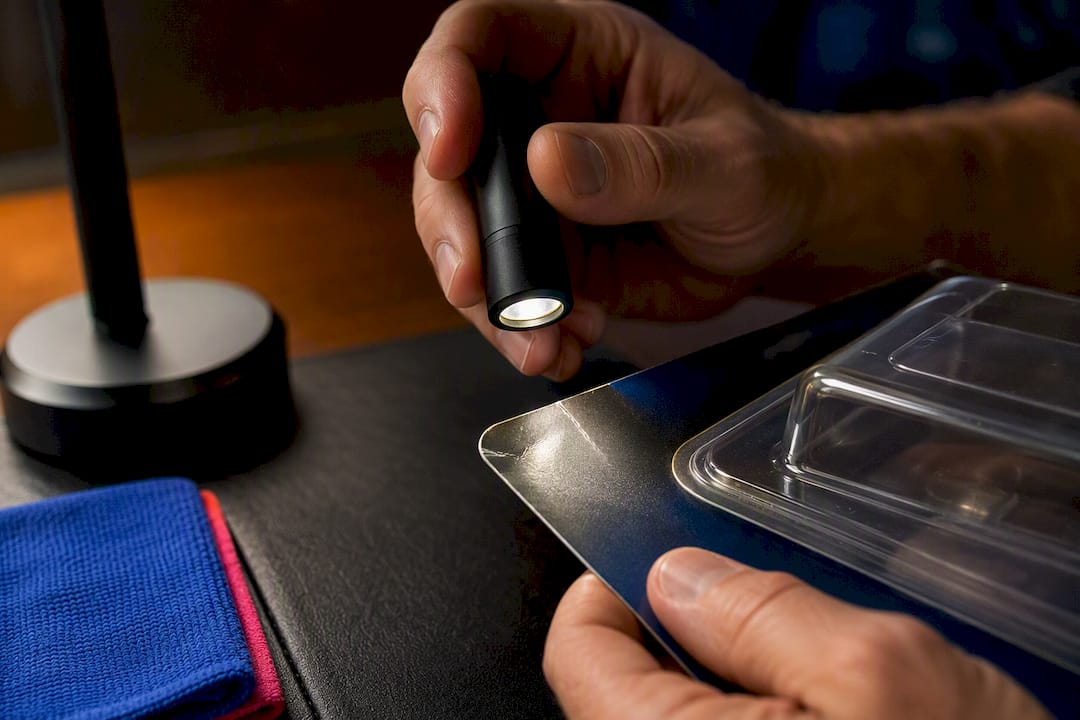
Pro Tip: Ask for a raking light photo, where the seller angles a lamp across the card surface. Creases and dents that vanish in flat lighting jump out immediately under raking light.
How Do You Store and Display MOC Toys Without Damaging Them?
The three enemies of a sealed card are light, humidity, and movement. UV exposure fades printed colors and can yellow the plastic bubble over months of window-sill display. Humidity swings cause the cardboard to absorb and release moisture repeatedly, which is exactly how cards develop that slow, permanent bow. Movement, even small amounts inside a loosely fitted case, grinds against corners and edges every time the piece shifts.
Good display and storage habits slow all three:
- Use a fitted acrylic case with UV-filtering plastic rather than clear, untreated acrylic.
- Choose cases with rigid internal support that holds the card flat instead of letting it flex.
- Store extras upright rather than flat, and never stack sealed cards on top of one another.
- Keep humidity moderate; a small silica desiccant packet in a display case helps in damp climates.
- Handle sealed pieces by the edges only when reorganizing a shelf, never by squeezing the bubble.
A snug case that supports the card and blocks UV light is the most effective method to slow long-term deterioration, especially for high-value pieces you plan to keep for years rather than flip quickly. Loose-fitting cases let the card shift with every door slam or foot traffic vibration nearby, and that repeated micro-movement is often the real culprit behind corner softening that owners assume just happens with age.
Pro Tip: Rotate display pieces out of direct light exposure every few months if you can’t install UV-filtering glass. Even indirect afternoon sun through a window adds up over a decade.
For a deeper walkthrough of shelving, humidity control, and case selection, Toylandeu™'s guide on how to store action figures covers the setup side in more detail.
What Do Grading Terms Like C-Scale Actually Mean?
You’ll see sellers describe cards as “C9,” “C8.5,” or similar. This is informal shorthand collectors use to rate condition on a numeric scale, generally topping out around C10 for a flawless card. The problem: there’s no universal enforcement body behind a seller-assigned C-grade, so one person’s C9 might be another appraiser’s C7.
- Treat any seller-stated C-grade as a starting point, not a guarantee.
- Cross-check the grade against the photos yourself using the corner, crease, and tab checklist above.
- Cardback condition, bubble clarity, and figure presentation visible through the blister remain the primary factors experienced collectors use to value MOC pieces, regardless of what number the seller assigned.
- For high-value or rare pieces, professional third-party grading and authentication removes the guesswork that comes with subjective seller claims.
Whether formal grading is worth the cost depends on the item’s rarity and your resale plans. Toylandeu™'s breakdown of whether action figure grading is worth it walks through when the expense pays off and when it doesn’t.
A Collector’s Five-Point Checklist Before Buying Sealed
Every sealed carded figure gets the same five checks before it’s worth bidding on: corners, crease lines, tab status, bubble clarity, and the back-of-card photo. Skip any one of those and you’re buying blind.
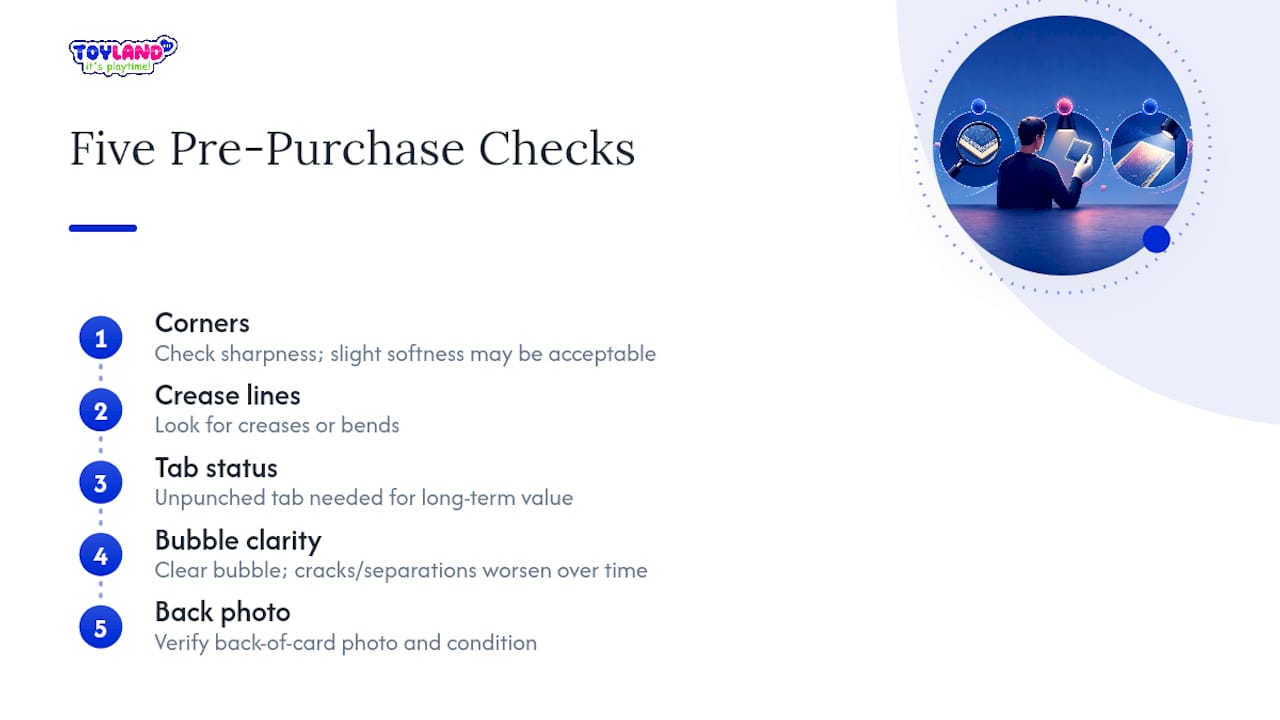
Some flaws are worth accepting. A slightly soft corner on a figure you’re buying to complete a display run doesn’t bother most collectors. A cracked or separated bubble does, because that’s a defect that tends to worsen over time rather than stay stable.
The real question to ask before you buy isn’t “is this MOC?” It’s “what am I buying this for?” A display piece you’ll enjoy looking at can tolerate minor cosmetic wear. A piece you’re buying as a long-term holding, hoping the packaging retains its value, needs to clear a much higher bar: unpunched tab, clean bubble, sharp corners, no fading. Matching the purchase to the goal, rather than chasing every MOC listing you see, keeps both your shelf and your budget in better shape.
Collector psychology around sealed goods isn’t unique to toys either. Market behavior around digital collectibles shows similar patterns, where scarcity and pristine condition drive price the same way an unpunched tab does on a physical card.
— Thane Holland
Where to Find Collector-Friendly Supplies and Sealed Items
Protecting a sealed card starts with the case it lives in, and a loose-fitting display case does more damage over a few years than most collectors realize. The site offers display and storage accessories built for long-term protection, alongside a catalog of toy-related items shipped worldwide.
If you’re assembling a display shelf, look for cases with rigid backing support and UV-filtering panels rather than plain clear plastic. That combination addresses the two biggest threats to a sealed card: movement inside the case and light exposure over time. Collectors who buy carded figures as gifts also appreciate that a well-fitted case keeps the piece looking retail-fresh long after the purchase date. For readers curious about how a factory-sealed, carded product looks in an actual retail listing, Toylandeu™'s MOC-style special forces action figure set shows the packaging format in practice.
Beyond figures, Toylandeu™ stocks broader collector and gift categories worth browsing, including creative drawing kits and ball-jointed collector dolls that ship the same way, sealed and ready for display or gifting. Browse the current catalog and pick a display case sized appropriately before a sealed piece sits unprotected on a shelf.
FAQ
What does MOC mean on a toy listing?
MOC stands for Mint on Card, meaning the toy is still factory-sealed to its original retail backing card with the bubble intact.
Does MOC guarantee the card is in perfect condition?
No. MOC only confirms the packaging is unopened; the card can still have creases, fading, or corner wear, so always check listing photos closely.
What’s the difference between MOC and MISB?
MOC applies to blister-carded items like action figures, while MISB (Mint in Sealed Box) describes items sealed inside a full box rather than a card.
Why do unpunched tabs increase value?
An unpunched tab shows the item was never hung on a retail peg, which many collectors read as a sign of untouched, shelf-fresh condition, often adding a meaningful price premium.
Should I trust a seller’s C-scale grade?
Treat it as a starting point only. C-scale grading is informal and inconsistent between sellers, so verify with close-up photos or consider third-party grading for expensive pieces.
How should I store an MOC figure to protect its value?
Keep it upright in a fitted, UV-filtering display case with rigid backing support, away from direct sunlight and humidity swings that cause bowing or bubble yellowing.