

3 No Sew Kids Cosplay Ideas Parents Can Finish in 90 Minutes
Mix pop-culture picks with closet-DIY projects sorted by age, and you get kids cosplay ideas that come together fast, stay comfortable for hours of trick-or-treating or convention floors, and still look sharp in photos. Safety and comfort come before accuracy every time a costume fights a child’s actual body. Skip to the age brackets below if you already know who your kid wants to be, or start with the theme buckets if you’re still deciding.
TL;DR:
- Most quick and comfortable costumes are built from closet staples, like hoodies, leggings, and simple accessories, saving time and money.
- Character recognition is best achieved through one strong prop or accessory, such as a headband, backpack, or themed piece, rather than full detailed outfits.
- Safety considerations include adding reflective elements, avoiding masks that block peripheral vision, and choosing breathable fabrics for weather changes.
- Layering costumes for warmth or cooling and using lightweight props reduce discomfort and improve mobility during long wear.
- Kids should be involved in choosing key details to increase their enjoyment and willingness to wear costumes for extended periods.
Table of Contents
- Popular Kids Cosplay Themes to Start From
- What’s Trending in 2026 (And What’s Still a Safe Bet)
- Age-by-Age Costume Ideas That Actually Fit
- Three No-Sew Projects You Can Finish in 90 Minutes
- Materials and a Quick Shopping Checklist
- Small Accessories That Make a Costume Read Instantly
- Who’s Behind This List and What Safety Looks Like
- Letting Your Kid Actually Design Their Own Costume
- Budget-Friendly Cosplay Without Cutting Corners
- Adapting Any Character for a Different Body or Gender
- Dressing for the Weather, Not Just the Character
- What Actually Matters When You Cut Through the Noise
- Finish the Look with Fast, Ready-Made Accessories
- Sources
- FAQ
Popular Kids Cosplay Themes to Start From
Most kids cosplay ideas fall into a handful of recognizable buckets, and picking the right one first saves hours of second-guessing at the fabric store.
- Superheroes and action franchises — capes, chest emblems, and masks read instantly from across a room; great for kids who want to run around in their costume.
- Anime and manga characters — colorful wigs and simple sashes carry the look even without a full outfit; popular with tweens who follow specific series.
- Animal and creature costumes — ears, a tail, and face paint do most of the work; ideal for toddlers who won’t tolerate a full-body suit.
- Cozy plush-inspired characters — soft, oversized silhouettes based on beloved plush toys; forgiving on fit and warm for cold-weather events.
- Classic witches, wizards, and fantasy figures — a hat, a cloak, and one prop finish the story; endlessly reusable across seasons.
- Video game characters — bold color blocking and one signature accessory (a hat, a belt, a weapon prop) make these easy to DIY.
- Family or group themes — coordinating siblings or parent-and-child pairs multiply the fun without multiplying the effort per costume.
- No-sew closet cosplay — built entirely from clothes already in the drawer, plus one or two accessories.
- Light-up and safety-forward costumes — built around reflective tape or battery LEDs, best for trick-or-treating after dark.
- Storybook and fairy tale characters — timeless, gender-flexible, and easy to build from a plain dress or tunic.
Closet cosplay and animal costumes are the fastest wins for last-minute planning. Family-group themes and light-up builds take a bit more coordination but pay off in photos.
What’s Trending in 2026 (And What’s Still a Safe Bet)
Pop-culture and movie tie-ins dominate this year’s costume choices, with characters from Spider-Man, Super Mario, One Piece, Bluey, and Pokémon ranking among the most popular kids’ costume themes for 2026.
- Spider-Man variants — a hoodie, red gloves, and a printed mask beat a full bodysuit for comfort.
- Super Mario characters — overalls plus a colored cap is nearly a complete costume on its own.
- One Piece crew members — a straw hat or bandana signals the character without a full pirate rig.
- Bluey and Bingo — a felt ear headband and a solid-color outfit work for toddlers who hate texture.
- Pokémon trainers or creatures — a yellow beanie with felt ears turns any kid into Pikachu in minutes.
- Witches and witchy accessories — a classic hat and cloak stay popular year after year and never feel dated.
Complex trends simplify well: swap a full character mask for a printed t-shirt or a themed headband, and let one strong prop carry the recognition. Pro Tip: A small, well-made accessory almost always sells a character better than a full, uncomfortable outfit, especially for kids under seven.
Age-by-Age Costume Ideas That Actually Fit
Comfort and mobility change dramatically between a six-month-old and a twelve-year-old, so the right approach shifts with every age bracket.
Babies (0 to 12 months): stick to onesie-based looks like a pumpkin, a ladybug, or a soft animal hood. Avoid loose masks or small attachable pieces near the face, and choose stretchy fabric that won’t restrict a diaper change.
Toddlers (1 to 3 years): headband ears, a solid-color romper, and face paint work better than full costumes toddlers can trip over or refuse to wear. A Bluey-style ear headband or a dinosaur hoodie are both easy, photo-friendly choices.
Kids (4 to 8 years) age group: this age group can handle capes, simple props, and layered outfits. Superhero hoodies, Mario overalls, or a witch’s cloak with a plastic wand all work well. Skip masks that block peripheral vision; use face paint or a headband instead.
Tweens (9 to 13 years) age group: more detail-oriented builds work here, including anime character wigs, layered fantasy outfits, or video game character color-blocking. Let this age group weigh in heavily on design, since they’re old enough to care about accuracy.
For sensory-sensitive kids at any age, cut out tags, choose seamless leggings under any costume, and skip face paint in favor of a mask-free accessory approach. The best-photo picks tend to be full-color themes like Mario or a witch’s cloak; the best-easy picks are anything built from a headband and a solid-color outfit already in the closet.
Three No-Sew Projects You Can Finish in 90 Minutes
Each of these projects uses materials most households already have, plus one or two quick craft-store buys.
- Closet-Upgrade Superhero (about 30 minutes). Materials: a solid-color hoodie or t-shirt, fabric glue or iron-on letters, a felt emblem, and an old cape or pillowcase. Steps: cut the pillowcase into a cape shape, attach it to the shirt collar with safety pins or fabric tape, iron on the emblem, add gloves, and check the hem length against your child’s height so nothing drags near their feet.
- Headband Character Build, inspired by DIY builds like Vanellope von Schweetz (about 45 minutes). Materials: a plain headband, felt or craft foam, hot glue (adult-handled), and elastic cord. Steps: cut two ear or prop shapes from felt, glue them to the headband, add any small decorative details, attach elastic cord for extra security if the child moves a lot, let the glue fully cure, and fit-test before heading out.
- Light-Up Safety Costume (about 60 minutes). Materials: a dark base outfit, battery-powered LED strip lights, reflective tape, and a small pocket or pouch for the battery pack. Steps: sew or safety-pin the LED strip along the outer seams, tuck the battery pack into a pocket where a child can’t remove it, add reflective tape to the front and back, test the lights in a dark room, and double-check all wiring is enclosed, not loose.
Pro Tip: Fit-test every project on your child before the event, not the morning of. What looks fine on a hanger can pinch, itch, or slide once a kid is actually moving in it.
Materials and a Quick Shopping Checklist
Good costume materials should be breathable, nontoxic, and flame-resistant whenever possible, especially for masks, capes, and anything close to a child’s face. Long, dragging hems, loose masks that block a kid’s vision, and tight elastic near the neck are the most common comfort complaints once the costume is actually on and moving.
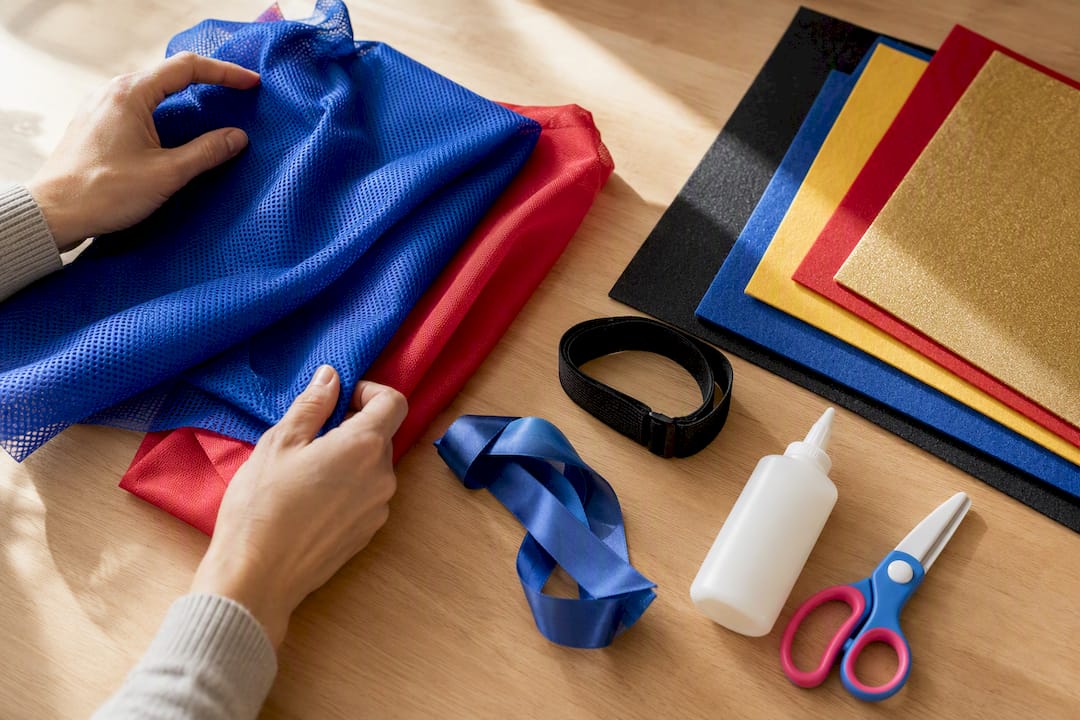
A basic no-sew starter kit covers most projects: fabric glue, a hot glue gun (adult-operated), safety pins, elastic cord, felt sheets in a few core colors, and double-sided fabric tape. For props, closed-cell craft foam covered in fabric holds its shape without hard edges, and it flexes better than cardboard when a kid inevitably sits down in it.
Quick substitutions when you’re short on time:
- Old pillowcases or bedsheets instead of buying cape fabric.
- Cardboard cereal boxes instead of craft foam for flat props like shields.
- Existing solid-color pajamas as a costume base instead of a specialty bodysuit.
- Hair elastics or headbands from a bathroom drawer instead of buying new ones.
Retail DIY tutorials, including builds like the Jack Skellington costume, show how far a few felt pieces and paint can go without any sewing at all.
Small Accessories That Make a Costume Read Instantly
A wig, a themed headband, a plush backpack, or one well-made prop often does more visual work than an entire outfit, since small accessories frequently sell the character better than full costume changes.
- A plush character backpack adds instant recognition to an otherwise simple outfit and doubles as a real bag for trick-or-treat candy.
- Anime-inspired dress-up accessory sets work as inspiration boards for hair clips, sashes, or small props kids can carry.
- A simple felt prop, like a wand or a shield, cuts from one folded sheet of craft foam, two glued layers for stiffness, and a painted design.
Attach anything worn near the face with soft elastic instead of pins, and keep props lightweight so tired arms don’t end the night early.
Who’s Behind This List and What Safety Looks Like
This guide was put together by Thane Holland, who covers DIY kids’ toys and costume projects with an eye toward what actually survives a full day of wear. Accessory categories suited for quick finishing work, from plush backpacks to anime-style props, are available in catalogs built for parents who need something that works now.
Follow a short safety checklist every time: add reflective elements or light for any after-dark event, per Good Housekeeping’s costume safety guidance; use non-toxic, kid-labeled face paint only; keep props short and flexible, never sharp or rigid; and skip full masks for kids who need clear peripheral vision.
Letting Your Kid Actually Design Their Own Costume
The costumes kids love most are usually the ones they had a real say in, not the ones a parent picked for the best photo. Start by asking your child to name three characters they’d want to be, then let them choose which single detail matters most to them, whether that’s a specific color, a prop, or a hairstyle.
Handing over small decisions keeps kids invested without turning the whole project into a debate. Let a seven-year-old pick between two felt colors for ears. Let a tween choose the wig style even if it’s not exactly screen-accurate. Kids notice when their input actually changes something, and that buy-in usually means they’ll wear the costume happily instead of fighting it at the door.
For younger kids, turn the process into a game: lay out three or four accessory options and let them build their own combination. For tweens working on anime or video game looks, sit down together and sketch the outfit before buying anything, since a five-minute sketch prevents a lot of wasted material later.
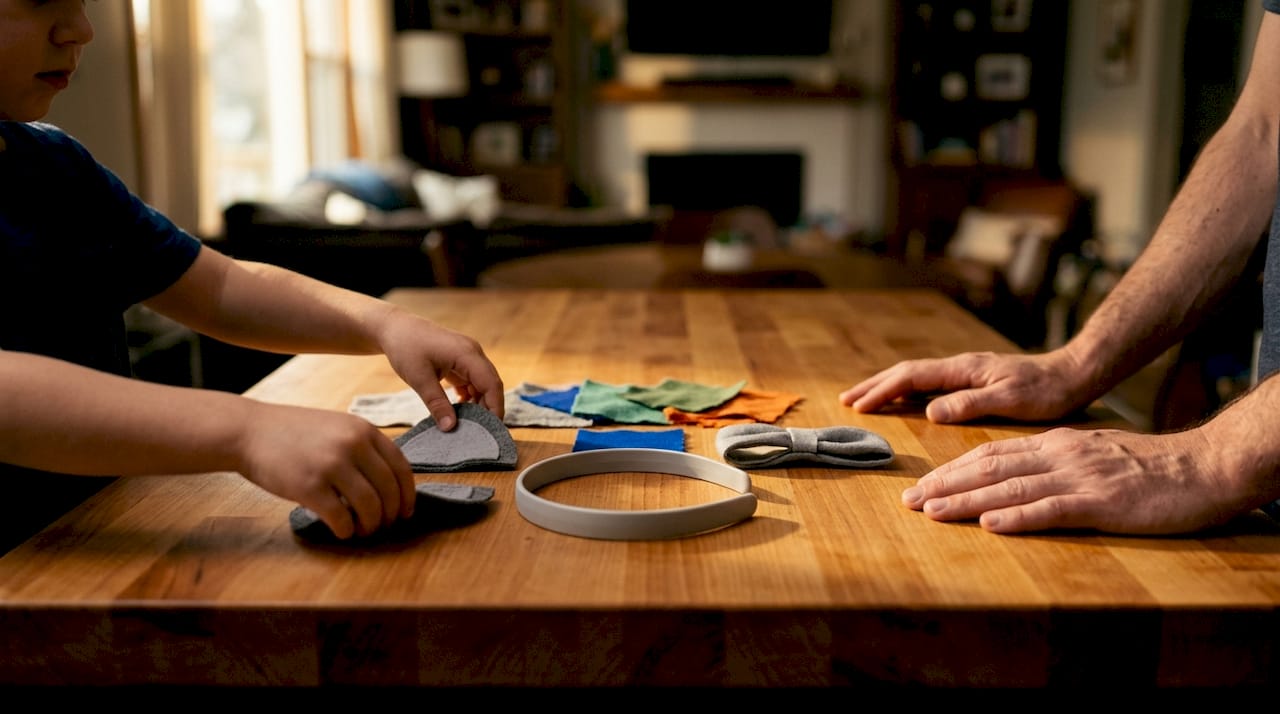
Keep the actual crafting collaborative where it’s safe to do so. A ten-year-old can cut felt shapes, paint a prop, or test a headband fit. Hot glue and craft knives stay in adult hands, but almost everything else can be a shared task. Kids who help build the costume tend to take better care of it, and they remember the process as much as the finished look.
Budget-Friendly Cosplay Without Cutting Corners
The cheapest kids cosplay ideas almost always start in the closet, not the costume aisle. A solid-color hoodie, leggings, or pajama set already owned covers the base of most superhero, video game, or animal costumes, leaving the budget free for one or two accessories that do the heavy lifting.
Thrift stores and hand-me-down bins are worth checking before any specialty purchase, especially for capes, cloaks, and oversized shirts that work as tunics. Felt sheets, craft foam, and fabric glue cost only a few dollars and stretch across multiple projects if you buy slightly more than one costume needs.
Sharing costumes between siblings or cousins across years cuts cost further, particularly for gender-neutral builds like witches, wizards, or animal costumes that don’t depend on a specific body shape. Swapping with other parents in a neighborhood or classroom group works the same way, and it usually costs nothing but a text message.
Save money by reusing hardware, too. A headband bought for one character can be repainted or re-decorated for a totally different look next season. One good wig, stored carefully, can serve two or three different characters across different years with a different accessory each time.
Adapting Any Character for a Different Body or Gender
Almost every popular character can flex across gender lines and body types with a few small changes, and most kids care far more about the character’s signature colors and props than a screen-accurate silhouette.
A witch costume works identically for any child regardless of gender since it’s built from a hat, a cloak, and a wand. Superhero costumes flex the same way: swap a fitted bodysuit for a looser hoodie and leggings combination, and the emblem and colors still carry full recognition. For characters typically drawn with a specific gendered silhouette, focus on the signature colors, hairstyle, or one prop instead of trying to match body proportions exactly.
For kids with different body types, prioritize adjustable elements: elastic waistbands instead of fitted zippers, oversized layers that can be cinched with a belt, and headbands or clips instead of tight wigs. A bigger cape or a slightly oversized tunic is easy to size down with a safety pin, while a too-small costume has no easy fix on the day of the event.
The goal is recognition, not precision. A kid in a green shirt with a turtle-shell backpack reads as a certain video game hero regardless of height, build, or gender, and that flexibility is exactly what makes closet cosplay work so well across a mixed group of kids.
Dressing for the Weather, Not Just the Character
A costume that looks perfect indoors can become miserable within twenty minutes outside in October wind or August heat, so weather planning belongs in the design phase, not as an afterthought.
For cold-weather events, build costumes in layers: a base layer of leggings or a long-sleeve shirt under the costume itself, with the character’s colors and props layered on top rather than baked into a single thin piece. Cloaks, capes, and oversized hoodies double as extra warmth without changing the look. Avoid costumes that require bare arms or legs unless you’re planning for indoor events only.
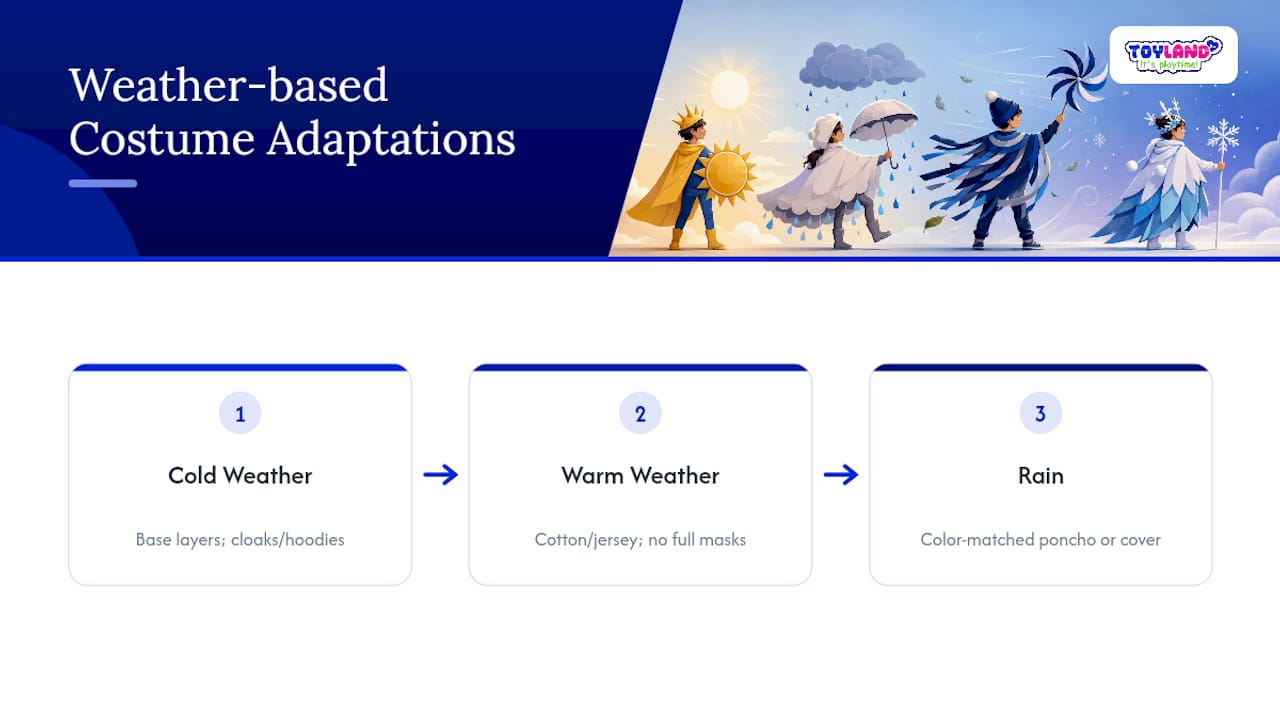
For warm-weather or daytime events, prioritize breathable cotton or jersey fabric over synthetic costume material, which traps heat quickly. Skip full masks entirely in warm weather, since they restrict airflow right when a kid needs it most.
Rain adds its own complications: face paint runs, felt props lose their shape, and cardboard-based accessories fall apart fast. A light poncho that matches the costume’s color scheme, or a plan to swap outdoor events for a covered space, saves a costume that took real effort to build.
What Actually Matters When You Cut Through the Noise
The conventional cosplay advice for kids overindexes on accuracy and underindexes on comfort, and that priority is backwards for anyone under twelve. A screen-accurate costume that gets abandoned by 7 p.m. because it itches or restricts movement has failed at its one job, no matter how good it looked in the driveway photo.
The research behind this list points to a clear pattern: small accessories carry recognition better than full outfits, closet-based builds survive real wear better than store-bought sets, and safety details like visibility and non-toxic materials are the trust signals parents actually check before buying anything. What’s overrated is chasing the most screen-accurate version of a trending character. What’s underrated is a ten-minute headband build that a kid can wear comfortably for six straight hours.
Prioritize fit and mobility first. Pick one strong accessory to carry the character, and let your kid have real input into at least one design choice. Everything else, including exact accuracy, is negotiable.
— Thane Holland
Finish the Look with Fast, Ready-Made Accessories
Building a costume from scratch is only half the job. The finishing pieces, wigs, plush accessories, and small props are what turn a decent outfit into something a kid actually wants to wear all night, and there are catalogs built around exactly that kind of quick assembly. Rather than hunting three different craft stores for one headband and one prop, browse a single catalog that covers plush accessories, doll-inspired styling pieces, and small props in one pass.

For a cozy character build, the Pochita plush backpack and slippers set turns a plain outfit into a recognizable look in seconds and doubles as a real candy bag for the night. For anime-inspired styling, the anime dress-up accessory suit offers small, mixable pieces that work as hair clips, sashes, or costume detailing without any extra crafting. Both ship from a wide catalog of over 30,000 items with worldwide shipping, ideal for stocking up ahead of a themed event rather than scrambling the week before.
Check the current listings, pick the piece that matches your kid’s character, and add it to your cart tonight so it arrives with time to spare before the big day.
Sources
- 10 Most Popular Halloween Costumes for Kids in 2026: Kpop Demon Hunters, Bluey & More
- Primary
- 70 most popular Halloween costumes for kids — Good Housekeeping
FAQ
What is the easiest character to cosplay for a kid?
Characters built around one strong accessory, like a witch’s hat, a Pikachu-style headband, or a Mario cap and overalls, are the easiest since they need no sewing and use clothes already in the closet.
What are some good cosplay ideas for 2026?
Spider-Man, Super Mario, One Piece, Bluey, and Pokémon rank among the most popular picks this year, alongside classic witches and witchy accessories that never go out of style.
Is it okay for a 10-year-old to cosplay?
Yes, cosplay is appropriate for a ten-year-old, and this age group can usually handle more detailed builds, including wigs and layered outfits, as long as fit and comfort are checked before the event.
What are some very easy cosplay ideas for beginners?
Closet-based looks, like a solid-color outfit with felt ear headband, a cape made from an old pillowcase, or face paint over regular clothes, all count as easy cosplay and take under 30 minutes to put together.
How do I keep my kid’s costume safe at night?
Add reflective tape or battery-powered LED lights, keep hems short enough to avoid tripping, and skip full masks that block vision, following the safety points outlined by Good Housekeeping.