

Creative Outdoor Kids Games That Build Skills and Fun
TL;DR:
- Simple outdoor games like Tag and Hide-and-Seek require no equipment and promote physical and social development. Building low-cost DIY game zones with household items encourages active play and enhances children’s sensory and motor skills. Child-led game design boosts leadership, creativity, and emotional engagement, making outdoor activities more meaningful.
Creative outdoor kids games are structured or free-form activities that engage children physically, socially, and mentally using simple materials or no equipment at all. These games do more than burn energy. They build emotional regulation, sharpen social skills, and support imaginative thinking in ways that screen time simply cannot replicate. Whether you have a sprawling backyard or a small patch of sidewalk, the right outdoor play ideas can turn any space into a development powerhouse. Toylandeu™ has seen firsthand how the right mix of movement and creativity keeps kids engaged longer and happier.
What are the best creative outdoor kids games with no equipment?
The most accessible creative outdoor kids games require zero gear and can start in under five minutes. Classic games like Tag, Hide-and-Seek, and Red Light/Green Light are recommended for children ages 4–12 and need no setup at all. That makes them the go-to option when you need to get kids moving fast, regardless of group size.
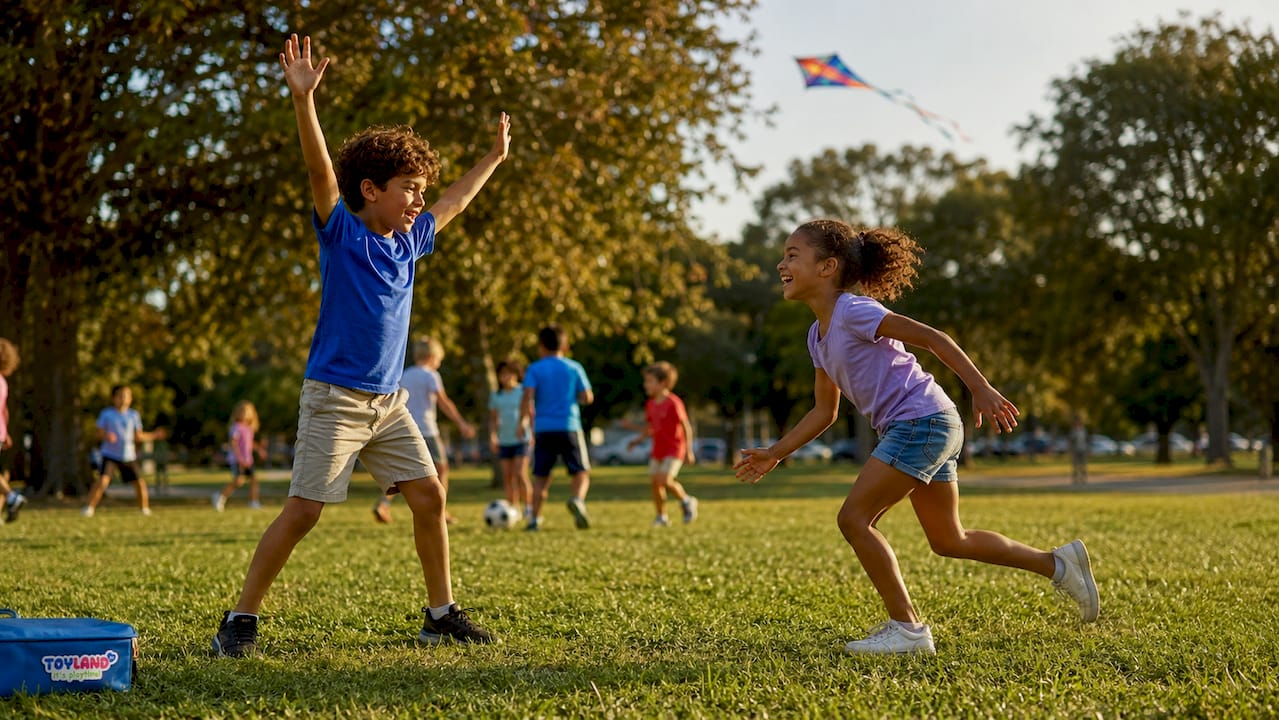
These games work because the rules are simple enough for young children but flexible enough to challenge older kids. Red Light/Green Light, for example, builds impulse control and listening skills without a single piece of equipment. You can layer in creativity by letting kids invent new commands or assign roles like “traffic cop” to rotate leadership.
Here are proven zero-equipment games that work for mixed-age groups:
- Tag variations: Freeze Tag, Shadow Tag (step on someone’s shadow to tag them), and Chain Tag all add creative twists to a classic.
- Hide-and-Seek: Expand it into “Sardines,” where one person hides and everyone else joins them when found, until the last seeker discovers the crowd.
- Red Light/Green Light: Add “Yellow Light” for slow motion to increase the challenge and the laughs.
- Simon Says: Builds listening skills and works well as a warm-up for larger group games.
- Statues: One child spins another and lets go. Whoever moves after stopping is out. Simple, hilarious, and endlessly replayable.
Pro Tip: Adapt classics for different ages by giving older kids a handicap. In Freeze Tag, older kids must hop on one foot while younger kids run freely. This keeps the game fair and competitive for everyone.
How can parents build DIY outdoor game zones on a budget?
DIY outdoor game zones cost between $0 and $20 using household items, and they consistently outlast the engagement of most static toys. The key is designing zones that invite kids to interact, not just observe. Pool noodles, sidewalk chalk, hula hoops, and old chairs are all you need to create hours of active play.
Here is a step-by-step approach to building a backyard game zone from scratch:
- Map the space. Identify flat areas, slopes, and natural obstacles like trees or garden edges. Use what is already there.
- Create an obstacle course. Lay pool noodles as hurdles, use chalk to draw balance beams, and set chairs as weave poles. Multi-station obstacle courses let you adjust difficulty per station, so younger and older kids play together without frustration.
- Add a chalk zone. Draw hopscotch grids, mazes, or a giant board game on the driveway. Kids can redesign the layout each session.
- Set up a water play station. Sponge tag and water balloon games cost almost nothing and keep kids moving on hot days.
- Rotate the layout weekly. Changing the course keeps it fresh and gives kids a reason to return.
| Zone type | Materials needed | Estimated cost |
|---|---|---|
| Obstacle course | Pool noodles, chalk, chairs | $0–$10 |
| Chalk game board | Sidewalk chalk | $2–$5 |
| Water play station | Sponges, balloons, bucket | $3–$8 |
| Balance trail | Tape, flat stones, rope | $0–$5 |
Pro Tip: Mix textures and physical challenges across stations. Crawling under a rope, jumping over a noodle, and balancing on chalk lines each activate different muscle groups. Multi-age groups stay engaged longer when no two stations feel the same.
What are the developmental benefits of outdoor play for children?
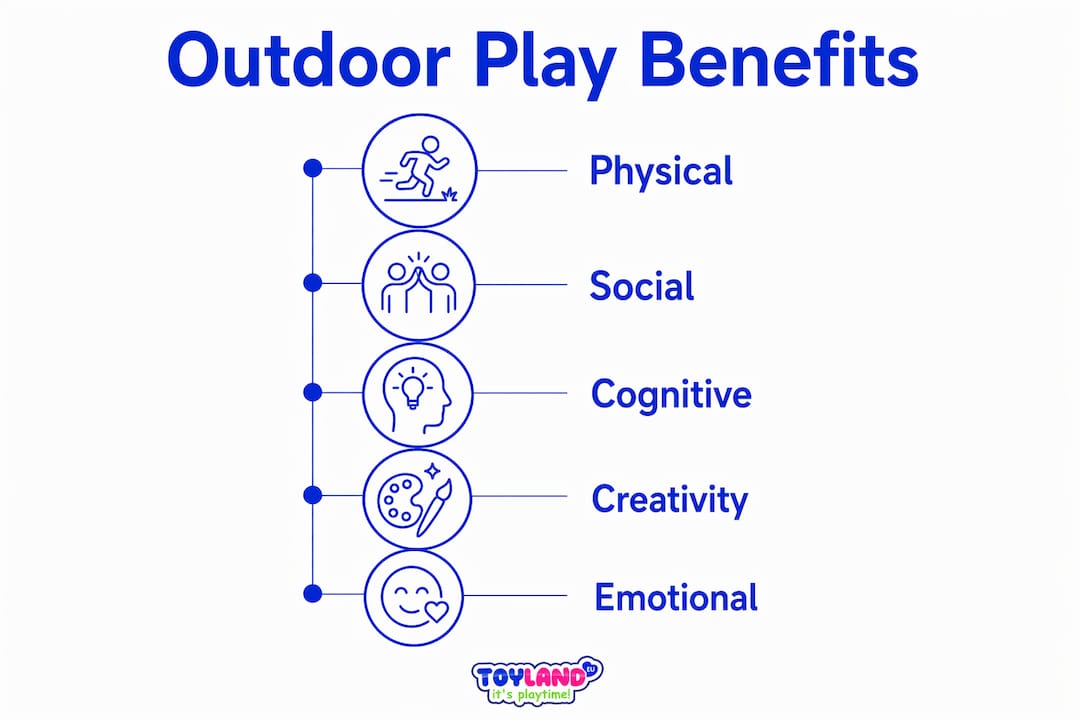
Outdoor play reduces child stress and anxiety and improves emotional regulation and focus, even with short daily or weekly sessions of 30–60 minutes. That is not a minor benefit. Consistent outdoor play time shapes how children handle frustration, conflict, and new challenges throughout their lives.
The developmental gains go beyond physical fitness. Engaging children’s senses outdoors builds mindfulness by training kids to look, listen, and feel their environment. This sensory engagement supports emotional processing and lowers long-term anxiety in ways that structured indoor activities rarely achieve.
Outdoor play is a critical developmental tool, not just entertainment. Encouraging sensory engagement helps children develop mindfulness that reduces long-term anxiety. When kids run, dig, splash, and climb, they are not just playing. They are building the emotional vocabulary they will use for the rest of their lives.
Social development is another major gain. Lawn games like hopscotch, frisbee golf, and lawn bowling build cooperation and healthy competition simultaneously. Kids learn to negotiate rules, handle losing, and celebrate others’ wins, all skills that transfer directly to school and adult relationships.
Key developmental benefits of regular outdoor play include:
- Reduced cortisol levels and lower baseline anxiety
- Stronger impulse control through games with rules
- Better conflict resolution from cooperative play
- Improved gross motor skills and physical coordination
- Greater creativity through imaginative play outdoors
How does letting kids design games improve their outdoor play?
Child-led game design is one of the most underused tools in a parent’s playbook. When children design their own scavenger hunts or game paths, they build leadership skills and deepen their emotional connection to the outdoor environment. The game becomes theirs, and that ownership drives deeper engagement than any adult-designed activity.
The process itself is the benefit. A child who maps out a nature scavenger hunt is practicing planning, sequencing, and creative problem-solving at the same time. These are the same cognitive skills that show up in reading comprehension and math reasoning.
Here is how to support child-led game design without taking over:
- Start with a prompt, not a plan. Ask “What would make this more fun?” instead of suggesting a specific change.
- Let them set the rules. Even if the rules seem odd, follow them. Kids learn cause and effect when their rules play out in real time.
- Assign a “game designer” role. Rotate this role so every child gets a turn leading.
- Debrief after play. Ask what worked and what they would change. This builds reflective thinking.
Pro Tip: Give kids a simple “design kit”: a notepad, a pencil, and a handful of chalk. Watching them sketch out a course or scavenger hunt list before playing adds a planning phase that doubles the total engagement time.
Key Takeaways
Creative outdoor kids games deliver the strongest developmental results when they combine physical movement, sensory engagement, and child-led design with minimal equipment and consistent play time.
| Point | Details |
|---|---|
| Zero-equipment games work best | Tag, Hide-and-Seek, and Red Light/Green Light start in under five minutes for any group size. |
| DIY zones cost almost nothing | Pool noodles, chalk, and household items create multi-station setups for $0–$20. |
| Outdoor play builds mental health | 30–60 minutes of outdoor activity measurably reduces child stress and improves focus. |
| Child-led design deepens engagement | Kids who design their own games develop leadership skills and stronger emotional connections. |
| Sensory play builds mindfulness | Engaging sight, sound, and touch outdoors lowers long-term anxiety in children. |
Why I think parents underestimate the power of simple outdoor games
I have watched kids spend 45 minutes on a chalk maze they drew themselves and ignore a $60 toy sitting five feet away. That tells you everything. Parents often feel pressure to provide elaborate setups or expensive gear, but the research and the reality both point the same direction: simplicity wins.
The games that stick are the ones where kids have some control. A scavenger hunt a child designed, a tag variation they invented, an obstacle course they rearranged. These are not just fun. They are the moments where kids figure out who they are socially and emotionally. You can read more about why outdoor toys support development beyond just physical activity.
My honest advice: resist the urge to fix or improve what kids create. Sit back, watch, and only step in when safety is a concern. The messiest, loudest, most chaotic game on the block is usually the one doing the most developmental work. Give kids a prompt, a little space, and some chalk, and they will surprise you every time.
— Thane Holland
Toylandeu™ toys that take outdoor play further
Active outdoor play gets even more engaging when you add the right physical toy to the mix. Toylandeu™ carries a range of RC vehicles and creative play kits designed to complement the DIY game zones and group activities covered here.

The gesture-controlled stunt car from Toylandeu™ integrates naturally into backyard obstacle courses, giving kids a moving target to chase or a vehicle to steer through chalk-drawn tracks. For parents planning a larger outdoor event or birthday party, pairing Toylandeu™ RC toys with creative party activity ideas creates a full afternoon of structured fun. Toylandeu™ offers free worldwide shipping and over 30,000 products, so finding the right fit for your child’s age and play style is straightforward.
FAQ
What are creative outdoor kids games?
Creative outdoor kids games are physical activities that combine movement with imagination, problem-solving, or social interaction. They range from zero-equipment classics like Tag to DIY obstacle courses built from household materials.
How long should kids play outside each day?
Sessions of 30–60 minutes show measurable mental health benefits, including reduced anxiety and improved emotional regulation. Daily outdoor play, even in short bursts, produces consistent developmental gains.
What outdoor games work for mixed-age groups?
Multi-station obstacle courses work best for mixed ages because you can adjust difficulty per station. Younger kids tackle physical challenges while older kids take on timed or competitive elements at the same course.
Do kids need expensive equipment for outdoor play?
No. DIY setups using pool noodles, sidewalk chalk, and household items cost between $0 and $20 and consistently outperform static toys in engagement time. The best outdoor games for children require creativity, not cost.
How does child-led game design help development?
When children design their own games or scavenger hunts, they build leadership skills, practice planning, and form stronger emotional connections to their outdoor environment. Adult guidance works best as a prompt, not a directive.