

Examples of Puppets for Teaching: 12 Types That Work
TL;DR:
- Puppets such as hand, sock, rod, shadow, and plush types are most effective for teaching children across different age groups. Research shows they increase classroom talk, reduce anxiety, and promote student interaction and social-emotional learning. Educators can choose or make durable puppets with clear mouth movement and personality to enhance engagement and language development.
The most effective examples of puppets for teaching are hand/glove puppets, finger puppets, sock puppets, rod puppets, marionettes, shadow puppets, ventriloquist-style puppets, and simple plush character puppets. Each type fits a different age range and lesson goal.
Quick age reference:
- Preschool (ages 3–5): Finger puppets, sock puppets, simple plush characters
- Early elementary (K–2): Hand/glove puppets, rod puppets, plush character puppets
- Upper elementary (grades 3–5): Marionettes, shadow puppets, ventriloquist-style
- Mixed-age or whole-class: Rod puppets, shadow puppets, puppet masks
Why do these types consistently outperform other classroom tools? A literature review synthesizing eleven studies found that puppets increase classroom talk, create a relaxed atmosphere, and generate more student interaction than direct instruction alone. They cost little, require no tech setup, and work across subjects from phonics to science.
Table of Contents
- Quick Summary
- TL;DR
- 1. What are the best examples of puppets for teaching? {#types}
- 2. Why does the research say puppets work? {#research}
- 3. How do you pick the right puppet for a lesson? {#choose}
- 4. Ready-to-use puppet activities for reading, ESL, SEL, math, and science {#activities}
- 5. Simple DIY puppet projects you can make in under an hour {#diy}
- 6. Cleaning, storage, and safety for classroom puppets {#safety}
- Key Takeaways {#takeaways}
- Why puppets deserve more credit than they get {#perspective}
- Toylandeu™ has the puppets your lessons actually need {#promo}
- Useful sources {#sources}
- FAQ
Quick Summary
The best puppet types for teaching are hand/glove, finger, sock, rod, marionette, shadow, ventriloquist, and plush character puppets. Research confirms they boost language use, engagement, and even social-emotional learning across preschool through grade 5. Toylandeu™ carries ready-made options including the Epic Battle String Puppets and the Jeffy Plush Puppet Toy.
TL;DR
- Hand and sock puppets work best for preschool and K–2 read-alouds and SEL.
- Rod and shadow puppets suit grades 3–5 and whole-class science or storytelling.
- Eleven peer-reviewed studies confirm puppets increase student talk and engagement.
- You can DIY a classroom-ready puppet quickly and inexpensively.
- Toylandeu™ sells ready-made teaching puppets with free worldwide shipping.
Table of Contents
- What are the best puppet examples for teaching?
- Why does the research say puppets work?
- How do you pick the right puppet for a lesson?
- Ready-to-use puppet activities for reading, ESL, SEL, math, and science
- Simple DIY puppet projects you can make in under an hour
- Cleaning, storage, and safety for classroom puppets
- Key Takeaways
- Editorial perspective
- Toylandeu™ puppet picks
- Useful sources
- FAQ
1. What are the best examples of puppets for teaching? {#types}
| Puppet Type | Best Ages | Classroom Use | Pros | Cons |
|---|---|---|---|---|
| Hand/glove puppet | Preschool–K–2 | Read-alouds, SEL talks | Easy to control, expressive | Limited to one hand |
| Finger puppet | Preschool | Phonics, counting | Cheap, portable | Small; hard to see in large groups |
| Sock puppet | Preschool–K–2 | Story retelling, ESL | Free to make, washable | Mouth movement limited |
| Rod puppet | K–5 | Science demos, storytelling | Visible from distance | Requires two hands |
| Marionette | Grades 3–5 | Drama, narrative writing | High engagement, theatrical | Complex to operate |
| Shadow puppet | Grades 2–5 | Science (light), history | Low cost, dramatic effect | Needs projector or lamp |
| Ventriloquist-style | Grades 2–5 | Behavior modeling, SEL | Strong personality, memorable | Requires voice practice |
| Plush/character puppet | Preschool–K–2 | Comfort, SEL, read-alouds | Soft, approachable, washable | Less articulated |
| Puppet mask | Grades K–5 | Drama, cultural studies | Full-body engagement | Less teacher-controlled |
Hand/glove puppets slip over the whole hand, letting you open and close the mouth naturally. They are the go-to for read-alouds and SEL conversations because the mouth movement signals speech clearly to young children.
Finger puppets are tiny fabric or foam characters that fit over one finger. They shine in small-group phonics work: one finger per letter sound, one puppet per character in a counting rhyme.
Sock puppets are the zero-budget option. A clean sock, two button eyes, and a felt tongue make a fully functional teaching tool in ten minutes. They are machine-washable, which matters in a shared classroom.
Rod puppets are flat or three-dimensional figures attached to a dowel or stick. Because you hold them above a table or screen, the whole class can see them, making them ideal for science demonstrations where you need both hands free for props.
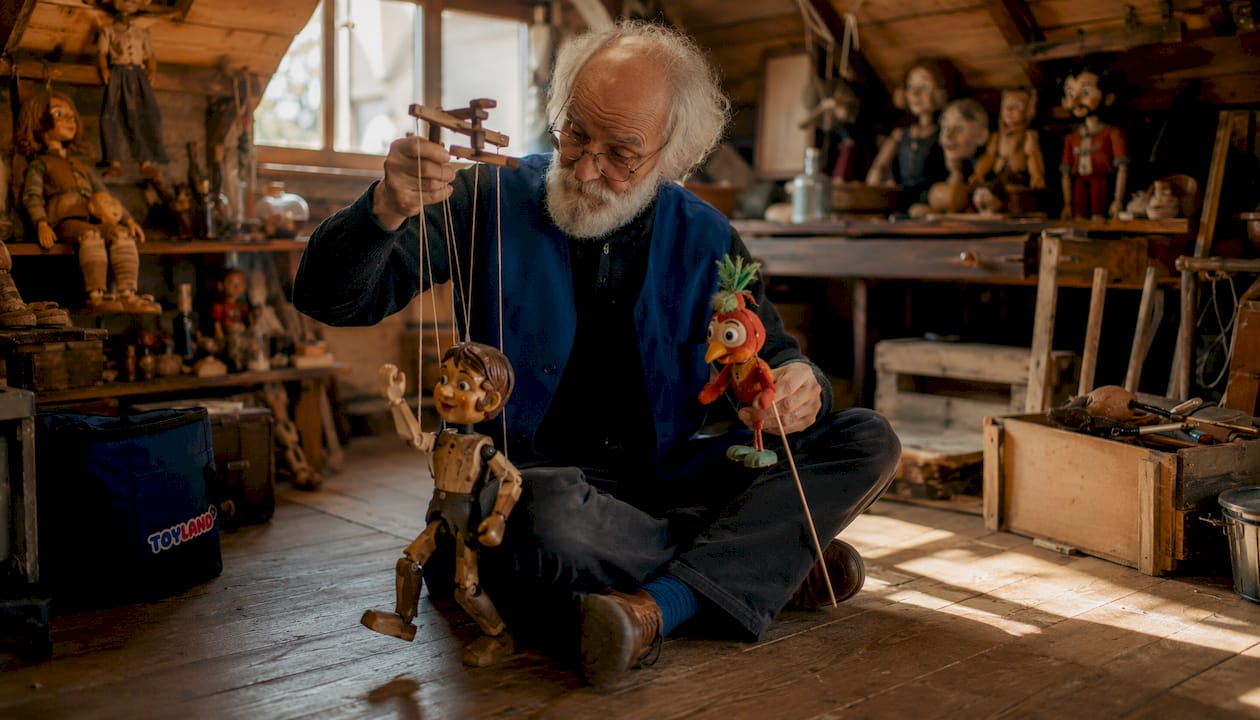
Marionettes are string-controlled figures. They take practice but reward it: older students find them theatrical and engaging. The Toylandeu™ Epic Battle String Puppets fall into this category and work well for grades 3 and up.
Shadow puppets need only a lamp and a white sheet or wall. Cut a flat silhouette from cardstock, attach it to a stick, and you have a science lesson on light and shadow built right into the activity.
Ventriloquist-style puppets have articulated mouths and distinct personalities. Experienced educators recommend choosing puppets with large, well-functioning mouths and avoiding overly cute designs for children older than seven. A slightly edgy or sassy character holds attention far longer.
Plush/character puppets like the Toylandeu™ Jeffy Plush Puppet Toy are soft, approachable, and safe for the youngest learners. They work especially well as SEL “feeling buddies” because children project emotions onto soft, familiar characters.
Pro Tip: For instruction, simple puppets often outperform elaborate ones because they let you focus on the interaction rather than the mechanics. A glove puppet you can operate with one hand beats a marionette that demands your full attention.
2. Why does the research say puppets work? {#research}
Puppets are not just fun props. The evidence for their pedagogical value is specific and consistent.
A literature review of eleven studies found that puppets consistently increase classroom talk, lower anxiety, and create the kind of relaxed atmosphere where students take linguistic risks they would otherwise avoid. That last point matters most for language learners and shy students.
A kindergarten case study tracked 20 children learning English through a named puppet character called “Pepe.” The named character lowered social barriers and improved speaking confidence measurably. The children spoke more English to Pepe than to their teacher, because the puppet felt like a peer rather than an authority figure.
Qualitative interviews with eleven special-education teachers documented that puppetry enhances cognitive function, memory, and language development while supporting stress coping and social inclusion. For students with learning differences, the puppet creates a safe emotional distance that direct instruction cannot replicate.
The Wandsworth Learning Resources Service frames the mechanism well: puppets work best as co-investigators that ask open questions, not as lecture tools. When the puppet asks “Why do you think that happened?” instead of the teacher, students answer more freely and reason out loud more often.
3. How do you pick the right puppet for a lesson? {#choose}
Start with one non-negotiable: mouth movement. A puppet that opens and closes its mouth clearly signals speech to children and holds attention far better than a static figure.
Selection checklist:
- Mouth action: Does it open and close visibly? Avoid puppets where the mouth is sewn shut or purely decorative.
- Size: Large enough for the back row to see; small enough for one hand to control comfortably.
- Material: Washable fabric for preschool; foam or wood for older grades where durability matters more than hygiene frequency.
- Voice comfort: Test your puppet voice before class. Recording and replaying it helps you find a pitch that is distinct but not vocally straining for a 30-minute lesson.
- Safety labels: For children under 3, confirm no small detachable parts. Check for ASTM F963 compliance on any purchased puppet.
- Price range: DIY sock or glove puppets run $1–$8. Quality store-bought hand puppets typically range from $10–$35. Marionettes and ventriloquist-style puppets can run $25–$60.
Buy vs. make:
- Buy when you need durability for daily classroom use, a specific articulated mouth, or a character with an established personality that children already recognize.
- Make when you want to customize for a lesson theme, involve students in the craft, or keep costs near zero.
Pro Tip: Never call the puppet a “puppet” in front of children. Treat it as a real character with its own name. That single habit, called maintaining the suspension of disbelief, is what separates a forgettable prop from a classroom character children ask about by name weeks later.
4. Ready-to-use puppet activities for reading, ESL, SEL, math, and science {#activities}
These five templates are built around the principle that puppets should pose questions, not deliver answers. Each one takes under ten minutes to set up.
1. Puppet read-aloud warm-up (K–2, literacy) Objective: Build prediction and vocabulary skills. The puppet “hasn’t read the book yet” and asks students what they think will happen. Three steps: introduce the puppet, show the cover, let the puppet ask two prediction questions. Assessment: students draw what they predicted vs. what happened.
2. ESL introduction dialogues (K–3, language) Objective: Practice greetings and self-introduction. Inspired by the Pepe kindergarten study, give the puppet a name and a home country. The puppet greets each child in English and waits for a reply. Sample prompt: “Hi! I’m Marco. Where are you from?” Extension: students make their own finger puppet and introduce it.
3. SEL “feeling buddy” role-play (Preschool–K–2) Objective: Name and manage emotions. The puppet arrives “feeling sad” and students suggest what might help. Three steps: puppet enters with a feeling, teacher asks “What do you think happened?”, students offer solutions. Assessment: students draw the puppet’s feeling and one solution.
4. Science inquiry: puppet poses a problem (grades 2–5) Objective: Develop hypothesis skills. The puppet “spilled something” or “broke something” and needs the class to figure out why. Case studies confirm students persist longer on tasks when a puppet presents the problem. Sample prompt: “My ice cube disappeared! Can you help me figure out where it went?”
5. Math story problems acted out (grades K–3) Objective: Connect abstract numbers to narrative. The puppet counts objects but makes deliberate errors. Students correct the puppet. Sample prompt: “I have 1, 2, 3, 6 apples. Is that right?” Extension: students write their own puppet math story.
Adapting for group size: In whole-class settings, use a rod or shadow puppet for visibility. In small groups, a hand or finger puppet works better because each child gets closer interaction. For classroom activities that align with language-learning goals, the same puppet-as-questioner structure transfers across subjects and age levels.
5. Simple DIY puppet projects you can make in under an hour {#diy}
You can build a classroom-ready puppet from inexpensive materials in 10–45 minutes. The government early childhood video resources confirm that simple builds often outperform elaborate ones for instructional use.
| Project | Time | Cost | Materials | Safety Note |
|---|---|---|---|---|
| Sock puppet | 10–20 min | $1–$5 | Old sock, buttons, felt, fabric glue | Use large buttons only; no small parts for under-3s |
| Glove/hand puppet | 20–40 min | $2–$8 | Felt, foam, needle/thread or glue gun | Supervise glue gun use; test seams before class |
| Paper rod/shadow puppet | 45 min | Under $2 | Cardstock, wooden dowel, tape, scissors | Blunt scissors for students; sand dowel ends |
Sock puppet steps:
- Slide the sock over your hand and mark where the mouth falls.
- Cut a small oval from felt and glue it inside the toe fold for the mouth.
- Attach button eyes above the fold and a felt tongue inside.
Durability note: DIY puppets typically last 4–8 weeks of regular classroom use before seams loosen. When a puppet needs to survive a full school year, a store-bought option with reinforced stitching is the better call. Students can still decorate and personalize a purchased puppet, which gives them ownership without sacrificing durability.
For readers who want to go further with wooden builds, Toylandeu™'s wooden puppet crafting guide covers jointed construction in detail.
6. Cleaning, storage, and safety for classroom puppets {#safety}
Regular cleaning extends puppet life and keeps shared-use items hygienic. The rule of thumb: clean after every five uses, or immediately after a sick child handles the puppet.
Safety checklist:
- Confirm ASTM F963 compliance for any purchased puppet used with children under 8.
- Remove or replace any button, bead, or small decorative piece that could detach.
- For craft puppets, use non-toxic, washable glue and water-based paints only.
- Check flame resistance on fabric puppets used near candles or science heat sources.
Cleaning by material:
- Plush/fabric puppets: Surface clean with a damp cloth and mild soap for spot stains. Machine-wash on gentle cycle in a mesh laundry bag when a deeper clean is needed; air dry to preserve shape.
- Glove/hand puppets (fabric): Most are hand-washable. Check for non-colorfast dyes before soaking.
- Wooden or rod puppets: Wipe down with a lightly damp cloth; never submerge. Dry immediately to prevent warping.
Storage tips: Store puppets in labeled zip bags or small bins, one puppet per bag. For shared-classroom use, label each bag with the puppet’s name and the date of last cleaning. Hanging storage on a pegboard keeps puppets visible and prevents the flattening that crushes foam features over time.
Pro Tip: Assign each puppet a “home” — a specific bag, box, or hook. Children who know where the puppet “lives” treat it with more care, which cuts replacement costs significantly.
Key Takeaways {#takeaways}
Puppets are one of the most research-supported, low-cost tools available for building language, engagement, and social-emotional skills across preschool through grade 5.
| Point | Details |
|---|---|
| Best puppet types for teaching | Hand/glove, finger, sock, rod, marionette, shadow, ventriloquist, and plush character puppets cover all age groups and subjects. |
| Research backing | Studies reviewed confirm puppets increase classroom talk, lower anxiety, and improve task persistence. |
| Top selection criteria | Prioritize mouth movement, washable materials, and age-appropriate size before price. |
| DIY is viable but limited | Sock and glove puppets can be made quickly and inexpensively but typically require replacement after several weeks of regular use. |
| Toylandeu™ ready-made picks | The Epic Battle String Puppets and Jeffy Plush Puppet Toy are ready-made options suited to upper-elementary and preschool use respectively. |
Why puppets deserve more credit than they get {#perspective}
Most educators treat puppets as a novelty, something you pull out for the first week of school and then shelve. That is exactly backwards. The research is clear: the longer a named puppet character stays in a classroom, the more students invest in it emotionally, and the more freely they use it as a vehicle for language and reasoning.
The “Pepe” kindergarten study is the most striking example. Twenty children spoke more English to a puppet than to their teacher. Not because the puppet was better at teaching, but because the social stakes felt lower. That is a mechanism worth understanding, not just a cute anecdote.
The other thing most guides miss: puppet character design matters more than puppet quality. A slightly imperfect sock puppet with a distinct, memorable personality will outperform a $50 ventriloquist figure with no character backstory. Toylandeu™‘s approach to puppet selection reflects this: the Jeffy Plush Puppet Toy has an immediately recognizable character, and the Epic Battle String Puppets carry enough theatrical drama to hold older students’ attention. Neither requires a performance degree to use effectively.
Toylandeu™ has the puppets your lessons actually need {#promo}
Finding a puppet that survives daily classroom use, ships fast, and actually fits the age group you are teaching is harder than it sounds. Toylandeu™ carries ready-made options that match the teaching types covered in this article, with free worldwide shipping and no minimum order.
Two standout picks: the Epic Battle String Puppets are marionette-style figures built for active play and dramatic storytelling, best for grades 3 and up. The Jeffy Plush Puppet Toy is a soft, character-driven plush puppet that works perfectly for preschool SEL and read-aloud activities. Both ship to the U.S. and internationally. If you are building out a broader learning kit, Toylandeu™'s educational toys collection pairs well with puppet-based lessons. Browse the full puppet range at Toylandeu™ and pick the type that fits your next lesson.
Useful sources {#sources}
- Puppet as a Pedagogical Tool: A Literature Review — backs the eleven-study engagement and classroom-talk findings.
- Puppets as motivators in kindergarten English learning — source for the “Pepe” case study and ESL confidence gains.
- Study on puppetry in special education settings — eleven special-education teacher interviews on cognitive and social benefits.
- Using puppets in the classroom, Wandsworth SLS — practitioner guidance on puppets as co-investigators and question-askers.
- 6 Reasons Why Puppets Will Change Your Classroom Forever, Edutopia — creativity, collaboration, and student-made puppet project ideas.
- How Any Elementary School Teacher Can Use a Puppet, ShowsThatTeach — mouth movement, character design, suspension of disbelief, and voice safety guidance.
- Teaching with Puppets: A Video Resource for Teachers — government video modules on puppet making, movement, and voice technique.
- Puppetry-Based Learning and Children’s Holistic Development, Jurnal Pendidikan Bitara UPSI — early childhood educator survey on puppetry across developmental domains.
FAQ
What puppet type works best for preschool teaching?
Hand/glove puppets, sock puppets, and soft plush character puppets work best for preschool. They are easy to control, washable, and safe for children ages 3–5.
How do puppets help with language development?
A kindergarten study of 20 children found that a named puppet character lowered social barriers and improved English-speaking confidence, with children speaking more freely to the puppet than to their teacher.
What features should a teaching puppet have?
Prioritize a clearly moving mouth, washable materials, and a size visible from the back of the room. Experienced educators also recommend a distinct personality over a generic cute design, especially for children over age 7.
Can I make a teaching puppet at home?
Yes. A sock puppet takes 10–20 minutes and costs $1–$5. A glove puppet runs $2–$8 and 20–40 minutes. Both are classroom-ready, though store-bought puppets with reinforced stitching last longer under daily use.
Where can I buy ready-made teaching puppets?
Toylandeu™ carries ready-made options including the Epic Battle String Puppets (marionette-style, best for grades 3+) and the Jeffy Plush Puppet Toy (plush character, best for preschool and K–2 SEL). Both ship to the U.S. with free worldwide shipping.