

Are Toy Guns Safe for Kids? A 2026 Parent's Guide
TL;DR:
- Toy guns are safe only when they meet strict safety standards, are age-appropriate, and are used with adult supervision. Lower-risk foam dart guns are suitable for children six and older, while realistic or projectile guns pose serious injury and legal risks. Certification marks like EN71, CE, or UKCA ensure the toys meet safety requirements.
Toy guns are safe for children only when they meet strict safety standards, are age-appropriate, and are used with proper adult supervision. The category covers everything from soft foam dart blasters to realistic pellet guns, and the safety gap between those two ends is enormous. Parents who understand the risks, know which certifications to look for, and apply a few consistent rules can make toy gun play genuinely low-risk. Those who skip that homework face real hazards, including eye injuries, toxic chemical exposure, and dangerous encounters with law enforcement.
Are toy guns safe? The honest answer for parents
The short answer is: it depends entirely on the type. Foam dart guns, sometimes called blasters, carry far lower risk than BB or pellet guns. BB and pellet guns exceed safe kinetic energy limits and can cause severe eye injuries or worse. That distinction matters more than any other factor a parent can evaluate at the store.
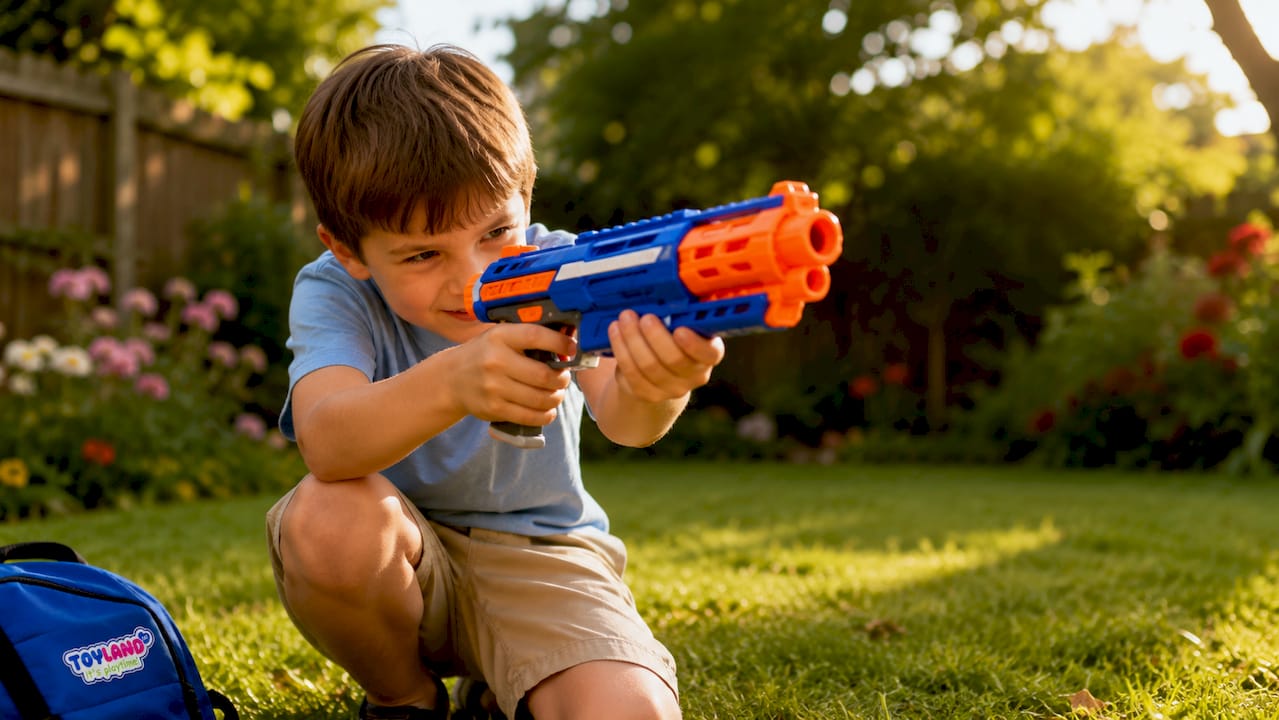
The toy gun category, formally called imitation firearms in most regulatory frameworks, spans a wide spectrum. Non-projectile toys with lights and sounds sit at one end. High-powered air-powered pellet guns sit at the other. Most of the injury risk, the legal risk, and the chemical risk clusters around the realistic and projectile ends of that spectrum.
What are the main risks associated with toy guns?
Physical injury is the most immediate concern. Projectile toys require careful design to prevent choking hazards, and suction-cup darts must be firmly attached and sized so young children cannot swallow them. Eye injuries from BB and pellet guns are the most severe outcome, and they are not rare.
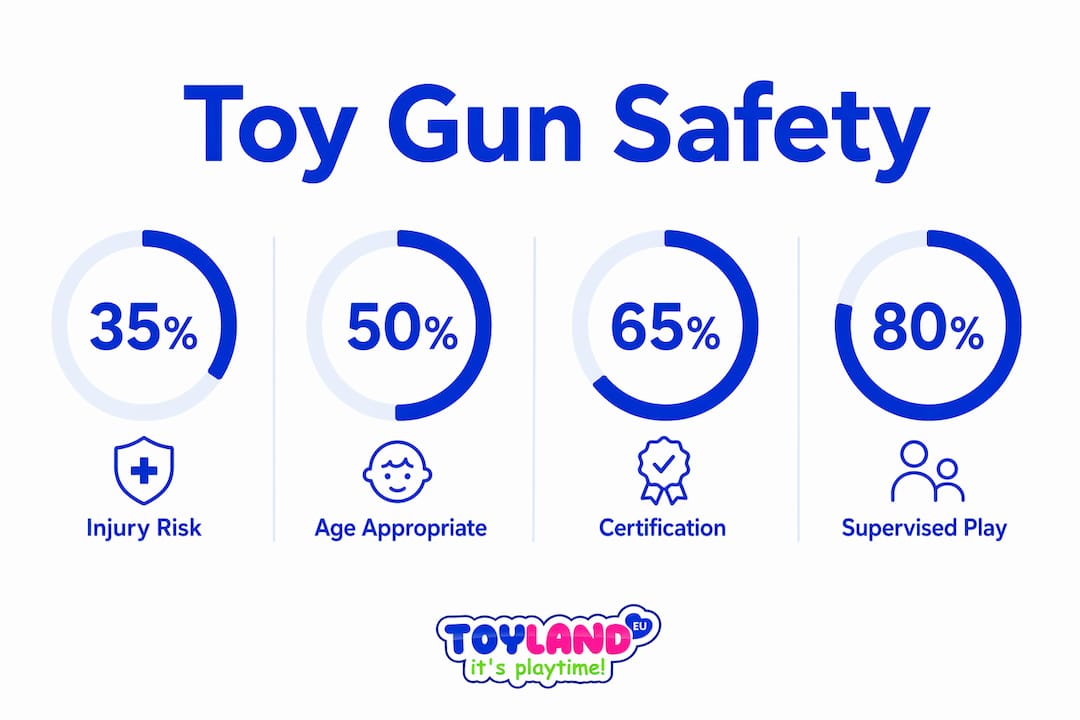
Chemical exposure is a less visible but equally serious risk. Testing has found lead levels up to 820 ppm and cadmium up to 206 ppm in some imitation toy guns, far above legal safety limits. Lead at those concentrations impairs brain development and permanently lowers IQ in young children.
Realistic appearance creates a third category of risk that parents often overlook. Law enforcement warns that realistic toy guns can be mistaken for real firearms by police and bystanders, creating dangerous situations. Children who paint toy guns black or remove orange tips dramatically increase that risk.
Parents often underestimate hearing risks from noisy toy guns. Sound levels from some toy guns can damage children’s hearing with repeated exposure, making this a frequently overlooked safety consideration.
Finally, toy guns at home can create false familiarity with firearms. Children who regularly handle toy guns may be less cautious around real, unsecured firearms, which is why home firearm storage and toy gun safety must be addressed together.
What safety standards should parents look for when buying toy guns?
Certified compliance is the clearest signal a toy gun is safe. The EN71 standard, used across Europe and recognized internationally, requires toxicity testing, physical safety testing, and projectile hazard testing. Look for CE or UKCA marks on packaging. EN71-compliant toys must pass age-appropriateness criteria as well as chemical and mechanical tests.
Age-specific guidance from regulators breaks down as follows:
- Ages 3 to 5: Plastic toys with lights and sounds only. No projectiles of any kind.
- Ages 6 to 8: Foam dart guns are acceptable with adult supervision. Projectiles must be large enough to avoid choking.
- Ages 9 and older: More advanced projectile toys are permitted, but only with consistent adult supervision and proper eye protection.
Pro Tip: Never rely on the orange tip alone to confirm a toy is safe. Orange tips are not a fully reliable safety indicator because some real firearms mimic them and toy guns are frequently modified. Always check for EN71, CE, or UKCA certification marks on the box.
| Safety feature | What to check |
|---|---|
| Certification mark | CE, UKCA, or EN71 label on packaging |
| Age label | Matches your child’s actual age, not aspirational age |
| Projectile size | Large enough to prevent choking in the target age group |
| Material safety | “Non-toxic” claim backed by a certification, not just marketing text |
| Realistic appearance | Bright colors preferred; avoid black or gray finishes |
For a deeper look at how current regulations protect children, the 2025 toy safety regulations guide from Toylandeu™ covers the full compliance picture.
How do different types of toy guns compare in terms of safety?
Not all toy guns carry the same risk profile. The table below breaks down the four main types.
| Type | Risk level | Key concern | Best age |
|---|---|---|---|
| Non-projectile (lights/sound) | Very low | Noise levels | 3 to 5 years |
| Foam dart guns (blasters) | Low to moderate | Eye impact, choking | 6 years and older |
| Gel blasters | Moderate to high | Realistic appearance, confusion | 12 years and older, supervised |
| BB and pellet guns | High | Severe eye injury, toxicity | Not recommended for children |
Foam dart guns are the most popular middle-ground option. 56% of manufacturers report increased demand for lower-risk foam dart guns. That shift reflects growing parent awareness of the injury risks at the pellet gun end of the market.
Gel blasters deserve special attention. They fire small water-absorbent beads and look convincingly realistic. That realistic appearance is their primary hazard. In public spaces, gel blasters are frequently mistaken for real firearms, which creates the same law enforcement risk as a pellet gun.
Non-projectile toys with lights and sounds are the safest option for children under six. The only meaningful risk is noise level. Parents should test the volume before purchase and look for toys with volume controls.
What practical toy gun safety tips should parents follow?
These rules reduce the most common injury and legal risks.
- Keep play on private property. Expert advice recommends limiting toy gun play to private yards or indoors. Public spaces create misunderstanding risks that no orange tip can fully prevent.
- Use eye protection for projectile toys. Foam darts fired at close range can cause eye injury. Safety glasses designed for children cost very little and eliminate that risk.
- Never modify a toy gun’s appearance. Painting a toy gun black or removing the orange tip makes it indistinguishable from a real firearm. Law enforcement has responded to calls involving modified toy guns with lethal force.
- Supervise all projectile play. Children under nine should never use foam dart guns or any projectile toy without an adult present.
- Check for non-toxic toy certifications before buying. Lead and cadmium contamination in imitation firearms is a documented problem, not a theoretical one.
- Store real firearms separately and locked. Unlocked guns at home undermine toy gun safety by creating conditions where children confuse real firearms for toys.
Pro Tip: Teach children one clear rule before any toy gun play begins: toy guns stay at home. That single rule eliminates most of the public safety risks parents worry about.
Key takeaways
Toy guns are safe when they carry certified compliance marks, match the child’s age, and are used under adult supervision on private property.
| Point | Details |
|---|---|
| Type determines risk | Foam dart guns are low risk; BB and pellet guns pose severe injury hazards. |
| Chemical hazards are real | Some toy guns contain lead and cadmium well above legal safety limits. |
| Certification marks matter | Look for EN71, CE, or UKCA marks, not just marketing claims of safety. |
| Orange tips are not enough | Realistic appearance and modifications make visual cues unreliable in public. |
| Home firearm safety connects | Unlocked real guns at home increase the risk of tragic confusion with toy guns. |
Why I think parents are asking the wrong question about toy gun safety
Most parents ask “are toy guns harmful?” when they should be asking “which toy guns are harmful and why?” The category is too broad for a single yes or no answer, and treating it as one thing leads to bad decisions in both directions. Parents who ban all toy guns miss out on play that genuinely teaches rules, responsibility, and cause-and-effect thinking. Parents who assume all toy guns are harmless end up with a pellet gun in the hands of a seven-year-old.
The orange tip misconception bothers me most. I have seen parents use it as a final safety check and feel completely reassured. The orange tip was designed to help law enforcement distinguish toys from real firearms at a distance. It was never designed to certify a toy as safe for a child to use. Those are completely different functions, and conflating them creates a false sense of security.
The chemical risk is the one that genuinely surprises most parents I talk to. Nobody expects a toy to contain lead at 820 ppm. But imitation firearms sourced from unregulated manufacturers have tested at exactly those levels. Buying from retailers who stock certified products is not overcaution. It is the minimum standard.
Toy gun play, managed well, is fine. The expert guidance on safe play from Toylandeu™ lays out a practical framework that I think gets the balance right. Supervision, age-appropriate choices, and private-property play cover most of the risk. The rest is knowing which products to avoid entirely.
— Thane Holland
Safe alternatives and certified toys at Toylandeu™

Parents who want the excitement of play without the risks of projectile or realistic toy guns have strong options. Toylandeu™ carries a wide selection of certified, age-appropriate toys built for active, imaginative play. RC cars, aircraft kits, and STEM robotics sets deliver the same thrill of control and competition without the injury or legal risks that come with imitation firearms.
The gesture-controlled stunt car from Toylandeu™ is a strong example: high engagement, zero projectile risk, and genuinely exciting for kids aged six and up. For parents who want to stay in the toy gun category, Toylandeu™ product pages include safety certification details so you can verify compliance before you buy. Free worldwide shipping and a catalog of over 30,000 items make it easy to find the right fit for your child’s age and interests.
FAQ
Are foam guns safe for young children?
Foam dart guns are low risk but not risk-free. They are appropriate for children aged six and older with adult supervision, and eye protection is recommended during play.
What does the EN71 standard mean for toy gun safety?
EN71 is a European safety standard that requires toy guns to pass toxicity, physical safety, and projectile hazard tests. A CE or UKCA mark on the packaging confirms the toy meets these requirements.
Can a toy gun be mistaken for a real firearm?
Yes. Realistic toy guns are regularly mistaken by police and bystanders for real firearms, especially when used in public or when the orange tip has been removed or painted over.
Are BB guns safe for kids?
BB and pellet guns are not recommended for children. They exceed safe kinetic energy limits and can cause severe eye injuries or fatal harm.
How do I know if a toy gun contains toxic chemicals?
Check for EN71, CE, or UKCA certification marks on the packaging. Avoid toys with no certification or those sourced from unregulated manufacturers, as some imitation firearms have tested with lead levels far above legal safety limits.