

Parents: 4 Questions, 3 Red Flags to Pick Toy or Hobby Grade RC
Toy-grade RC cars run $50 to $150, come sealed shut, and are built to be driven, not fixed. Hobby-grade RC cars start around $150 and climb past $1,000, but every part comes apart and every part can be replaced. Buy toy-grade if your kid wants quick backyard fun without a learning curve. Buy hobby-grade if you’re ready to teach repairs, fund upgrades, and get years out of one chassis.
TL;DR:
- Hobby-grade RC cars typically cost more upfront but use separate, easily replaceable parts that can extend the vehicle’s lifespan significantly.
- Repair parts for hobby-grade models are readily available online, often making maintenance and upgrades more affordable over the vehicle’s lifetime.
- Hobby-grade chassis are made from durable materials like nylon or aluminum, making them better suited for rough terrain and hard impacts than toy-grade plastics.
- Brushed motors in toy-grade cars top out at around 10 mph, while hobby-grade models often feature brushless motors capable of higher speed and better handling.
- For frequent users, hobby-grade RC cars usually become more cost-effective over time compared to toy-grade models, especially when considering part replacements and upgrades.
Table of Contents
- Toy Grade vs Hobby Grade RC: The Real Definitions
- What Do Toy Grade and Hobby Grade RC Cars Actually Cost Over Time?
- Why Hobby-Grade RC Cars Hold Up Longer
- Performance and Customization: What You’ll Actually Notice
- How Much Maintenance Does Each Grade Actually Need?
- How to Choose Between Toy Grade and Hobby Grade RC
- Who’s Behind This RC Buying Advice
- There’s No “Better” Grade, Just a Better Fit
- Find the Right RC Car on Toylandeu™
- Sources
- FAQ
Toy Grade vs Hobby Grade RC: The Real Definitions
The split comes down to how the electronics are built and whether the vehicle expects to be repaired. Toy-grade cars usually cram the receiver, motor driver, and steering control onto one sealed circuit board. Hobby-grade cars separate those jobs into a standalone electronic speed controller (ESC), a receiver, and individual servos, all connected by plugs you can swap out.
That structural difference is the whole story. A toy-grade car with a dead ESC is a dead car. A hobby-grade car with a dead ESC gets a new ESC. Scale numbers help too. Most toy-grade models run 1:28 or 1:24 for cheap plastic builds, while hobby-grade starts around 1:24 and climbs to the popular 1:10 size, where most aftermarket parts live.
Here’s a quick way to spot which one you’re holding in a store aisle:
- One sealed unit underneath with no visible screws or panel = toy-grade.
- Separate battery, receiver, and ESC boxes you can open with a screwdriver = hobby-grade.
- Fixed, non-removable battery wired straight into the board = almost always toy-grade.
- A model number or “kit” branding tied to a specific manufacturer platform = hobby-grade.
What Do Toy Grade and Hobby Grade RC Cars Actually Cost Over Time?
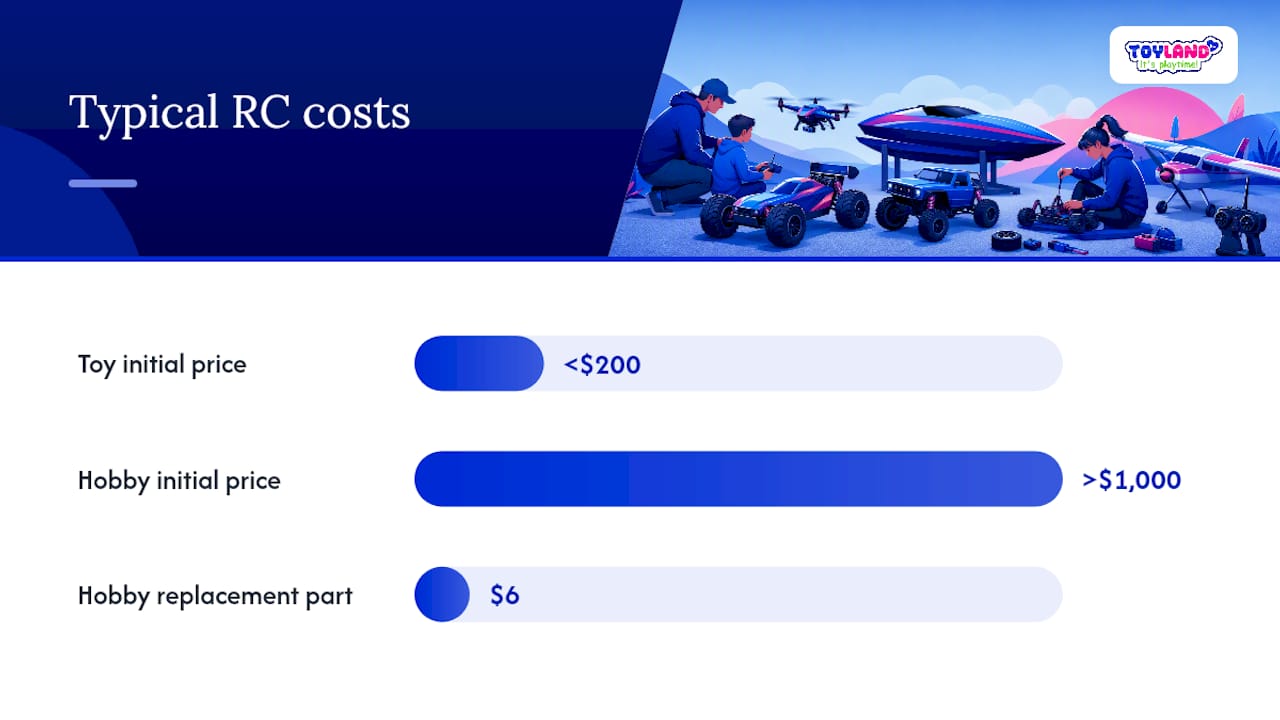
The sticker price only tells half the story. Toy-grade models generally cost less than two hundred dollars, while hobby-grade starts at higher prices and can go beyond a thousand dollars for advanced setups, depending on motor type, scale, and brand.
The gap that matters more is what happens after the first crash. A toy-grade car with a snapped axle or fried motor usually gets thrown out, because most toy-grade lines skip spare-parts support entirely, which means a single broken piece often ends the vehicle’s life. A hobby-grade car with the same damage gets a $6 replacement part and another year of driving.
Where the money actually goes:
- Toy-grade: replacement batteries (if removable), occasional full-unit replacement after a serious crash.
- Hobby-grade: spare tires, gears, shock sets, upgraded batteries, and eventually a better motor or ESC.
Pro Tip: If your family drives an RC car more than twice a month, the hobby-grade math usually wins within a year. Parts cost less than buying a new toy-grade car every few months.
A hobby-grade truck that survives multiple years of backyard use may cost less per mile than a toy-grade car that needs frequent replacements.
Why Hobby-Grade RC Cars Hold Up Longer
Materials tell you a lot before you even open the box. Toy-grade shells are usually thin injection-molded plastic over a fixed plastic chassis, fine for smooth driveways but brittle on gravel or curbs. Hobby-grade chassis are typically nylon composite or aluminum, built with the expectation of hard impacts.
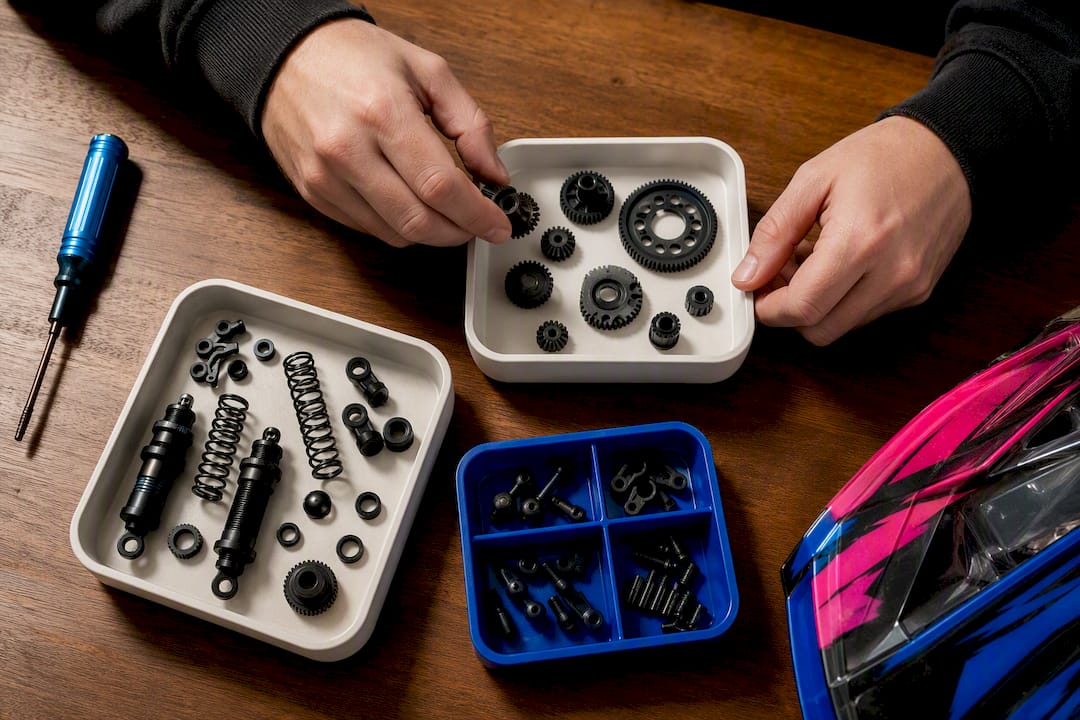
What breaks first also differs by grade. Toy-grade failures tend to hit the gearbox or the sealed electronics, and once those go, there’s nothing to swap. Hobby-grade failures usually hit wear parts, tires, shocks, and dogbones, items designed to be replaced.
- Toy-grade weak points: sealed gearbox, fixed steering linkage, non-removable battery.
- Hobby-grade weak points: exposed suspension arms, drivetrain gears, exterior body shell (all replaceable).
Local hobby shops and online RC suppliers stock these parts by the bin, and hobby shops in particular are built around parts support and repair knowledge that mass-market toy retailers don’t offer.
Pro Tip: Before buying any hobby-grade model, search the exact model name plus “spare parts” online. If a real listing of replacement gears, shocks, and body shells shows up, you’re set for years. If nothing comes up, walk away, even if the price looks good.
Performance and Customization: What You’ll Actually Notice
Speed is where the two grades split hardest. Toy-grade cars almost always use brushed motors, which top out around 5 to 10 mph and lose power as the battery drains. Hobby-grade models frequently use brushless motors paired with adjustable suspension, delivering higher sustained speed and better handling over rough terrain than a fixed-setup toy-grade car can manage.
That gap opens up a real upgrade path once your kid outgrows the basics:
- Swapping a brushed motor for a brushless one for a serious speed jump.
- Adjustable shocks and tire compounds for dirt, grass, or pavement.
- Larger-capacity batteries for longer run time between charges.
For families worried about a first hobby-grade purchase going too fast soon, look for models with a speed limiter switch or start your kid on a smaller-scale 1:24 buggy before moving up to 1:10. Some entry hobby-grade kits also ship with lower-voltage battery packs specifically so beginners can build confidence before adding power. Riders serious about improving lap times and cornering can also pair a hobby-grade car with a coaching app like Virew, which tracks driving telemetry the way sim racers use lap analytics.
How Much Maintenance Does Each Grade Actually Need?
Toy-grade needs almost nothing, which is exactly its appeal for busy parents. Charge it, drive it, wipe off the dirt. The tradeoff is that when something inside fails, replacement is the only fix.
Hobby-grade asks for a little more attention but rewards you with a car that keeps running for years. Keep this short list of supplies on hand once you own one:
- A small screwdriver set (Phillips and hex) for chassis access.
- Light machine oil or grease for gears and bearings.
- A soft brush or compressed air for clearing dirt from the drivetrain.
- Spare O rings and bushings, cheap and easy to lose track of.
- A basic multimeter if you’re troubleshooting electronics.
A quick wipe-down and gear check after muddy runs prevents most of the wear that shortens a hobby-grade car’s life. For cleaning contact points on the electronics side, dedicated electronics cleaning solutions work better than household sprays, which can leave residue on connectors.
How to Choose Between Toy Grade and Hobby Grade RC
Start with four honest questions: How old is the driver? Have they already shown sustained interest, not just a one-week phase? What’s the real budget, sticker price plus parts? And is a parent willing to sit down and learn basic repairs alongside the kid?
Choosing hobby-grade only makes sense once a child has shown real staying power with RC driving and someone in the house is willing to handle basic upkeep rather than jumping straight to the more expensive option.
Watch for these red flags before buying either type:
- A sealed battery compartment with no visible way to swap cells.
- Zero spare-parts listings anywhere online for that exact model.
- A single circuit board handling motor, steering, and radio with no separate connectors.
Pro Tip: Confirming spare-parts availability before checkout is the single highest-value five minutes you’ll spend shopping — it tells you whether this car has a second year in it.
Who’s Behind This RC Buying Advice
This guide comes from Thane Holland, a Toylandeu™ contributor focused on RC toys and how families actually use them day to day.
The store offers a large selection of toy and hobby products including RC vehicles suitable for both casual play and more advanced use.
- A step-by-step RC car maintenance checklist for new hobby-grade owners.
- Durable, low-maintenance RC models built for younger or first-time drivers.
- Entry-level hobby-grade trucks for kids ready to graduate from toy-grade basics.
There’s No “Better” Grade, Just a Better Fit
Toy-grade isn’t a downgrade. For a lot of families, it’s the correct answer: a kid who wants ten minutes of backyard fun on a Saturday doesn’t need a repair kit and a spare-parts subscription. Buying hobby-grade for that kid just means a $300 car sitting in a closet by June.
Hobby-grade earns its price when the interest is real and a parent is willing to be part of the process. Handing a ten-year-old a screwdriver and letting them fix their own gearbox teaches more than the car itself ever will. The mistake isn’t picking either grade. It’s picking hobby-grade to impress a kid who hasn’t asked for it yet, or picking toy-grade for a kid who’s already outgrown it.
— Thane Holland
Find the Right RC Car on Toylandeu™
Toylandeu™ carries both sides of this comparison side by side, so you’re not stuck guessing between a toy store rack and a specialty hobby shop. For younger or first-time drivers, the durable mini off-road SUV built for kids handles rough backyard terrain without the fragile electronics common in cheaper toy-grade cars. For kids ready to step up, the 1/16 scale 4WD drift truck offers real hobby-grade speed and upgrade room without jumping straight to a $500 kit.

Every listing states the intended age range and skill level up front, so you’re not left comparing spec sheets on your own. If you want something with more instant flash, the gesture-controlled 360° stunt car is a strong toy-grade pick for kids who want tricks over top speed. Whichever direction fits your household, browse the current RC lineup and check the maintenance guide before your first purchase so you know exactly what you’re signing up for.
Sources
- What’s The Difference Between Hobby-Grade And Toy-Grade RC Vehicles - RCVehicleGarage
- Hobby-grade vs Toy Grade RC Cars & Trucks | HobbyTown Santee
- Picking Out the Right Product: Toys vs Hobbies — Roger’s Hobby Center
FAQ
What Is the Difference Between Hobby-Grade and Toy-Grade RC Cars?
Toy-grade cars use sealed, non-repairable electronics and cost $50 to $150; hobby-grade cars use separate, replaceable components and start around $150, offering real repairability and upgrade paths.
What Does “Hobby-Grade RC” Mean?
Hobby-grade means the vehicle’s motor, ESC, receiver, and servos are separate, swappable parts rather than one sealed board, so nearly every component can be repaired or upgraded individually.
What Makes an RC Car Hobby Grade?
Modular construction is the deciding factor: a removable battery, separate electronic components, and available spare parts for that specific model all point to hobby-grade.
Why Are Hobby-Grade RC Cars So Expensive?
The higher price covers better motors, tougher chassis materials like nylon composite or aluminum, and individually replaceable parts, all of which cost more to manufacture than a sealed plastic toy-grade shell.
Can a Beginner Start With a Hobby-Grade RC Car?
Yes, especially with a smaller 1:24 scale hobby-grade model or one with a speed limiter, which gives beginners the repair experience without the higher speeds of larger hobby-grade trucks.