

The Best Math Toys for Toddlers Start With Open-Ended Play
Start with open-ended manipulatives, not flashy gadgets. Blocks, counting sets, and shape sorters teach counting, spatial reasoning, and patterning, and they hold a toddler’s interest for years instead of weeks. These toys work because they double as conversation starters. When you count blocks out loud, ask “which pile has more,” or name shapes as your toddler stacks them, you turn ordinary play into repeated math practice without a worksheet in sight.
Before you buy anything, check for three things:
- Durability: Solid wood or thick plastic that survives drops, chewing, and years of use.
- Piece size: Large enough to rule out choking hazards for children under three.
- Multi-use design: Can be sorted, stacked, counted, and matched, not just used one way.
Key Takeaways
Open-ended manipulatives paired with caregiver math talk teach more real math than expensive gadgets, and durable multi-use toys deliver the best long-term value.
| Point | Details |
|---|---|
| Choose open-ended toys first | Blocks, counting sets, and shape sorters teach multiple skills and last through several developmental stages. |
| Talk while you play | Counting aloud and comparing quantities during play matters more than any single toy’s features. |
| Match toys to age, not just labels | Watch your toddler’s actual skills; a “12 months+” label doesn’t guarantee the right challenge level. |
| Prioritize safety basics | Pieces larger than 1.75 inches and non-toxic finishes matter most for children under three. |
| Shop Toylandeu™ for curated picks | Toylandeu™ organizes counting, sorting, and building toys by age so parents can compare options quickly. |
Table of Contents
- What Are the Best Math Toys for Toddlers?
- Which Math Toys Are Right for Each Age?
- How Do You Turn Playtime Into a Math Lesson?
- What Should You Check Before Buying a Math Toy?
- Why Do Experts Recommend Open-Ended Toys Over Gadgets?
- How Toylandeu™ Chooses Educational Math Toys
- Where to Find These Toys on Toylandeu™
- Sources
- FAQ
What Are the Best Math Toys for Toddlers?
The best math toys for toddlers are the ones that flex across several skills instead of teaching just one. A set of wooden blocks can be stacked for spatial reasoning, sorted by color, or counted aloud. That versatility beats a single-purpose gadget every time, because your toddler’s brain grows in bursts and a good toy grows with it.
1. Blocks and building sets
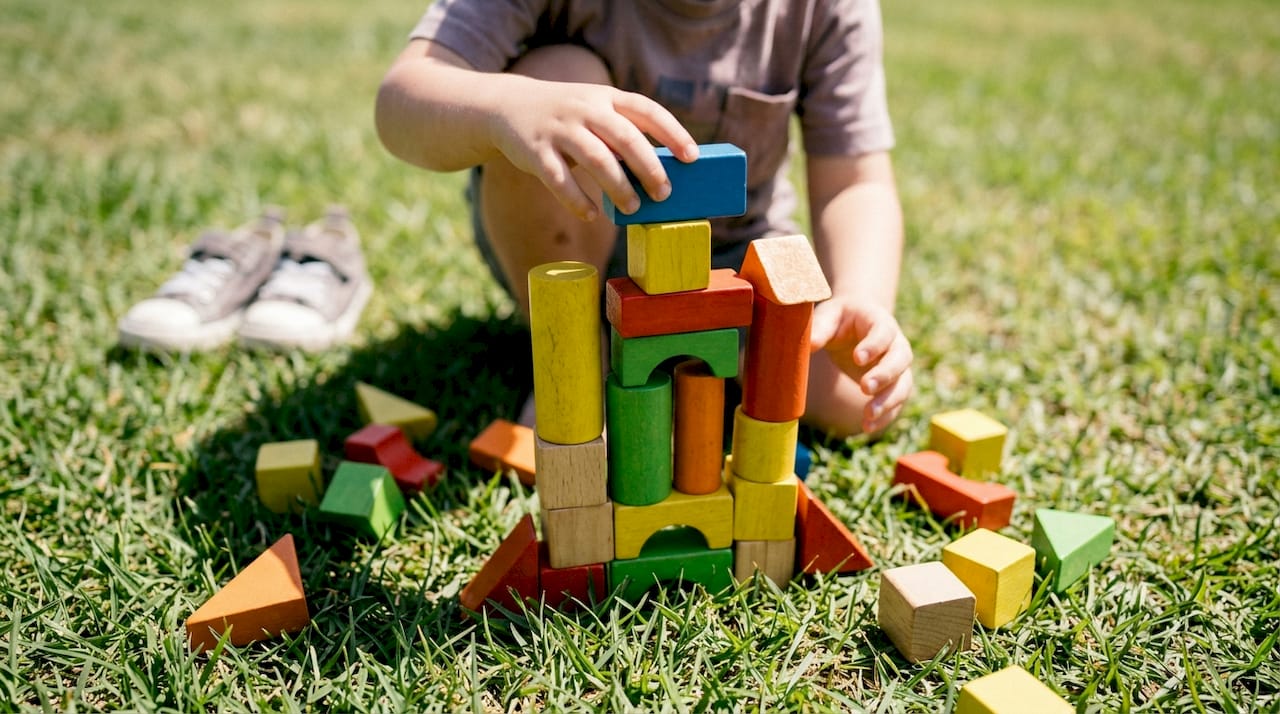
Wooden blocks are the original STEM toy, and for good reason. Stacking teaches balance and gravity, sorting by size introduces measurement vocabulary (“bigger,” “smaller,” “taller”), and building alongside a caregiver opens the door to spatial language toddlers rarely hear otherwise. Try a simple challenge: build a tower of five blocks, then ask your toddler to build one “just as tall.” Expert reviewers consistently rank blocks and open-ended construction sets among the best learning toys precisely because they support this kind of flexible, repeatable play.
2. Counting toys and number sets
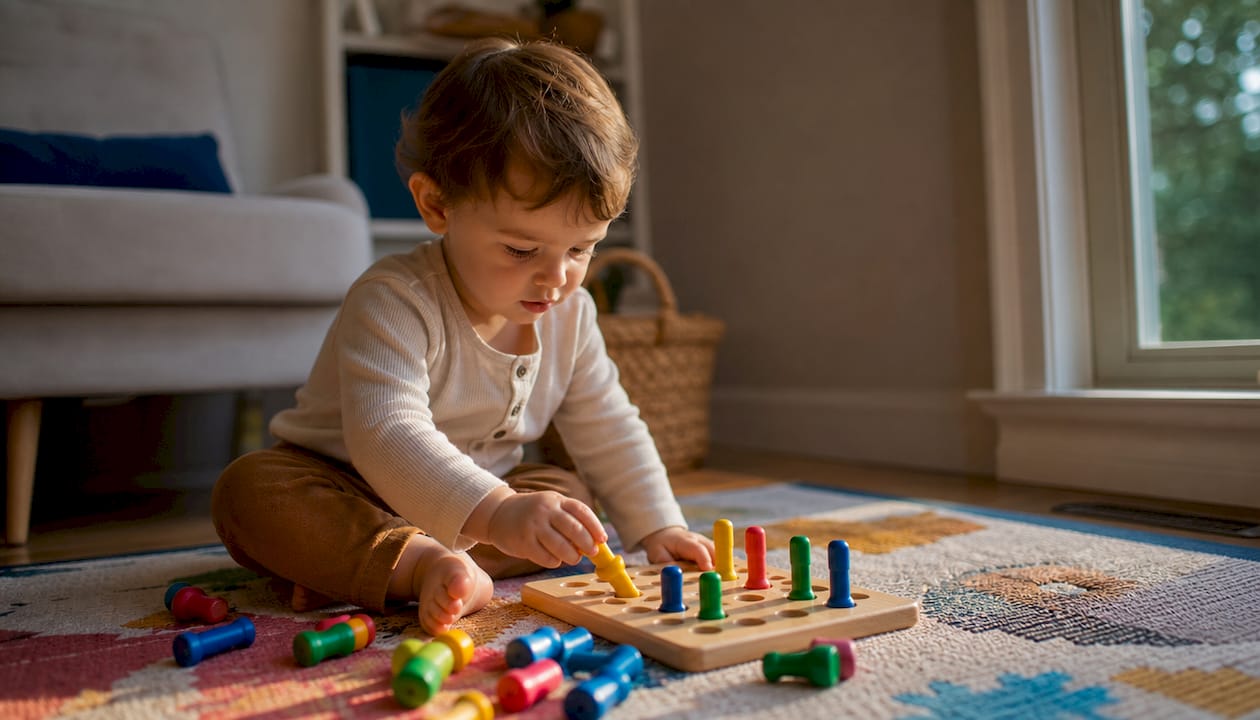
Counting bears, pegs, or beads let toddlers connect a quantity to a number, which is a much harder concept than adults assume. Start by counting five pegs out loud together, then ask your child to hand you “two.” A Montessori wooden counting peg board works well here because the pegs are chunky enough for small hands and colorful enough to double as a sorting activity.
3. Shape sorters and puzzles
Shape sorters teach spatial mapping. Your toddler has to rotate a shape in their mind before it fits the hole, which is early geometry in disguise. Simple wooden puzzles with four to twelve pieces are ideal for this age. A shape matching toy built around a familiar object, like a carrot with removable rings, gives toddlers a low-frustration way to practice size and shape comparison.
4. Patterning and sequencing toys
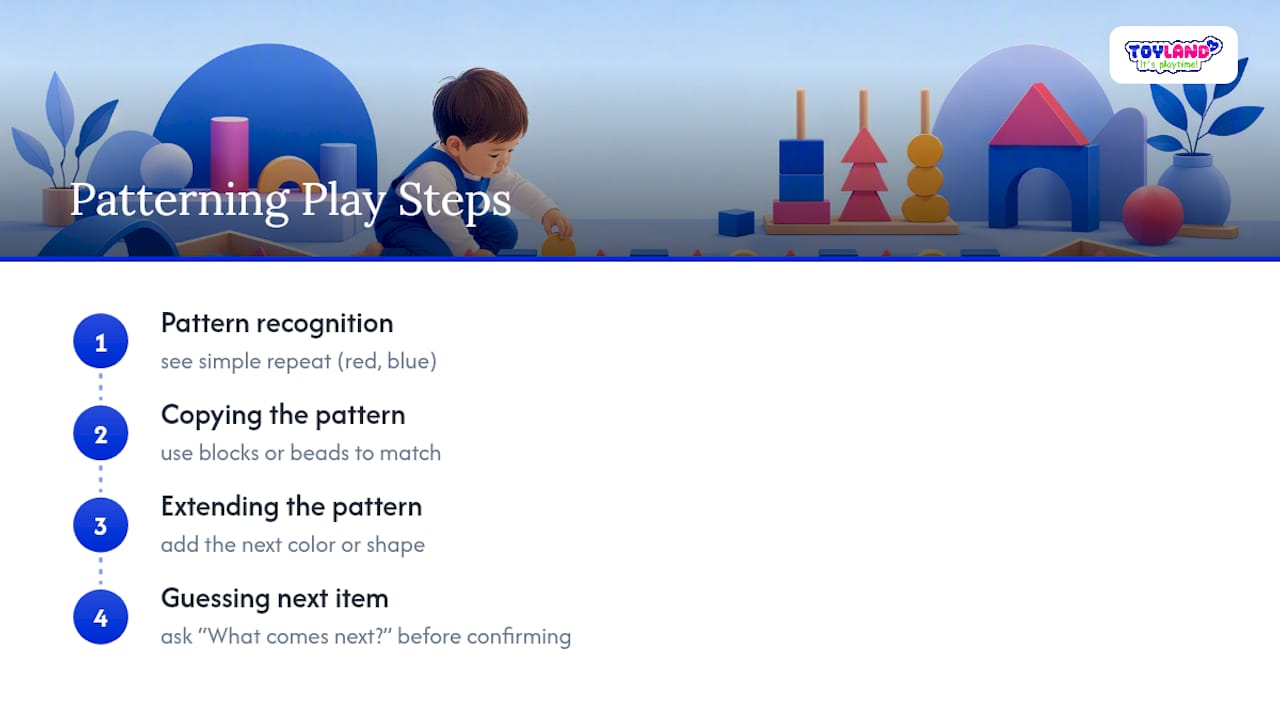
Pattern blocks or beads on a string let toddlers copy a sequence, like red, blue, red, blue, then extend it themselves. This skill directly predicts later algebra readiness, but at this age it just looks like threading beads. Lay out a short pattern and ask, “What comes next?” Let your toddler guess before you confirm.
5. Linear board games and number paths
Simple path-based games, where a piece moves forward one space per turn, introduce counting-in-sequence and turn-taking at the same time. These games work because the numbers are physical and visible instead of abstract. Even a homemade number path drawn in chalk teaches the same lesson: numbers have an order, and moving along them is math.
6. Fishing boards and multi-skill sets
Toys that combine several skills in one object tend to outlast single-purpose toys by years. A math fishing board that pairs counting with shape recognition gives you two learning goals from one purchase, which matters when you’re trying to build a toy collection without cluttering the living room.
Pro Tip: Rotate three or four toys at a time instead of leaving everything out. A toy your toddler “forgot” about for two weeks gets rediscovered with fresh curiosity, and you get more mileage out of fewer purchases.
Classroom-tested manipulatives back this up. Sets built around counting, sorting, and patterning, like nuts-and-bolts style toys, are popular in early-childhood classrooms because they combine fine motor practice with number sense in one object. That combination is exactly what to look for when comparing options at home.
Which Math Toys Are Right for Each Age?
A toy that thrills a 15 month old will bore a 3 year old, and a toy sized for a 4 year old can be a choking hazard for a toddler just starting to walk. Matching challenge level to age keeps toddlers engaged instead of frustrated or checked out.
- 12 to 18 months: Large stacking rings, simple shape sorters with two or three shapes, and chunky blocks. The goal here is cause and effect, not counting yet. Avoid anything with pieces smaller than a toilet paper tube.
- 18 to 24 months: Bigger shape sorters with four to six shapes, simple four-piece puzzles, and stacking cups that nest by size. This is when “big” and “small” start to click as real concepts.
- 2 to 3 years: Counting sets with five to ten pieces, pattern blocks, and eight to twelve-piece wooden puzzles. NAEYC specifically recommends wooden puzzles in the four to twelve-piece range for this age band, along with snap-together blocks and sorting objects that build early mathematical thinking.
- 3 to 4 years: Simple board games with a number path, pattern cards to copy and extend, and building sets with fifty or more pieces for more complex spatial challenges.
Small parts remain the biggest safety concern through age three. Any piece that fits inside a standard toilet paper roll is a choking risk for a child under three, regardless of what the box says. Once your toddler ages into the 3 to 4 year range, you can introduce smaller manipulatives, but keep supervising open play if younger siblings are in the house.
How Do You Turn Playtime Into a Math Lesson?
You do not need a lesson plan. You need five minutes and a few specific phrases.
- Counting routine: While your toddler stacks blocks, count each one aloud as it’s placed. After five blocks, ask, “How many do we have now?” Let them guess, even if the guess is wrong.
- Sort and compare: Dump a bin of counting bears or blocks on the floor and ask your toddler to make two piles by color. Then ask, “Which pile has more?” This single question builds comparison skills that show up later in subtraction.
- Pattern copying: Line up three or four blocks in a repeating color pattern and ask your toddler to continue it. If they get stuck, extend the pattern one more step and ask again.
- Shape hunt: During shape sorter play, name each shape as it goes in: “That’s a circle. Circles roll.” Toddlers absorb vocabulary faster through repetition tied to action than through flashcards.
Pro Tip: Use comparison words constantly, even outside toy time. “You have more crackers than your sister” and “this cup is taller than that one” build the same math vocabulary as any toy on the market.
To raise the challenge without buying anything new, add a second variable. Once your toddler sorts blocks by color easily, ask them to sort by size instead. Once counting to five is automatic, count backward from five. Small tweaks like these extend the life of every toy you already own, and they line up with outdoor counting activities that stretch the same skills beyond the living room floor.
What Should You Check Before Buying a Math Toy?
Age labels on toy packaging are a starting point, not a rule. A toy marked “18 months and up” might still be too advanced for a toddler who is behind on fine motor skills, or too simple for one who’s ahead. Watch your child’s actual play, not the box.
- Look for finishes labeled non-toxic and free of lead or phthalates, especially on anything that will end up in a toddler’s mouth.
- For children under three, choose pieces larger than 1.75 inches in diameter to reduce choking risk.
- Wipeable wood or hard plastic surfaces hold up better than fabric or painted finishes that chip with heavy use.
- Favor toys that teach two or three skills (counting, sorting, stacking) over single-purpose gadgets that get outgrown in weeks.
Consistency matters more than variety here. Repeated, simple activities with a small rotation of toys tend to build stronger spatial and number skills than constantly introducing new gadgets, largely because repetition is what lets a skill move from “with help” to “on their own.” A $15 set of counting bears used daily will outperform a $60 electronic toy used twice.
Why Do Experts Recommend Open-Ended Toys Over Gadgets?
The guidance from major early-childhood organizations lines up almost exactly with what this article recommends: simple, flexible toys beat complicated ones.
Interaction quality and the “math talk” happening during play matter more than how sophisticated or expensive a toy is. A caregiver counting blocks with a toddler produces more learning than a flashy electronic toy used alone.
That’s the core finding behind Psychology Today’s guidance on math toys for toddlers, and it reframes the whole shopping decision. You’re not buying a toy that teaches math. You’re buying a toy that gives you and your toddler a reason to talk about numbers, shapes, and comparisons together.
NAEYC’s own recommendations back this up with specifics: problem-solving, construction, and sensory exploration toys, including wooden puzzles, snap-together blocks, and sorting objects, top their list for toddlers. None of these require batteries. Wirecutter’s reviewers reach a similar conclusion from a different angle, noting that simple blocks and construction sets consistently outperform trendier options in long-term testing, largely because open-ended toys don’t have a “finished” state. A toddler can return to the same bucket of blocks at 18 months and again at 4 years and find a new challenge each time.
How Toylandeu™ Chooses Educational Math Toys
Curating a catalog of educational toys means saying no to a lot of flashy gadgets that promise more than they deliver. When Toylandeu™ selects math toys for toddlers, durability and multi-use design come first: a toy has to survive real play and teach more than one skill, whether that’s counting, sorting, or spatial reasoning packed into a single wooden set.
The goal isn’t to chase every new electronic toy on the market. It’s to stock the kind of open-ended toys that early-childhood research keeps pointing back to, and to make it easy for parents to find them by age and learning goal. Our interactive puzzle guide and toddler toy roundup go deeper on specific picks if you want to keep browsing.
— Thane Holland
Where to Find These Toys on Toylandeu™
Toylandeu™ stocks the categories this guide keeps coming back to, sorted so you don’t have to dig through unrelated listings to find them. Three categories are worth starting with: Montessori counting toys for one-to-one number practice, wooden blocks for open-ended building and spatial skills, and creative learning sets that blend math with drawing or hands-on art.
With more than 30,000 products and filters by age and category, Toylandeu™ makes it faster to compare a shape sorter against a counting peg board than scrolling through a generic search engine full of unrelated results. Every product page lists the age range and materials up front, so you can check durability and piece size before you buy instead of guessing from a stock photo.
If you want a toy that pairs counting practice with creative play, the Creative Learning Set for kids ages 3 to 12 combines drawing activities with early math games in one purchase, which fits the multi-skill approach this whole guide has been building toward. Add it to your cart, or keep browsing the counting and shape-sorting categories linked throughout this guide to build out a small, rotating toy collection your toddler will actually use.
Sources
- What Math Toys Should Your Toddler Have? | Psychology Today
- Good Toys for Young Children by Age and Stage | NAEYC
- Learning Toys and STEM Toys We Love | Wirecutter
- Nuts About Math! - Complete Set at Lakeshore Learning
FAQ
What Is a Good Gift for a Child Who Loves Math?
A set of pattern blocks, a counting peg board, or a multi-skill manipulative like a fishing board with counting and shapes makes a strong gift, since it teaches more than one concept and lasts through multiple ages. Toylandeu™'s Montessori counting peg board fits this well because it’s durable and flexible enough for repeated play.
What Math Can a 2-Year-Old Do?
Most 2 year olds can count a few objects aloud, though not always accurately, and can start matching quantities to simple numbers like “one” and “two.” NAEYC’s guidance points to wooden puzzles and sorting objects as ideal for this stage because they build the foundation counting skills rest on.
What Is the Most Popular Toy for a 2-Year-Old?
Simple stacking and shape-sorting toys remain among the most popular choices for 2 year olds because they match the child’s developing spatial and fine motor skills without requiring counting fluency yet. Open-ended blocks are a consistent favorite across expert reviews for the same reason.
What Are Some Good Toys for Learning Math?
Blocks, counting sets, shape sorters, pattern blocks, and simple number-path games all count as strong math toys because each one builds a different skill, from spatial reasoning to sequencing. Reviewers consistently point to blocks and open-ended construction toys as the most reliable long-term picks.
Do Educational Math Toys Actually Work Without Caregiver Involvement?
Not as well. Research on toddler learning consistently finds that the quality of interaction during play, not the toy’s complexity, predicts how much math learning actually happens, so narrating and asking questions while your toddler plays matters more than the price tag.
Recommended
- Master Math Playfully: The Best Montessori Math Toys Revealed – ToylandEU
- Spark Curiosity with Math: Interactive Puzzles for Kids – ToylandEU
- Montessori Wooden Counting Peg Board For Kids Durable Wooden Math Learning Toy For Preschool ToylandEU™
- Top early learning toys: expert-backed examples for smarter play – ToylandEU