Kids and Aquariums: Responsibility vs. Hassle
TL;DR:
- Owning an aquarium with kids is a shared family responsibility that offers educational and emotional benefits. Proper routines and planning help prevent common issues like overfeeding and water problems, making it a manageable project.
Owning an aquarium with kids is more family project than burden — when you go in with realistic expectations. Yes, fish tanks require consistent care. But the question of kids and aquariums responsibility vs hassle almost always tips toward “worth it” when parents treat the tank as shared territory rather than handing it off to a seven-year-old and hoping for the best. The maintenance is real, but so are the benefits: calmer kids, natural science lessons, and a living centerpiece that earns its place in the home.
Quick Summary:
- Aquarium care works best as a shared family responsibility, not a child’s solo job.
- Children gain measurable emotional, behavioral, and educational benefits from fish ownership.
- Common hassles like overfeeding and cloudy water are preventable with simple routines.
- The cycling phase, which can last several weeks, doubles as a hands-on science lesson.
- Tank size matters: larger tanks are actually easier for beginners to maintain.
TL;DR: An aquarium is a good pet situation for families who plan ahead, share the work, and use the experience intentionally. Skip it if no adult is willing to stay involved long-term.
Table of Contents
- The aquarium belongs to the whole family, not just the kid
- What aquariums actually do for kids’ development
- Common maintenance challenges and how to minimize hassle
- How the cycling phase teaches real science
- Behavioral and developmental gains worth knowing about
- Long-term commitment: what families need to be honest about
- Key Takeaways
- FAQ
- Recommended Reads
Table of Contents
- Reframing aquarium ownership as a family responsibility
- Educational and emotional benefits of aquariums for children
- Common maintenance challenges and how to minimize hassle
- Using the cycling phase as a hands-on science lesson
- Behavioral and developmental benefits for kids
- Long-term commitment considerations for families
- Key Takeaways
- FAQ
The aquarium belongs to the whole family, not just the kid
Experts consistently advise framing the aquarium as a family project from day one. When a child loses interest — and many do, at least temporarily — the fish still need feeding. If that reality catches parents off guard, resentment builds fast. Setting shared ownership expectations before the tank arrives prevents that entirely.
Age-appropriate task assignment makes this concrete:
- Ages 3–5: Observe fish behavior, help drop in pre-measured food portions.
- Ages 6–12: Daily feeding, basic equipment checks, algae wiping under supervision.
- Ages 13+: Independent daily maintenance, water testing, partial water changes.
Adults handle the technical work: water chemistry, filter maintenance, and any health issues. Kids handle the visible, satisfying parts. That split keeps children engaged without setting them up to fail.
Pro Tip: Post a simple weekly chart on the fridge with each family member’s aquarium task. Rotating responsibilities every month keeps it from feeling like one person’s chore.
What aquariums actually do for kids’ development
The calming effect of watching fish is not just anecdotal, as supported by advice on choosing the best soothing child decor like accessories lumineux déco enfantine apaisants. Research shows that watching fish swim can help reduce stress hormones, providing calming effects without conscious effort from the child. For kids with anxiety, ADHD, or sensory sensitivities, that kind of passive regulation is genuinely useful.
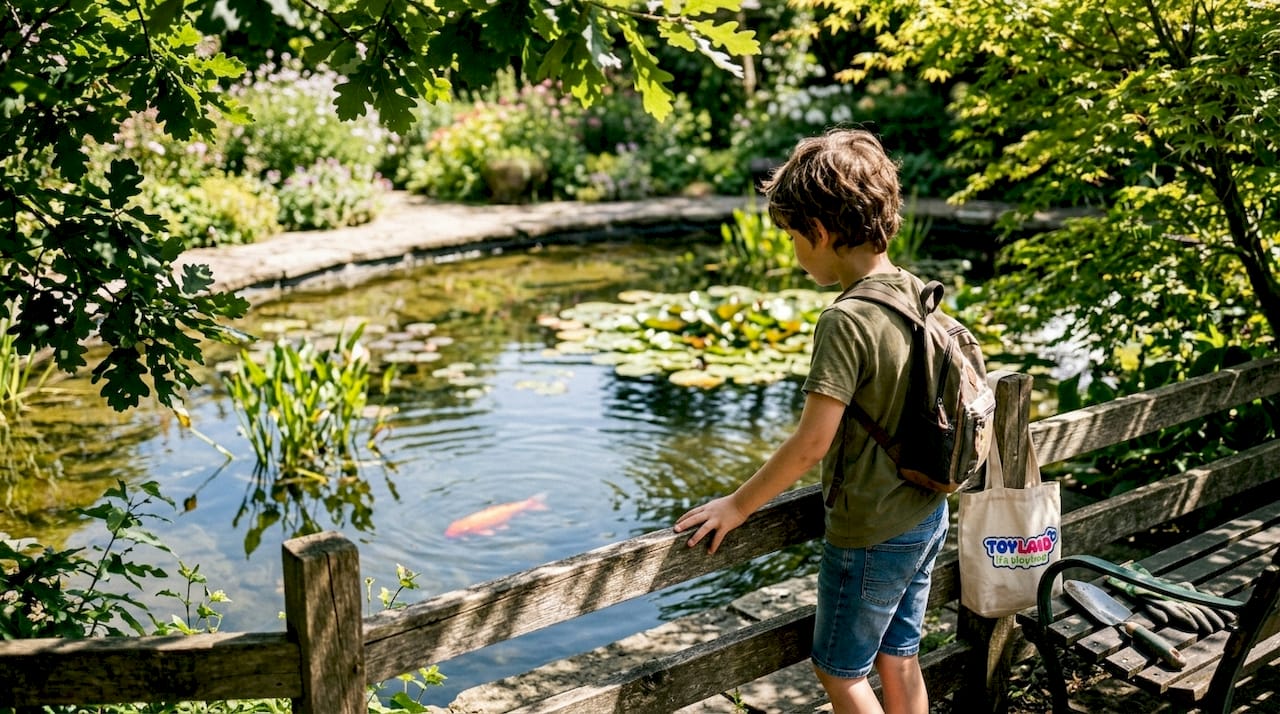
Beyond stress relief, aquarium routines build real skills. Feeding fish on a schedule teaches time awareness. Noticing when a fish looks “off” develops observational habits. Choosing tank decorations and researching species sparks biology curiosity that no worksheet replicates.
For kids who struggle with sensory regulation, the aquarium functions like a natural anchor: something predictable, visually engaging, and entirely non-demanding. Parents of kids with ADHD often report that tank observation becomes one of the few activities that holds attention without a screen.
Common maintenance challenges and how to minimize hassle
Most aquarium frustration is preventable. The problems families run into follow a short, predictable list.
- Overfeeding: The single biggest cause of aquarium water quality issues. Kids add “just a little more” and ammonia spikes follow. Fix: store food out of reach and pre-measure daily portions.
- Cleaning everything at once: Never clean all aquarium components simultaneously. Doing so wipes out the beneficial bacteria colony that keeps water safe. Stagger filter cleaning, gravel vacuuming, and glass wiping across different weeks.
- Wrong tank size: Small tanks feel manageable but punish mistakes. Larger tanks significantly dilute waste, stabilize temperature better, and are generally more forgiving of beginner errors than very small desktop setups.
- Skipping water tests: Weekly parameter checks catch problems before fish start dying.
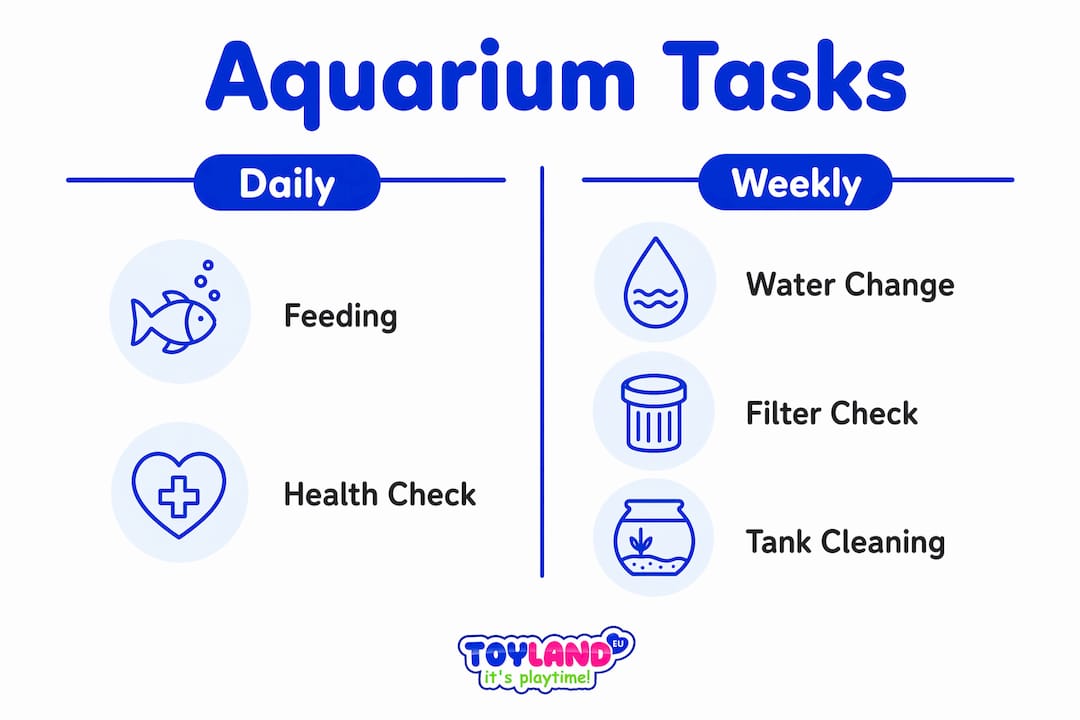
| Task | Frequency | Who Does It |
|---|---|---|
| Feeding | Daily | Child (supervised) |
| Visual health check | Daily | Child |
| Glass wiping | Weekly | Child or parent |
| Partial water change | Weekly | Parent with child |
| Filter media rinse | Monthly | Parent |
| Full gravel vacuum | Monthly | Parent |
Keeping this schedule visible reduces the “I forgot” problem and makes the workload feel manageable rather than open-ended.
How the cycling phase teaches real science
Before any fish enter the tank, the water needs to cycle. This process, typically lasting 2–4 weeks, establishes the beneficial bacteria that convert toxic ammonia into less harmful nitrate. Skip it, and fish die within days. Do it right, and you have a stable ecosystem for years.
That waiting period is also a perfect teaching window. Here’s how to run it as a family science project:
- Fill the tank and run the filter for 24 hours before adding anything.
- Add a small ammonia source (fish food or pure ammonia drops) to feed developing bacteria.
- Test water every 2–3 days using a liquid test kit. Record results in a notebook.
- Explain to kids what they’re seeing: ammonia rises, then nitrite rises, then both fall as bacteria establish.
- When ammonia and nitrite both read zero, the tank is ready.
Kids who go through cycling with their parents arrive at fish-stocking day with genuine investment. They waited, they watched, they understand why the water had to be ready first.
Behavioral and developmental gains worth knowing about
Caring for fish as kids builds a specific kind of accountability that chores alone don’t always teach: the consequences are immediate and visible. A missed feeding shows up in fish behavior. Dirty water shows up in tank clarity. That feedback loop is unusually direct for a child’s experience.
Routine adherence improves too. Kids who maintain aquarium schedules often transfer that habit to other responsibilities, according to pet care and parenting resources. The tank also creates natural conversation between parents and children about biology, death (fish don’t live forever), and empathy toward living creatures. Those conversations happen organically, without anyone scheduling a “lesson.”
Long-term commitment: what families need to be honest about
An aquarium is not a toy you put away when interest fades. Fish need care every single day, including holidays, sick days, and the week everyone’s schedule falls apart. Before buying, families should answer three questions honestly: Who feeds the fish when the child is at camp? Who handles a sick fish? Who maintains the tank when the novelty wears off?
The children and chores research is clear that sustained responsibility works best when adults stay involved as guides, not just supervisors who step in when things go wrong. Plan for at least one parent to remain genuinely engaged with the tank for its entire life. Freshwater setups with hardy species like bettas, guppies, or danios reduce the technical burden considerably. Saltwater tanks are beautiful but belong firmly in the “advanced commitment” category — not a first family aquarium.
If the family travels frequently, an automatic feeder ($15–$40) handles short absences. For longer trips, a trusted neighbor or pet sitter who can follow a written care sheet is the realistic solution.
Key Takeaways
An aquarium with kids succeeds when adults treat it as a shared family responsibility, not a child’s independent project.
| Point | Details |
|---|---|
| Shared ownership prevents burnout | Frame the tank as a family project so adult care continues when child interest dips. |
| Larger tanks are easier | A 40+ gallon tank is more stable and forgiving than a small desktop setup for beginners. |
| Overfeeding is the top hazard | Store food out of reach and pre-measure portions to prevent ammonia spikes. |
| Cycling teaches real science | The 2–4 week cycling phase builds patience and introduces water chemistry concepts. |
| Stress reduction is measurable | Watching fish has calming effects, benefiting kids with anxiety or ADHD. |
FAQ
Is an aquarium a good pet for kids?
Yes, when adults stay involved. Aquariums teach responsibility, biology, and routine while providing calming sensory benefits — but they require consistent adult guidance, especially for younger children.
What age can kids start caring for fish independently?
Teenagers (13+) can handle most daily maintenance independently. Children ages 6–12 can manage feeding and observation under supervision, while younger kids assist with simple tasks like dropping in pre-measured food.
How do you stop kids from overfeeding fish?
Store fish food out of children’s reach and pre-measure daily portions into a small container. Overfeeding is the leading cause of water quality problems in family aquariums.
What tank size works best for a family with kids?
A 40+ gallon freshwater tank is the most forgiving choice for beginners. Larger water volume dilutes waste and stabilizes temperature, making it easier to maintain than small tanks despite the higher upfront cost.
How long does aquarium cycling take?
Cycling typically takes 2–4 weeks. During this period, beneficial bacteria establish in the filter and convert toxic ammonia into safer compounds — a process kids can track through regular water testing.
Recommended Reads
Looking for more ways to build responsibility and creativity in kids through play? Toylandeu™ carries educational drawing kits and realistic marine fish models that pair naturally with aquarium learning — great for extending the biology curiosity an aquarium sparks. Browse the full selection at Toylandeu™ for gift ideas that grow with your child.