

Inclusive toys: Building diversity and representation for every child
TL;DR:
- Children begin forming social categories as early as ages 3 to 5, influencing their perceptions.
- Genuine inclusive toys represent multiple dimensions of identity and avoid stereotypes, promoting empathy.
- Choosing depth over appearance in toys supports long-term social-emotional development and diversity acceptance.
Most parents are surprised to learn that children begin forming social categories, including those around race, gender, and ability, as early as ages 3 to 5. Yet walk through most toy aisles and you will still find shelves dominated by a narrow slice of human experience. That gap between what children need and what the market offers creates real confusion for parents who want to make better choices. This guide clarifies exactly what inclusive toys are, backs up the importance of representation with solid evidence, and gives you a practical framework for shopping smarter starting today.
Table of Contents
- Defining inclusivity in toys: Beyond appearances
- Why inclusivity matters: The science and impact on children
- Navigating edge cases: Nuance and challenges in toy inclusivity
- How to choose truly inclusive toys: A practical parent’s checklist
- Our view: True inclusivity in toys requires more than faces
- Discover inclusive learning toys at ToylandEU
- Frequently asked questions
Key Takeaways
| Point | Details |
|---|---|
| Inclusivity starts early | Children internalize social categories before age five, making diverse toys crucial from the start. |
| Representation matters | Toys reflecting varied identities promote empathy, resilience, and positive social development. |
| Avoid tokenism | Look for toys with depth and multiple identities, not just surface diversity or stereotypes. |
| Practical choices | Use an expert-driven checklist to evaluate toy inclusivity in your home. |
| Parents are advocates | Your selection and feedback help shape a more inclusive toy industry for all children. |
Defining inclusivity in toys: Beyond appearances
When people hear “inclusive toys,” they often picture a doll with a different skin tone. That is a start, but genuine inclusivity reaches much further. An inclusive toy represents multiple dimensions of human identity, such as ethnicity, disability, gender expression, family structure, and neurodiversity, without reducing any of those identities to a costume or a stereotype.
Think of the difference between a toy line that adds one character in a wheelchair as an afterthought versus a line where that character has a backstory, relationships, and a full personality. The first approach is often called tokenism. The second is authentic representation, and children can tell the difference even when adults cannot.
“Representation works through what researchers call the mirror and window effect: children see themselves in toys (mirror) and discover other experiences through them (window). Both functions build empathy and psychological resilience.” — Psychology Today
Four qualities separate genuinely inclusive toys from surface-level diversity:
- Multi-dimensional characters: Each figure or doll has a distinct identity that goes beyond visual traits.
- Contextual storytelling: Playsets and guides show diverse characters in everyday, aspirational, and challenging scenarios.
- Caregiver support: Packaging and guides help adults facilitate conversations about difference, fairness, and belonging.
- Avoidance of stereotypes: Characters of any background are not locked into one role, profession, or personality type.
Research backs the value of this depth. Roughly 40% of parents now say they actively want toys that reflect diversity because they connect those toys to positive social-emotional outcomes for their children. That number has grown sharply over the past five years, reflecting a shift in what families prioritize at checkout. For more on how fostering empathy through play shapes a child’s ability to relate to others, our earlier deep dive explains the psychology beautifully.
Why inclusivity matters: The science and impact on children
Understanding the definition helps, but seeing the real-world impact makes it clearer why inclusivity should be a priority.
Children do not arrive at preschool as blank slates. By ages 3 to 5, they have already begun internalizing social categories, and those early impressions form the scaffolding for lifelong attitudes. Inclusive toys placed in a child’s hands during this critical window actively reduce stigma and build social-emotional learning (SEL) skills like empathy, perspective-taking, and respectful communication.
| Age range | What children are doing socially | What inclusive toys support |
|---|---|---|
| 2 to 3 years | Noticing physical differences | Normalizing diversity through visual representation |
| 3 to 5 years | Forming in-group and out-group thinking | Building positive associations across identities |
| 5 to 7 years | Developing moral reasoning | Encouraging fairness, inclusion, and empathy |
| 7 to 10 years | Peer comparison and identity formation | Reinforcing self-worth and respect for difference |
The data from recent product launches confirms that appetite for this kind of toy is enormous. When Mattel released the Blind Barbie doll with a white cane, 3.2 billion media impressions were generated within 48 hours. More importantly, child studies conducted alongside the launch showed enthusiastic responses from sighted and visually impaired children alike. Both groups wanted to play with her. That is the mirror and window effect in action at scale.
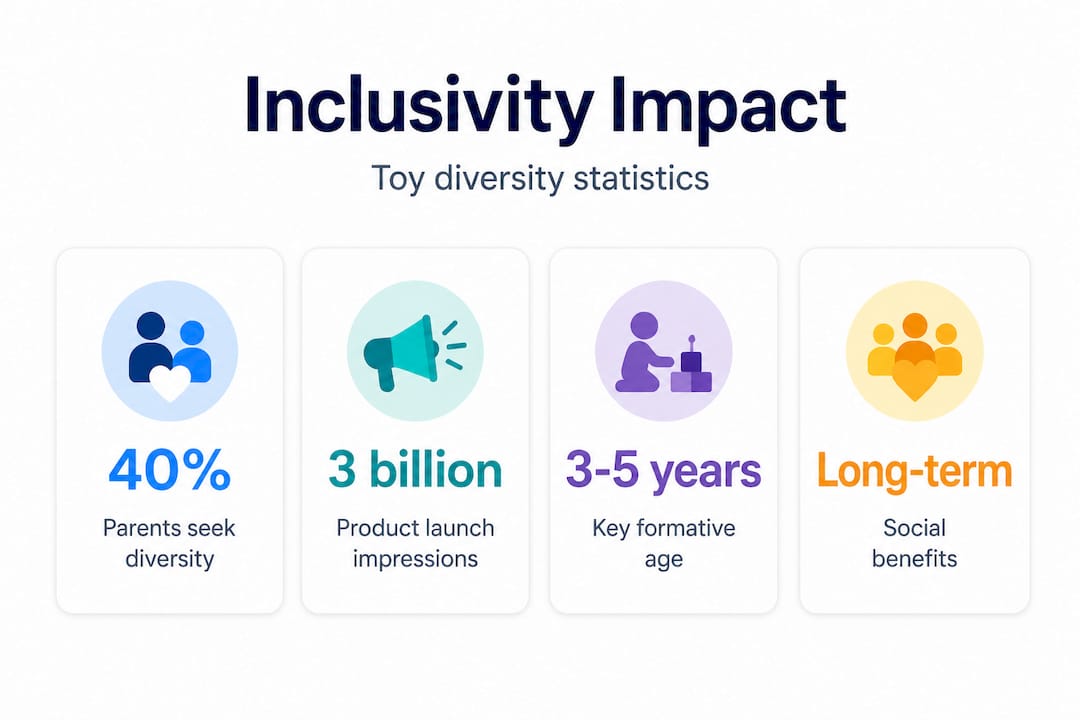
Statistic callout: A single inclusive product launch can generate over 3 billion impressions in 48 hours, signaling how hungry families are for representation.
Pro Tip: When assessing a toy’s impact on emotional development, look for products that include conversation starters or discussion guides. These tools transform passive play into active learning.
The long-term benefits of inclusive play also extend beyond the individual child. Classrooms where children have regular access to diverse toys show lower rates of peer exclusion. Children who grow up with a rich exposure to varied identities through imaginative play are better prepared to navigate multicultural environments as adults, making inclusivity in toys an investment that pays dividends for decades.
Navigating edge cases: Nuance and challenges in toy inclusivity
With the positive impact established, parents must also navigate nuanced challenges and evolving definitions when selecting toys.
Not every inclusion challenge is straightforward. Gender expansiveness is one area where toy design has improved but still lags behind social reality. Toys that allow children to explore roles and appearances outside traditional gender norms have been shown to reduce rigid stereotypes. Yet parents, particularly in families with boys, often unconsciously steer children away from counter-stereotypic toys, not out of malice but habit. That unconscious resistance is worth noticing and questioning.
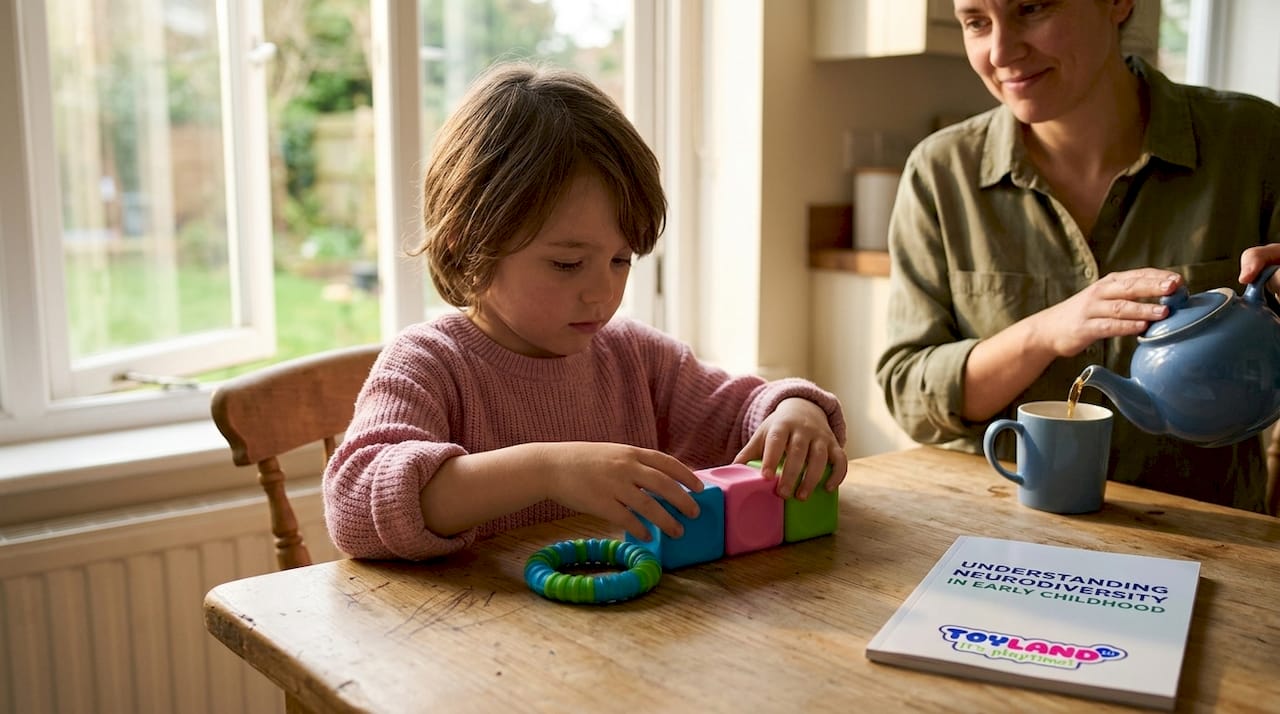
Neurodiversity representation is another frontier. Toys designed with autistic children in mind, including sensory-friendly materials and predictable mechanics, do double duty: they support children with different processing styles and normalize neurodiversity for neurotypical children who encounter them.
Historical brands are also evolving, sometimes awkwardly. American Girl is a good example: the line has expanded significantly from its original narrow representation, but it has also faced criticism for how some earlier characters portrayed specific cultural or historical experiences. That evolution exposes an important truth. Brands do not get inclusivity right all at once, and parents should feel empowered to hold them accountable.
Here is a numbered list of the most common challenges parents encounter and how to address them:
- Tokenism disguised as diversity. One character of color in a set of twelve is not inclusion. Look for lines where diverse characters are central, not decorative.
- Stereotyped roles. A toy that only shows female figures in caregiving roles or male figures in action roles reinforces the exact norms inclusive play should challenge. Check the full playscape, not just the figures.
- Disability as tragedy narrative. Toys that show disability only as a problem to overcome can be harmful. Seek out products where characters with disabilities are shown living full, joyful lives.
- Missing caregiver support. Without guidance, even a well-designed toy can lead to missed conversations. Guides and prompts help you get the most out of an inclusive toy.
- Sibling influence on play. Research shows that siblings actively shape each other’s toy preferences and can reinforce or challenge gender norms. Be intentional about the mix of toys available across your household.
For parents looking at innovative child development toys, understanding these edge cases helps you move past marketing language and evaluate what a product actually delivers.
How to choose truly inclusive toys: A practical parent’s checklist
Parents ready to apply what they’ve learned need practical steps, so here is a checklist to guide your choices.
The most important principle when shopping for inclusive toys is depth over decoration. A toy that collaborates with affected communities in its design process, avoids stereotypes at every level, and provides genuine multi-identity representation across an entire product line, rather than a single token figure, is what authentic inclusivity actually looks like.
Use this checklist every time you consider a new purchase:
- Representation check: Does this toy or set include multiple identities rather than one add-on character?
- Stereotype check: Are characters shown in a range of roles, emotions, and situations, or are they locked into familiar boxes?
- Disability and neurodiversity check: Is disability or neurodiversity represented in a way that centers dignity and joy, not just challenge?
- Caregiver guide check: Does the product come with materials that help you talk to your child about what they are playing with?
- Community input check: Did the brand collaborate with the communities being represented? Look for acknowledgment in product descriptions or press releases.
- Longevity check: Can this toy grow with your child and remain relevant as their understanding of the world deepens?
Pro Tip: Before buying, search the brand’s website or social media for behind-the-scenes content about how the toy was developed. Brands that genuinely prioritize inclusion usually show their process, including who they partnered with and what feedback they incorporated.
Engaging your child in the conversation is equally important. Ask them what they notice about the characters in their toys. Ask who is missing. Children are often more perceptive than adults expect, and those conversations build critical thinking skills alongside empathy. When you explore interactive toys and learning, look for products specifically designed to open those dialogs rather than close them down.
Finally, remember that no single toy does everything. Building an inclusive toy collection over time, mixing dolls, building sets, games, puppets, and STEM kits that together represent a wide range of human experiences, is more powerful than searching for one perfect product.
Our view: True inclusivity in toys requires more than faces
Here is an honest take that the toy industry rarely admits: swapping a blonde doll for a brown-skinned version is not inclusion. It is repackaging. Real inclusivity demands that every layer of a toy, its narrative, its mechanics, its packaging language, its price point, and its marketing, reflects the full complexity of the child who will play with it.
We have seen brands rush to release “diverse” product lines in response to cultural pressure, only to pull them when sales disappoint. The failure usually traces back to the same mistake: treating inclusion as a marketing strategy rather than a design philosophy. A product that looks inclusive on the shelf but carries a stereotyped backstory, a limited narrative, or a price point that makes it inaccessible to the communities it claims to represent is not actually inclusive. It is performative.
The brands getting it right are the ones treating representation as an iterative process. They release products, gather feedback from real children and caregivers, and revise. They partner with disability advocates, cultural consultants, and neurodiversity experts before the design is finalized, not after the backlash hits.
As parents and gift buyers, you hold genuine power in this dynamic. Every purchase is a vote. When you choose a toy that reflects genuine depth and when you leave reviews explaining why you chose it, you send a signal that shapes what lands on shelves next year. Explore expert picks for toddlers with this lens in mind, and you will find options that were built with real intention behind them.
Retailers also have a responsibility. Curating a catalog is an editorial act. Choosing which toys to stock, which to feature, and which to promote shapes what children across the world get to play with. We take that seriously at ToylandEU, and we think the industry as a whole should too.
Discover inclusive learning toys at ToylandEU
You have done the reading, you know what to look for, and now you need a place to find it.
At ToylandEU, we carry over 30,000 toys from around the world, including dolls, puppets, STEM kits, games, and playsets that span a broad range of identities and experiences. Our catalog includes products designed with disability representation, gender-expansive play, and multicultural storytelling in mind. Free worldwide shipping means that no matter where you are, finding a thoughtful, representative toy for the child in your life is just a few clicks away. Browse our full collection at ToylandEU.com and use the checklist from this guide to find something that truly reflects the world your child deserves to see.
Frequently asked questions
How can parents spot tokenism in toy products?
Tokenism typically shows up as a single diverse character with no real backstory or depth; look for product lines that offer multiple identities and include caregiver guides to support meaningful play.
Does early exposure to diverse toys actually change children’s attitudes?
Yes. Research confirms that children internalize social categories as early as age 3, and regular play with inclusive toys during that window actively reduces stigma and builds empathy.
Are popular brands keeping pace with inclusivity in 2026?
Major brands are evolving, but some still face criticism for past or present limitations; historical brands like American Girl show both growth and ongoing challenges, so always review a brand’s full track record before buying.
How do siblings influence play inclusivity?
Siblings often reinforce or challenge gendered play norms during shared play, which means the mix of toys available across your whole household matters as much as any individual purchase.