

Collectors: Spot Fake Anime Figures in Under a Minute
Most suspicious listings can be screened in under a minute: compare the box against official manufacturer photos, then check the seller’s payment method and history. If either one looks off, walk away. The rest comes down to a short physical checklist, a few packaging checks, and knowing where to buy so you never have to run the checklist in the first place.
TL;DR:
- Authentic figures typically have high-quality paint with clear detailing, precise sculpting, and a strong feel of weight, unlike fake ones which often feel hollow and poorly painted.
- Official packaging includes sharp print, accurate logo placement, authentic hologram stickers, and base stamps with correct text and barcodes, making these markers key for verification.
- Purchasing from licensed retailers or using trusted proxies and buyer-protected payment methods greatly reduces the risk of buying a bootleg, especially compared to marketplace or unknown sellers.
- Price significantly below market value, especially from unfamiliar sources, is a red flag indicating a potential scam or counterfeit product.
- New manufacturer-backed authenticity stickers from MegaHouse and Bandai starting in 2025 help distinguish genuine high-value figures, though older releases still require other verification methods.
Table of Contents
- What Are Fake Anime Figures Called?
- Checklist: Physical Signs That Indicate a Fake Figure
- Packaging, Holograms, and Base Stamps: Verifying Markings and Barcodes
- How to Buy Safely: Authorized Sellers, Proxies, and Payment Protections
- Marketplace Red Flags and Quick Verification Steps
- Recent Industry Anti-Counterfeit Measures Collectors Should Use
- Common Known Fake Figure Manufacturers and Their Typical Characteristics
- Legal and Ethical Issues Related to Fake Anime Figures
- Impact of Counterfeit Figures on the Anime Figure Market and Collectors
- How to Report Counterfeit Figures to Authorities or Manufacturers
- Collector Perspective: Rules That Keep Me From Getting Burned
- A Trusted Alternative: Buying Licensed Figures Through Toylandeu™
- Trusted Reference Links and Tools for Deeper Verification
- Sources
- FAQ
What Are Fake Anime Figures Called?
The collector term is bootleg figures, sometimes shortened to “boots,” though you’ll also see “counterfeit figures” or “recast figures” used depending on how they were made. A bootleg is a straight copy of a licensed release, usually cast from a mold taken off an original piece or, in more sophisticated cases, from a leaked prototype mold before the real product even ships. That second category is the one that worries experienced collectors most, because it can look disturbingly close to the real thing.
“Replica” and “unofficial figure” get thrown around too, but they mean the same thing in practice: a product made without a license from the original rights holder, sold to look like an official release. None of these terms describe a legitimate budget line. If a figure isn’t from the licensed manufacturer or an authorized reseller, it’s a bootleg, full stop.
Checklist: Physical Signs That Indicate a Fake Figure
Paint work is where fakes fail first. Official releases have crisp, layered eye printing, with clean pupil edges and smooth color gradients across the iris. Bootlegs frequently show blurry or pixelated eyes, muddy gradients, or paint that bleeds slightly over the sculpt lines, especially around the lips and eyebrows.
Sculpt accuracy tells the same story from a different angle. Faces are the hardest part to recast well, so look closely at nose bridges, jawlines, and finger detail. Bootlegs often round off hair strands that should be sharp, or flatten expressions that read as generic rather than character specific.
A few more checks worth running every time:
- Seam lines and mold flash: Look where limbs meet the torso and where the base connects to the feet. Rough plastic ridges (flash) along these seams point to a cheap secondary mold.
- Weight and material feel: An authentic PVC or ABS figure has a certain density. A noticeably light, hollow-feeling piece, or one with a strong chemical smell straight out of the box, is a red flag.
- Base and peg fit: Official bases are cut to match the specific figure’s pose. A base that looks generic, has a loose peg, or requires force to seat the figure usually signals an aftermarket cast.
- Accessory fit: Swords, hands, and interchangeable parts should click into place. Persistent gaps or wobble mean the mold tolerances were off.
Pro Tip: Zoom in on listing photos of the eyes before anything else. If a seller only posts wide shots of the whole figure and never a close-up of the face, that’s often deliberate.
Industry sources consistently point to paint quality and packaging as the two fastest tells, since both are expensive for counterfeiters to replicate at scale but cheap for buyers to check from photos alone.
Packaging, Holograms, and Base Stamps: Verifying Markings and Barcodes
Packaging is where mass-produced bootlegs cut the most corners, because box art and printing require separate tooling from the figure itself. Run through these checks before you trust any listing:
- Logo and text placement. Compare font weight, spacing, and logo position against an official product photo from the manufacturer’s own site. Even small spelling errors or slightly off kerning are common tells.
- Print sharpness and cardboard weight. Genuine boxes use heavier stock with sharp, saturated printing. Bootleg boxes often look slightly washed out or feel thin and flimsy in hand.
- Hologram or authenticity sticker. Where present, a real hologram shifts color and pattern as you tilt it. A flat, printed “hologram” that doesn’t change under light is fake.
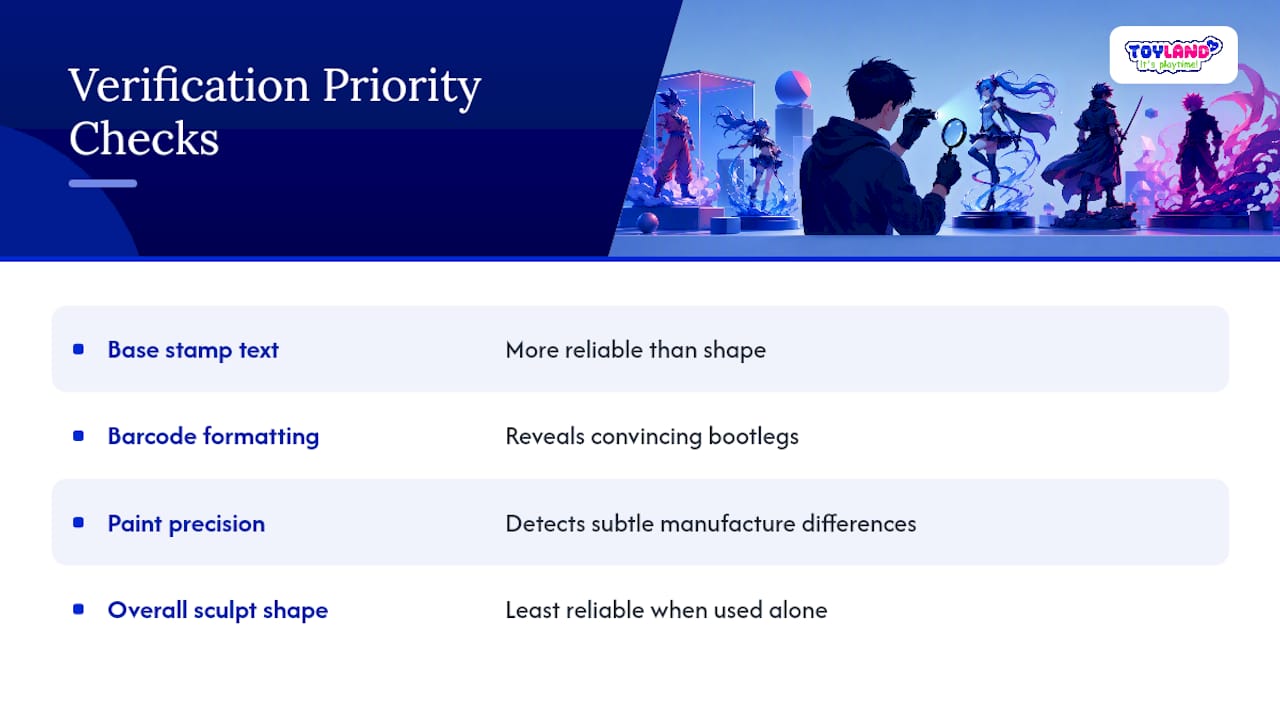
- Base stamp text. Flip the base over and read the copyright line, production code, and manufacturer name. Modern counterfeiters can mimic overall shape well, but base stamp text and barcode formatting are harder to copy exactly.
- Barcode check and reverse-image search. Search the barcode number online and reverse-image search the box photo. Both moves regularly expose stock photos reused across multiple scam listings.
Pro Tip: Don’t judge a figure by where it was manufactured. Licensed production happens across multiple countries, so country-of-origin tells you nothing. Base stamps and barcodes are what actually matter.
How to Buy Safely: Authorized Sellers, Proxies, and Payment Protections
Authorized retailers and manufacturer web stores are the safest starting point, period. They carry direct accountability back to the licensor, which is exactly what a random marketplace listing lacks.
When you do buy secondhand or through a marketplace, the payment method is one of the clearest risk signals available to you:
- Use PayPal Goods & Services, a credit card, or built-in marketplace checkout protection.
- Never send payment through Friends & Family, a direct bank transfer, or cryptocurrency. Sellers who insist on these methods are one of the strongest fraud indicators around, because none of them offer buyer recourse.
- Ask for real, current photos of the actual item, not stock images pulled from the manufacturer’s listing.
- Check seller feedback history for consistency: a long track record of similar sales beats a brand-new account with a handful of high-value listings.
If you’re importing directly from Japan, a reputable proxy service should provide purchase verification (a receipt or order confirmation from the actual retailer), photos of the item before shipping, and support if a dispute arises. A proxy that won’t show you the original purchase confirmation isn’t worth using.
Price is the last gut check. If a figure is offered far below typical market prices on an unfamiliar site, that’s not a deal, that’s bait. Scam categories generally break down into three types: outright bootlegs sold as authentic, fake pre-orders that never ship, and bait-and-switch listings that swap the item after payment.
Marketplace Red Flags and Quick Verification Steps
A few behavioral patterns show up again and again in bootleg and scam listings:
- Brand-new seller accounts suddenly listing several high-value, hard-to-find figures at once.
- Listings that only use official manufacturer promo images, never actual photos of the item in hand.
- Pressure tactics: “only 1 left,” countdown timers, or urgency to pay outside the platform.
- Shipping origins that don’t match the claimed source (a “Japan direct” listing shipping from an unrelated region).
If something feels off, run this sequence before paying: request close-up photos of the base and box, reverse-image search those photos, check the barcode, and ask for the shipping origin on the tracking label. If you’ve already paid and suspect a bootleg, open a dispute immediately through your payment provider and report the listing to the platform. Speed matters here, since most buyer-protection windows close after a set number of days.
Recent Industry Anti-Counterfeit Measures Collectors Should Use
Manufacturers are no longer leaving authentication to guesswork. Starting in 2025, MegaHouse partnered with Bandai to affix new authenticity stickers to select high-value figure packaging, giving buyers a manufacturer-backed way to confirm a box is genuine.
This rollout is still uneven. Newer, high-demand releases are the most likely to carry these stickers, while older stock and back-catalog figures often predate the initiative entirely. If a listing shows an item that should have the new sticker and doesn’t, or the sticker looks flat and doesn’t shift under light, treat that as a warning sign rather than proof of anything on its own. For older releases without stickers, fall back on base stamp text, barcode checks, and paint quality, the checks that have worked all along.
Common Known Fake Figure Manufacturers and Their Typical Characteristics
Bootleg operations don’t operate under consistent brand names the way licensed manufacturers do, which is itself a tell. Instead, you’ll see generic factory codes, unbranded packaging, or boxes that copy a real manufacturer’s design closely enough to pass a glance but fall apart under close comparison.
The pattern that repeats across marketplaces: figures sourced through AliExpress, Wish, and DHGate storefronts, often listed under vague titles like “anime figure toy” rather than the character or series name a licensed release would use. These listings frequently reuse the same handful of stock photos across dozens of near-identical shops, a strong sign the operation is running the same mold through multiple storefronts. Pricing sits well under retail, packaging text is often inconsistent or missing entirely, and the base rarely carries a real production stamp.
Higher-end bootlegs are a different problem. These sometimes originate from leaked prototype molds and can carry convincing sculpt detail, which is exactly why base stamp text, barcode formatting, and paint precision matter more than overall shape when you’re trying to tell the two apart. No single “known bad” storefront name is reliable to publish here, since these operations rotate shop names constantly once a listing gets reported. The safer approach is judging the listing itself against the checklist above, rather than trying to blacklist sellers by name.
Legal and Ethical Issues Related to Fake Anime Figures
Buying a bootleg isn’t usually a criminal act for the individual purchaser in most jurisdictions, but manufacturing and selling counterfeit merchandise is a trademark and copyright infringement issue that exposes sellers to real legal risk. Licensors like Good Smile Company and Bandai hold intellectual property rights over character designs and sculpts, and bootleg production violates those rights regardless of where the seller operates.
The ethical dimension matters just as much to most collectors. Every bootleg sale routes money away from the original illustrators, sculptors, and licensors who created the character and the figure design in the first place. For a hobby that depends on continued licensing deals between anime studios and figure manufacturers, normalizing bootleg purchases undercuts the economics that keep new official figures getting made at all.
There’s also a consumer-protection angle worth being blunt about: buyers of bootlegs are frequently victims themselves, paying full or near-full price for a product misrepresented as authentic. That’s functionally consumer fraud, even when no one gets prosecuted for it. Reporting a suspected bootleg listing isn’t just protecting your own wallet. It’s flagging a fraud pattern that will hit the next buyer too if the listing stays up.
Impact of Counterfeit Figures on the Anime Figure Market and Collectors
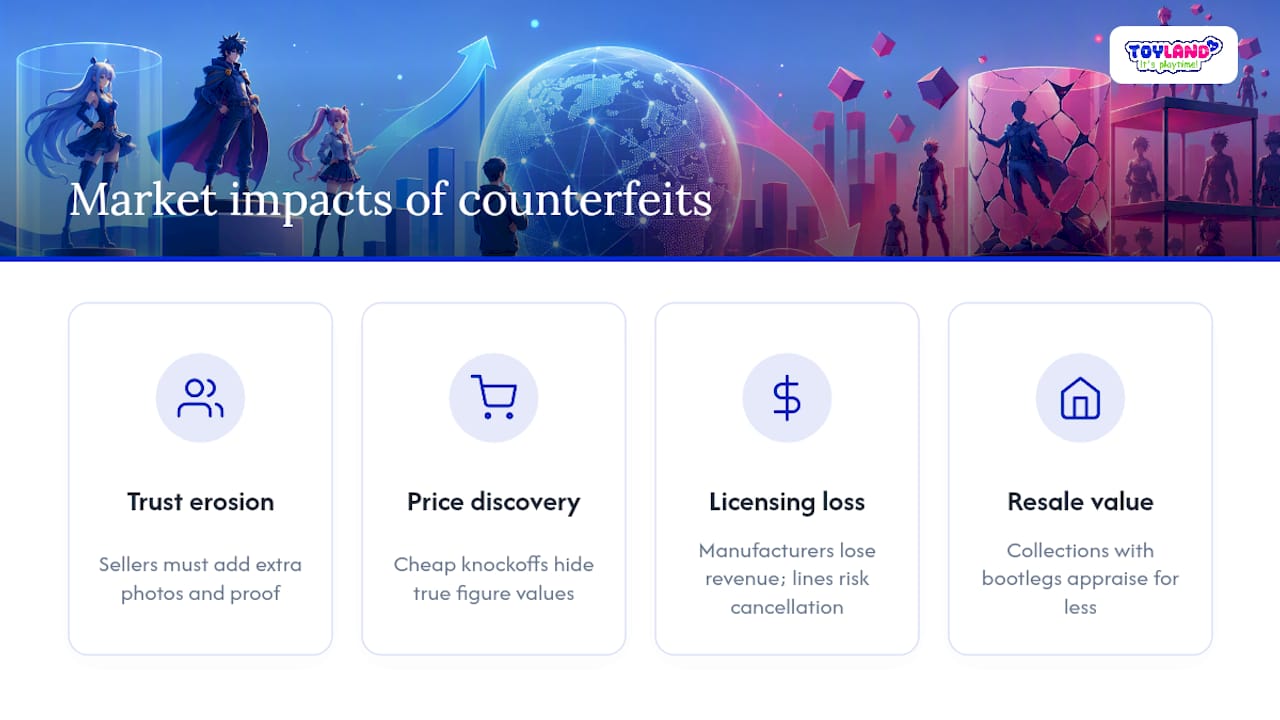
Counterfeits distort the secondary market in ways that go beyond one bad purchase. When bootlegs circulate widely, they erode trust in resale listings generally, forcing honest sellers to over-document every sale with extra photos and proof of purchase just to compete with buyers who’ve been burned before.
Price discovery also suffers. A market flooded with cheap knockoffs makes it harder for new collectors to learn what a figure should actually cost, which in turn makes them easier targets for the next bootleg listing they encounter. Manufacturers lose licensing revenue directly, which can factor into decisions about which characters or series get figure lines greenlit in the future.
For collectors building a serious collection, resale value takes a hit too. A collection padded with unknowingly purchased bootlegs is worth far less than its owner assumes, and that gap often isn’t discovered until a sale or appraisal forces the issue. The anti-counterfeit sticker rollout from MegaHouse and Bandai exists precisely because this erosion of trust has become a real cost of doing business in the collectibles space, not just an occasional nuisance.
How to Report Counterfeit Figures to Authorities or Manufacturers
If you spot a bootleg listing, reporting it does more good than just avoiding it yourself. Most marketplaces (eBay, Amazon, Mercari) have a direct “report this listing” or “report counterfeit” function built into the listing page itself. Use it and include your photo comparison as evidence when the form allows attachments.
Manufacturers also want to hear from you. Good Smile Company maintains a dedicated partner support page for fake product reports, where you can flag specific listings and get guidance on whether an item you’re considering is likely genuine. Bandai and other major licensors have similar contact channels through their official customer support pages.
If you already paid for a bootleg through a payment method with buyer protection, open a dispute with that provider first, since most have a limited window to file a claim. Save every piece of evidence: listing screenshots, seller messages, and photos of the item you received, before the listing gets taken down and that evidence disappears with it.
Collector Perspective: Rules That Keep Me From Getting Burned
Five rules cover most of it: inspect base and box photos before anything else, insist on buyer-protected payment every time, keep receipts and screenshots of every purchase, maintain a short list of sellers you already trust, and treat any price that seems too good as a warning rather than luck.
The closest call I’ve seen involved a listing with sharp photos and a reasonable price, everything looked fine until the seller asked to move payment off-platform “to save on fees.” That one request was the entire tell. Community resources like MyFigureCollection earn their keep here too, not for drama, but because someone else has usually already flagged a bad seller or posted the exact box photo you need for comparison.
— Thane Holland
A Trusted Alternative: Buying Licensed Figures Through Toylandeu™
Skipping the whole verification checklist starts with buying from a source that’s already done the vetting. Some retailers carry licensed collectible figures and related merchandise, backed by secure checkout and standard buyer protections, so you’re not relying on a stranger’s payment terms or a base stamp you have to squint at under a lamp.
Every product page lists what you’re actually getting, real photos, sizing, and material details, plus responsive customer service if something about your order doesn’t match expectations. That’s the difference between hoping a listing is honest and buying from a storefront where the accountability is built in from the start. If you’re building out a collection and want to browse figures without running a background check on every seller, the PVC action figure collection is a solid place to start, and checkout takes the same few minutes it would on any listing you’d otherwise have to vet by hand.
Trusted Reference Links and Tools for Deeper Verification
Keep a short list of go-to resources on hand. MyFigureCollection is the largest collector database for cross-referencing official photos and release details. Good Smile Company’s fake-awareness support page covers manufacturer-specific authentication guidance. For packaging fundamentals that apply well beyond figures, this breakdown of authenticity cues in product packaging is a useful primer on what genuine print quality should look like.
Sources
- How to Tell if Anime Figure is Fake? — ZenMarket
- How to avoid getting scammed when buying anime figures online — AnimeVault
- How to spot a fake figure — RareInventory
- MegaHouse teams up with BANDAI to combat rise in fake anime figures — Essential Japan
FAQ
What Are Fake Anime Figures Called?
Collectors call them bootleg figures, or sometimes “recasts” when they’re made from a mold taken directly off an original piece. “Counterfeit figure” and “replica” describe the same thing: an unlicensed copy sold to look like an official release.
Is It Illegal to Buy Bootleg Figures?
Manufacturing and selling counterfeits is copyright and trademark infringement, which creates real legal exposure for sellers. Buying one as an individual isn’t typically treated as a criminal offense in most cases, but it does support an illegal supply chain.
Why Are Some Anime Figures So Expensive?
High-end licensed figures carry costs from official licensing fees, detailed sculpting, and quality-controlled paint work, all of which bootleg producers skip entirely. That gap in production standards is exactly why a suspiciously cheap listing deserves a second look before you buy.
Where Can I Buy Legitimate Anime Figures?
Manufacturer web stores and authorized retailers are the safest options, since they carry direct accountability back to the licensor. Some retail platforms offer licensed collectible figures with secure checkout for collectors who want a vetted retail alternative to marketplace listings.