

Diversity Toys: Fostering Empathy and Inclusion Through Play
TL;DR:
- Diversity toys represent a wide range of human experiences to promote empathy and inclusivity in children.
- Early exposure to diverse play reduces bias and encourages positive attitudes about race, gender, and ability.
- Safe, authentic, and age-appropriate toys paired with adult engagement maximize their impact on developing inclusivity.
Not all toys are created equal when it comes to shaping how children see the world. While any toy can entertain, diversity toys normalize inclusivity and reduce bias starting at an age most parents don’t expect—as young as three years old. If you’ve ever wondered whether the toys you buy actually influence how your child treats others, the answer is a clear yes. This guide breaks down what diversity toys are, why the science behind them is compelling, and how to choose the right ones safely and thoughtfully.
Table of Contents
- What are diversity toys?
- The impact of diversity toys on children
- Types of diversity toys and how to choose
- Safety and inclusivity: What parents should consider
- A fresh perspective: The real power (and pitfalls) of diversity toys
- Explore diverse and creative toys at ToylandEU
- Frequently asked questions
Key Takeaways
| Point | Details |
|---|---|
| Early attitudes matter | Children shape social attitudes as early as age three, making early play choices critical. |
| Diversity toys explained | These toys represent a range of identities to nurture empathy, acceptance, and inclusion. |
| Proven positive impact | Research links diversity toys with reduced biases and increased openness to different people and roles. |
| Safe selection is essential | Always check age recommendations and safety certifications, especially for younger children. |
| Inclusion beyond appearance | Real impact means pairing diverse toys with open conversations and story-based play. |
What are diversity toys?
Diversity toys are playthings intentionally designed to represent a broad range of human experiences, including different races, ethnicities, genders, abilities, body types, and cultural backgrounds. They aren’t simply toys that happen to look different. They are created with a deliberate goal: to give every child a mirror that reflects who they are, and a window into lives that are different from their own.
Think about the classic doll aisle for a moment. For decades, a single skin tone dominated shelves. Diversity toys emerged as a direct response to that gap. Today, the category includes everything from dolls with varying skin tones and natural hair textures to action figures using wheelchairs, puzzles featuring children from around the world, and modular construction sets that let kids build figures representing many identities.
Key features that define a true diversity toy:
- Dolls and figures with varying skin tones, facial features, and hair types
- Characters depicted with visible disabilities, such as hearing aids, prosthetic limbs, or mobility aids
- Cultural attire and accessories that reflect real traditions respectfully
- Modular or mix-and-match parts that allow open-ended identity exploration
- Storylines and packaging that reflect diverse family structures and roles
The purpose behind all of these features is rooted in empathy. When children play with figures or characters that look like people they know, or people they’ve never met, they practice perspective-taking. That practice, done consistently, builds a foundation for acceptance. Research confirms that early play with diverse toys helps shape positive social attitudes long before kids enter a classroom.
The impact of diversity toys on children
Understanding what diversity toys are is one thing. Seeing what they actually do for children is where things get genuinely compelling.
Children’s brains are remarkably absorbent in the early years. Social attitudes, including ideas about race, gender, and ability, begin forming between ages three and five. That window is narrow, and it’s when play matters most. Toys that children interact with repeatedly during this period don’t just entertain. They teach.
“Exposure to counter-stereotypical play scenarios helps reduce children’s bias around toys and professions, opening up broader possibilities for how they see themselves and others.”
Research confirms that diverse play reduces bias and builds more flexible thinking about gender roles and professional possibilities. Separately, studies show that cross-group play predicts positive STEM beliefs about girls and Black peers, meaning children who engage with diverse representation in play are more likely to believe that everyone, regardless of background, can become a scientist, engineer, or doctor.
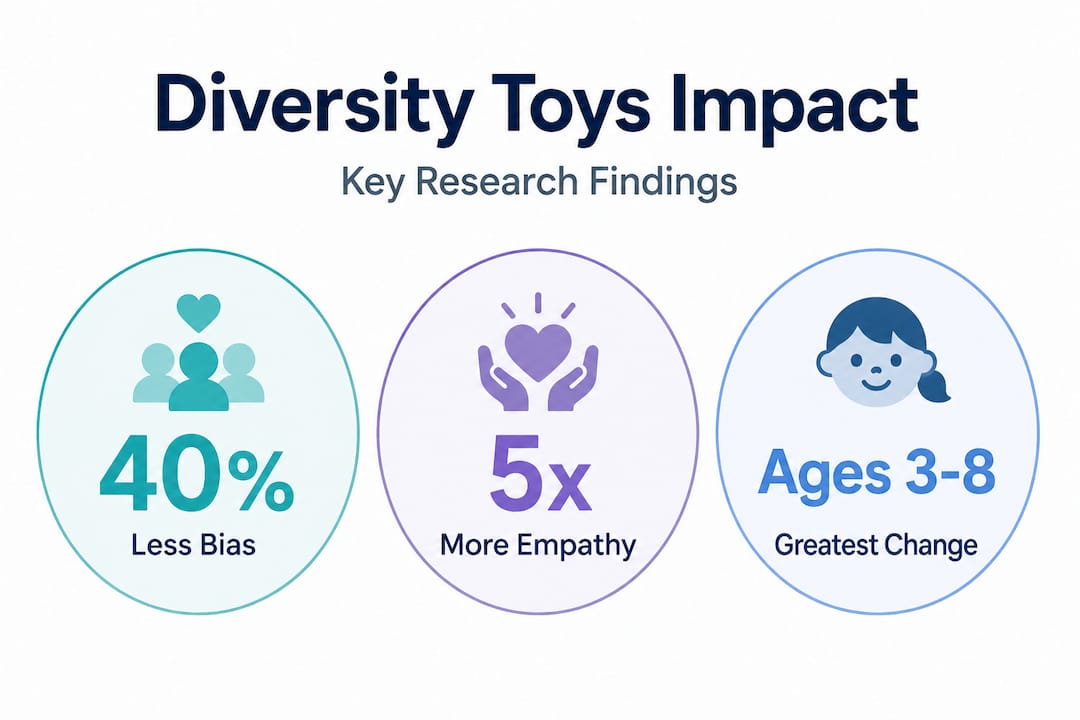
The table below summarizes the key outcomes tied to diversity toy play:
| Outcome | What research shows | Age group most affected |
|---|---|---|
| Reduced racial bias | Children normalize diversity and form more inclusive attitudes | Ages 3 to 7 |
| Positive STEM beliefs | Kids are more likely to believe all genders and races can pursue science | Ages 4 to 9 |
| Flexible gender-role thinking | Fewer rigid ideas about what boys and girls “should” do | Ages 3 to 6 |
| Greater disability acceptance | Increased comfort and empathy toward peers with visible disabilities | Ages 4 to 8 |
| Broader career aspirations | Children imagine more diverse futures for themselves and others | Ages 5 to 10 |
These aren’t marginal effects. They show up consistently across multiple studies and represent real shifts in how children think. The earlier diverse representation enters the play space, the stronger and more lasting those shifts tend to be.
It’s also worth noting that the benefits aren’t one-directional. Children from majority groups learn to recognize and value difference. Children from minority groups see themselves represented, which directly supports confidence and self-worth. Both outcomes matter enormously.
Types of diversity toys and how to choose
Knowing the benefits, the next step for parents and buyers is choosing the right diversity toys. The market has grown significantly, and the options can feel overwhelming. Breaking them into clear categories makes the decision much easier.
Main categories of diversity toys:
| Type | Key features | Best for |
|---|---|---|
| Diverse dolls and action figures | Multiple skin tones, hair textures, cultural attire, disability representation | Ages 2 and up, imaginative play |
| Modular and DIY sets | Mix-and-match body parts, customizable identities | Ages 4 and up, creative exploration |
| Puzzles and board games | Characters from many backgrounds, cooperative play elements | Ages 3 and up, cognitive development |
| Books paired with figures | Stories that center diverse experiences alongside tactile toys | All ages, language and empathy development |
| Cultural playsets | Miniature environments representing different regions and traditions | Ages 3 and up, world awareness |
Once you understand the categories, here’s how to narrow your choice with confidence:
- Consider the child’s age first. A toddler needs chunky, easy-to-grip pieces with no small parts. A seven-year-old can handle a modular set with finer pieces. Age labels on packaging are a starting point, but always assess the specific toy.
- Look for authentic representation. Ask yourself whether the toy reflects real people respectfully, or whether it leans on caricature or cliche. Cultural attire should be accurate, not costume-like. Disabilities should be shown naturally, not as defining limitations.
- Check safety certifications. Look for CE markings in Europe, ASTM compliance in the US, or equivalent certifications. These signal the toy has passed recognized safety standards.
- Match the toy to the child’s existing interests. A child who loves building will respond more to a modular identity set than to a narrative-driven doll. Engagement matters because children only internalize lessons from toys they actually play with.
- Read reviews from diverse communities. Parents from the backgrounds being represented often provide the most useful feedback on whether a toy feels authentic or tokenistic.
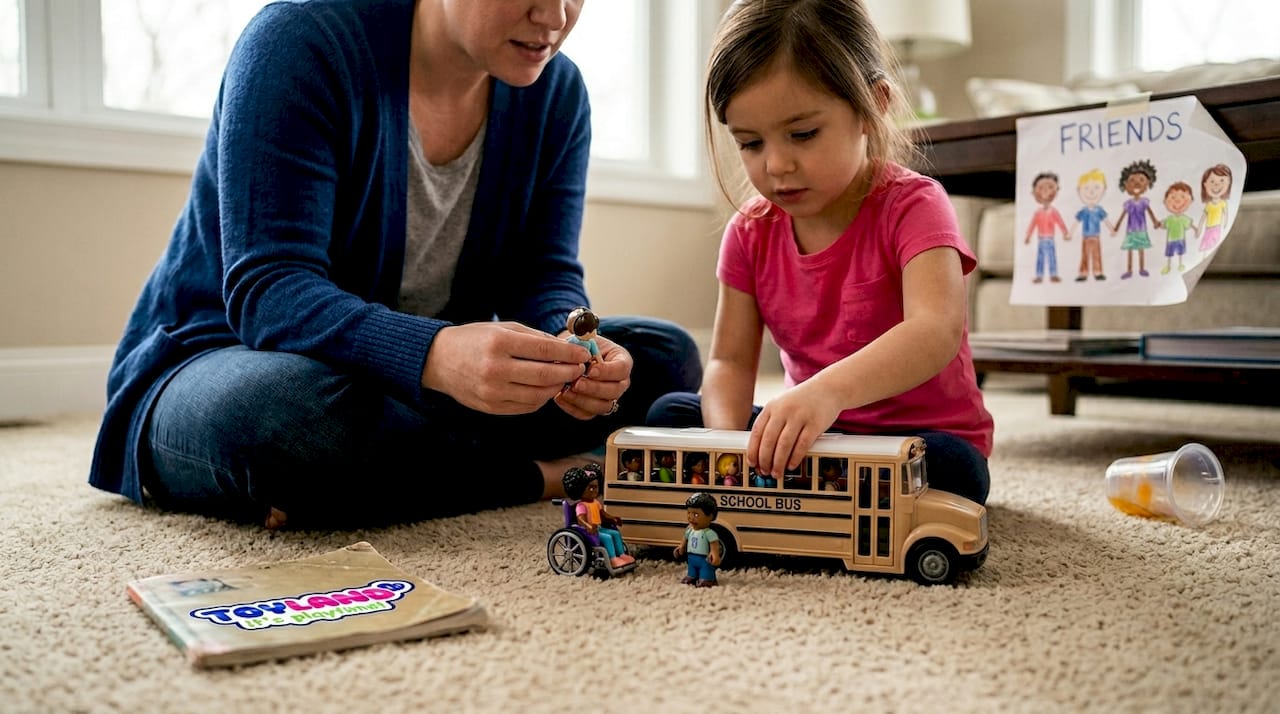
Pro Tip: Look for toys with adjustable or modular parts like Body Blocks, which let children mix and match skin tones, hair, and accessories. These kinds of sets invite children to actively think about identity rather than passively accept a fixed representation.
When in doubt, simpler is often better. A well-made doll with a rich skin tone and natural hair, paired with a conversation about where the character might be from, can spark more meaningful reflection than an elaborate set used only once. Connection and conversation are what make diversity toys truly work.
You can also learn more about what makes toys physically safe for young children by exploring toy safety features that responsible manufacturers use, or dig into toy safety tech innovations shaping the current market.
Safety and inclusivity: What parents should consider
Having chosen a diversity toy, it’s essential to consider both practical safety and deeper inclusivity before completing your purchase. These two things are equally important and, fortunately, both are easy to assess with the right checklist.
What to check before buying:
- Age-appropriate size and design. Small figures or tiny accessories are choking hazards for children under three. Always verify that the toy is sized correctly for your child’s developmental stage.
- Choke-testing compliance. Modular toys for toddlers must pass specific size requirements to ensure individual pieces cannot be swallowed. If a toy is advertised as modular, check the minimum age recommendation carefully.
- Authentic, not stereotypical, representation. A toy can claim diversity on the packaging while still relying on outdated or inaccurate depictions. Look closely at the details. Does the cultural attire reflect a real tradition? Is the disability representation integrated naturally, or does it feel like an afterthought?
- Company values and sourcing. Some brands have made genuine commitments to inclusion through hiring diverse creators, partnering with community organizations, and donating to relevant causes. Others are simply responding to market demand without real investment. A quick review of the brand’s website reveals a lot.
- Packaging and storylines. Even a beautifully designed doll loses its impact if the packaging shows it in a limited or stereotyped role. Look at the full picture.
Exploring advanced toy safety features in 2026 can help you understand what to look for on labels and in product descriptions, especially for younger children who explore toys with their hands and mouths.
Pro Tip: Before gifting a diversity toy, take two minutes to read the most critical online reviews, not just the five-star ones. Parents from the communities being represented will often flag issues with authenticity or safety that general reviewers miss entirely.
The goal is a toy that a child can play with safely, one that opens minds without reinforcing the very stereotypes it claims to challenge.
A fresh perspective: The real power (and pitfalls) of diversity toys
Here’s something most toy guides won’t tell you directly: buying a diversity toy and placing it in a child’s hands is not enough on its own. It’s a meaningful start, but it’s not a complete solution.
We’ve seen a pattern where well-meaning parents invest in diverse dolls or inclusive playsets, then step back and assume the work is done. The toy sits on the shelf alongside dozens of others, and the intended lesson never quite lands. Representation without conversation is just decoration.
The real power of diversity toys emerges when an adult participates in the story. When a parent asks, “Where do you think she’s from? What language might she speak at home?” they activate the toy’s purpose. The object becomes a prompt for curiosity, and curiosity is where empathy grows. Without that engagement, even the most thoughtfully designed toy becomes background noise.
There’s also a risk of treating representation as a checklist. One doll with a darker skin tone, one figure with a hearing aid, and the job feels done. But children are perceptive. They notice when diversity is present in the toy box but absent in the books they read, the shows they watch, and the conversations happening around them. Representation works best when it’s woven consistently into a child’s entire environment, not siloed into a single product category.
We also think it’s worth pushing back gently against the idea that certain types of children “need” diversity toys more than others. Every child benefits from diverse play, including children who belong to majority groups. Exposure to different identities in play reduces bias in all children, and that reduction matters enormously for the kind of society they’ll grow up to shape.
The most effective diversity toys we’ve come across aren’t necessarily the most elaborate or expensive. They’re the ones that spark a question, a story, or a moment of genuine curiosity in a child. That’s the real measure of impact.
Explore diverse and creative toys at ToylandEU
If you’re ready to bring fun, creativity, and authentic representation into gift-giving or playtime, ToylandEU’s wide catalog is a great place to start building a more inclusive toy collection.
The Montessori drawing kit is a wonderful option for encouraging children to express their own stories and identities through art, a natural companion to diverse imaginative play. For hands-on creativity that lets children shape their own worlds literally, the clay modeling kit offers 24 colors and endless possibilities. Across the full ToylandEU catalog, you’ll find thoughtfully chosen toys that build confidence through play while supporting creativity, learning, and representation. Free worldwide shipping makes it easy to give the gift of inclusive play, wherever you are.
Frequently asked questions
What makes a toy a diversity toy?
A diversity toy features authentic representation of different races, genders, abilities, or cultures and is designed to foster empathy and inclusivity. These toys go beyond appearance to encourage children to think about and value different lived experiences, helping to normalize inclusion from a very young age.
Why are diversity toys important for my child?
They help children build empathy, challenge stereotypes, and develop positive beliefs about people from all backgrounds, starting as early as age 3. Because children form social attitudes between ages three and five, diverse play during this window has a lasting influence on how they treat and perceive others throughout life.
How do I ensure diversity toys are safe for toddlers?
Choose age-appropriate toys that have passed choke-testing and carry reputable certifications, and always read reviews before buying. Modular toys for young children must meet specific size requirements, so verify the minimum age recommendation before purchasing for children under three.
Can diversity toys help reduce bias in children?
Yes, research shows early exposure through diverse play leads to reduced stereotypes and more inclusive attitudes in children of all backgrounds. Studies confirm that counter-stereotypical play measurably reduces bias around professions, gender roles, and social groups.
Are modular or customizable toys as effective as traditional diversity dolls?
Modular toys can support even deeper exploration of identity and inclusion when chosen with safety in mind. Options like Body Blocks allow for custom identity representation that encourages active thinking about diversity rather than passive acceptance of a fixed character.