

What Action Figure Articulation Actually Means for Collectors
Action figure articulation is the layout and type of joints that let a figure move. What matters most isn’t how many joints a figure has. It’s whether those joints are placed where a body actually bends and built to hold a pose without drooping.
That’s the single rule to remember before you buy anything: a 16-point figure with a smart ankle rocker and a solid torso twist will out-pose a “32 points of articulation” box claim with wobbly knees every time.
- Check the ankle and torso joints first in product photos. These two spots predict balance more than any other joint.
- Look for material call-outs like POM or ABS in the listing. If a seller mentions the plastic type, that’s usually a good sign they know what they built.
- Don’t chase joint counts on the box. A figure engineered around 14 useful joints beats one bragging about 30 stiff ones.
Key Takeaways
Durable, posable action figures come down to joint placement and material quality (POM-on-ABS construction) rather than the total number of articulation points advertised on the box.
| Point | Details |
|---|---|
| Prioritize joint placement | Ankle tilt and torso twist predict poseability far better than a high joint count. |
| Check the materials | POM cores paired with ABS shells resist loosening better than all-ABS joints. |
| Match joints to use case | Play favors durable hinges; photography favors range of motion; display favors sculpt integration. |
| Fix small problems at home | Friction tape resolves looseness; warm water loosens stiffness; avoid oil-based lubricants. |
| Shop with Toylandeu™ | Toylandeu™ lists articulated figures and desk toys with photos suited to checking ankle and torso joints before purchase. |
Table of Contents
- Common Joint Types and Where They Show Up on a Figure
- Articulation vs. Posability: Why Joint Placement Beats Joint Count
- Materials and Manufacturing Signals of Durable Joints
- Fixing Loose, Stiff, or Popping Joints at Home
- What Most Buying Guides Get Wrong About Articulation
- Sources
- FAQ
Common Joint Types and Where They Show Up on a Figure
Every articulated figure is built from a handful of joint families, and once you know them, you can read a product photo like a blueprint. Toy sculptors have relied on the same core set for decades, refining materials more than concepts, as design tutorials like Stan Winston School’s guide to sculpting articulation lay out for anyone learning the craft.
- Ball joints give three degrees of freedom and show up at the neck, shoulders, and hips, where real bodies rotate in multiple directions. They’re the most expressive joint type but also the first to loosen with heavy use, since the ball has to keep tension inside its socket over thousands of pose changes.
- Hinge (pin) joints move on a single axis, which is exactly what elbows and knees need. They’re mechanically simple and tend to stay tight longer than ball joints, trading range of motion for reliability.
- Swivel (peg) joints only rotate, no bending involved. You’ll find them at the biceps and waist, where a simple twist adds a surprising amount of pose variety without touching the sculpt’s silhouette.
- Ratchet joints lock into discrete notches rather than moving freely, which matters on larger, heavier figures where a plain hinge would sag under the figure’s own weight.
- Butterfly (shoulder cut) joints hide extra rotation inside the shoulder block, letting arms lift higher without an ugly visible seam breaking up the deltoid sculpt.
- Double-jointed elbows and knees stack two hinges together for dramatically more bend, often past 160 degrees. The catch: more parts means more mold complexity, and if tooling tolerances slip, those extra joints loosen faster than a single-jointed equivalent.
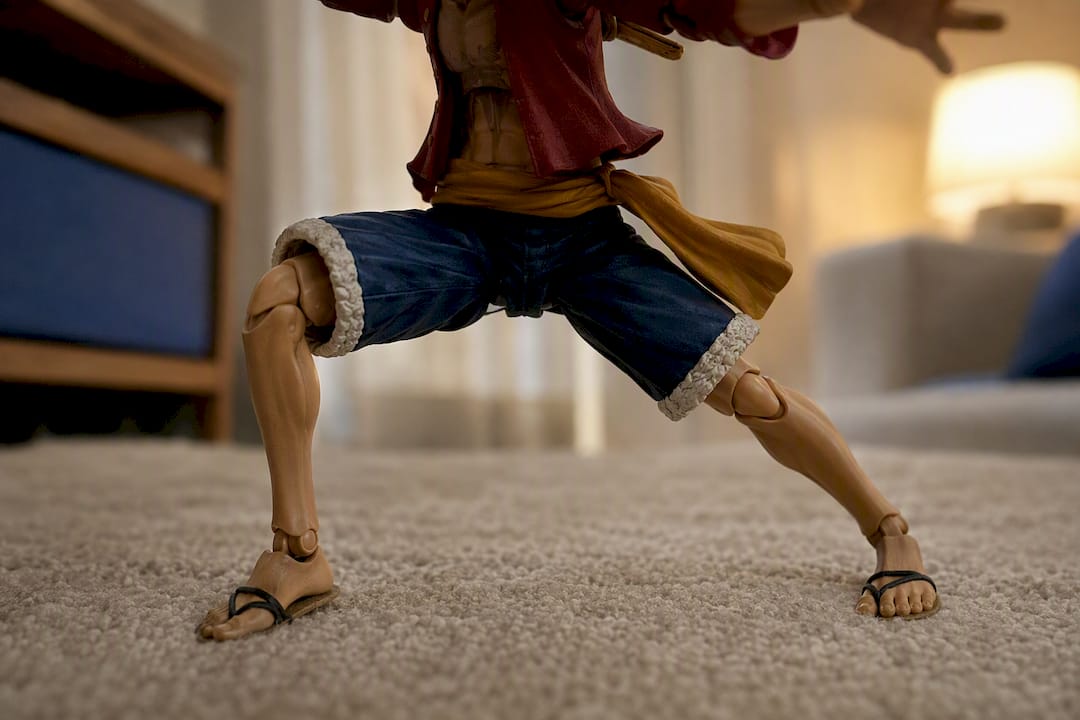
- Ankle rockers, ankle tilts, and ab/waist crunches are the unsung heroes of a stable dynamic pose. They let the foot flatten on uneven terrain and let the torso lean into a punch or a crouch instead of standing ramrod straight.
Pro Tip: When comparing two figures in the same line, look at the ankles before anything else. A figure with only a swivel ankle will topple in any pose that isn’t standing straight up, no matter how good the shoulders are.
Articulation vs. Posability: Why Joint Placement Beats Joint Count
Articulation and posability sound like the same thing, but collectors and figure designers draw a real line between them. Articulation is the inventory: how many joints, what type, where they sit. Posability is the outcome: can the figure actually hold an expressive pose without your hand still under its elbow, as reference guides on figure articulation point out when comparing toy lines.
A figure can have twenty joints and still be hard to pose well if the hips are shallow or the ankles can’t tilt. What you need depends on what you’re doing with the figure.
- For play, prioritize robust hinges and ratchets that survive a kid’s grip over delicate ball joints that pop loose after a week.
- For photography, range of motion and hand swaps matter more than raw joint count, since you need dynamic angles and expressive gestures for the shot.
- For shelf display, the sculpt has to read well from a standing pose, so integration with the figure’s silhouette often matters more than how far a knee bends.
Run this stability checklist before buying: Does the ankle tilt side to side, not just forward and back? Do the feet sit flat without heel lift? Can the torso twist enough to counterbalance an arm swing? Buyers guides on scale and articulation consistently flag these four points as the difference between a figure that poses confidently and one that needs a display stand to stay upright.
Materials and Manufacturing Signals of Durable Joints
The plastic inside a joint matters more than most buyers realize. High-quality joint design pairs a POM (polyoxymethylene) core with an ABS outer shell, and that combination isn’t marketing language. POM has a naturally low friction coefficient and strong fatigue resistance, so it keeps its grip through repeated posing far longer than an all-ABS joint, according to factory-level durability testing from figure manufacturers.
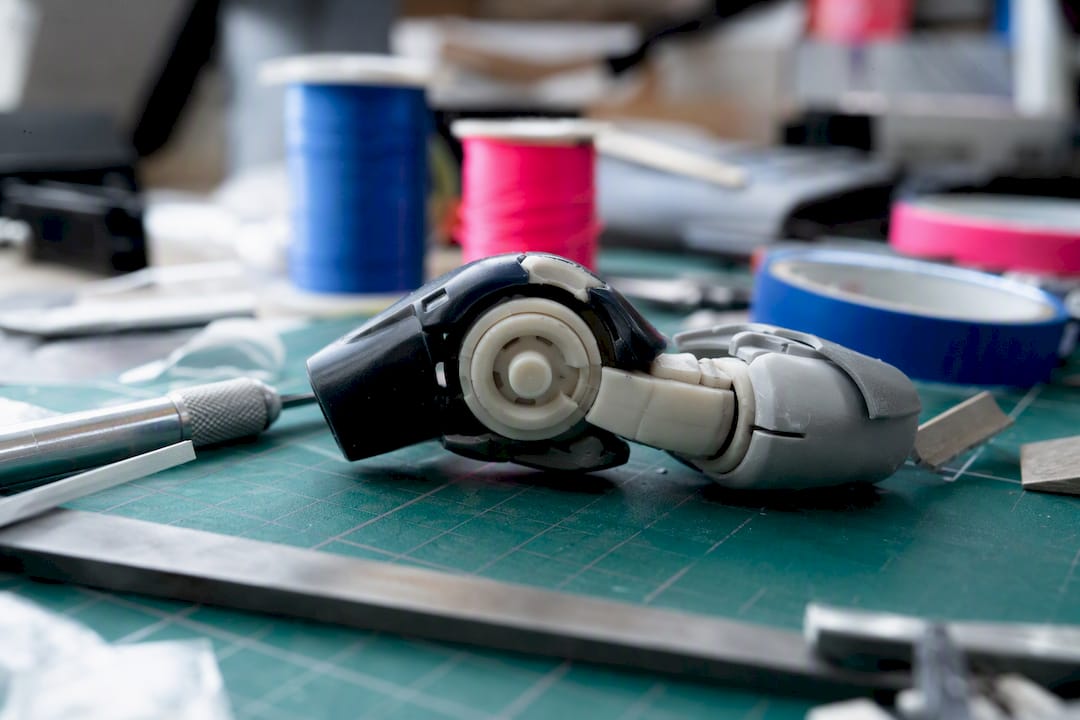
Larger, heavier figures often add ratchet or metal-spring joints at the hips and shoulders, since a plain friction joint can’t support that much weight without sagging over time.
Reputable manufacturers back these material choices with real testing. Cycle testing pushes a joint through thousands of pose changes, torque and tension checks confirm the joint holds a set position, and toy safety testing broadly references standards like ASTM F963, the US consumer safety specification for toys, which covers small parts and mechanical hazards relevant to jointed pieces.
- Ask sellers whether joints use POM bushings, since dual-layer sockets resist popping and loosening far better than plain ABS-on-ABS contact.
- Look for close-up photos of the ankle and hip joints, not just full-body shots, since that’s where tolerance problems show up first.
Fixing Loose, Stiff, or Popping Joints at Home
Most joint problems are fixable without sending a figure back, as long as you know which fix matches which problem.
- Loose joints: wrap a small strip of friction tape or heat-shrink tubing around the joint peg before reassembling. This restores the tension the plastic lost over time, though it’s a temporary fix, not a permanent rebuild.
- Stiff joints: try gently working the joint through a warm water soak to loosen tight tolerances. Avoid household oils or WD-40, since petroleum lubricants degrade certain plastics and can leave a permanent residue on painted surfaces, a warning echoed in action figure design guidance aimed at hobbyist sculptors.
- Popping joints: figure out whether the joint is designed to pop off for easy paint application and swapping (common on ball joints) or whether it’s a manufacturing failure. If it snaps back in cleanly and holds tension, it’s by design. If it won’t seat again, that’s a defect.
- When to contact the seller: if a joint breaks outright or won’t hold any tension after reattachment, ask for a replacement part or a warranty claim before attempting more aggressive fixes yourself.
Pro Tip: Keep the original packaging for at least a month after purchase. Warranty claims move faster when you can reference the exact SKU and batch, and sellers are far more responsive to a specific complaint than a vague “it broke.”
Why You Can Trust This Guide
This guide comes from Thane Holland, writing in affiliation with Toylandeu™, a retailer whose catalog spans articulated robot figures, anime collectibles, and smaller 3D printed desk toys, giving direct exposure to how different joint types perform across scales and price points.
- The recommendations above (checking ankle specs, asking about POM cores, reviewing close-up photos) reflect the same checks used when evaluating new product listings.
- Readers are encouraged to apply the same lab-style scrutiny: ask for material specs, request ankle or torso close-ups, and treat vague listings with skepticism.
What Most Buying Guides Get Wrong About Articulation
Most articulation advice online still leans on joint counts because it’s an easy number to put in a headline. That’s backwards. A figure’s box claiming “28 points of articulation” tells you nothing about whether the hips are deep enough for a wide stance or whether the ankle rocker actually rocks.
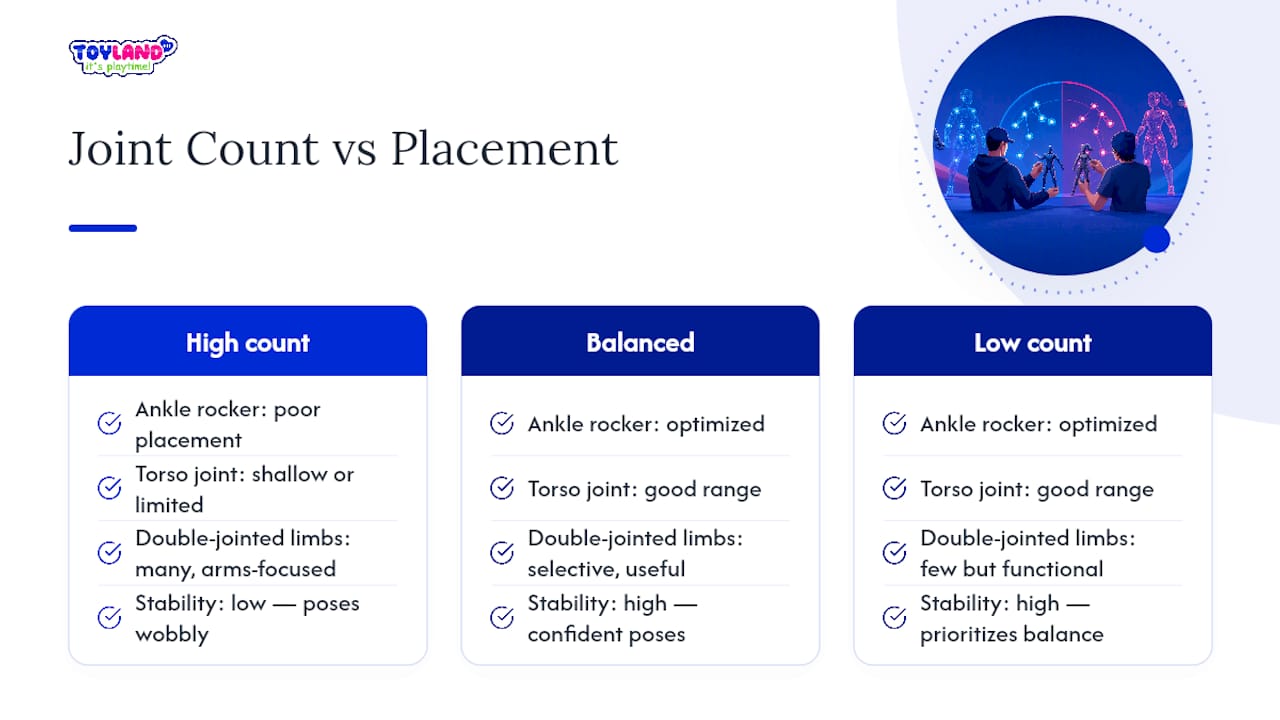
The conventional wisdom treats articulation as a spec to maximize. The better approach treats it as a design decision that should serve the character’s pose language first. A stoic, standing-guard figure doesn’t need a double-jointed knee. A martial artist figure without one is barely usable.
If there’s one thing collectors and parents alike should prioritize first, it’s the ankle and torso joints, not the arms. Arms get all the attention in marketing photos, but a figure’s ability to stand confidently in a dynamic pose comes from the waist down. Buy for stability first, range of motion second, and joint count dead last.
Browse Articulated Figures and Preservation Gear at Toylandeu™
Toylandeu™ carries a broad range of articulated figures alongside the storage and display accessories that keep them looking sharp for years, all shipped internationally at no extra freight cost.

If you’re weighing options like the 17cm Demon Slayer figure collection or a compact 3D printed flexible desk figure, check the product photos for ankle and torso detail before adding to cart, the same way this guide recommends. Once a figure arrives, our collector’s guide to storing action figures walks through keeping joints from drying out or seizing in storage. For something outside articulated figures entirely, browse the Montessori drawing kit for younger siblings who aren’t quite ready for collectible joints yet. Check the specs page on any listing before you buy, and don’t hesitate to message support if a material call-out is missing.
Sources
FAQ
What is articulation in action figures?
Articulation refers to the number, type, and placement of movable joints on a figure, covering everything from ball joints at the shoulders to hinge joints at the knees.
What action figure has the best articulation?
There’s no single winner, since “best” depends on placement quality, not point count. Figures that combine ankle rockers, torso twist, and double-jointed limbs from a POM-on-ABS build tend to outperform figures with higher advertised counts but weaker joint engineering.
What is the most articulated action figure ever?
Claims about the “most articulated” figure ever usually reference specific collector lines with 30 or more points, but definitions vary by manufacturer and aren’t standardized, so treat any single claim with caution.
What are some high articulation action figures available?
Look for figures explicitly built around ball-jointed shoulders and hips, double-jointed elbows and knees, and ankle rockers. Toylandeu™'s articulated robot figure line is one example built with this joint layout for display and posing.
How do I know if a figure’s joints will loosen quickly?
Check whether the listing mentions POM or reinforced sockets at the ball joints, since plain ABS-on-ABS contact wears faster under repeated posing than a POM-core design.
Recommended
- Articulated Robot Action Figures - Creative Collectibles for Teens & Adults ToylandEU™
- How to Store Action Figures: Collector’s Preservation Guide – ToylandEU™
- Articulated Robot Action Figures: 3D Printed Desk Toy for Ages 14 & Up ToylandEU™
- Action Figures and Role Playing: A Family Guide – ToylandEU