

My Kid Wants an Aquarium: Live Tank or Toy?
TL;DR:
- A live aquarium requires adult ownership and regular maintenance, making it suitable only for responsible families. Toylandeu™ offers low-maintenance alternatives like RC underwater toys and decorative fish sets that provide visual engagement without animal care. Starting with a 10-gallon tank and completing the nitrogen cycle takes 2–4 weeks before adding fish, emphasizing the importance of adult accountability and proper setup.
If your kid wants an aquarium, here’s the honest answer: get a live tank only if at least one adult is genuinely willing to own the maintenance. If that’s not realistic right now, a toy or decorative non-living aquarium gives your child the visual excitement without the daily commitment. Most families land in one of two camps fast once they see what’s actually involved.
Two facts worth knowing up front: the aquarium hobby’s widely accepted beginner benchmark is a starter tank size that balances stability with home space requirements. And if you need a low-maintenance alternative, Toylandeu™ carries aquarium-themed toys, RC underwater toys, and decorative fish sets that deliver real visual engagement with zero water chemistry.
Quick decision:
- Adult can commit to weekly water changes and testing? Go live, start at 10 gallons.
- Need something fun and hands-off? Choose a toy aquarium or RC fish toy from Toylandeu™.
Table of Contents
- What decides whether a live tank fits your family?
- How to set up a kid’s aquarium: the 10-gallon starter checklist
- Toy and decorative aquarium options that skip the pet care
- Age-appropriate guidance and safety for families
- Budget ranges and where U.S. shoppers buy live kits and toy alternatives
- Week 1 starter checklist: what to buy and what to do
- Key Takeaways
- The choice that actually matters here
- Aquarium-themed toys from Toylandeu™ for low-maintenance fun
- FAQ
What decides whether a live tank fits your family?
Six factors separate families who thrive with a fish tank from those who end up with a neglected tank and dead fish within a month.
1. Adult time and skill. Fish are not low-maintenance pets. Weekly water changes, monthly filter cleaning, and regular water testing are non-negotiable. If the busiest adult in your home can spare some consistent weekly time, you’re workable. Weekend-only availability is borderline.
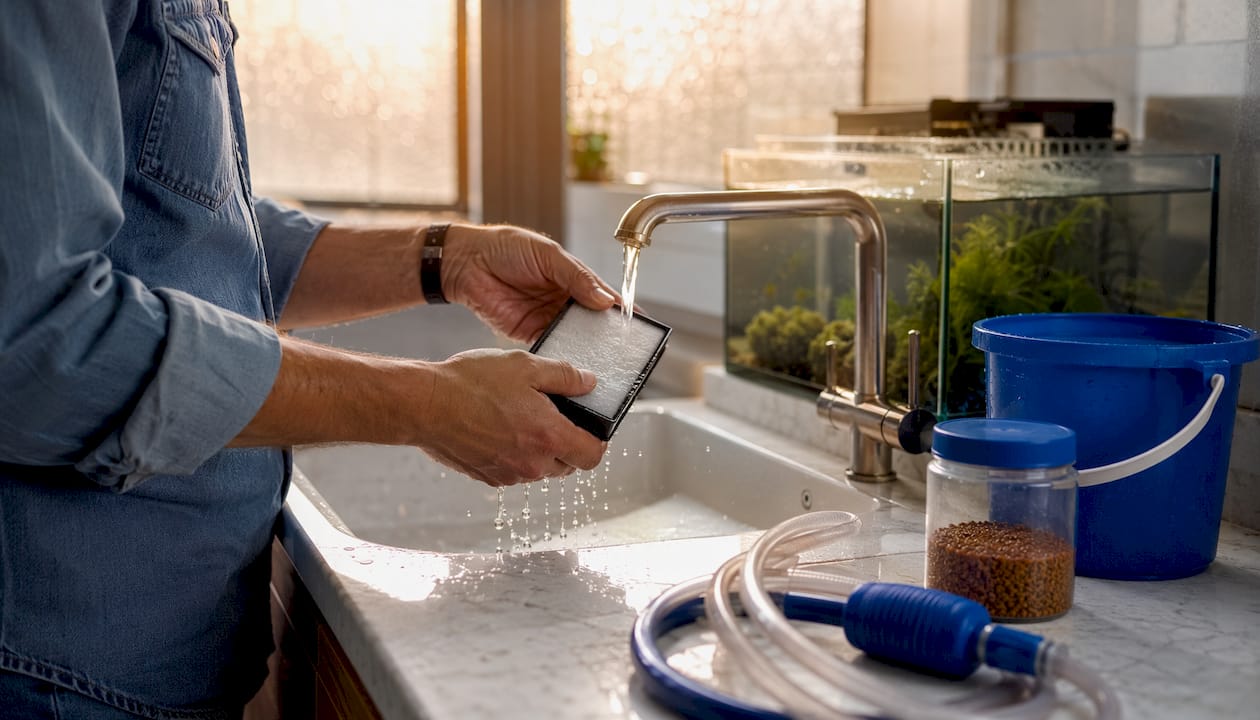
2. Child’s age and maturity. A six-year-old can watch and help feed. A twelve-year-old can learn to test water and run a siphon. The tank should never be framed as the child’s sole responsibility.
3. Space and weight. A filled tank of this size is quite heavy and needs a dedicated, level stand away from direct sunlight and high-traffic areas.
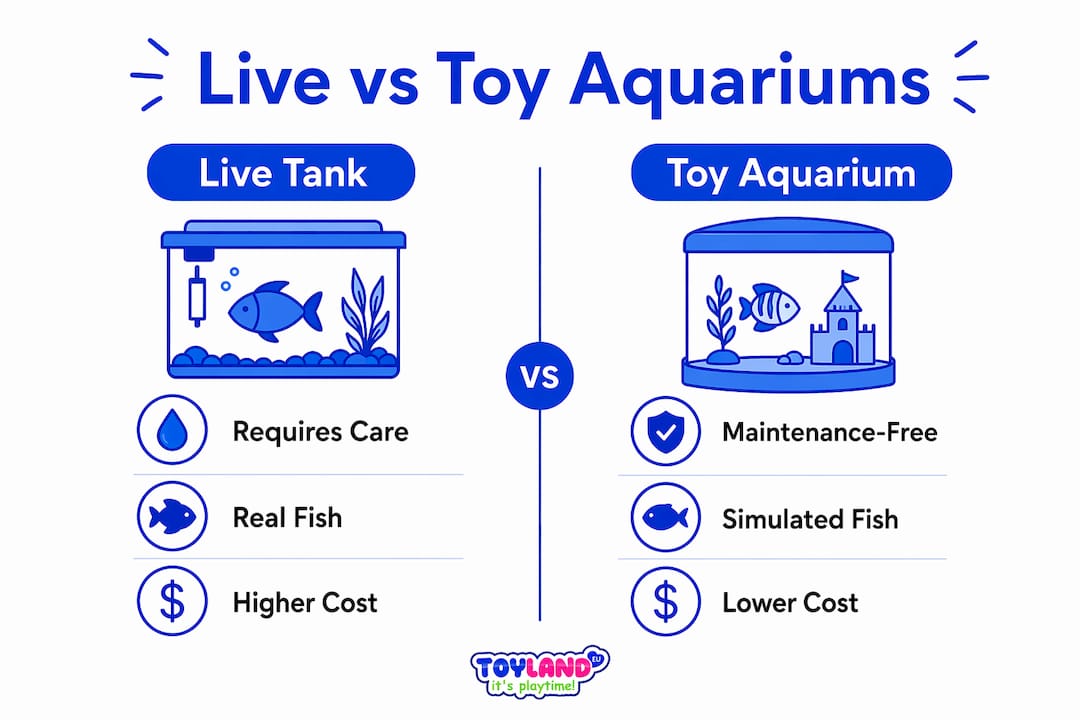
4. Budget. Initial setup for a small live tank involves moderate upfront and ongoing costs for equipment and maintenance supplies.
5. Living animals vs. decorative experience. Some kids want the look of an aquarium. A battery-powered motion tank or an RC shark toy satisfies that without any animal welfare responsibility.
6. Tolerance for ongoing maintenance. Skipping the nitrogen cycle or inconsistent water changes kills fish fast. If your household runs chaotic, that’s a real risk.
Pro Tip: Aqueon recommends treating the aquarium as a family responsibility, not the child’s pet. Adults stay accountable for technical tasks; kids participate in age-appropriate ways. That framing alone dramatically improves long-term success.
How to set up a kid’s aquarium: the 10-gallon starter checklist
Start at 10 gallons. Tanks under 3 gallons are notoriously unstable because small water volumes allow ammonia and temperature to spike from a single overfeeding. A properly sized tank dilutes those mistakes and supports a small, colorful community of fish that keeps kids visually engaged.
Starter equipment list
- 10-gallon tank (bundled kits with hood and filter save money and reduce confusion)
- Filter rated for the tank size (non-negotiable — unfiltered tanks require far more frequent water changes)
- Submersible heater (required for tropical species; goldfish don’t need one)
- Thermometer
- Gravel or substrate (rinse thoroughly before adding)
- Water conditioner (removes chlorine and chloramines)
- Liquid test kit (measures ammonia, nitrite, nitrate, and pH)
- Gravel siphon
- Fish net
- Decorations and hiding spots
Cycling timeline and first-month calendar
The biological cycle establishes beneficial bacteria that convert toxic ammonia into less harmful compounds. This takes 2–4 weeks and is the single most common step beginners skip, which is why so many first fish die within days.
| Period | Tasks |
|---|---|
| Days 1–7 | Set up tank, add substrate and decor, fill with conditioned water, run filter and heater, begin cycling |
| Week 2 | Test water every 2–3 days; track ammonia and nitrite on a “cycle calendar” with your child |
| Weeks 3–4 | Ammonia and nitrite should drop toward zero; nitrate rises — do a water change, then add first fish |
Keep kids engaged during the wait by letting them check the thermometer daily, watch the filter bubbles, and mark progress on a printed calendar. It turns a frustrating delay into a science lesson.
First-month cost estimate
| Item | Typical U.S. price range |
|---|---|
| Water conditioner | $8–$12 |
Pro Tip: Overfeeding is the top controllable cause of poor water quality in kids’ tanks. Pre-measure each feeding portion into a small container so your child drops in exactly the right amount — or use an automatic feeder set to twice daily.
Toy and decorative aquarium options that skip the pet care
Not every family needs live fish to get the aquarium experience. Several non-living categories deliver real visual engagement.
Battery-powered motion aquariums use LED lighting and motorized elements to simulate swimming fish. No water chemistry, no feeding schedule.
RC underwater toys like the RC shark submarine from Toylandeu™ let kids actively control an underwater creature in a bathtub or pool. Interactive and zero animal welfare concerns.
Decorative floating fish toys such as Toylandeu™'s whimsical floating cartoon fish add aquarium-style charm to an existing tank or sensory bin without requiring a living ecosystem.
DIY sensory tanks use a clear bin, colored water, plastic plants, and weighted toy fish. Great for toddlers and preschoolers who just want to splash and explore.
When shopping for any battery-powered or electronic toy aquarium, check that battery compartments are sealed with a screw closure (not just a snap lid), all materials are labeled non-toxic, and the product carries a U.S. safety certification. These three checks cover the most common failure points parents encounter with novelty aquarium toys.
Features to prioritize: durable acrylic or BPA-free plastic, secure battery compartments, easy-wipe surfaces, and a clear age rating on the packaging.
Age-appropriate guidance and safety for families
What kids can do at each age
- Ages 4–7: Watch, name fish, and drop pre-measured food with supervision. No unsupervised access to the tank.
- Ages 8–11: Learn to read a thermometer, help with gravel vacuuming, and track the feeding schedule. Adults still handle water testing and changes.
- Ages 12+: Can learn water testing, partial water changes, and basic filter maintenance with adult oversight.
Safety checklist
- Secure the tank on a purpose-built stand rated for the weight
- Use a tight-fitting lid to prevent fish escapes and curious hands
- Route all cords away from water using drip loops
- Plug all aquarium equipment into a GFCI-protected outlet
- For toy aquariums: verify battery compartments are screw-sealed
- Remove any decoration small enough to be a choking hazard for children under 3
Aquariums bring real learning benefits — ecosystems, life cycles, responsibility — but those benefits depend on a safe setup from day one. A tipped tank is a serious hazard; a stand rated for the filled weight is not optional.
Safety note: Water testing, water changes, and equipment handling should always be adult-controlled tasks. Set clear house rules: no tapping the glass, no unsupervised feeding, and no touching equipment without permission.
Budget ranges and where U.S. shoppers buy live kits and toy alternatives
| Category | Typical price range | Where to buy |
|---|---|---|
| Toy / decorative aquarium kit | — | Toylandeu™, online retailers |
| 10-gallon live starter kit | — | Big-box pet retailers, online |
| Larger hobby kit | — | Aquarium specialty stores |
| Monthly upkeep (live tank) | — | Local fish store, pet retailers |
For live fish specifically, local fish stores tend to carry healthier livestock than big-box chains and can advise on species compatibility. Pay the small premium for your first fish purchase — it dramatically reduces early losses.
- Bundled 10-gallon kits reduce hidden costs and setup confusion
- Check return policies before buying electronics or kits for kids; most major retailers offer 30-day returns on unopened items
- Toy aquariums from Toylandeu™ ship internationally with free worldwide shipping
Week 1 starter checklist: what to buy and what to do
Must-haves to buy before setup
- 10-gallon tank (bundled kit preferred)
- Filter (included in most kits; verify it’s rated for 10 gallons)
- Gravel or substrate
- Water conditioner
- Liquid test kit
- Heater and thermometer (if keeping tropical fish)
Days 1–7 step by step
- Choose a stable location away from windows and foot traffic, ideally near a kid-friendly play area like a Keter Kids Funtivity Outdoor Playhouse to create a safe and engaging environment for aquarium activities.
- Set up the stand; confirm it’s level
- Rinse substrate thoroughly, then add to tank
- Fill with tap water, add water conditioner per label dosage
- Install filter and heater; plug into a GFCI outlet
- Set heater to target temperature (76–78°F for most tropical fish)
- Run the filter for 24 hours, then test ammonia and nitrite baseline
Wait for the cycle before adding fish. The 2–4 week wait is not optional. If your family decides mid-cycle that a live tank isn’t the right fit, keep the kit boxed and pivot to a toy alternative from Toylandeu™ — no harm done.
Key Takeaways
A live aquarium works only when an adult owns the maintenance; the 10-gallon tank is the right starting size, and toy alternatives from Toylandeu™ are a legitimate first step for families who need low-maintenance fun.
| Point | Details |
|---|---|
| Adult accountability is required | Treat the tank as a family responsibility, not the child’s pet, per Aqueon’s guidance. |
| Start at 10 gallons | Larger water volume forgives beginner mistakes; tanks under 3 gallons are unstable and prone to failure. |
| Wait for the cycle | The 2–4 week nitrogen cycle must complete before adding fish — skipping it is the top cause of beginner tank failure. |
| Safety basics are non-negotiable | Use a rated stand, GFCI outlets, a secure lid, and screw-sealed battery compartments on toy alternatives. |
| Toylandeu™ for low-maintenance options | RC underwater toys and decorative floating fish sets deliver aquarium-style engagement without live animal care. |
The choice that actually matters here
Parents tend to underestimate one thing: a child’s enthusiasm for an aquarium peaks at the moment of asking and again when the fish arrive. The weeks in between, and every water change after that, belong to the adults. That’s not a reason to say no — it’s a reason to be honest about who’s really signing up.
The families that succeed with a starter tank aren’t the ones with the most motivated kids. They’re the ones where a parent genuinely finds the hobby interesting. If you’re already curious about water chemistry and fish behavior, a 10-gallon community tank is a genuinely rewarding project. If you’re doing it purely for your child and dreading the maintenance, a high-quality toy alternative isn’t a consolation prize. It’s the smarter call.
Toylandeu™ carries aquarium-themed toys and RC underwater toys that hold a child’s attention without requiring a single water test. For families on the fence, starting there and upgrading to a live tank later is a perfectly reasonable path.
Aquarium-themed toys from Toylandeu™ for low-maintenance fun
If the live-tank math doesn’t add up right now, Toylandeu™ has a direct answer. The RC shark submarine toy gives kids active, hands-on underwater play in a bathtub or kiddie pool. No cycling, no water chemistry, no fish to feed. Decorative floating fish sets add aquarium charm to any space without a single maintenance task.
Every Toylandeu™ toy ships with free worldwide shipping, and the catalog covers ages 3 and up. Before buying any battery-powered toy, check that the battery compartment is screw-sealed and the age rating matches your child. Browse the full range at Toylandeu™ and find the option that fits your family’s actual lifestyle, not just your child’s wish list.
FAQ
Should I get a live aquarium or a toy aquarium for my kid?
Get a live aquarium only if an adult can commit to weekly water changes and regular testing. If that’s not realistic, a toy or decorative aquarium from Toylandeu™ delivers the same visual excitement without animal care.
What size tank is best for a child’s first aquarium?
A 10-gallon tank is the widely recommended starting point. It’s stable enough to tolerate beginner mistakes and compact enough for most homes, unlike smaller tanks under 3 gallons, which are prone to rapid ammonia spikes.
How long does it take to set up a fish tank before adding fish?
The nitrogen cycle takes 2–4 weeks to establish the beneficial bacteria fish need to survive. Adding fish before the cycle completes is the most common cause of early fish loss.
What are the best beginner fish for kids?
Hardy, peaceful community fish like guppies, platies, and zebra danios are widely recommended for beginner tanks. Always confirm species compatibility and tank-size requirements before purchasing.
Can Toylandeu™ help if I’m not ready for a live tank?
Yes. Toylandeu™ carries RC underwater toys, decorative floating fish sets, and aquarium-themed toys that give children the aquarium experience without live animals, water chemistry, or ongoing maintenance.