

Why Are Toys Valuable Investments for Collectors in 2026
TL;DR:
- Collectible toys can be valuable investments when rarity, condition, and licensed branding create high demand, but active management is essential. The market benefits from serial demand cycles, strong secondary markets, and demographic shifts toward adult collectors, yet risks like storage costs and market volatility remain significant. Success depends on disciplined research, focusing on pristine items and timing purchases before media hype peaks, while avoiding emotional attachment.
Toys are valuable investments when rarity, licensed branding, and pristine condition converge to create scarcity-driven demand that outpaces inflation. The collectible toy market, formally classified as an alternative asset class, posted a 32% growth in collectibles in 2025, now representing nearly 19% of all global toy dollar sales. Franchises like Pokémon, Star Wars, and LEGO drive record secondary market prices, with a rare Boba Fett figure selling for $185,850 in 2019. Understanding why toys hold and grow financial value requires examining the same fundamentals that govern any appreciating asset: supply constraints, demand cycles, and condition.
Why are toys valuable investments? The core drivers
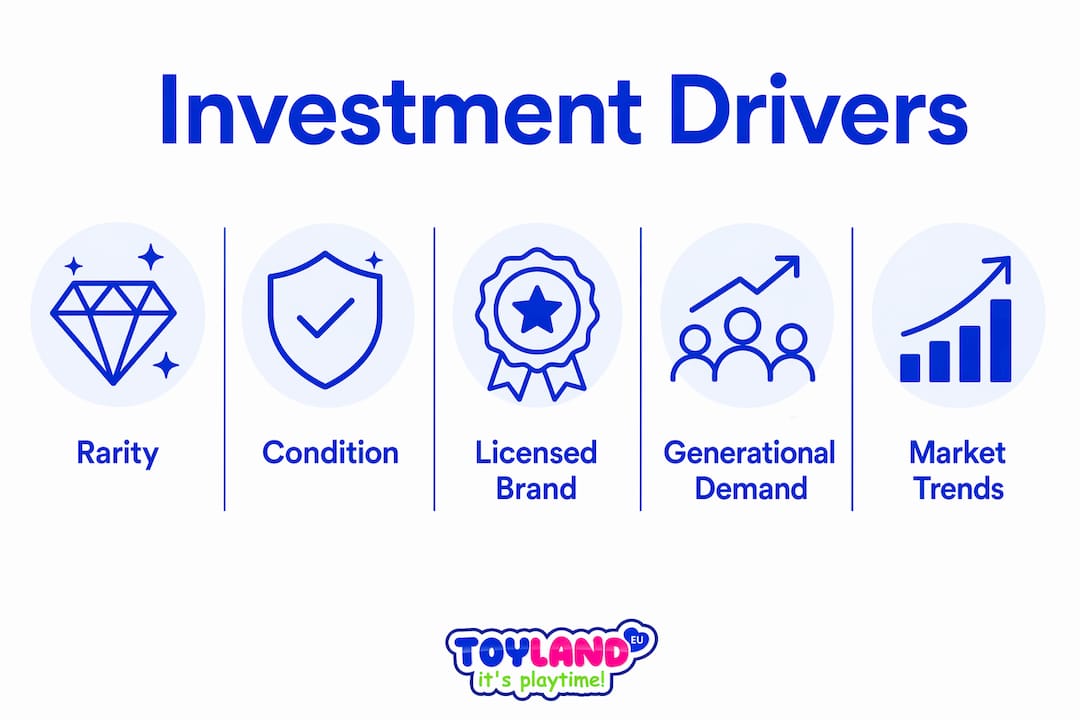
The investment case for collectible toys rests on four pillars: rarity, condition, licensed intellectual property, and cultural timing. Each one independently lifts value. Together, they can multiply it dramatically.
Rarity and limited production create the scarcity that makes any asset worth holding. Toy manufacturers retire sets, limit production runs, and issue exclusive variants that never return to retail. When supply is fixed and demand grows, price appreciation follows the same logic as fine art or rare wine.
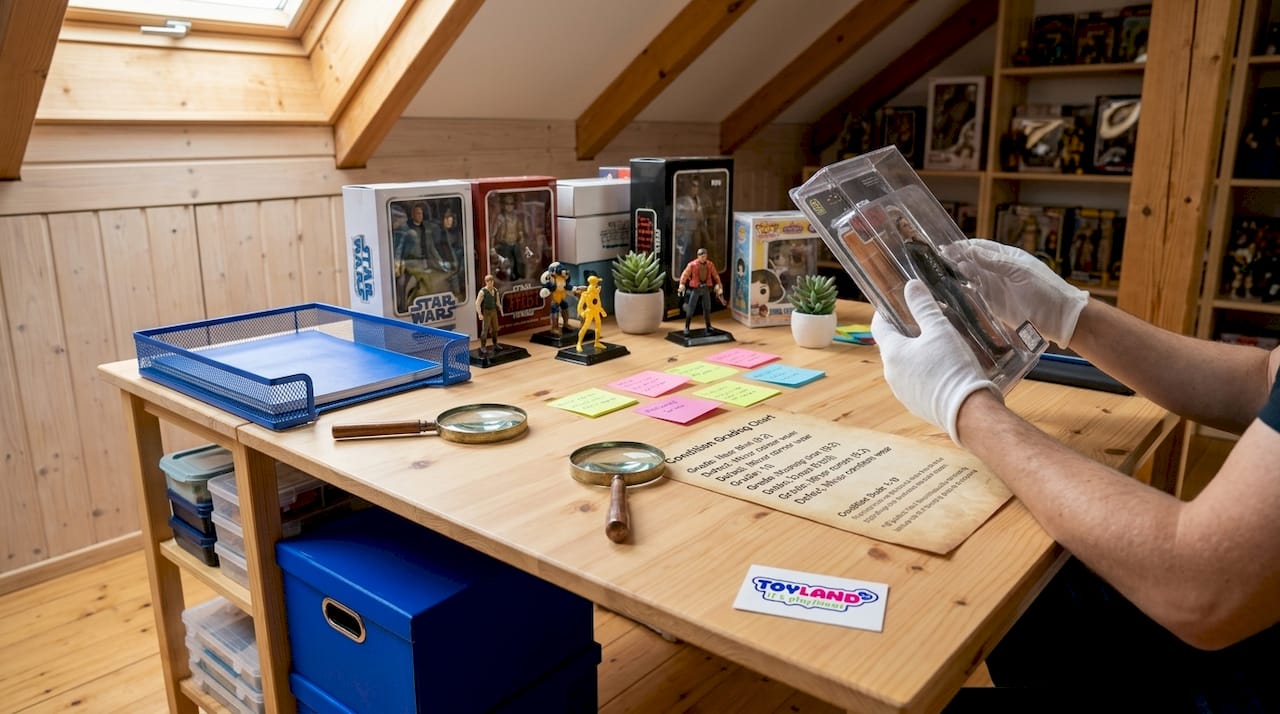
Condition is the single biggest value lever. Mint condition vintage figures can command prices up to 10 times more than used equivalents. New Old Stock (NOS) toys, meaning unopened items in original factory packaging, sit at the top of every collector’s wish list. Even minor environmental damage, slight yellowing from sun exposure or humidity warping, drastically reduces expected return on investment. Storage quality is not optional for serious investors.
Licensed properties amplify demand at scale. Star Wars merchandise alone has generated over $30 billion in cumulative sales, creating a global collector base that sustains secondary market liquidity for decades. When Disney, Hasbro, or The Pokémon Company retire a product line, the secondary market absorbs remaining supply and prices climb.
| Condition | Description | Typical value multiplier vs. loose used |
|---|---|---|
| Loose, played | Missing parts, visible wear | 1x (baseline) |
| Complete, loose | All parts present, no packaging | 2x to 3x |
| Complete in box (CIB) | Original box, some wear | 4x to 6x |
| Mint in box (MIB) | Unopened, pristine packaging | 8x to 12x |
| New Old Stock (NOS) | Factory sealed, no shelf wear | 10x to 15x+ |
Pro Tip: Never store collectible toys in attics or garages. Temperature swings and UV exposure are the two most common causes of condition downgrade. Climate-controlled storage pays for itself quickly when a single item is worth hundreds of dollars.
How market dynamics and demographics are reshaping toy values
The buyer profile for collectible toys has shifted permanently. Kidult consumers now account for nearly 30% of global toy sales, a demographic defined by adults purchasing toys for nostalgia, display, and investment. This is not a passing trend. It reflects a structural generational shift in disposable income flowing toward childhood-era collectibles.
Several forces are accelerating this shift right now:
- Streaming and franchise cycles drive demand spikes. A new Star Wars series or a Pokémon anniversary event triggers immediate secondary market activity. Collectors who hold relevant inventory before these cycles benefit from short-term price surges.
- Licensed toy sales grew 15% in 2025, now representing 37% of the entire global toy market. This is the highest licensed share ever recorded, confirming that brand-attached toys dominate collector demand.
- Social media and scalper bots compress the window between product release and secondary market premium. Automated purchasing systems dominate limited drops, meaning retail price access at launch is increasingly rare for individual collectors.
- Cross-generational fandom sustains value longer than single-generation nostalgia. Properties like LEGO, which appeal to both parents and children, maintain collector demand across multiple buyer cohorts simultaneously.
The 30-year value cycle is a well-documented pattern: toys appreciate most sharply when the generation that played with them reaches peak earning years, roughly three decades after original release. Toys from the 1990s are currently in that window, which explains the Pokémon card and vintage action figure surges seen since 2020. Collectors who understand this cycle can position ahead of the next wave rather than chasing it.
Understanding why Gen Z and Millennials drive collectibles adds another layer of context for investors tracking demand demographics.
What are the real risks of investing in toys?
Toys are speculative, non-income-generating assets. They pay no dividends, generate no rent, and carry ongoing costs that erode returns if not managed carefully. Financial advisors recommend treating toy collecting as a high-risk hobby that supplements a diversified portfolio, not as a core holding.
The specific risks investors must account for include:
- Storage and insurance costs. Climate-controlled storage, acid-free packaging, and specialty insurance for high-value items add real annual expense. A collection worth $10,000 can cost $500 to $1,000 per year to maintain properly.
- Authenticity and counterfeiting. The secondary market for vintage toys carries significant counterfeit risk. Reproduction packaging, fake stickers, and resealed boxes are common. Authentication services exist but add cost and time.
- Grading inconsistency. Graded toys do not consistently yield a premium the way graded trading cards do. The grading infrastructure for toys is still developing, which means valuation remains subjective and liquidity is lower than in more mature collectible markets.
- Hype cycle volatility. Fast-moving trends can produce 15% to 40% gains in 90 days, but the same cycles produce rapid saturation and price collapse. Buying at peak hype is the most common investor mistake.
- Market fragmentation. The secondary market is internationally fragmented, with supply concentrated in Asia and demand in the US and Europe. This creates arbitrage opportunities but also pricing complexity and shipping risk.
Pro Tip: Use eBay’s “Sold Listings” filter, not active listings, to determine real market value. Asking prices are aspirational. Completed sales are reality. This single habit prevents overpaying on acquisition and sets accurate exit price expectations.
How to start building a collectible toy investment strategy
Practical toy investment strategy starts with research discipline, not emotional attachment. High emotional connection drives initial interest, but sustainable returns require focus on market fundamentals.
The most reliable starting framework for new investors covers these priorities:
- Target licensed properties with proven longevity. Star Wars, LEGO, Pokémon, and Marvel have demonstrated multi-decade collector demand. Avoid single-season entertainment properties with no franchise history.
- Prioritize condition above all else. Mint, sealed, and NOS items are the only categories where condition premiums are predictable. Buying “good condition” items at a discount rarely produces the returns that pristine examples do.
- Track LEGO set retirement dates actively. When LEGO retires a set, secondary market prices typically rise 20% to 50% within 12 months. This is one of the most documented and repeatable appreciation patterns in the toy collectibles market.
- Diversify across intellectual properties. Scalpers using automated bots dominate single-franchise limited drops. Spreading holdings across multiple IPs reduces exposure to any one franchise’s cultural cycle.
- Monitor rare LEGO market trends for current pricing signals. Secondary market data from active collector communities provides more current valuation benchmarks than general financial media.
- Avoid buying at peak media attention. The moment a toy appears in mainstream financial news as a hot investment, the appreciation window has typically already closed for new buyers.
Key takeaways
Toys are valuable investments when rarity, condition, licensed branding, and generational demand cycles align, but they require active management and disciplined research to generate real financial returns.
| Point | Details |
|---|---|
| Condition drives value most | Mint in box items command 8x to 15x the value of loose, used equivalents. |
| Licensed franchises sustain demand | Properties like Star Wars and LEGO maintain multi-decade collector markets that support liquidity. |
| Kidult market is structural | Adults now represent nearly 30% of global toy sales, creating durable long-term demand. |
| Risks are real and ongoing | Storage, counterfeiting, grading gaps, and hype cycles require active cost and risk management. |
| Sold prices beat asking prices | eBay completed sales data gives accurate market valuation; listing prices do not. |
The uncomfortable truth about toy investing in 2026
I have watched the toy collectibles market mature significantly over the past several years, and my honest assessment is this: the opportunity is real, but most people entering it are doing so for the wrong reasons at the wrong time.
The 30-year nostalgia cycle is genuine. The kidult demographic shift is structural. The licensed toy market growing to 37% of global sales is not a blip. These are durable trends. What concerns me is the infrastructure gap. Unlike trading cards, which now have PSA and BGS grading with broadly accepted premiums, toys still lack a universally trusted grading system. That means two collectors can look at the same item and reach very different valuations. Until that infrastructure matures, liquidity risk remains the biggest underappreciated threat in this market.
The investors I respect most in this space treat toys the way serious art collectors treat emerging artists: they buy what they know deeply, they hold patiently, and they never allocate money they cannot afford to lock up for five to ten years. Emotional connection to a franchise is a useful starting point for research. It is a terrible basis for a buy decision. The collectors who consistently profit are the ones who separate what they love from what the market will pay for.
The cultural shift making toys a legitimate alternative asset is real. The financial discipline required to profit from it is rarer than the toys themselves.
— Thane
Explore collectible and innovative toys at Toylandeu
Toylandeu carries over 30,000 toy products across categories that matter to both collectors and enthusiasts, from licensed remote-controlled vehicles to STEM kits with lasting appeal. For investors and hobbyists tracking the intersection of play and value, the catalog includes products that combine genuine innovation with the kind of broad appeal that sustains long-term interest. The RC gesture-controlled stunt car is one example of a product category where novelty and engineering quality attract both gift buyers and collectors tracking emerging toy trends. Toylandeu ships worldwide with free international shipping, making it accessible regardless of where you are building your collection.
FAQ
Why do mint condition toys sell for so much more?
Mint in box and factory-sealed toys can command 10 to 15 times the price of used equivalents because condition is the primary value driver in collectible markets. Even minor environmental damage, such as yellowing or shelf wear, significantly reduces a toy’s investment value.
What toy categories have the strongest investment track record?
Licensed franchise toys from properties like Star Wars, LEGO, and Pokémon have the most documented appreciation history, supported by multi-decade collector demand and active secondary markets.
Are toys a safe investment for beginners?
Toys are speculative assets that financial advisors recommend treating as a high-risk supplement to a diversified portfolio, not a core holding. Hidden costs including storage, insurance, and authentication reduce net returns and require active management.
How do I find accurate prices for collectible toys?
Use eBay’s completed and sold listings filter to see actual transaction prices rather than active listing prices, which reflect seller hopes rather than market reality.
When is the best time to buy collectible toys for investment?
The best acquisition window is before peak media attention, ideally when a licensed set is approaching retirement or when a franchise anniversary is 12 to 18 months away. Buying at the height of mainstream hype typically means the appreciation has already occurred.
Recommended
- Why Collectibles & Blind-Box Toys Are Trending with Gen Z & Millennials in 2025 – ToylandEU
- Emerging Children’s Toy Safety Tech Innovations in 2026 – ToylandEU
- Future of Interactive Toys 2025: Tech-Driven Child Development & Safety – ToylandEU
- How 2025 Toy Safety Tech Boosts Parental Confidence – ToylandEU