

What Are Reusable Water Balloons: Eco Family Guide
TL;DR:
- Reusable water balloons use durable silicone shells with magnetic closures, allowing for hundreds of reuse without waste. They inflate automatically upon dipping, seal on impact, and require minimal cleanup, making them eco-friendly and child-safe with supervision. Proper rinsing and drying extend their lifespan, offering a practical alternative to traditional balloons and enhancing outdoor summer fun.
If you’ve ever spent 20 minutes filling and tying traditional water balloons only to find shredded latex all over the yard afterward, you already understand the problem. Reusable water balloons are exactly what families have been waiting for. They are silicone shells with magnetic closures that fill, seal, and reset themselves for another round without any cleanup or waste. This guide breaks down how they work, why they’re better for your kids and the planet, and how to get the most out of them this summer.
Table of Contents
- Key takeaways
- What reusable water balloons actually are
- Benefits of reusable water balloons over traditional ones
- Different types and the best reusable water balloon ideas
- How to use, clean, and store them properly
- My honest take on reusable water balloons
- Gear up for your best outdoor summer yet
- FAQ
Key takeaways
| Point | Details |
|---|---|
| Silicone and magnets replace latex | Reusable water balloons use silicone shells and magnetic closures instead of disposable latex. |
| No knot tying needed | Magnetic self-sealing designs make filling fast and accessible for kids, adults, and seniors. |
| Zero cleanup debris | Silicone shells leave no plastic shards behind, removing choking hazards for children and pets. |
| Dry before storing | Storing balloons damp causes mildew inside the refill hole and shortens product life significantly. |
| Supervise young children | Small internal magnets carry an ingestion risk, so adult supervision is recommended during play. |
What reusable water balloons actually are
Reusable water balloons are soft silicone spheres designed to work exactly like a traditional water balloon, with one major difference: you can use them hundreds of times. The shell is made from food-grade or toy-safe silicone, which gives it a satisfying squish without the brittleness of latex. At the center of each balloon sits a small magnetic closure. When you dip the balloon into water, the opening draws in water automatically and the magnets snap shut to seal it. No tying. No fumbling. No duds sitting on the ground.
Here’s what makes the technology clever. Magnetic closures release on impact, meaning the balloon opens and splashes on contact with a target, then closes again for the next fill. The same silicone shell withstands dozens of impacts on hard surfaces without tearing, holding a volume comparable to a standard latex balloon. This durability is what makes them genuinely reusable rather than just “reusable until they break on the third throw.”
Key design features to look for when shopping:
- Magnetic closure strength: A weaker magnet means more duds mid-throw. Look for dual-magnet or reinforced closure designs.
- Shell thickness: Thicker silicone holds up better through a season of use.
- Pack size: A 15-pack handles a group of four kids comfortably, while larger parties benefit from 30-packs to keep play moving.
- Fill hole size: A wider fill opening speeds up refills significantly, especially for younger kids.
Pro Tip: Fill your reusable water balloons in a large bucket or shallow tub rather than a faucet. The wider opening lets the silicone fill faster, and kids can refill independently without fighting over a tap.
Benefits of reusable water balloons over traditional ones
Traditional water balloons leave a mess that most parents dread. Bits of shredded latex scatter across the yard, embedding in grass, collecting on the patio, and creating real choking hazards for pets and toddlers. Silicone shells generate zero cleanup debris because nothing breaks apart on impact. The balloon opens, splashes, and returns to its original form. That alone makes a strong case.
The advantages go further than cleanup, though. Here’s a clear breakdown:
- Faster preparation. Magnetic designs let a child fill and seal a balloon in under five seconds. Compare that to the traditional routine of filling, tying a knot, and hoping it doesn’t slip out of your hands.
- Gentler impact. Children prefer the spattering effect of silicone balloons over the sharp pop of latex, which can sting exposed skin. This makes the game more enjoyable for younger kids who often opt out of traditional balloon fights.
- Lower long-term cost. A bag of 100 traditional balloons runs out in a single afternoon. A 15-pack of silicone balloons can last an entire summer.
- Eco-friendly materials. No latex waste means nothing ends up in landfills, storm drains, or wildlife habitats after every play session.
Keep reusable water balloons away from children under three years old during unsupervised play. The small internal magnets are a swallowing risk. A recent summer safety report flags magnet ingestion as a hazard parents should understand before purchasing.
Pro Tip: Buy an extra set for birthday parties or block parties. Having 30 to 45 balloons in rotation means no one stands around waiting while others play.
Different types and the best reusable water balloon ideas
The market for reusable water balloons has grown fast, and not all products work the same way. Knowing the differences helps you pick the right one for your family.
| Type | How it seals | Best for | Watch out for |
|---|---|---|---|
| Magnetic silicone | Magnets snap shut automatically | All ages, fast refills | Magnet ingestion risk for toddlers |
| Latex self-sealing | Elastic lip seals on fill | Budget play, older kids | Less durable, still produces some waste |
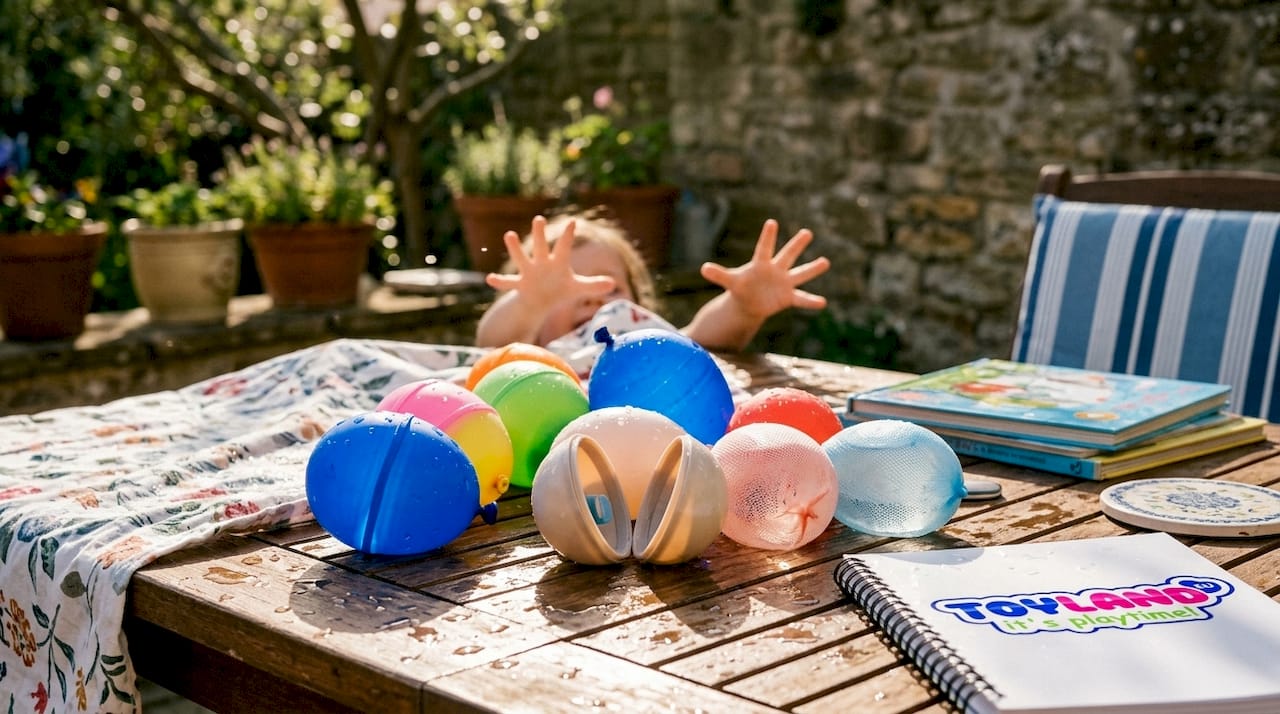
| Fabric water bombs | Absorbent cloth holds water | Pool-edge play, no burst needed | Does not burst on impact |
Magnetic silicone is the most popular type for good reason. The self-sealing mechanism removes the biggest frustration point from water balloon play, and the silicone construction keeps them durable through rough use.
For activity ideas that go beyond a standard free-for-all, try these with your family:
- Target practice: Set up buckets or hula hoops at different distances and score points for dunking a balloon in from a distance.
- Water balloon relay: Kids carry a filled balloon between their knees from one end of the yard to another. Fastest team wins.
- Keep away: Three or more players pass balloons over the heads of shorter players. Anyone who gets hit is out.
- Pool toss: Standing in a pool, toss the balloon up and catch it without triggering the splash. Surprisingly tricky and popular with older kids.
For more outdoor play activity ideas, families often combine reusable water balloons with other water toys to build a full afternoon of activity without needing much gear.
How to use, clean, and store them properly
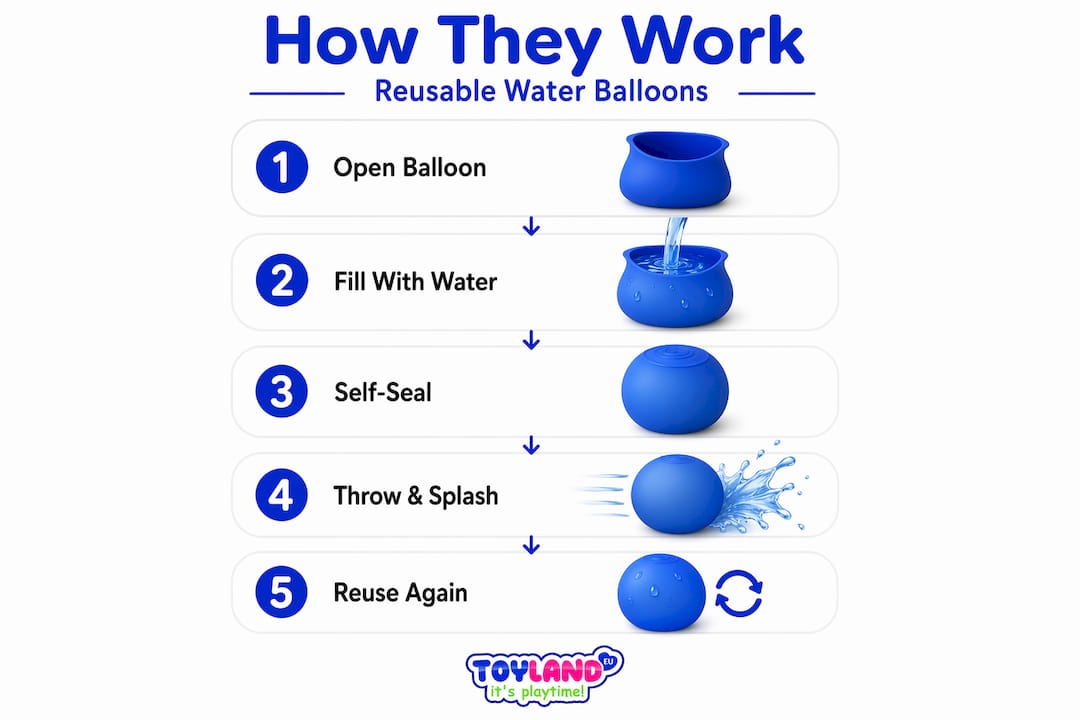
Getting the most life out of your reusable water balloons comes down to three habits: rinse, dry, and store right.
Using them correctly:
- Submerge the balloon in a bucket of clean water with the opening facing down.
- Allow the magnetic closure to draw in water until the shell is full.
- Lift out and throw. The closure will open on impact.
Cleaning after use:
- Rinse each balloon with fresh water after every session. This step matters most after pool or saltwater use because magnet housings corrode with mineral buildup if left unrinsed.
- Squeeze the balloon gently while rinsing to flush the interior.
- Lay them flat on a towel or drying rack. Do not store them while any moisture remains inside.
Storage tips:
- Storing balloons damp causes mildew inside the refill hole, which is the most common reason they fail before their time.
- Store in a mesh bag or open container to allow airflow.
- Keep away from direct sunlight for long periods, as UV exposure degrades silicone faster over a full season.
Pro Tip: After your last use of the season, let the balloons air dry overnight before packing them away in a mesh laundry bag. This keeps airflow around each balloon through the off-season and prevents any trapped moisture from causing problems.
My honest take on reusable water balloons
I’ve watched traditional water balloon fights end the same way for years. The game winds down, and someone has to crawl through the grass pulling up little rubber shreds before the dog finds them. The fun gets followed by a chore, and that’s the part nobody talks about when selling a $3 bag of balloons.
When I first tried reusable silicone balloons in a backyard setting with kids ranging from five to twelve years old, the difference was immediate. The younger kids could fill their own balloons without help, which changed the dynamic completely. They were independent participants rather than bystanders waiting for adults to hand them ammunition.
My one honest caveat: they are not a perfect product. The magnetic closure occasionally fails to open on a softer throw, giving you a dud that bounces instead of splashes. And the eco-friendly toy innovations behind them are still evolving. Some cheaper versions fall apart after a single season if you skip the drying step. Buy from a reputable source, follow the maintenance basics, and these will easily outlast a hundred bags of disposable balloons.
— Thane
Gear up for your best outdoor summer yet
Reusable water balloons are one piece of a much bigger outdoor play picture. At Toylandeu, we stock a broad selection of outdoor and active toys designed for families who want to spend more time playing and less time cleaning up. Whether you’re building a backyard obstacle course or looking for something to keep the energy going between water fights, our gesture-controlled stunt car is one of the most popular picks for active outdoor fun with kids of all ages. Browse the full Toylandeu catalog at toylandeu.com for free worldwide shipping on every order. For more water play inspiration, check out our guide to outdoor water toys for safety tips and top family picks.
FAQ
What are reusable water balloons made of?
Reusable water balloons are made from soft, flexible silicone with small internal magnets that form the self-sealing closure. They are designed to withstand repeated impacts without tearing.
How do reusable water balloons work?
You submerge the balloon in water and the magnetic opening fills and snaps shut automatically. On impact, the magnets separate, releasing the water, and the balloon resets for the next fill.
Are reusable water balloons safe for young kids?
They are safer than latex balloons in terms of cleanup and skin impact, but the small internal magnets pose an ingestion risk. Parents should supervise closely when young children are playing with them.
How many reusable water balloons do you need?
A 15-pack works well for four children, while groups of eight or more benefit from 30-packs to keep play moving without long waits between throws.
Where can you buy reusable water balloons?
Reusable water balloons are sold at major toy retailers, outdoor recreation stores, and online platforms. Look for silicone construction and dual-magnet closures for the best durability.
Recommended
- Embrace Eco-Friendly Creativity: Our Top Picks for Building Toys – ToylandEU
- Sustainable Toy Innovations Shaping Play in 2025: Parent’s Eco Guide – ToylandEU
- Top Eco-Friendly Toys Transforming Play in 2025 | Sustainable Choices for Parents – ToylandEU
- Eco-Conscious Toys for 2025 | Sustainable Play for Modern Parents – ToylandEU