

What Are Eco-Friendly Toys? A Parent's Guide
TL;DR:
- Eco-friendly toys are made from sustainable, non-toxic materials like FSC-certified wood, natural rubber, and food-grade silicone. They offer safer, more durable, and environmentally responsible play options that promote open-ended development and reduce waste. Prioritize replacing mouthing and bath toys first, and look for reputable certifications to ensure safety and transparency.
Eco-friendly toys are playthings made from sustainable, natural, or recycled materials that prioritize child safety and minimize environmental harm. Brands like Green Toys, PlanToys, and Melissa & Doug have built their reputations on this standard, using FSC-certified wood, organic cotton, natural rubber, and recycled plastics to create products that are safer for children and gentler on the planet. These toys are also called “sustainable toys” or “eco-conscious kids’ toys” in the industry. What sets them apart is not just the material. It is the entire lifecycle: how they are made, how long they last, and what happens when a child outgrows them.
What are eco-friendly toys made from?
The material is everything. A toy labeled “eco-friendly” must back that claim with verifiable sourcing, non-toxic finishes, and responsible manufacturing. Here is what to look for:
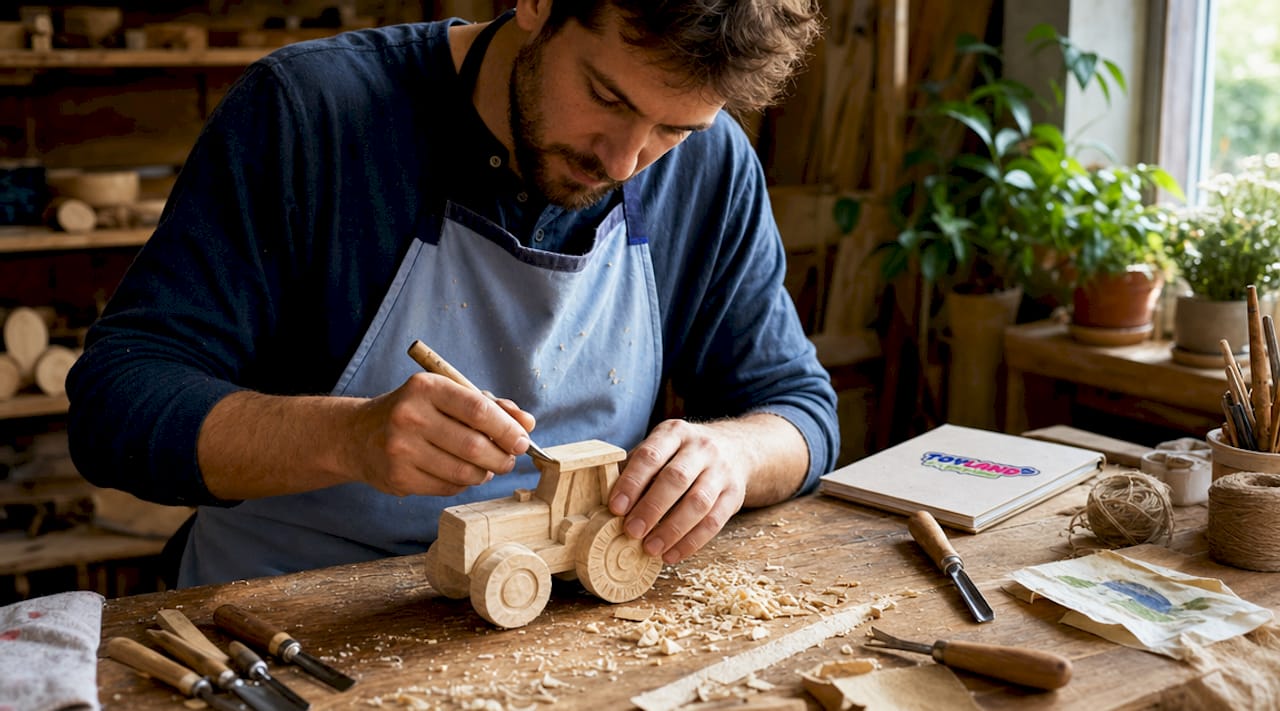
- FSC-certified hardwood: Solid hardwood from forests certified by the Forest Stewardship Council is the gold standard for wooden toys. It is durable, biodegradable, and free from the chemical additives found in most plastics.
- Natural rubber: Sourced from rubber trees, natural rubber is flexible, durable, and biodegradable. It is ideal for teethers and squeeze toys.
- Food-grade silicone: Food-grade silicone contains no BPA, phthalates, or PVC. Made from silica, it does not leach harmful chemicals under normal use, making it the safest choice for teethers and bath toys.
- Organic cotton and wool: Used in soft toys and stuffed animals, these materials avoid the pesticide residues common in conventionally grown fibers.
- Recycled plastics: These can be a legitimate eco-friendly option, but only with full transparency. Recycled plastics can harbor chemical residues, so parents should prefer brands that publish detailed polymer sourcing and testing reports.
One critical point many parents miss: the finish matters as much as the base material. Wooden toys coated in cheap paints are not truly eco-friendly or safe. Look for plant-based oils, beeswax, or water-based paints as finishing agents.
Pro Tip: Check for EN 71 (European toy safety standard) or ASTM F963 (U.S. standard) certifications on any toy you buy. These confirm the product has been tested for chemical safety, not just marketed as “natural.”
What are the benefits of eco-friendly toys for kids and families?
Choosing sustainable toys is not just an environmental statement. It is a practical decision with measurable payoffs for your child’s health, your household budget, and the planet.
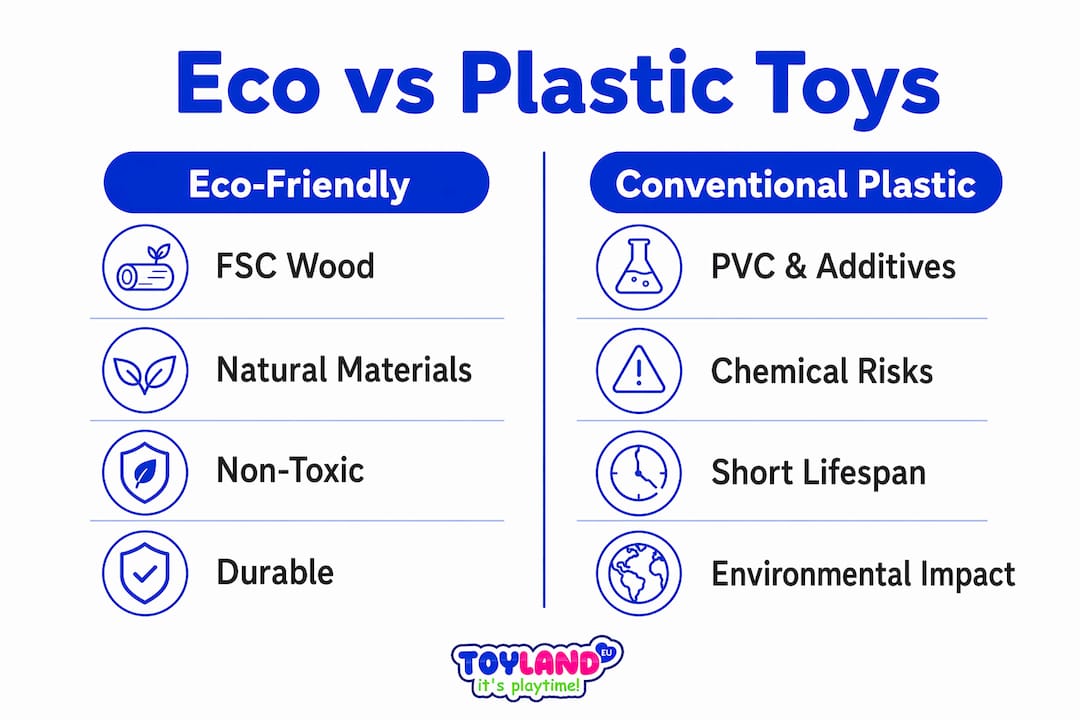
- Reduced chemical exposure. Conventional plastic toys, especially those made with PVC, can leach endocrine disruptors. Wood does not shed microplastics or release endocrine disruptors, making it significantly safer for young children who mouth their toys.
- Superior durability. A quality wooden toy outlasts dozens of comparable plastic toys, reducing overall household spending over time. The higher upfront cost of sustainable toys is offset by their ability to last across multiple children and even generations.
- Environmental impact. Eco-friendly materials are biodegradable or recyclable, which means they do not contribute to the growing problem of plastic waste in landfills and oceans.
- Developmental value. Eco-conscious toys prioritize open-ended play and are designed to be passed down or reused. Open-ended play builds creativity, problem-solving, and focus in ways that battery-powered single-function toys rarely do.
- Ethical production. Most reputable eco-friendly toy brands also commit to fair labor practices and transparent supply chains, which means your purchase supports responsible manufacturing.
The durability point deserves extra emphasis. Parents often hesitate at the price of a $40 wooden stacking toy versus a $12 plastic version. The wooden toy, maintained properly, can serve three children over 15 years. The plastic version typically breaks within one.
How do eco-friendly toys compare to conventional plastic toys?
The differences go beyond materials. Here is a direct comparison across the factors that matter most to parents:
| Factor | Eco-friendly toys | Conventional plastic toys |
|---|---|---|
| Primary materials | FSC wood, natural rubber, organic cotton, food-grade silicone | PVC, ABS plastic, synthetic dyes |
| Chemical safety | Non-toxic finishes, no BPA or phthalates | Risk of endocrine disruptors, microplastic shedding |
| Durability | High. Often lasts decades with proper care | Low to medium. Prone to cracking and breaking |
| Environmental footprint | Biodegradable or recyclable at end of life | Contributes to landfill and ocean plastic waste |
| Cost | Higher upfront, lower lifetime cost | Lower upfront, higher replacement cost |
| Play value | Open-ended, developmental, multigenerational | Often single-function, age-limited |
The chemical safety row is where conventional plastic toys fall shortest. PVC bath toys degrade quickly in warm, humid conditions, creating high chemical leaching risks and bacterial contamination. Studies found up to 75 million bacteria per square centimeter inside common rubber duck toys. That statistic alone explains why bath toys are the first category most pediatric health advocates recommend replacing.
Pro Tip: When evaluating a toy’s eco credentials, search for the brand’s material sourcing page. Brands like Green Toys and PlanToys publish this information openly. If a brand cannot tell you where its materials come from, that is your answer.
You can also explore Toylandeu’s eco-friendly building toy picks for a curated list of options that meet these standards.
How to choose eco-friendly toys and integrate them at home
Transitioning your child’s toy collection does not require replacing everything at once. A triage approach works best: start with the toys that carry the highest risk, then work outward.
- Replace mouthed and bath toys first. Prioritize replacing toys that go directly in a child’s mouth with food-grade silicone, natural rubber, or hardwood alternatives. Larger plastic toys used less in mouthing can be swapped out gradually as they break or are outgrown.
- Look for recognized certifications. EN 71, ASTM F963, FSC, and OEKO-TEX are the certifications that carry real weight. Avoid toys that use vague terms like “natural” or “green” without third-party verification.
- Care for what you buy. Wooden toys last longer when wiped clean with a damp cloth and occasionally conditioned with food-safe beeswax or mineral oil. Avoid soaking them in water.
- Choose open-ended designs. Blocks, art kits, and building sets offer more developmental value and longer play life than single-purpose toys. They also adapt to a child’s growing abilities, which extends their useful life.
- Budget strategically. Spend more on the toys your child uses daily and most intensively. For occasional-use toys, secondhand eco-friendly options from brands like Melissa & Doug or PlanToys are widely available and still safe.
For a broader view of what is available in 2025 and beyond, Toylandeu’s guide to sustainable toy innovations covers the newest materials and formats entering the market.
Key takeaways
Eco-friendly toys made from FSC-certified wood, natural rubber, and food-grade silicone are the safest, most durable, and most environmentally responsible choice for children at any age.
| Point | Details |
|---|---|
| Material defines safety | Choose FSC wood, natural rubber, or food-grade silicone over PVC and conventional plastics. |
| Replace mouthed toys first | Bath toys and teethers carry the highest chemical risk and should be swapped out immediately. |
| Certifications matter | EN 71, ASTM F963, and FSC labels confirm third-party safety testing, not just marketing claims. |
| Durability offsets cost | A quality wooden toy outlasts dozens of plastic equivalents, reducing long-term household spending. |
| Open-ended play wins | Eco-friendly toys designed for open-ended play deliver more developmental value and a longer useful life. |
Why I think “eco-friendly” labeling deserves more skepticism than it gets
Parents come to sustainable toys with the right instincts. They want safer materials, less waste, and products that actually last. But the label “eco-friendly” has become so overused that it now covers everything from genuinely responsible products to toys with a single recycled component and a green logo.
The most common misconception I see is that “recycled” automatically means “safe.” It does not. Recycled plastics can carry residual contamination from their previous life, and without transparent sourcing reports, you have no way to know what is in them. The brands worth trusting are the ones that publish their polymer sourcing openly and submit to independent testing.
The second misconception is that wooden toys are always safe. A wooden toy finished with cheap paint or synthetic lacquer is not meaningfully better than plastic. The wood is the starting point, not the whole story. Non-toxic finishes, food-safe oils, and water-based paints are what complete the picture.
My honest recommendation: treat “eco-friendly” as a prompt to ask questions, not a reason to stop asking them. The brands that welcome those questions, like Green Toys, PlanToys, and others with published transparency reports, are the ones worth your money. The brands that deflect with marketing language are not. Toylandeu’s non-toxic toy guide breaks down exactly which certifications to look for and why they matter.
— Thane
Explore eco-friendly toys at Toylandeu
Toylandeu carries a growing selection of eco-conscious kids’ toys that meet real safety and sustainability standards, from Montessori art kits to open-ended building sets.
The Enchanting Kids Art Workbook Montessori Drawing Kit is one of the strongest examples: a creative, open-ended kit designed to develop fine motor skills and artistic thinking without screens or single-use plastic components. It is the kind of toy that grows with a child rather than getting discarded after a season. Browse Toylandeu’s full catalog at toylandeu.com to find sustainable toy alternatives across every age group and interest, with free worldwide shipping on every order.
FAQ
What are eco-friendly toys, exactly?
Eco-friendly toys are playthings made from sustainable, non-toxic, or recycled materials such as FSC-certified wood, natural rubber, organic cotton, and food-grade silicone. They are designed to minimize environmental impact and reduce chemical exposure for children.
Why choose eco-friendly toys over regular plastic toys?
Eco-friendly toys eliminate the risk of chemical leaching from PVC and synthetic additives, last significantly longer than conventional plastic toys, and produce far less waste at the end of their life.
Are recycled plastic toys safe for kids?
Recycled plastic toys can be safe, but only when brands publish transparent polymer sourcing and independent testing results. Without that documentation, recycled plastics may carry residual chemical contamination from prior use.
What certifications should I look for on eco-friendly toys?
Look for EN 71 (European safety standard), ASTM F963 (U.S. safety standard), FSC (sustainable wood sourcing), and OEKO-TEX (textile safety). These are third-party verified and carry real accountability.
Which toys should I replace with eco-friendly options first?
Start with teethers, bath toys, and any toy your child regularly puts in their mouth. These carry the highest chemical exposure risk and are the most important to swap for food-grade silicone, natural rubber, or hardwood alternatives.
Recommended
- Sustainable Toy Innovations Shaping Play in 2025: Parent’s Eco Guide – ToylandEU
- Top Eco-Friendly Toys Transforming Play in 2025 | Sustainable Choices for Parents – ToylandEU
- Eco-Friendly Toy Innovations in 2025: Transforming Play for Conscious Families – ToylandEU
- Embrace Eco-Friendly Creativity: Our Top Picks for Building Toys – ToylandEU