

Must-Have Toys for Hobbyists: Top Picks for 2026
TL;DR:
- Effective hobby tools focus on rapid setup, versatility, and workflow support, enabling quick project completion. Prioritizing proven accessories like cutting mats, clamps, and sharpening setups enhances productivity more than expensive focal tools. Beginners should buy tools incrementally, emphasizing quality and practical application for sustained creativity.
Must-have toys for hobbyists are specialized tools and gadgets that empower creativity, sharpen skills, and deliver real project results across crafting, woodworking, modeling, and electronics. The best picks are not the most expensive or the most popular. They are the ones proven through testing, like those covered in Wirecutter’s hobby-crafts coverage, to deliver usability and rapid creative output. This list cuts through the noise with research-backed recommendations for every type of maker, from the weekend crafter to the dedicated scale modeler.
Quick Summary
The most effective hobby tools combine fast setup, broad functionality, and workflow support. Cricut Joy 2 leads crafting, WoodWiki’s six-tool power kit anchors woodworking, and workflow enablers like cutting mats and clamps outperform flashy gear in daily practice.
TL;DR
- Cricut Joy 2: best smart cutting machine for crafters
- WoodWiki’s six-tool kit: $650 to $1,400 for woodworking beginners
- Hand-tool woodworking kit: $370 to $500 with chisels, plane, and sharpening gear
- Scale modeling: side cutters, hobby knife, and sanding tools cover 90% of needs
- Soldering kits: WireJewelry Professional and EUROTOOL Basic for jewelry and electronics
- Workflow enablers (mats, clamps, storage) are the unsung heroes of every hobby
Table of Contents
- Top crafting gadgets every hobbyist should own
- Power and hand tools for woodworking hobbyists
- Modeling tools for scale model builders
- Soldering kits for jewelry making and small electronics
- How to organize your hobby tools for maximum creativity
- Key Takeaways
- Perspective
- Where to find hobby kits and creative toys
- FAQ
1. Top crafting gadgets every hobbyist should own
The Cricut Joy 2 is the single best entry point for crafters who want fast results without a steep learning curve. It sets up in under 30 minutes and supports print-then-cut functionality, meaning you can design, print, and cut custom stickers, cards, or iron-on transfers in one session. That speed matters because quick project wins are the single biggest driver of sustained hobbyist motivation.
The machine handles vinyl sheets, cardstock, iron-on material, and printable sticker paper. To get the most from it, you need a few accessories beyond the base unit:
- Fine-point blade for detailed cuts on paper and vinyl
- StandardGrip cutting mat (12x12 inch) for everyday projects
- Cricut Design Space app with free and premium project templates
- Weeding tools for removing excess vinyl cleanly
Pro Tip: Test the full workflow with included materials before buying extra vinyl or specialty blades. The Cricut Access subscription offers guided projects that help you learn the machine’s limits before spending more.
For hobbyists interested in DIY and craft projects, a smart cutting machine like the Cricut Joy 2 opens up dozens of creative directions from a single purchase.
2. Power and hand tools for woodworking hobbyists
Woodworking is one hobby where buying order matters as much as what you buy. WoodWiki recommends a six-tool power kit costing between $650 and $1,400, starting with a cordless drill and building toward a circular saw, jigsaw, random orbit sander, brad nailer, and track saw. Buying a single battery platform (like DeWalt 20V MAX or Milwaukee M18) across all tools saves money and eliminates the frustration of mismatched chargers.
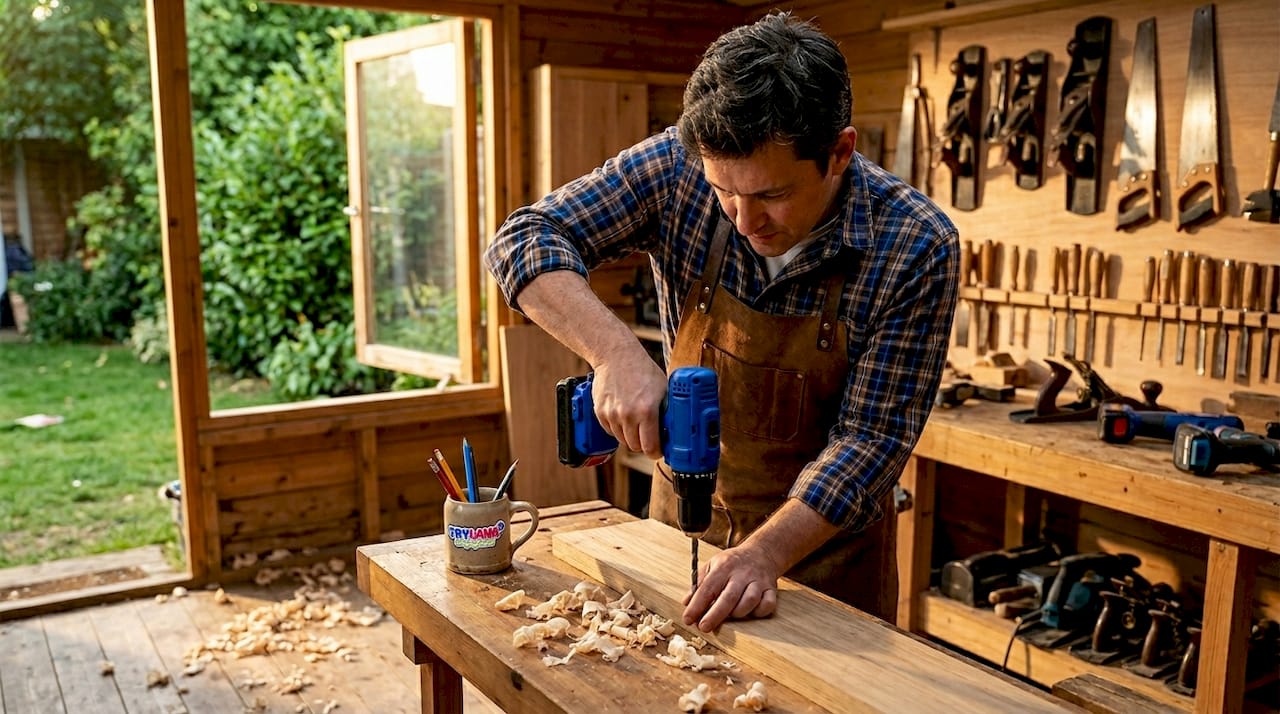
For makers who prefer hand tools, the entry cost is lower and the skill ceiling is higher. A hand-tool starter kit runs $370 to $500 and covers a bench plane, set of chisels, a crosscut saw, marking gauge, mallet, and sharpening gear. These tools produce furniture-grade results when used correctly.
Sharpening is the detail most beginners skip and later regret. Sharpening is the force multiplier that determines tool performance more than the tool itself. A $40 chisel that is razor-sharp outperforms a $200 chisel that is dull.
| Category | Starter cost | Best for |
|---|---|---|
| Power tool kit (6 tools) | $650 to $1,400 | Speed, repetitive cuts, larger projects |
| Hand-tool kit | $370 to $500 | Precision joinery, quiet work, small spaces |
| Sharpening setup | $50 to $150 | Both categories, non-negotiable |
Pro Tip: Pre-1940 vintage bench planes, found on eBay or at estate sales, offer exceptional performance after minimal tuning and cost a fraction of new premium planes from Lie-Nielsen or Veritas.
3. Modeling tools for scale model builders
Scale modeling rewards precision over quantity. The tools that matter most are the ones you reach for on every single build, not the specialized gear that sits in a drawer. According to modeling toolkit research, side cutters, a hobby knife, and sanding tools between 400 and 1000 grit cover the vast majority of assembly and finishing needs.
Here is what belongs in every modeler’s starter kit:
- Sprue cutters (side cutters) for clean part removal without stress marks
- Tamiya or X-Acto hobby knife with spare blades for trimming and scribing
- Sanding sticks and sheets in 400, 600, and 1000 grit for seam removal
- Self-healing cutting mat to protect your work surface and guide straight cuts
- Plastic cement (Tamiya Extra Thin) for invisible, strong joins on styrene kits
- Parts storage trays to prevent losing small components mid-build
Airbrushes, panel line tools, and specialty weathering sets are worth adding later. Buying them before you have completed five or six builds wastes money and creates decision fatigue. The core principle is to avoid overspending on specialized gear until your skills and project demands actually require it.
Pro Tip: Starter modeling kits from Tamiya or Revell include basic instructions and pre-colored parts, which let you practice cutting and assembly before investing in paints or advanced finishing tools.
4. Soldering kits for jewelry making and small electronics
Soldering is one hobby where the wrong kit creates safety problems, not just frustration. A quality starter kit for jewelry making includes a heat source, solder, flux, heat-resistant work surface, and tweezers. The difference between jewelry soldering and electronics soldering is significant: jewelry work uses a torch and silver or gold solder, while electronics use a temperature-controlled iron and rosin-core solder.
For jewelry makers, the WireJewelry Professional kit and the EUROTOOL Basic kit represent two reliable entry points at different price levels. The WireJewelry kit suits makers who want to work with sterling silver and need a butane torch setup from day one. The EUROTOOL Basic works well for those learning technique before committing to precious metals.
Electronics hobbyists need a different setup entirely. A temperature-controlled soldering iron (Hakko FX-888D is the benchmark), rosin-core 60/40 solder, brass tip cleaner, and a PCB holder cover most beginner and intermediate projects.
Pro Tip: Match your kit to your first three planned projects, not your long-term ambitions. A torch kit for someone making simple wire-wrapped rings is overkill and adds unnecessary risk.
5. How to organize your hobby tools for maximum creativity
The tools that most hobbyists undervalue are not the focal instruments. They are the workflow enablers like cutting mats, clamps, sharpening setups, and storage solutions that prevent errors and speed up every creative session. A disorganized workspace adds friction to every step of a project and increases the chance of damaging materials or tools.
| Workflow category | Examples | Primary benefit |
|---|---|---|
| Surface protection | Self-healing cutting mats, silicone work mats | Prevents material damage and blade dulling |
| Clamping and holding | F-clamps, spring clamps, PCB holders | Frees hands and holds work accurately |
| Sharpening | Diamond plates, leather strops, honing guides | Maintains tool performance between projects |
| Storage | Modular parts bins, tool rolls, pegboards | Reduces setup time and prevents loss |
Small-space hobbyists benefit most from modular systems. A pegboard above a workbench, combined with labeled bins for consumables, cuts average setup time significantly. For STEM-oriented hobbyists, organized tool kits also model good engineering habits that transfer directly to project quality.
Pro Tip: Before buying a new tool, spend one session working without it and identifying exactly what it would solve. Incremental investment guided by real project friction avoids clutter and wasted spending.
Key takeaways
The most effective must-have toys for hobbyists are proven workflow tools that reduce friction, enable fast project starts, and scale with your growing skills.
| Point | Details |
|---|---|
| Start with proven tools | Prioritize test-validated picks like Cricut Joy 2 over popular but untested alternatives. |
| Buy in order, not all at once | WoodWiki’s six-tool sequence saves money and avoids redundant purchases. |
| Sharpening beats upgrading | A sharp basic tool outperforms an expensive dull one every time. |
| Workflow enablers matter most | Mats, clamps, and storage prevent errors more reliably than premium focal tools. |
| Match kit to first projects | Select soldering or modeling kits based on your next three builds, not your ultimate goals. |
Why the unglamorous tools are the ones that actually matter
I have tested a lot of hobby gear over the years, and the pattern is always the same. The tool that gets the most attention in the unboxing video is rarely the one that determines whether a project succeeds. It is the cutting mat underneath it. It is the sharpening stone that nobody photographs. It is the labeled parts bin that means you never lose a 2mm screw again.
The Cricut Joy 2 resonates with crafters not because it is the most powerful cutting machine on the market. It resonates because you can go from box to finished project in under an hour. That first win matters more than any spec sheet. The same logic applies to Tamiya’s Extra Thin cement for modelers or a Hakko iron for electronics builders. These are tools that get out of your way and let you make things.
My honest advice: resist the urge to build a complete toolkit before you have completed your first ten projects. The hobbyists I have seen thrive are the ones who buy one good tool, learn it deeply, and add the next piece only when a specific project demands it. That approach produces better work and costs less. It also keeps the hobby feeling like a hobby rather than a gear acquisition exercise.
— Thane
Explore creative kits and hobby toys at Toylandeu
Toylandeu carries a curated selection of creative kits and hobby-oriented toys that complement everything covered in this guide. The Montessori Drawing Kit gives visual artists a structured, skill-building entry point into illustration and design. The 24-Color Clay Modeling Kit supports sculptors and tactile makers with a full color range and guided project ideas. For hobbyists who love dynamic, skill-based gadgets, the gesture-controlled stunt car delivers 360-degree RC action with an intuitive control system. Toylandeu ships worldwide with free delivery, making it easy to find the right creative tool wherever you are.
FAQ
What are the best hobby tools for beginners?
The best starting tools depend on your hobby, but Cricut Joy 2 for crafting, a cordless drill for woodworking, and Tamiya side cutters for modeling each offer fast results with minimal learning friction. Prioritize tools with short setup times and broad project applications.
How much should a beginner hobbyist spend on tools?
A woodworking hand-tool starter kit runs $370 to $500, while a power tool kit costs $650 to $1,400. Crafting and modeling setups start lower, often under $100 for core tools. Buy incrementally based on actual project needs rather than building a full toolkit upfront.
What are essential toys for collectors and model builders?
Scale model builders need Tamiya or X-Acto hobby knives, sprue cutters, sanding sticks in 400 to 1000 grit, and plastic cement. A self-healing cutting mat and parts storage trays round out the core modeling toolkit without unnecessary expense.
Do soldering kits differ for jewelry versus electronics?
Yes. Jewelry soldering requires a butane torch and silver-compatible solder, while electronics soldering uses a temperature-controlled iron and rosin-core solder. Using the wrong setup produces weak joins or damaged components, so match the kit to your specific hobby before purchasing.
Are workflow tools really more important than the main hobby tool?
Research from modeling and woodworking communities confirms that workflow enablers like cutting mats, clamps, and sharpening setups often determine project quality more than the focal tool itself. They reduce errors, protect materials, and speed up every creative session.