

Classroom Ready Multiplication Games for Kids with Hands On Kit Picks
The fastest way to master times tables is short daily mixed practice, five to fifteen minutes combining timed fluency drills, puzzles, and hands-on activities. The best game rotation includes at least one timed drill, one adaptive digital game, one card or board game, and physical manipulatives, so a child moves from counting on fingers to instant recall. Age-graded examples and specific Toylandeu™ picks follow.
TL;DR:
- Short daily practice sessions of five to fifteen minutes using a mix of timed drills, puzzles, and manipulatives are more effective than longer, infrequent sessions.
- Digital games like Math Trainer and Prodigy Math provide adaptive difficulty and automatic progress tracking, but physical manipulatives help deepen conceptual understanding.
- Simple low-prep games such as Multiplication War and problem-card relays engage children in active learning without extensive setup or screen time.
- Combining hands-on array-building activities with regular drills significantly improves both accuracy and confidence in multiplication facts.
- Toylandeu™ offers versatile kits that support visual and conceptual learning, suitable for ages three to twelve, complementing game-based practice.
Table of Contents
- Top Multiplication Games and Activities for Every Age
- How to Run Short, Effective Practice Sessions That Build Recall
- Screen-Based vs. Printable Games: What to Choose and When
- Low-Prep Game Plans You Can Run Tomorrow
- Toylandeu™ Picks: Hands-On Kits That Back Up the Games Above
- A Parent’s Note on What Actually Worked
- Where to Buy the Kits Featured in This Guide
- Sources
- FAQ
Top Multiplication Games and Activities for Every Age
Multiplication practice games work best when you rotate formats instead of drilling the same worksheet every day. Kids get bored fast, and bored kids stop learning. Here’s how to group the options so you’re not scrambling for ideas every afternoon.
1. Timed fluency drills. MathIsFun’s Math Trainer gives kids 60 seconds to answer as many facts as possible, which works well for ages 7 to 11 once they know their facts conceptually and just need speed. No setup required, just a browser.
2. Adaptive web games. Prodigy Math adjusts difficulty in real time and ties questions to grade-level standards, making it a strong fit for classrooms tracking Common Core progress. Multiplication Duck uses spaced repetition to keep facts fresh, good for ages 6 to 9 who need gentler pacing.
3. Card and board games. Multiplication War (explained in detail below) needs nothing but a deck of cards and works for ages 6 and up. Bingo with a printed times-table card is a five-minute setup and plays well in groups of any size.
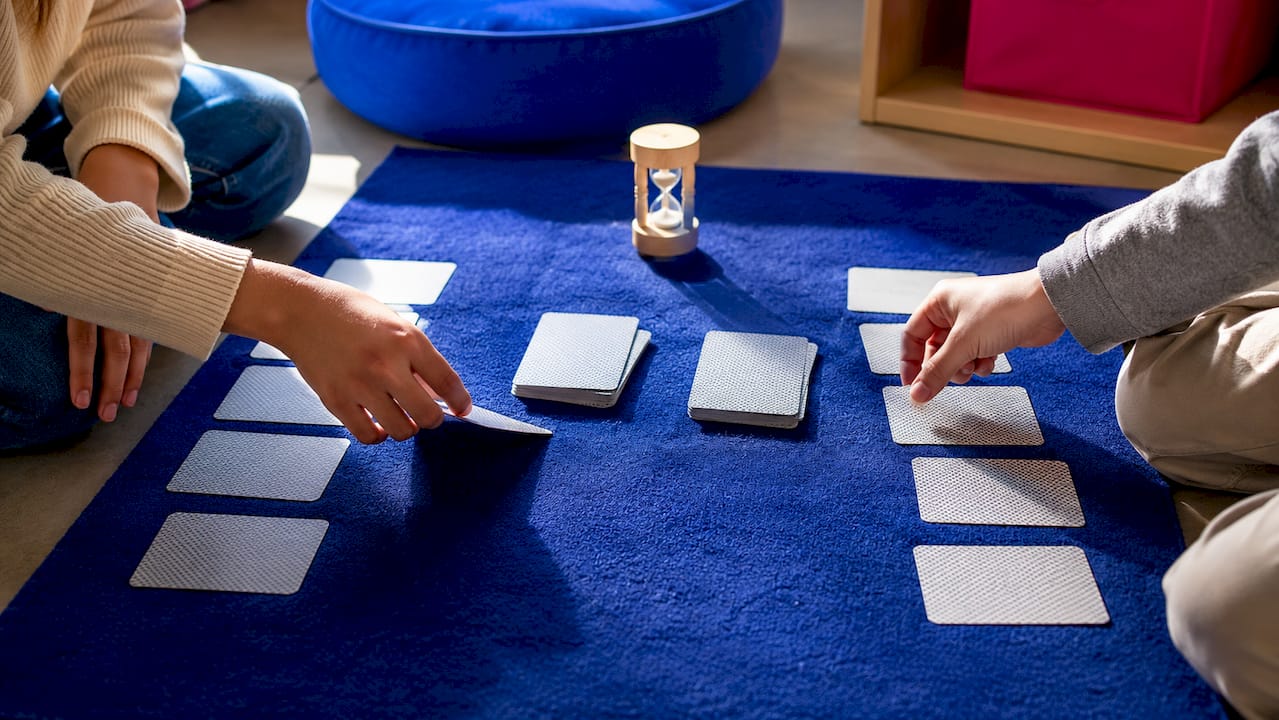
4. Manipulatives. Counting bears, base-ten blocks, or an array-building kit help kids ages 5 to 8 see why 4 times 3 equals 12, not just memorize that it does. This is the step most flashcard drills skip entirely.
5. Kinesthetic relays. Problem-card relay races get kids ages 8 to 11 out of their seats, which matters for classrooms doing a second math block after lunch.

6. Printable puzzles. Multiplication crosswords and array-matching worksheets, no screen needed, fine for car rides, waiting rooms, or homework folders.
For classrooms, stick to the low-prep options: card games, printables, and browser-based drills that need zero setup between periods. At home, mix in manipulatives on weekends when there’s more time to sit together and build with the pieces.
How to Run Short, Effective Practice Sessions That Build Recall
Five to fifteen minutes a day beats a single 45-minute cram session, and it’s not close. Short, frequent practice sessions build fluency faster than infrequent long ones because recall is a habit, not a lecture.
Follow this progression:
- Practice mode — no timer, focus on accuracy until the child hits roughly 80% correct on a given table.
- Timed mode — introduce 60-second cutoff challenges once accuracy is solid; the pressure forces the brain to skip counting and pull the answer from memory.
- Survival mode — mix tables and remove the safety net; one wrong answer ends the round, which is where true fluency shows up.
A simple weekly mix keeps things fresh: Monday for speed drills, Tuesday for puzzles, Wednesday for hands-on manipulatives, Thursday for a mixed-table game, Friday for a two-minute check-in to see what stuck.
Kids who feel confident with the facts handle the clock fine; kids who are still guessing just freeze up and start hating math games altogether.*
Screen-Based vs. Printable Games: What to Choose and When
Digital games win on engagement and tracking. A platform like Math Playground mixes fast-paced challenges with slower puzzle modes, which covers kids who thrive under pressure and kids who need to think things through. Digital tools also log progress automatically, so you’re not guessing which tables still need work.
Printable and physical games win on something screens can’t replicate: fine motor practice, face-to-face interaction, and zero screen time before bed. A deck of cards or a set of dice teaches the same facts without another glowing rectangle in the room.
When picking a digital multiplication app, look for:
- Alignment with Common Core or your local grade standards
- Adaptive difficulty that adjusts to the child’s actual level, not a fixed script
- No ads interrupting practice mid-session
- Some form of progress reporting parents or teachers can check
If screen time is limited at home, most digital puzzle modes translate directly to paper. An array-matching game becomes a grid worksheet; a speed-round app becomes a stopwatch and a stack of flashcards.
Low-Prep Game Plans You Can Run Tomorrow
These three need almost no setup and work in a classroom or at the kitchen table.
-
Multiplication War. Split a deck of cards (face cards removed) between two players. Both flip two cards and multiply them; highest product wins the round. Scaffold by removing high cards for kids still learning smaller tables. Assess by tracking how many rounds a child solves without pausing to count.
-
Problem-card relay. Post multiplication problems around the room or yard. Kids race to solve one, bring the answer back, then grab the next card. Time each round and log completed problems for a quick fluency snapshot.
-
Array builder puzzle. Give kids grid paper and have them draw arrays for a set of facts (3x4 becomes a 3-by-4 grid). This bridges the conceptual gap that pure memorization skips. Vary difficulty by increasing the numbers or timing the drawing.
Each plan pairs with a five-question exit ticket targeting the tables just practiced. That data tells you whether to speed up or slow down tomorrow.
Toylandeu™ Picks: Hands-On Kits That Back Up the Games Above
Digital drills and card games handle the recall side. The conceptual side, understanding why the math works, usually needs something a child can touch. That’s the gap Toylandeu™'s hands-on catalog fills.
The Creative Learning Set: Fun Drawing & Math Game for Kids 3-12 Years works well for array-building exercises since kids can physically construct and rearrange groups before jumping to abstract facts. Beyond that kit:
- A Montessori-style counting or fraction kit helps older elementary kids connect multiplication to division and fractions later on.
- Magnetic or building-block sets double as impromptu array builders when you’re short on graph paper.
- Printable-friendly supplies (blank cards, dry-erase boards) let you turn any of the game plans above into a repeatable station.
| Product type | Best use | Age range |
|---|---|---|
| Creative Learning Set | Array-building, visual models | 3–12 |
| Montessori math kits | Bridging multiplication to fractions | 8–12 |
| Building blocks/magnetic sets | Improvised array practice | 5 |
A Parent’s Note on What Actually Worked
Two weeks of nothing but flashcards got us nowhere. What changed things was mixing in a physical array-building session once a week alongside the daily timed drills. Accuracy jumped noticeably within a month. If you’re stuck, try this: two eight-minute sessions this week, one timed, one hands-on. Compare the difference yourself.
— Thane Holland
Where to Buy the Kits Featured in This Guide
If you want to skip the printer and grab something your kids can build with tonight, the Creative Learning Set: Fun Drawing & Math Game for Kids 3-12 Years is the direct match for the array-building activities covered above.
It’s built for ages 3 to 12, so it stretches from early counting all the way through the multiplication and fraction work older elementary kids tackle. Toylandeu™ ships internationally with free worldwide shipping, so ordering one kit for a classroom station or a home practice corner doesn’t add a shipping surprise at checkout. If the Creative Learning Set is out of stock or you want to browse the wider catalog of math and STEM kits, head to the main Toylandeu™ catalog to compare options before you order.
Sources
FAQ
What are some fun games that teach multiplication?
Multiplication War, timed drills on sites like Math Playground, array-building puzzles, and relay races with problem cards all teach the facts while keeping kids engaged rather than bored at a worksheet.
How do I teach multiplication to kids in a fun way?
Mix modes throughout the week: hands-on manipulatives for concepts, timed drills for speed, and card or puzzle games for variety, in sessions of five to fifteen minutes rather than one long sitting.
What are some common multiplication games?
Card games like Multiplication War, bingo with times-table cards, adaptive apps like Prodigy Math, and printable array puzzles are among the most widely used options in classrooms and at home.
What are some cool math games that teach multiplication?
Adaptive web games like Multiplication Duck use spaced repetition to keep facts fresh, while hands-on kits such as the Creative Learning Set let kids build visual arrays instead of just memorizing numbers.