

Skip DIY: Ready to Run Waterproof RC Cars for Gifts at Toylandeu
Yes, ready-to-run waterproof and water-resistant RC toy cars are real products you can buy today, and they hold up fine in puddles, wet grass, and light rain. That doesn’t mean pool submersion or saltwater play, so check the product page before you assume otherwise. Look for explicit “waterproof electronics” wording, any listed IP rating, and what’s included in the box. Thane Holland covers exactly what to check on Toylandeu™ product listings below.
TL;DR:
- Waterproof electronics like sealed ESCs and gasketed receiver boxes are essential for handling splashes and brief immersion, but often have depth and time limits.
- Most waterproof claims exclude saltwater exposure, prolonged submersion, and damage from wear on drivetrain metal parts, which remain vulnerable despite sealed electronics.
- Proper aftercare, including thorough drying, re-greasing, and moisture inspection, significantly extends the life of waterproof RC cars after wet runs.
- Toylandeu™ offers ready-to-run waterproof RC models suited for different outdoor conditions, with clear specifications such as IP ratings and included accessories.
- DIY waterproofing measures can improve moisture resistance but are no substitute for factory-sealed, water-ready models designed for frequent wet-weather use.
Table of Contents
- What Does “Waterproof” Actually Mean for an RC Toy Car?
- What Waterproof Features Should You Check Before Buying?
- Which Waterproof RC Cars Does Toylandeu™ Recommend?
- How Do You Care for a Waterproof RC Car After a Wet Run?
- How Do You Pick the Right Waterproof RC Car as a Gift?
- How Do You Waterproof an RC Car That Isn’t Sealed?
- What Tools and Materials Do You Need for DIY Waterproofing?
- How Do You Test If Your Waterproofing Actually Worked?
- What Toylandeu™ Wants You to Know Before You Buy
- Shop Ready-to-Run Waterproof RC Cars at Toylandeu™
- Sources
- FAQ
What Does “Waterproof” Actually Mean for an RC Toy Car?
“Water-resistant” and “waterproof” get used loosely in toy marketing, and the difference matters more than most buyers realize. Water-resistant generally means the car can handle splashes, light rain, or a quick pass through a puddle without frying its circuit board. Waterproof suggests a higher tolerance, sometimes including brief contact with standing water, but it rarely means the toy can be dunked and left there.
The clearest way to cut through the marketing language is the IPX rating system, a standard manufacturers use to qualify moisture protection. An IPX4 rating typically covers splashing water from any direction, which is plenty for a rainy backyard session. IPX7 suggests the item can survive brief, shallow immersion, but that’s a lab test condition, not a green light for lake play.
Even when a listing uses the word “waterproof,” manufacturers almost always attach caveats. Saltwater is usually off-limits because it accelerates corrosion far faster than fresh water. Prolonged submersion voids the practical protection regardless of the rating, and most brands specify a depth or time limit buried in the fine print. Read that fine print. It’s the difference between a toy that survives five birthday parties and one that dies in week two.
What Waterproof Features Should You Check Before Buying?
Not every part of an RC car benefits equally from waterproofing, and knowing which components actually matter helps you separate a genuinely protected toy from one that just has a shiny “waterproof” sticker on the box.
The electronics are where waterproofing counts most. A sealed Electronic Speed Controller (ESC) keeps water out of the component that controls motor power, and it’s often the first thing to fail on a cheap, unsealed model. A waterproof steering servo, a gasketed receiver box, and connectors with sealed balance plugs round out the electronics package that genuinely water-resistant labels are usually referring to.
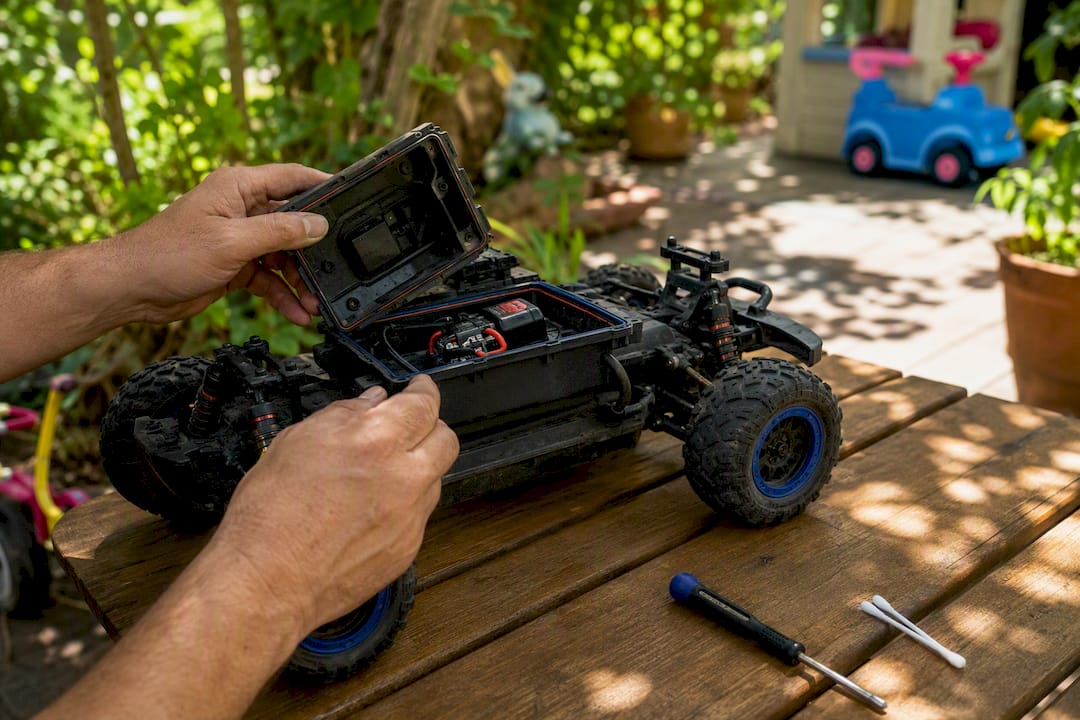
Design details matter too. High ground clearance keeps the electronics bay further from puddle depth, and an enclosed battery compartment with splash guards adds another layer of separation between water and wiring.
Here’s what to scan for on any product listing:
- Sealed ESC and waterproof steering servo mentioned by name
- Gasketed or sealed receiver box
- Enclosed, water-resistant battery compartment
- Higher ground clearance for off-road or wet-grass use
- A stated IP rating or explicit “waterproof electronics” claim
What waterproofing doesn’t cover is just as important. Bearings, drive shafts, and other metal drivetrain parts stay exposed even on well-sealed models, and they’ll wear or rust with repeated wet use regardless of what the electronics box says.
Pro Tip: If a listing doesn’t mention sealed electronics or an IP rating anywhere, assume it’s a fair-weather toy. Silence on waterproofing is rarely an oversight.
Which Waterproof RC Cars Does Toylandeu™ Recommend?
Toylandeu™ carries several ready-to-run models built with wet-weather play in mind, each suited to a slightly different buyer.
- RC All-Terrain Waterproof RC Car: Built for kids and teens who want to drive through mud, puddles, and rough yards without babying the truck after every run. Good pick when the recipient plays outdoors more than indoors.
- RC Amphibious 4WD Pink RC Car & Boat: A novelty pick that transitions from land to water, ideal for a birthday gift where the “wow” factor matters as much as durability.
- RC All-Weather 4WD RC Monster Truck: A rugged monster truck body paired with all-weather electronics, aimed at buyers who want one toy that handles snow, rain, and dirt equally well.
- RC All-Terrain JJRC Q156 Remote Control Stunt Car: A compact stunt car with water-and-land claims, a solid fit for smaller hands or a second car for a sibling.
- RC Durable Mini Remote Control Off-Road SUV: A budget-friendly option for younger kids still getting used to RC controls, with water-resistant construction that forgives the occasional puddle detour.
Each product page lists age range, included battery and charger status, and the specific waterproof claim, so check those details before checkout rather than assuming they match across models.
How Do You Care for a Waterproof RC Car After a Wet Run?
Sealed electronics buy you protection during the run, not immunity from every consequence of getting wet. Aftercare is what actually extends the life of the toy, and skipping it is the most common way owners undo a perfectly good waterproof design.
- Remove the battery immediately after driving through water, even if nothing looks wrong.
- Pop off the body shell and towel-dry or shake out any pooled water from the chassis.
- Let the car air-dry fully in a warm, ventilated spot before storing or charging.
- Use compressed air to clear water from tight crevices around the wheel wells and chassis joints.
- Re-grease bearings and dogbones with a water-displacing lubricant or marine grease, since driving through water accelerates mechanical wear even when the electronics stay dry.
Battery handling deserves its own attention. Inspect connectors for moisture before reattaching a battery, and never charge a battery pack that’s still wet. If the RC uses a LiPo battery, store it at a partial charge in a cool, dry spot rather than leaving it topped off between uses.
Pro Tip: Keep a small tube of dielectric grease in your toolbox. A dab on battery connectors after every wet run prevents the slow corrosion that eventually causes intermittent power loss.
If a model stops responding correctly after a soak despite following these steps, check the product page for warranty terms or reach out to Toylandeu™ support before attempting a repair yourself.
How Do You Pick the Right Waterproof RC Car as a Gift?
Toy-grade waterproof models trade some long-term durability for a lower price and simpler design, while hobby-grade versions pair sealed electronics with serviceable metal drivetrain parts built to survive years of use and repair.
Match the toy to how it’ll actually be used. A kid running through wet grass and puddles needs basic water resistance; a buyer chasing amphibious novelty play wants a model specifically built to enter water, like the amphibious car above.
- Confirm whether the battery and charger are included, since many performance models sell them separately.
- Check the recommended age range against the recipient’s actual age and RC experience.
- Look for spare parts availability if the recipient tends to be rough on toys.
- Weigh price against warranty coverage rather than choosing on price alone.
How Do You Waterproof an RC Car That Isn’t Sealed?
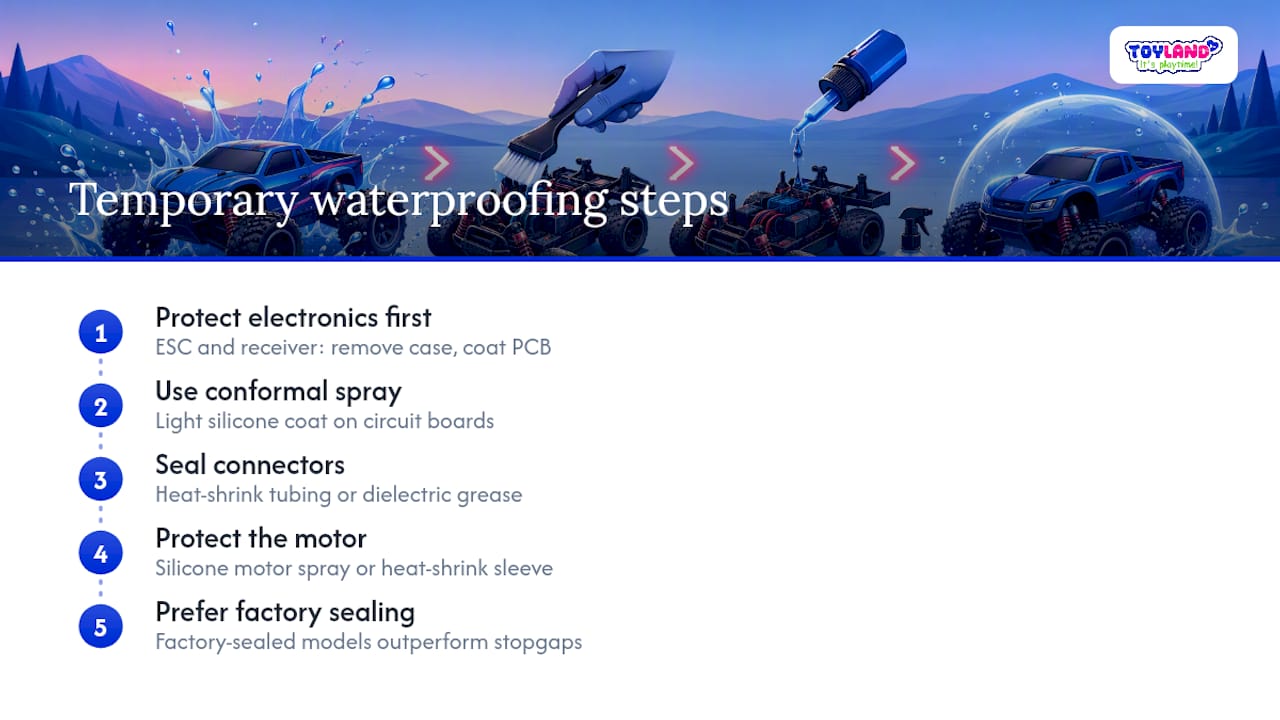
If you already own a non-waterproof RC car, a few practical steps can improve its moisture tolerance, though none of them turn it into a true waterproof model. Start with the electronic speed controller and receiver, since these are the components most likely to short out from a wet run. A light coat of silicone conformal spray, applied to the circuit board after removing the case, adds a thin protective barrier against moisture without affecting performance.
Connectors deserve separate attention. Battery connectors and servo plugs are common entry points for water, so wrapping them with heat-shrink tubing or a dab of dielectric grease at each connection point cuts down on corrosion risk significantly. Motor protection matters too, since brushed motors have exposed windings that corrode quickly once wet. A silicone-based motor spray or a simple heat-shrink sleeve around the motor housing helps, though the motor still needs full drying after any water exposure.
None of these steps replace a factory-sealed design. They’re stopgap measures that reduce risk, not a substitute for gasketed housings and sealed connectors built into the vehicle from the start. If wet-weather driving is a regular activity rather than an occasional accident, a factory waterproof model designed for the job will hold up longer and need far less babysitting after every run.
What Tools and Materials Do You Need for DIY Waterproofing?
A basic DIY waterproofing attempt doesn’t require a workshop, but a few specific items make the difference between a lasting seal and a wasted afternoon. Silicone conformal coating spray, sold at most hobby shops, is the core material for protecting circuit boards. Dielectric grease handles connector protection, and heat-shrink tubing with a small heat gun (or even a lighter used carefully) seals wire joints.
A small Phillips screwdriver set is necessary for opening the ESC and receiver housings, along with a soft brush for clearing dust before applying any coating. Cotton swabs help apply grease precisely to small connector pins without over-application, which can attract dust and cause its own problems.
Keep isopropyl alcohol and a lint-free cloth on hand for cleaning surfaces before coating. Silicone and grease adhere poorly to dirty or oily components, so skipping this step undermines the whole process. A small parts tray or magnetic mat keeps screws organized during disassembly, since RC chassis screws are easy to lose and expensive to replace individually.
None of this is a large investment. A basic kit covering conformal spray, dielectric grease, and heat-shrink tubing typically runs under the cost of a replacement ESC, which makes the upfront materials worth having on hand even for occasional use.
How Do You Test If Your Waterproofing Actually Worked?
Testing before a real wet-weather run saves you from discovering a failed seal in the middle of a rainstorm. A simple spray test is the safest first check: mist the car lightly with a spray bottle, focusing on seams, connector points, and the receiver box, then run the car normally afterward and watch for stuttering, erratic steering, or sudden power loss.
A more demanding test involves running the car through a shallow puddle, no deeper than the wheel hubs, for a few short passes rather than one prolonged soak. Manufacturers and hobby guides consistently advise against deep or prolonged submersion even on factory-sealed models, so a DIY waterproofing job should be tested even more conservatively.
After either test, open the electronics bay and inspect for any visible moisture on the circuit board or connectors. A dry board after a spray test is a good sign; any dampness means the seal needs another pass before you trust it with an actual wet run. Retest after every significant repair or disassembly, since reopening the ESC housing can disturb a previously good seal.
What Toylandeu™ Wants You to Know Before You Buy
Waterproof claims genuinely change how much freedom you have with an RC car, but they don’t remove the need for basic aftercare. A sealed ESC and gasketed receiver box buy you peace of mind during a rainy afternoon, not a pass on drying the chassis afterward or re-greasing bearings when they start to squeak.
The honest take: buy for the claim that matches the actual use case, not the flashiest marketing copy. A backyard puddle-jumper doesn’t need the same waterproofing as a car meant for genuine land-to-water play, and matching expectations to reality is what keeps a gift toy running past the first month.
— Thane Holland
Shop Ready-to-Run Waterproof RC Cars at Toylandeu™
Toylandeu™ sells factory-built waterproof and water-resistant RC toy cars, so you skip the guesswork of DIY sealing kits and get sealed electronics straight out of the box. Every listing states the waterproof claim, age range, and whether a battery and charger come included, which means less scrolling and more confidence at checkout.

If you’re shopping for a gift, pair the car with a spare battery pack so wet-weather runs don’t get cut short by a single charge. The RC Durable Mini Remote Control Off-Road SUV is a solid entry point for younger recipients, while older kids or teens might prefer something with more speed and stunt capability, like the RC Revolutionary Gesture-Controlled Stunt Car. Browse the full waterproof RC lineup on Toylandeu™ and check each product page for the exact IP rating and included accessories before you add it to your cart.
Sources
FAQ
Can a waterproof RC car go underwater?
Most waterproof-labeled RC cars are built for splashes, puddles, and brief shallow contact, not full submersion, and manufacturers generally advise against driving through deep standing water.
Is it safe to drive a waterproof RC car in saltwater?
No. Saltwater corrodes metal components far faster than fresh water, and most manufacturer guidance specifically warns against saltwater use even on sealed models.
Can I charge the battery right after a wet run?
Never charge a battery that’s still wet or damp. Dry the battery and its connectors completely and inspect for moisture before reconnecting it to a charger.
Does using an RC car in water void the warranty?
It depends on the specific product and how the water exposure occurred; check the Toylandeu™ product page or contact support directly, since warranty terms vary by model and claim type.
What’s the difference between a toy-grade and hobby-grade waterproof RC car?
Toy-grade models focus on sealed, low-cost electronics for casual play, while hobby-grade models add serviceable, repairable drivetrain parts designed for longer-term durability.