

How to clean plush dolls: safe methods for parents
Your child’s favorite stuffed bunny has survived juice spills, muddy hands, and a suspicious encounter with the dog. Now it smells like a gym locker and looks like it lost a fight. Cleaning plush dolls feels risky because the wrong method can shrink the stuffing, bleed the colors, or destroy a beloved toy entirely. The good news is that with the right approach, you can get that doll fresh, clean, and germ-free without any drama. This guide walks you through every method, from machine washing to spot cleaning, so you always know exactly what to do.
Table of Contents
- Understanding plush dolls: materials, care labels, and risks
- What you’ll need: tools, products, and safe detergents
- Step-by-step cleaning methods: machine wash, hand wash, and spot cleaning
- Frequency, disinfection, and handling illness
- Troubleshooting, drying, and preserving plush quality
- Explore safe, adorable plush dolls and educational toys at ToylandEU
- Frequently asked questions
Key Takeaways
| Point | Details |
|---|---|
| Check care labels first | Always identify cleaning recommendations and risks by reading the doll’s care label. |
| Pick the right cleaning method | Use machine, hand, or spot cleaning based on material and sturdiness for best results. |
| Avoid harsh chemicals and heat | Keep plush dolls safe by sticking to mild detergents and avoiding high heat or bleach. |
| Clean routinely for health | Weekly spot cleaning and periodic full washing help reduce germs and extend toy life. |
| Preserve softness and shape | Air drying and gentle handling keep plush dolls fluffy and maintain their appearance. |
Understanding plush dolls: materials, care labels, and risks
Not all plush dolls are created equal. Some are made from soft cotton, others from polyester fleece, acrylic fur, or blended synthetic fabrics. Vintage dolls may use wool or rayon. Each material reacts differently to water, heat, and detergent. Knowing what you have before you start cleaning is the single most important step.
The care label is your first stop. Check the care label to find out if the doll is machine washable, hand wash only, or spot clean only, and always test colorfastness by dabbing a hidden area with diluted detergent before you commit to a full wash. A small test patch on the back seam takes 30 seconds and can save you from a ruined toy.
Here is a quick breakdown of common plush materials and their cleaning needs:
| Material | Machine wash? | Water temp | Special notes |
|---|---|---|---|
| Polyester fleece | Usually yes | Cold | Gentle cycle only |
| Cotton plush | Often yes | Cold/warm | Check for shrinkage |
| Acrylic fur | Sometimes | Cold | Air dry only |
| Wool or rayon | No | N/A | Spot clean only |
| Vintage fabric | No | N/A | Handle with extreme care |
Beyond fabric type, watch out for hidden risks. Dolls with battery packs, sound modules, or wire armatures cannot go in water at all. Dolls with glued-on eyes or accessories may lose parts in the wash. Understanding toy safety features helps you spot these vulnerabilities before cleaning. If the doll uses eco-friendly toy materials, it may actually be more resilient, but always verify with the label first.
Key risks to watch for before cleaning:
- Color bleeding on multi-colored dolls
- Shrinking of cotton or wool stuffing
- Damage to electronic components from moisture
- Glue failure on eyes, noses, or decorative patches
- Matting of long-pile fur from agitation
What you’ll need: tools, products, and safe detergents
Gathering the right supplies before you start saves time and prevents mistakes. You do not need anything fancy, just the right basics.
Essential cleaning toolkit:
- Mesh laundry bag or clean pillowcase
- Mild baby detergent or fragrance-free gentle detergent
- Soft-bristle brush or old toothbrush
- Clean white cloths or microfiber towels
- A basin or clean sink for hand washing
- Baking soda for odor treatment
- A vacuum with a brush attachment
For detergent, baby-safe or fragrance-free formulas are your best bet. They clean effectively without leaving harsh residues that could irritate your child’s skin. Look for eco-cleaning agents that are plant-based and free from dyes. Many parents also appreciate eco-friendly toy innovations that make toys easier to clean from the start.
Knowing what to avoid is just as important. Never use hot water, bleach, fabric softener, or high heat because they damage fabric, dissolve glue, and cause shrinkage or matting. Fabric softener in particular coats fibers and traps dirt over time, making the doll harder to clean in the future.
| Product | Safe to use? | Why |
|---|---|---|
| Baby detergent | Yes | Gentle, residue-free |
| Fragrance-free detergent | Yes | No skin irritants |
| Bleach (diluted, whites only) | Use with caution | Can damage color and fabric |
| Fabric softener | No | Coats fibers, traps dirt |
| Hot water | No | Causes shrinkage and matting |
| Harsh stain removers | No | May bleach or weaken fabric |
Pro Tip: Add a quarter cup of baking soda to your wash cycle along with detergent. It neutralizes odors naturally without any harsh chemicals, and it is completely safe for children.
Step-by-step cleaning methods: machine wash, hand wash, and spot cleaning
Now for the actual cleaning. There are three main methods, and choosing the right one depends entirely on the doll’s care label and construction.
Machine washing
- Remove any batteries, sound modules, or detachable accessories.
- Place the doll inside a mesh laundry bag or tied pillowcase to protect it from agitation.
- Set your machine to the gentle or delicate cycle with cold or warm water.
- Add a small amount of mild detergent and run an extra rinse cycle to remove all soap residue.
- Remove promptly after the cycle ends to prevent mildew.
For drying, air dry flat or use low-heat tumble dry and toss in a couple of clean tennis balls to help fluff the stuffing back up. A hairdryer on the lowest setting also works well for reshaping fur.
Hand washing
Fill a basin with cool or lukewarm water and mild soap, submerge the doll, and gently squeeze and agitate the fabric. Rinse thoroughly until the water runs clear. Press out excess water by rolling the doll in a clean towel. Never wring or twist, as this distorts the stuffing and can tear seams. Lay flat to air dry while reshaping the doll by hand.
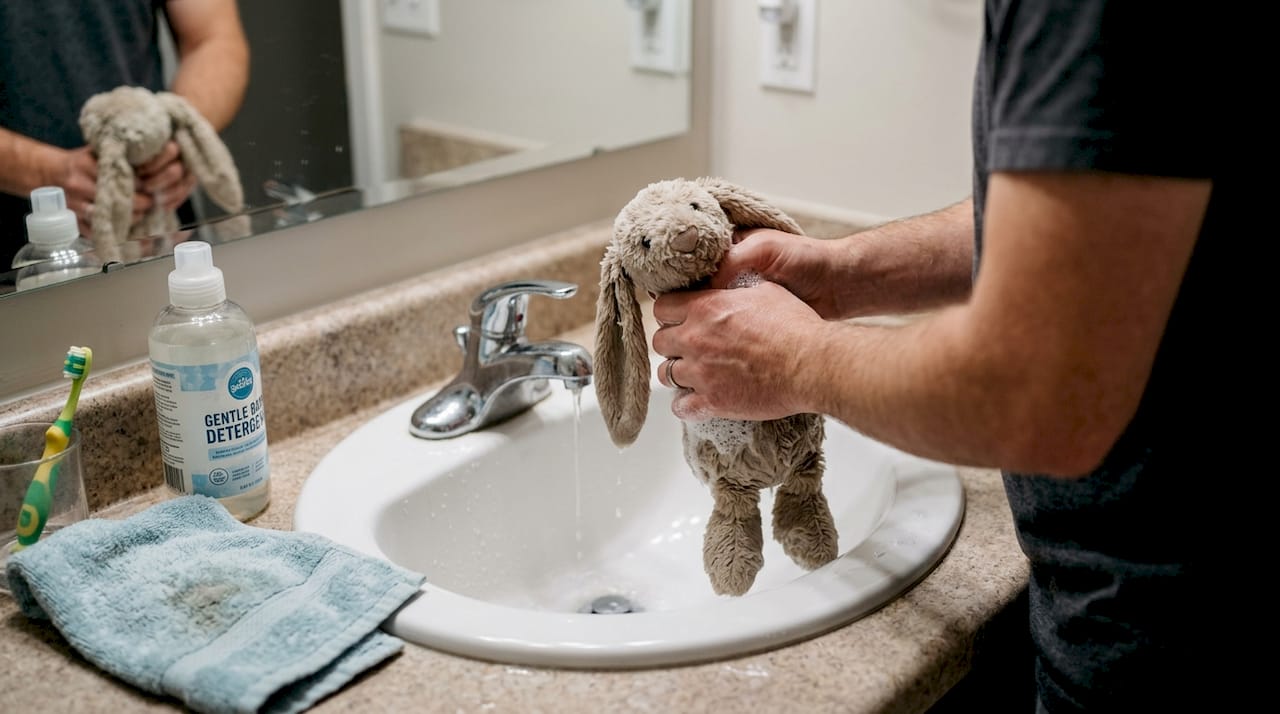
For a helpful visual reference on hand washing delicate plush toys, the wash stuffed animals guide covers specific techniques for different doll types.
Spot cleaning
For stains or non-washable dolls, dab the affected area with a cloth dampened in mild soapy water, rinse with a clean damp cloth, and air dry. For dolls with electronics or vintage construction, surface clean only using a vacuum, steam, or baking soda for odors.
Spot cleaning for non-washable dolls is the safest approach for anything fragile or electronic. Work in small sections and never saturate the fabric. Following toy care best practices helps you extend the life of any toy, not just plush dolls.
Frequency, disinfection, and handling illness
How often should you actually wash a plush doll? The answer depends on how much it gets used and whether anyone in the house has been sick.
Recommended cleaning schedule:
- Weekly: Spot clean visible dirt or vacuum with a brush attachment
- Monthly to every two months: Full wash for heavily used dolls
- After illness: Full wash immediately, with a laundry sanitizer added
- After outdoor play: Spot clean or full wash depending on exposure
Routine vacuuming and spot cleaning extend the time between full washes, which reduces wear on the fabric and stuffing over time. Think of it like brushing your teeth daily so you need fewer dentist visits.
For disinfection, full wash every 1-2 months covers most situations, but after illness you should add a laundry sanitizer spray before washing. Steam cleaning and vacuuming are excellent for allergen and dust mite removal without soaking the doll. Interestingly, hospitals often treat plush toys as single-patient use because thorough disinfection is so difficult, which tells you something about how seriously germs can linger in fabric.
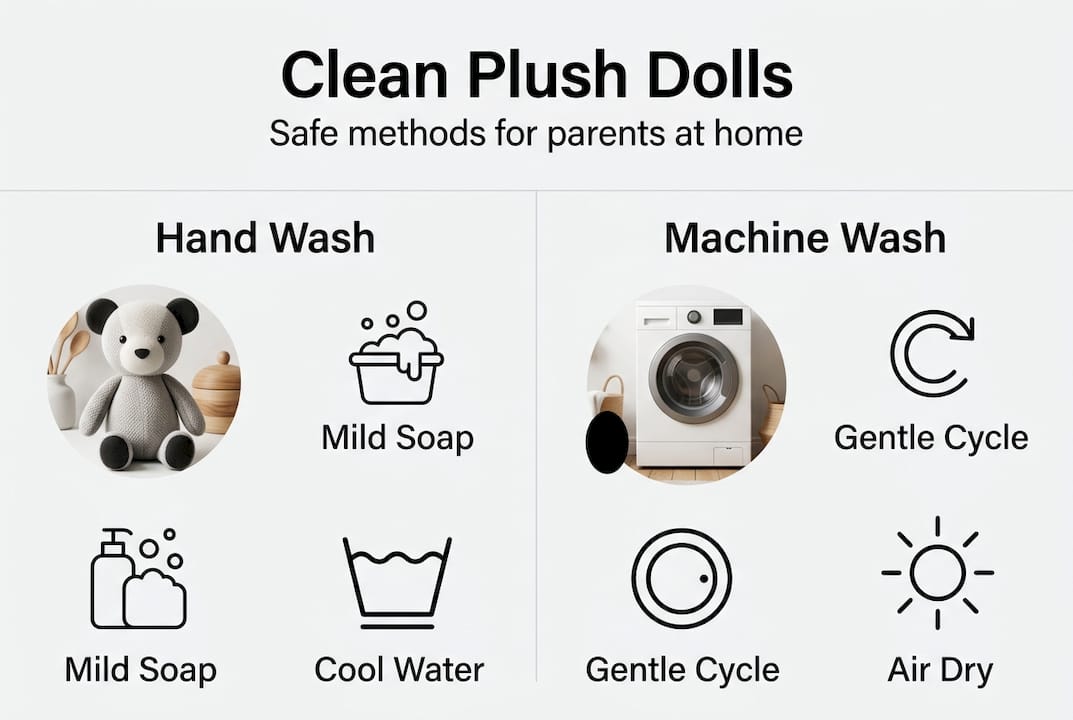
Regular cleaning is sufficient for most households unless a child has been ill, according to Consumer Reports. You do not need to disinfect after every use. Staying informed about toy safety recall tips is also smart, since some recalled toys have material issues that affect how they should be cleaned.
Pro Tip: Freeze a plush doll in a sealed plastic bag overnight to kill dust mites without any washing at all. This works especially well for dolls that cannot get wet.
Troubleshooting, drying, and preserving plush quality
Even with the best intentions, things can go wrong. Here is how to handle the most common post-wash problems and keep plush dolls looking great long-term.
Common mistakes and how to fix them:
- Matted fur after washing: Use a soft-bristle brush or pet slicker brush to gently tease the fibers back up while the doll is still slightly damp.
- Lumpy stuffing: Knead the doll by hand while drying and use tennis balls in the dryer on low heat to redistribute fill.
- Faded color: Always wash in cold water going forward and turn the doll inside out if possible.
- Lingering odor: Sprinkle baking soda on the dry doll, let it sit for an hour, then vacuum it off.
- Misshapen body: Stuff the doll loosely with clean towels while it dries to hold its shape.
Air drying prevents clumping and shrinkage but takes one to two days. Low heat in the dryer speeds things up and actually helps fluff the stuffing without causing harm, as long as you check every 20 minutes. Never leave a plush doll in a hot dryer unattended.
Machine washing works well for sturdy plush but risks damage to delicate or heirloom items. For those, hand washing or spot cleaning is always the safer choice. If you have a special anime plush doll with detailed embroidery or printed features, spot cleaning is almost always the right call. For general guidance on keeping all types of toys in top shape, toy maintenance tips offer a broader perspective.
Storage tips to keep clean dolls clean:
- Store in breathable cotton bags, not plastic, to prevent moisture buildup
- Keep away from direct sunlight to prevent fading
- Rotate toys in use so no single doll gets excessive wear
- Avoid storing in damp basements or humid closets
Explore safe, adorable plush dolls and educational toys at ToylandEU
Now that you know exactly how to keep plush dolls clean and in great shape, it is the perfect time to add some new favorites to your child’s collection. At ToylandEU, we carry a wide range of soft, well-made plush toys that are built with parents in mind.
From charming anime plush dolls that kids absolutely love to impressive large plush dolls that make unforgettable gifts, our catalog has something for every child and every budget. We also carry a fantastic range of educational toys that combine fun with learning, perfect for kids aged 3 to 12. With free worldwide shipping and over 30,000 products available, ToylandEU makes it easy to find toys that are as easy to care for as they are to love.
Frequently asked questions
Can I use bleach or vinegar to disinfect plush dolls?
Bleach and vinegar are not reliable disinfectants for plush dolls and may damage fabric or cause color loss. Use laundry sanitizers or EPA-approved products instead for safe, effective disinfection.
How can I clean plush dolls with electronics or fragile parts?
For dolls with electronics or vintage features, surface clean only using a damp cloth, vacuum, or steam. Baking soda handles odors well without any moisture risk.
How often should I wash plush dolls used daily?
For heavily used dolls, spot clean or vacuum weekly and do a full wash every one to two months or immediately after illness.
Can I machine dry plush dolls after washing?
Air drying is safest and prevents shrinkage, but low-heat tumble drying with tennis balls helps restore fluffiness. Always avoid high heat settings.
Is regular washing necessary, or just after illness?
Regular cleaning is sufficient for most households, with spot cleaning and vacuuming keeping dolls fresh between full washes. A complete wash after illness is always recommended.