

Keep Kids Safe: Electric Water Gun Safety Guide
TL;DR:
- Electric water guns pose risks from batteries, pressurized streams, and electrical components, not just getting wet.
- Proper safety measures include inspecting compartments, avoiding charging risks, and wearing eye protection.
- Establishing strict rules and modeling safe habits prevent accidents during summer water play.
Electric water guns look like a simple upgrade from the classic squirt gun. They shoot farther, soak faster, and kids absolutely love them. But here’s what most parents don’t realize: these toys introduce a set of risks that have nothing to do with getting wet. Batteries, pressurized streams, charging hazards, and exposed compartments turn a backyard toy into something that deserves a real safety conversation. Supervision alone is not enough. This guide walks you through the actual risks, the rules that matter most, and the steps that keep summer fun from turning into an emergency room visit.
Table of Contents
- Understanding electric water gun risks
- Battery, charging, and compartment safety
- Eye protection and smart aiming rules
- Setting rules for safe playtime
- Our experience: What safety guidelines often miss
- Discover safe and creative play options
- Frequently asked questions
Key Takeaways
| Point | Details |
|---|---|
| Battery safety is critical | Only use proper batteries, supervise all charging, and select toys with child-resistant compartments. |
| Protect eyes every time | Eye protection is essential for all players, and aiming rules must be reinforced. |
| Enforce playtime rules | Always separate charging and play areas, and require supervision for setup and charging. |
| Inspect toys regularly | Check battery compartments and toy condition before every play session to prevent hidden risks. |
Understanding electric water gun risks
Most parents assume a water toy is a water toy. You hand it over, keep an eye on the kids, and call it a day. The problem is that electric water guns are fundamentally different from the plastic squirt guns you grew up with. They contain batteries, electronic components, and pressurized water systems that each carry their own hazard profile.
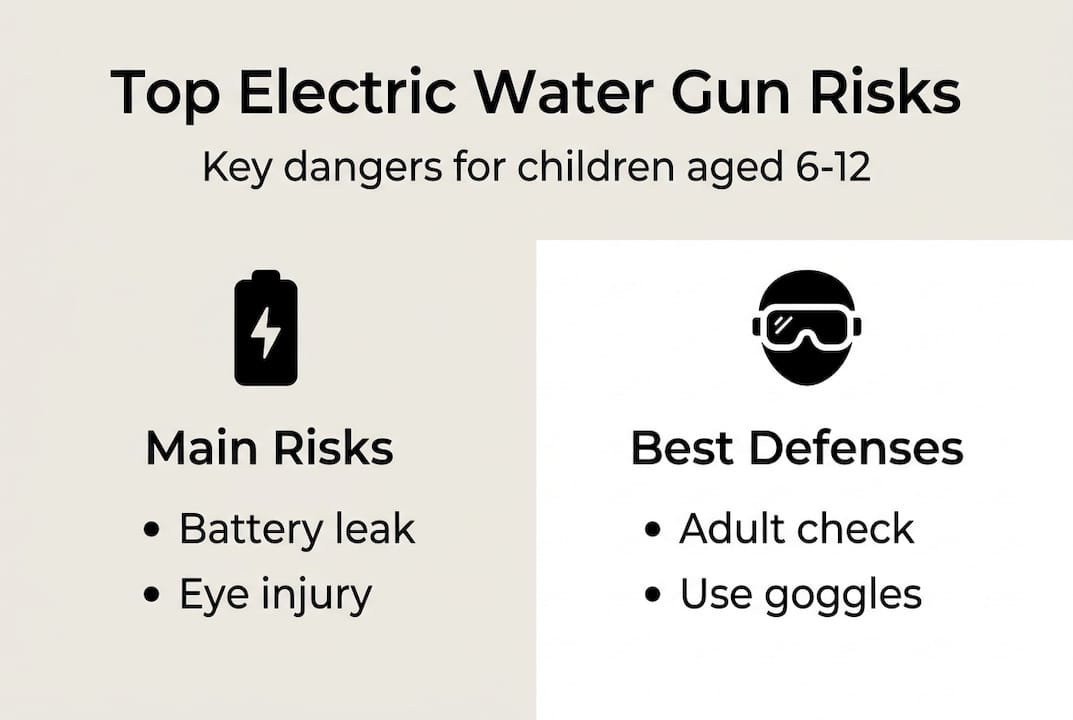
Let’s start with batteries. Many electric water guns use AA, AAA, or rechargeable lithium packs. Some smaller models use button or coin cell batteries, which are the most dangerous type for children aged 6 to 12. A loose or swallowed button battery can cause serious internal injury within two hours. Battery leaks are another concern: when a battery corrodes inside a wet toy, it releases chemicals that can irritate skin and eyes on contact. As standard toy battery safety basics guidelines make clear, batteries require careful handling, charging, and disposal to avoid injury.
Physical damage to the toy creates a second layer of risk. A cracked battery compartment from a drop on concrete is not just a cosmetic problem. It can expose wiring, create a short circuit, or allow water to reach the battery directly. With kids aged 6 to 12, drops happen constantly. It is not a question of if, but when.
Charging introduces risks that parents rarely anticipate. Unlike traditional toys, rechargeable electric water guns need to be plugged in, and that charging session carries real electrical hazards if mismanaged. Charging near water, charging outdoors during play, or leaving a toy to charge overnight without supervision are all common mistakes.
Here is a quick overview of the key risks specific to electric water gun models:
- Battery ingestion hazard: Button and coin cell batteries can fall out and be swallowed
- Chemical leakage: Corroded batteries release harmful residue inside the toy
- Short circuit from water intrusion: Cracked or damaged compartments let water reach electrical parts
- Charging hazards: Incorrect charger use or unsupervised charging can cause overheating
- Pressurized stream injuries: High-pressure water can cause eye injuries, especially at close range
Water toys that include batteries sit at the intersection of two serious hazard categories: electrical and projectile. Most parents only think about one.
Children aged 6 to 12 are at a uniquely higher risk because they are active, impulsive, and more likely to drop, throw, or misuse toys between play sessions. If you want a broader look at how different models compare, our outdoor water toys guide covers the full range of options and safety considerations. It is also worth reviewing choosing the best toys before your next purchase, since battery type and compartment design are factors most parents overlook at checkout.
Battery, charging, and compartment safety
Once you understand why electric water guns carry extra risks, the next step is knowing exactly what to do about them. These are not vague suggestions. They are specific actions that address the most common mistakes families make with battery-powered water toys.
Follow these steps every time your child uses or charges their electric water gun:
- Check the battery type before you buy. Avoid models that use button or coin cell batteries unless the compartment has a child-resistant screw closure.
- Never mix old and new batteries, and never mix different battery brands or chemistries in the same toy.
- Remove rechargeable batteries from the toy before charging them. Charging the battery pack while it remains inside a damp toy is one of the most common causes of overheating.
- Keep all batteries and chargers completely dry. Wipe down the toy before handling the battery compartment.
- Inspect the compartment after every play session. Look for cracks, loose covers, corrosion, or any discoloration around the battery contacts.
- Replace damaged compartments immediately. Do not tape over cracks or continue using a toy with a broken battery seal.
As manufacturers consistently remind users, never mix battery types, charge only under adult supervision, and use child-resistant compartments wherever available.
Pro Tip: After every use, dry the toy with a towel before storing it. Moisture trapped near the battery compartment overnight accelerates corrosion faster than regular outdoor exposure.
Here is a quick comparison to help you choose safer battery configurations:
| Feature | Safer option | Higher risk option |
|---|---|---|
| Battery type | Rechargeable AA/AAA pack | Button or coin cell batteries |
| Compartment closure | Screw-sealed, child-resistant | Snap-open, no lock |
| Charging method | External charger, battery removed | Charging with battery installed in toy |
| Inspection frequency | After every use | Only when problems are visible |
For a broader look at how battery hazards connect to product recalls and buying decisions, the toy safety recalls impact article is a valuable read before your next purchase.
Eye protection and smart aiming rules
Batteries get most of the safety attention, but the risk you are most likely to deal with on a summer afternoon is an eye injury from a pressurized water stream. This is the one that sends kids to urgent care, and it is almost entirely preventable.
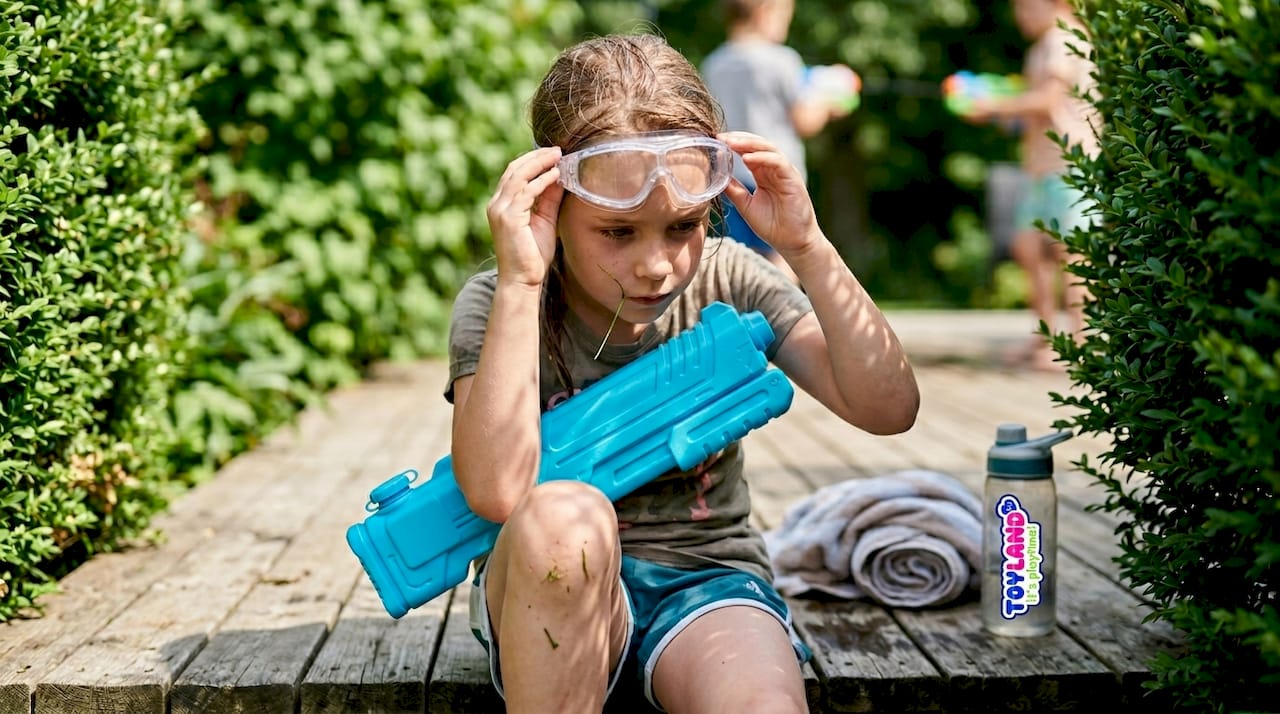
Electric water guns produce significantly more water pressure than traditional squirt toys. Many models are designed to shoot accurately at distances of 30 to 100 feet. At close range, that stream carries enough force to cause real eye damage, particularly in younger children whose eyes are more sensitive. Product manuals for leading models are direct about this: eye protection must be worn by all people within range, and users must never aim at the eyes or face.
Here is a clear breakdown of safe and unsafe aiming zones:
| Zone | Safe to target? | Notes |
|---|---|---|
| Torso (chest, back) | Yes | Safest target zone |
| Arms and legs | Yes | Acceptable with standard goggles |
| Head and neck | No | Even if goggles are worn |
| Face and eyes | Never | Risk of serious injury at any range |
Beyond the aiming rules, here is what parents should enforce before any water battle begins:
- Every child must wear protective eyewear, including bystanders and younger siblings watching from the sidelines
- Set a minimum engagement distance, such as no shooting closer than 10 feet
- Establish clear out-of-bounds zones where shooting is never allowed, like near windows, pets, or anyone not participating
- Younger siblings aged 5 and under should not participate in play involving electric water guns
For parents curious about how water gun toys fit within broader toy safety standards, the post on toy gun safety standards provides useful context on regulation and real-world expectations.
Pro Tip: Buy a two-pack of kid-sized safety goggles and keep them in the same bin as the water gun. If goggles are easy to grab, kids are far more likely to actually wear them.
Setting rules for safe playtime
Knowing the risks is only useful if it leads to consistent habits. The families that avoid injuries are not just the ones who know the rules. They are the ones who practice them every single time, even on rushed summer afternoons.
Here are the household rules every family should put in place before electric water guns come out:
- Designate a charging zone indoors, separate from the backyard play area. Charging never happens outside or during active play.
- An adult must handle all battery changes. Kids aged 6 to 12 can learn to use the toy safely, but battery removal and installation is an adult task.
- Eye protection goes on before the toy is picked up, not after a quick shot at a sibling.
- Play stays in the approved zone. Define boundaries clearly so kids are not running with pressurized water guns near driveways, streets, or non-participants.
- After play, the toy gets inspected. Kids can help with the visual check as a habit-building activity.
The best rules are the ones kids can explain back to you. If your child cannot tell you why you never charge the toy outside, the rule has not been fully learned yet.
As play and charging safety product guidelines confirm, these areas must be kept separate, supervised by an adult, and governed by strict adherence to product warnings.
For families who have experienced the frustration of discovering toy recalls after purchase, understanding how parental trust and toy recalls interact can help you make smarter purchasing decisions from the start.
Pro Tip: Post a simple, laminated rule card near where you store the water guns. Even kids who know the rules benefit from a visual reminder, especially when friends are visiting and excitement is high.
Our experience: What safety guidelines often miss
Most safety guides give you a list of rules and call it done. But in our experience working with parents and toy products, the accidents rarely happen during normal play. They happen during the transitions: the moment play ends and someone decides to charge the toy right there on the patio, or when a second kid grabs the gun while the first is still nearby without goggles.
Supervision is only as good as the ground rules that back it up. An adult watching from a lawn chair is not the same as an adult who has established clear expectations and checked for compliance before play started.
We have also seen what happens when parents trust a “child-resistant” battery compartment label too literally. One small drop on a hard surface can pop a snap-fit compartment right open, even on a toy that passed safety testing. The lock is a minimum standard, not a guarantee.
The most effective approach we have seen is modeling behavior. When you physically show your child how to inspect the battery compartment, explain why you dry the toy before storing it, and put on goggles yourself before a demonstration, children stop thinking of safety as a rule and start seeing it as a habit. That shift is the real goal. Staying current with toy safety innovations also helps parents recognize which designs are genuinely safer, not just labeled that way.
Discover safe and creative play options
Safety education and outdoor fun are not opposites. Once you have the right rules in place for electric water guns, it is worth exploring a full range of toys that keep kids active, creative, and safe.

At ToylandEU, we carry thousands of options designed with families like yours in mind. If your kids love action and outdoor movement, the RC gesture-controlled stunt car delivers serious excitement without water or battery compartment concerns. For quieter afternoons, the kids art workbook is a Montessori-inspired creative kit that builds fine motor skills. Whether you are shopping for summer play or looking for an alternative on cooler days, we make it easy to find toys that match both your child’s energy level and your safety standards.
Frequently asked questions
What is the safest way to charge an electric water gun?
Always remove rechargeable batteries before charging and charge in a dry indoor area under adult supervision. Charge only under supervision and never attempt to charge non-rechargeable alkaline batteries.
Should kids wear goggles when using electric water guns?
Yes, protective eyewear is required for all users and anyone nearby. As product manuals warn, eye protection must be worn by the user and anyone within range of the water stream.
What do I do if the battery compartment gets wet or damaged?
Stop use immediately, dry and inspect the compartment thoroughly, and do not continue if you see cracks or corrosion. Physical damage alters battery risk, and a compromised compartment should be replaced before the toy is used again.
Are all electric water guns safe for children aged 6-12?
Not all models carry the same risk level. Models with button batteries present ingestion hazards, so prioritize toys with screw-sealed, child-resistant compartments and clear safety warnings on the packaging.
Where can I find more safe toy recommendations?
Look for toy retailers that prioritize safety standards and publish clear product information. ToylandEU curates a broad selection of tested, family-friendly toys and provides educational resources to help parents shop with confidence.
Recommended
- The Ultimate Guide to Outdoor Water Toys for Kids: Benefits, Safety Ti – ToylandEU
- Top 1911 Squirt Guns in 2025: Ultimate Water Battle Buying Guide – ToylandEU
- Toy Guns: A Texan’s Opinion - Safety vs Play & Child Psychology – ToylandEU
- Summer 2026 Bouncy House Safety Tips for Kids’ Fun & Security – ToylandEU