

Beach Kite Flying: A Beginner's Guide to Wind, Setup, and Safety
Yes, beaches are ideal kite-flying spots when you pick the right wind and a wide, clear stretch of sand. The one rule that matters most: fly in a steady onshore breeze of moderate speed, set up upwind of other people and never fly near power lines. If lightning, heavy rain, or gusty unpredictable wind rolls in, pack up and wait it out.
Before you head out, run through this:
- Wind: steady, moderate speed, blowing onshore
- Space: wide open sand, no crowds downwind of you
- Hazards: no power lines, poles, or overhead wires nearby
- Tide: check the chart so you’re not set up where the water will be in an hour
Key Takeaways
Successful beach kite flying comes down to matching kite type and size to a steady 8 to 15 mph wind, launching on firm intertidal sand upwind of people, and never flying near power lines or in storms.
| Point | Details |
|---|---|
| Match kite to wind | Light-wind kites fly at 3 to 6 mph, recreational kites at 8 to 15 mph, big-wind kites need 12 to 25+ mph. |
| Choose firm sand | Set up on intertidal sand upwind of people, away from dunes, power lines, and surf zones. |
| Launch with control | Use a back-to-wind static launch or a helper-assisted long launch instead of forcing a running start. |
| Respect safety limits | Never fly near power lines or in rain and lightning; wet lines can conduct electricity. |
| Start with the right size | Toylandeu™ stocks ripstop delta and parafoil kites sized for different ages, from small diamonds for young kids to larger deltas for teens and adults. |
Table of Contents
- Which Kites Work Best for Beach Kite Flying
- Picking the Right Day: Wind, Tide, and Obstacles
- Gear and Setup Before You Launch
- How to Launch a Kite at the Beach
- Keeping It Steady: Basic Control and Maneuvers
- Landing and Packing Up Without Damage
- Beach Kite Safety and Etiquette Every Flier Should Know
- Cleaning and Storing Your Kite After a Beach Day
- Why Trust This Beach Kite Flying Guide
- Best Kite Sizes for Different Ages and Skill Levels
- What Actually Matters When You’re Just Starting Out
- Get Set Up With a Beginner Kite From Toylandeu™
- Sources
- FAQ
Which Kites Work Best for Beach Kite Flying
Beach wind is rarely gentle and rarely violent. It’s usually somewhere in between, which is why the kite you bring matters as much as the day you pick. Single-line deltas and diamonds are the easiest entry point. They’re forgiving in light to moderate wind, stable once airborne, and simple to launch without a second person. Port Aransas’s tourism office recommends delta kites for beginners for exactly this reason, along with launching upwind of crowds and adding a tail for extra visibility and stability.
If your local beach tends to blow harder, parafoils and hybrid framed kites handle those gusts better and hold up longer against sand and salt exposure. Look for ripstop nylon sails and reinforced frames rather than shrink-wrapped plastic film. Cheap plastic kites tear within a season of beach use; a ripstop delta with a fiberglass spine can last years.
- Deltas and diamonds: light to moderate wind, easiest for beginners
- Parafoils and framed hybrids: stronger wind, better gust resistance
- Add a tail on any kite for stability and visibility around other beachgoers
Pro Tip: If you’re buying just one kite for a family beach trip, get a delta with a tail attachment. It flies in more wind conditions than a diamond and won’t nosedive as easily in gusts.
Picking the Right Day: Wind, Tide, and Obstacles
Most single-line kites fly best in a steady breeze between 5 and 25 mph, but the sweet spot for recreational flying sits closer to 8 to 15 mph. Light-wind kites can get airborne in 3 to 6 mph, while big-wind designs need 12 to 25+ mph to perform, so matching the kite’s wind rating to the forecast matters more than picking a “good” kite in the abstract. A kite rated for light wind will feel unstable and hard to control once conditions push past 15 mph.
You don’t need a weather station to judge wind on-site. Here’s a quick sequence for reading conditions before you unpack anything:
- Watch flags or beach umbrellas. A flag standing out stiffly usually means 15 mph or more; a gentle flutter is closer to 8 to 10 mph.
- Check the water. Small ripples with no whitecaps generally sit in the 8 to 15 mph range; scattered whitecaps mean it’s stronger than most beginner kites want.
- Use a wind app or a cheap handheld anemometer if you want a number instead of a guess.
- Confirm the wind is steady, not gusty. A consistent breeze is easier and safer to fly in than one that surges and drops every few seconds.
Setup location matters as much as the wind speed. Beaches give you wide, open, unobstructed space, and firm intertidal sand near the waterline provides much better footing than loose dry sand higher up the beach. Set up upwind of swimmers, sunbathers, and anglers, and stay clear of dunes, vehicle lanes, and surf zones. Check a tide chart before you commit to a spot. A firm launch area at low tide can be underwater within two hours.
Gear and Setup Before You Launch
A short checklist before your kite ever leaves the ground:
- Flying line rated for your kite’s size, plus a sturdy winder or handle
- Gloves, especially for bigger kites; nylon line can burn bare hands on a hard pull
- A sand anchor or stake so the kite doesn’t drag off if you set it down
- A tail, even on kites that don’t strictly need one, for visibility near other beachgoers
- Optional extras: a handheld anemometer, a spare bridle, some repair tape, and a small towel to wipe sand out of connectors
Setup itself takes about two minutes once you’ve done it a few times. Inspect the sail and frame for tears or cracks, attach the bridle lines to the correct points, confirm wind direction one more time, and stake your anchor or hand the line to a helper before you unclip anything.
Pro Tip: Carry your kite in a sleeve or bag rather than tucked under your arm. Dragging a sail across dry sand is one of the fastest ways to wear through ripstop fabric.
How to Launch a Kite at the Beach
Launching is where most beginners either succeed on the first try or spend ten frustrating minutes untangling line. Three methods cover almost every beach situation.
- Solo static launch. Stand with your back to the wind, hold the kite by its bridle point, and let out a few feet of line. Raise the kite to chest height and let the wind lift it off your hands rather than throwing it.
- Helper-assisted long launch. Have a helper walk the kite 30 to 50 feet downwind and hold it facing you. On your signal, they release it while you reel and manage tension. This works well for bigger kites that are awkward to launch alone.
- Running launch. If the beach is firm and clear, a short controlled run can get a light kite airborne when the wind is marginal. Keep the run short and stop as soon as the kite catches lift.
If the line goes slack mid-launch, walk backward a few steps to restore tension instead of yanking the line. A sudden gust that tips the nose down usually means the kite is climbing too steeply. Ease off tension rather than pulling harder, which only drives the nose further down.
Keeping It Steady: Basic Control and Maneuvers
Once airborne, the goal is a light, steady pull on the line, not a constant tug of war. Feel for that tension and make small adjustments rather than big yanks, which is what causes most beginner kites to spiral or stall.
- Let out line gradually to reach smoother, steadier wind higher up, pausing every few feet to feel how the kite responds
- Practice gentle turns by shifting your body angle slightly rather than jerking the line
- A slow figure-eight pattern is the easiest way to sustain lift and get a feel for how the kite answers your input
- In a gust, ease the line out slightly instead of braking hard; in a lull, reel in slowly to maintain tension
Most control mistakes come from overcorrecting. A kite that dips doesn’t need a hard yank, just a small release and a moment to recover on its own.
Landing and Packing Up Without Damage
Bring the kite down the same deliberate way you brought it up. Reel in evenly while walking toward the kite as it descends, keeping steady tension the whole way. If it’s windy, have a helper pinch the line near the ground once the kite is low enough to grab.
- Reel in steadily, walking toward the kite as tension allows.
- If the wind spikes suddenly or weather turns, let the line go slack and let the kite settle to the sand rather than fighting a stronger pull than you can manage.
- Once it’s down, clear sand from the fittings and bridle points before folding, bag the kite for the walk back, and give it a fresh water rinse at home if it touched salt spray.
Beach Kite Safety and Etiquette Every Flier Should Know
The single most important rule: never fly near power lines, and never attempt to retrieve a kite that gets tangled in one. Call your local utility company instead. Edison’s safety guidance is blunt about this, and for good reason. A wet kite line can conduct electricity, and kite.org’s safety guidelines advise against flying in rain or lightning for the same reason.
Beyond electrical hazards, most beach kite conflicts come down to space:
- Give swimmers, surfers, and anglers a wide berth, and keep your line visible so nobody walks into it
- Stay off dune vegetation and away from posted nesting areas, and pack out all your gear and trash when you leave
- Watch for sudden gusts near jetties or rock formations, which can funnel wind unpredictably
- Stop flying immediately if you see lightning, feel wind shift sharply, or notice birds diving aggressively near your kite, since seagulls occasionally investigate bright tails and can tangle in line
Busy beaches call for extra visibility. Bright colors and longer tails make it easier for others to spot your line before they walk into it, which matters more on a packed weekend than a quiet weekday morning. If you’re supervising kids near the water while someone else flies, a parent’s guide to beach supervision covers the broader safety habits worth building into any beach day.
Cleaning and Storing Your Kite After a Beach Day
Salt and sand are harder on kites than almost anything else you’ll expose them to. A quick rinse in fresh water after every beach session, followed by a full air dry before folding, prevents most long-term damage.
- Rinse the sail and frame with fresh water, then unzip or unfold it fully to dry before packing away
- Check bridle lines and stitching for fraying, and inspect metal fittings for early corrosion
- Repair small tears with sail tape before they spread, and swap out line that shows visible wear
- Store the kite flat or in its sleeve, out of direct sunlight and away from humidity
If you fly at the beach often, a deeper inspection every month or two catches problems before they turn into a snapped spar mid-flight.
Why Trust This Beach Kite Flying Guide
This guide was written by Thane Holland, drawing on established kite-safety standards and beach recreation guidance rather than guesswork. Toylandeu™ has built a library of family-focused how-to content because getting beginners airborne safely, on the first try, is the whole point.
For more step-by-step detail, Toylandeu™'s how to fly a kite guide for beginners and families covers technique in more depth, and organizations like National Kite Month publish their own beginner resources worth cross-referencing.
A good beginner kite session depends less on the kite itself and more on picking the right wind, the right stretch of sand, and knowing when to call it quits.
- Toylandeu™ product pages list wind ratings and materials so you can match a kite to your local beach conditions
- Replacement parts and accessories help extend a kite’s life well past its first season
Best Kite Sizes for Different Ages and Skill Levels
Kite size should scale with the flier’s strength and experience, not just their age. A toddler holding a large delta in a stiff breeze is a recipe for a dropped line and a chase down the beach.
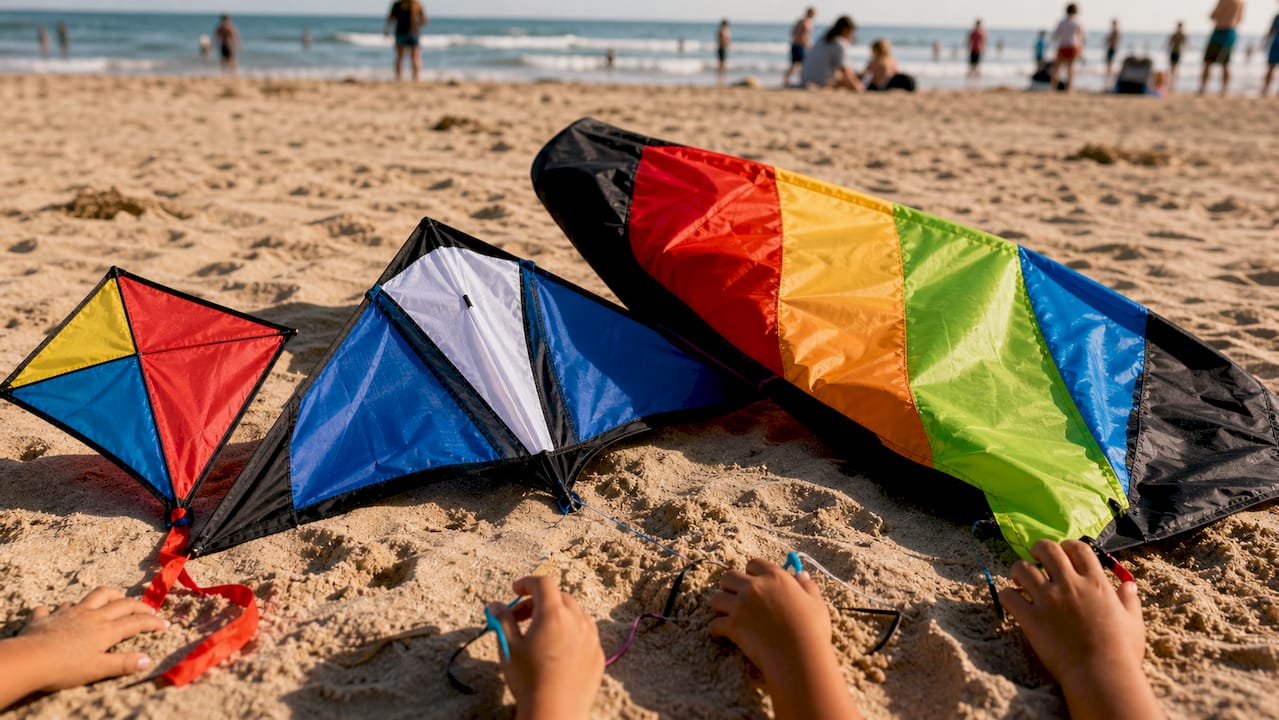
For kids around 4 to 7, small diamond or delta kites with a wingspan under 3 feet fly well in lighter wind and pull gently enough for small hands to manage without a winder. Kids 8 to 12 can usually handle a mid-size delta or parafoil, roughly 3 to 5 feet across, especially once they’ve flown a smaller kite a few times and understand line tension.
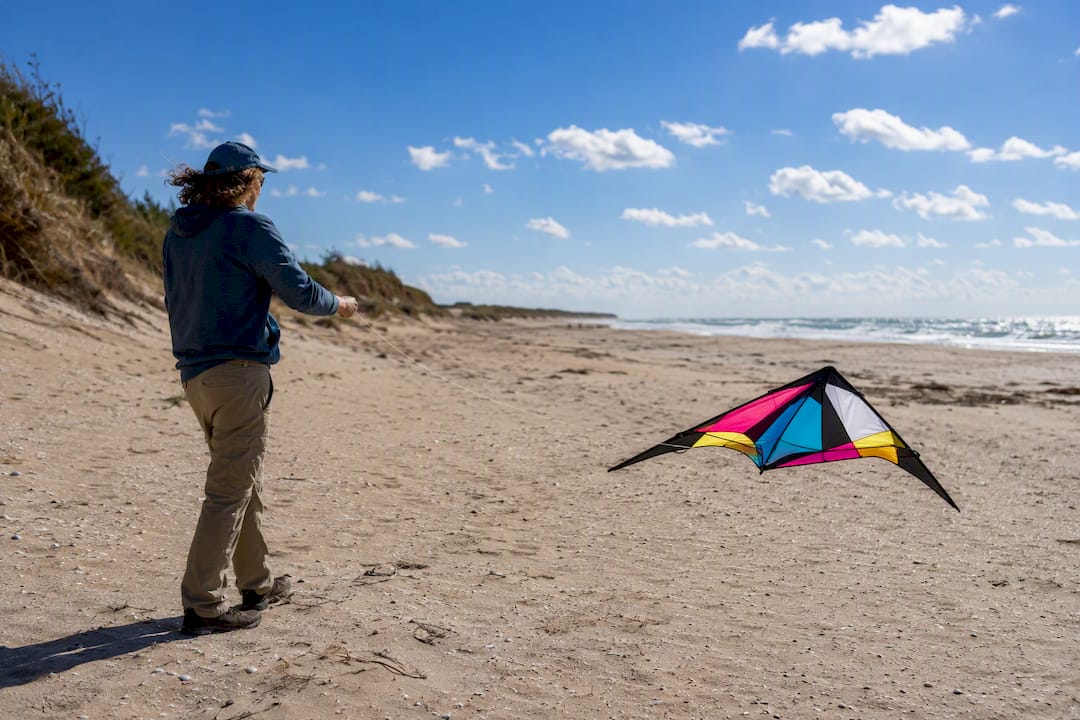
Teens and adult beginners can start with a 5 to 7 foot delta or parafoil, which flies stably across a wider wind range and tolerates beginner mistakes like overcorrecting or launching too fast. Anyone stepping up to a stunt or dual-line kite, which requires active two-handed control, should have solid experience with a single-line kite first. Dual-line kites respond fast and can dive hard if you’re not ready for the learning curve.
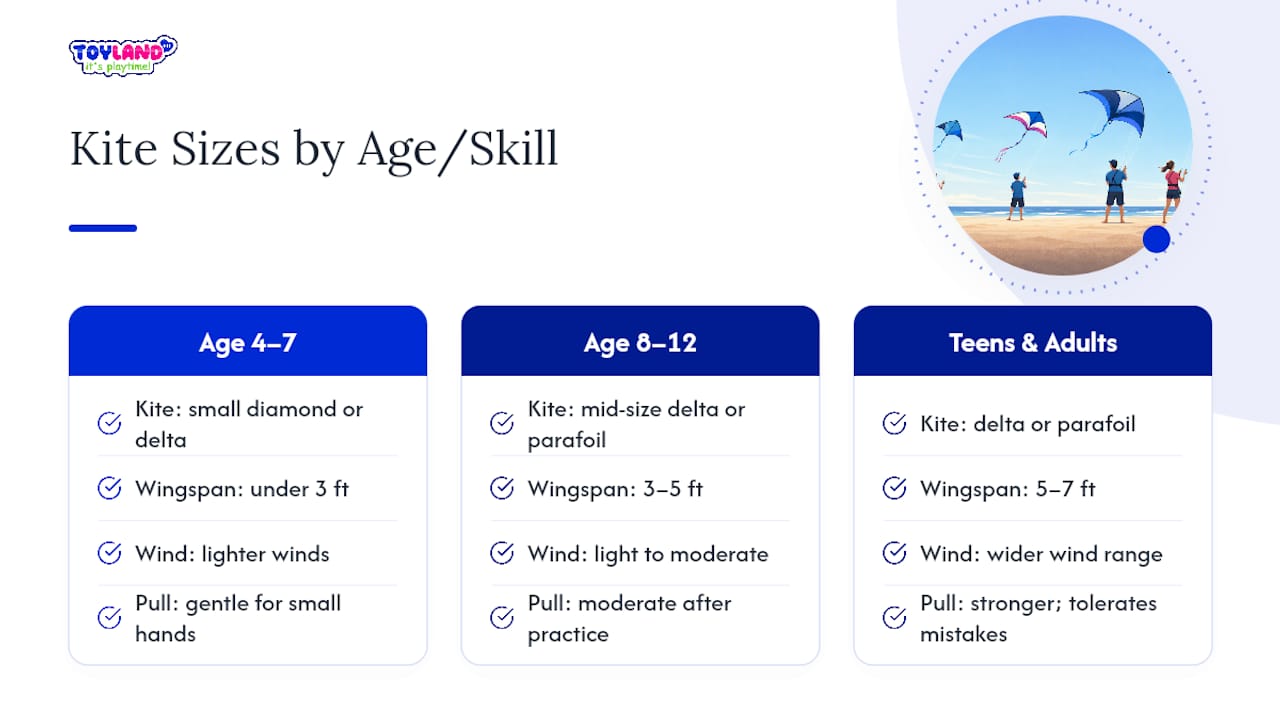
As a rule of thumb: bigger kites generate more pull, so match size to the flier’s grip strength and comfort with gloves, not just their age on paper. A wiry 10-year-old who’s flown kites for two summers can often handle more kite than a first-time adult.
What Actually Matters When You’re Just Starting Out
Most beginner kite advice focuses on the wrong thing first: buying gear. What actually determines whether your first few sessions go well is picking a day with steady, moderate wind and a stretch of beach with real room to work. A $15 delta in perfect 10 mph wind on open sand will fly better and longer than a $60 kite fighting gusty, obstructed conditions.
The conventional wisdom oversells dual-line stunt kites as the “next step” for anyone who’s flown a single-line kite a few times. In practice, that jump skips a skill most beginners never fully build: reading wind changes before they hit the kite. A single-line flier who spends real time on tension and line-length adjustments in variable wind is better prepared for a stunt kite later than one who rushes the upgrade.
If there’s one thing worth prioritizing above kite choice or technique, it’s honest wind assessment. Beginners consistently overestimate how “light” a breezy day feels standing on sand, then get surprised when their kite won’t stop climbing. Watch the water, not just the flag, and match your kite’s rating to what you actually see out there, not what the morning forecast promised.
Get Set Up With a Beginner Kite From Toylandeu™
Toylandeu™ carries beginner-friendly kites built with the same ripstop nylon and reinforced frames this guide recommends, so you’re not gambling on a flimsy plastic kite for your first beach trip. Every order ships free worldwide, and the catalog includes replacement parts and accessories if a bridle line frays or a spar cracks after a season of salt air.

If you’re also looking to round out a family beach day beyond kites, Toylandeu™'s RC flying bird drone gives kids another outdoor flying toy to enjoy once the kite’s packed away, and creative options like the Montessori drawing kit fill the downtime between wind gusts. Browse the beginner kite selection, check the wind rating against your local beach conditions, and place an order before your next trip so it arrives in time.
Sources
- Kite
- Go Fly a Kite - Your guide to flying a kite at the beach - Travel Ocean Shores
- Kite Flying in Port Aransas | Beach Guide & Tips
FAQ
Can You Fly a Kite at the Beach?
Yes, beaches are among the best places to fly a kite because they offer wide, open space and steady onshore wind, provided you avoid power lines, crowds, and rising tides.
Why Do People Fly Kites at the Beach?
Beaches combine consistent wind with unobstructed space and firm sand for footing, which makes launching and controlling a kite easier than in a park or backyard.
What Type of Kite Is Best for Flying at the Beach?
Delta and diamond kites work best for beginners in light to moderate wind, while parafoils and reinforced hybrid kites handle stronger coastal gusts and hold up better against sand and salt.
How Do You Fly a Beach Kite?
Stand with your back to the wind, hold the kite by its bridle, let out a little line, and let the wind lift it rather than throwing it, then use gentle line adjustments to keep steady tension once it’s airborne.
What Wind Speed Is Too Strong for a Beginner Kite?
Most beginner kites struggle above 15 mph; if whitecaps are forming on the water or flags are snapping stiffly, it’s likely too strong for a light or recreational kite.
Recommended
- How to Fly a Kite: Tips for Beginners and Families – ToylandEU
- RC Flying Bird Toy Drone - Remote Control Fun for Kids & Adults Outdoors ToylandEU
- RC Ultimate Beginner’s RC Glider 76102s - Fly High with Ease! ToylandEU
- RC Volantex 600mm RC Glider - Unleash Your Flying Skills with Our Beginner-Friendly Aircraft ToylandEU